Hospitality-grade floor protection · Ships in 1–3 business days · 90-day limited warranty
Hospitality-grade floor protection · Ships in 1–3 business days · 90-day limited warranty
You drag a metal stool across the floor and the open tube leg scratches a line behind it. This tube plugs guide shows you how to measure the leg and pick the right inner plug, end cap, or threaded insert for the hollow leg.
Press-fit, no adhesive required · Sizes for round, square, rectangular, oval, half-oval, and ellipse tubes
Every plug matches one tube shape and one job. Answer both and you’ve narrowed to the right plug.
1 Tube shape
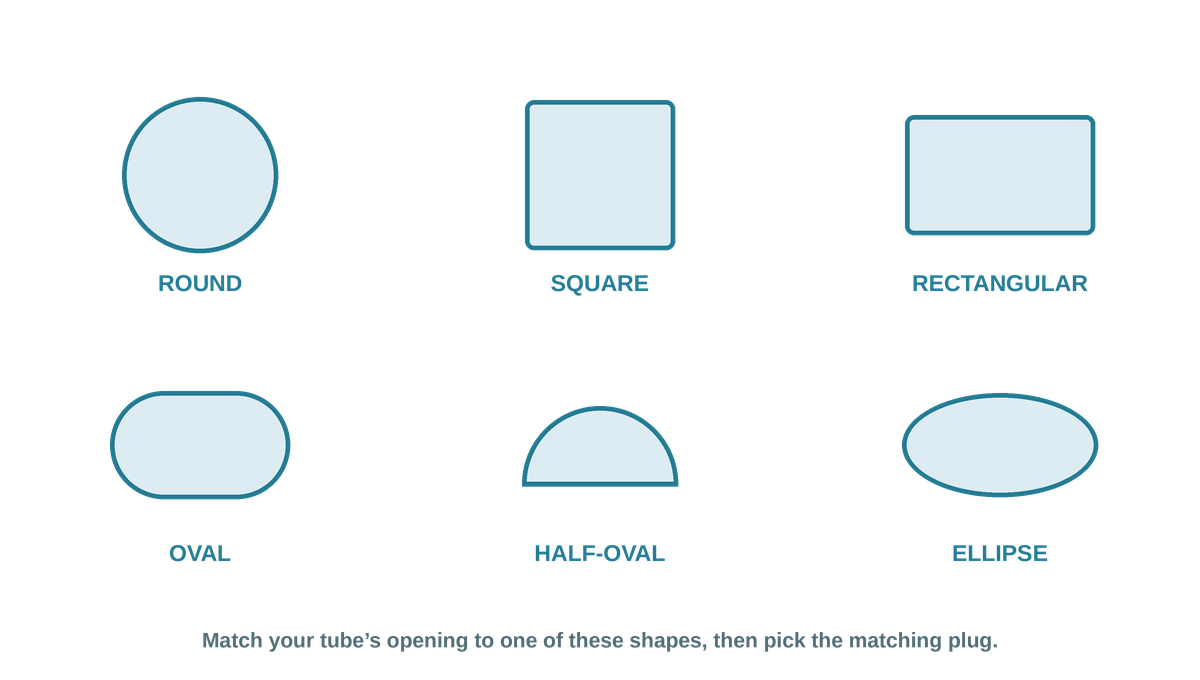
If the tube opening is round
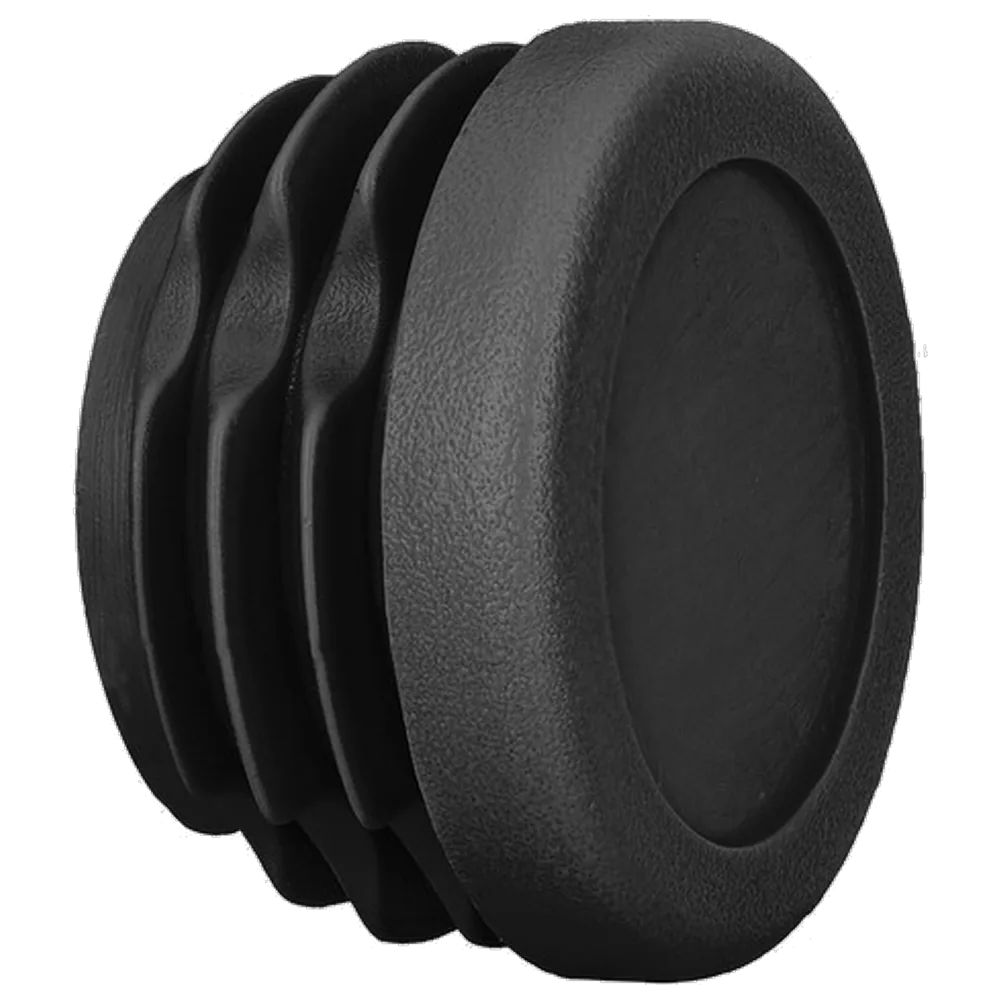
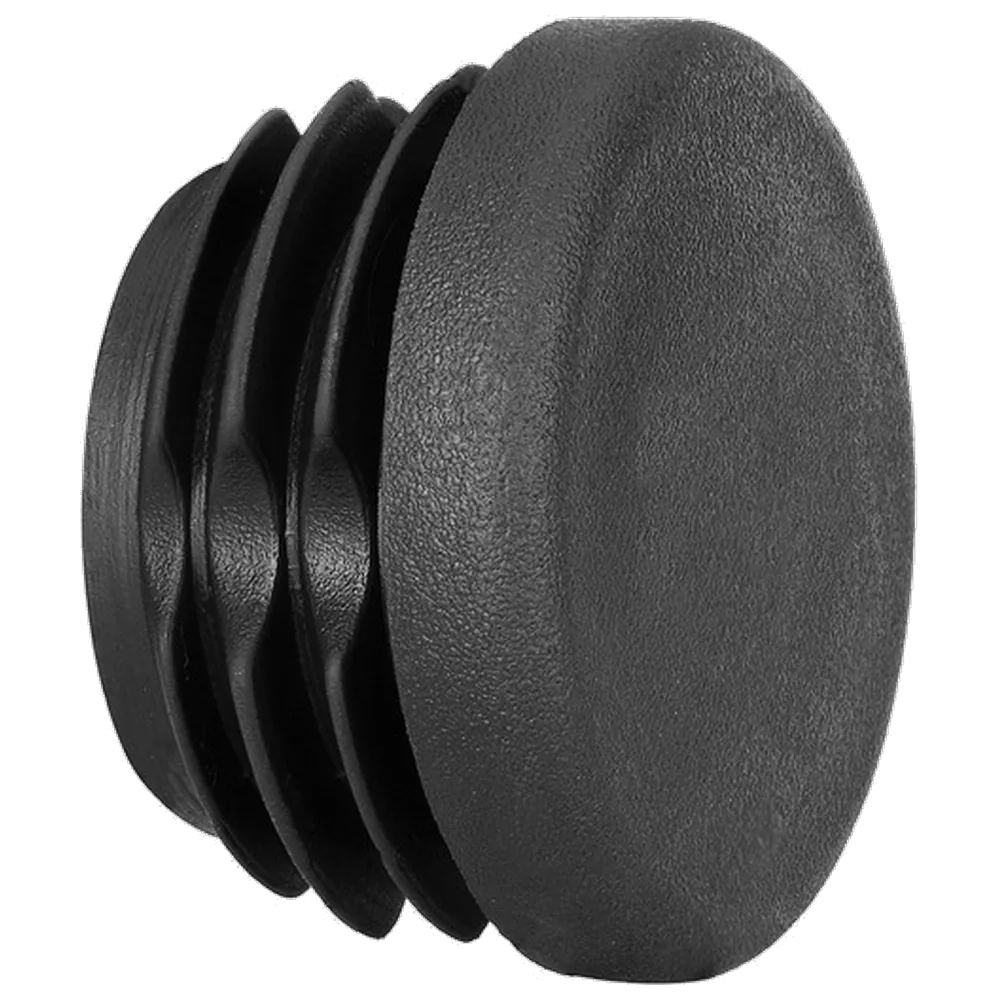
Round inner plugs and external end caps for round hollow steel and aluminum tube legs. Match the plug to the tube’s outer diameter.
If the tube opening isn’t round
Shaped inner plugs grip square, rectangular, oval, half-oval, and ellipse tube profiles. The ribbed body stops rotation inside the tube.
2 The job
If you just need to seal and finish the tube end
A plain inner plug or external end cap closes the open tube, keeps out dust and moisture, and gives a clean finish.
If you also need to adjust height or level the furniture
A plug with a threaded insert lets you screw in an adjustable leveling foot, so you can level the piece on an uneven floor.
Got both answers? You know the plug type. Next, measure your tube for the right size, and if your tube legs touch the floor, check whether you also need floor protection. Or browse the full lineup.
Two measurements set every plug: the tube’s outer dimension and the wall thickness (T). Both must match the plug spec for a secure press fit. Two more apply in some cases: head style on round, oval, and ellipse profiles, and thread size when you’re adding a leveling foot.
Measure across the outside of the tube with calipers or a ruler. Diameter for round legs; width and length for square, rectangular, oval, half-oval, and ellipse. Match the plug to your tube’s outer dimension. This sets the plug size.
Use calipers at the cut end of the tube and measure the actual wall, not a manufacturer spec. Your measured wall must fall within the plug’s listed T range.
Decide how the cap should sit on the tube face: flat and flush, rounded or domed, or a thin head that barely shows. Applies to round, oval, and ellipse profiles, and picks the head variant.
Check the shank of the leveling foot you plan to use, not the tube. This sets the thread to order: M6, M8, M10, or M12.
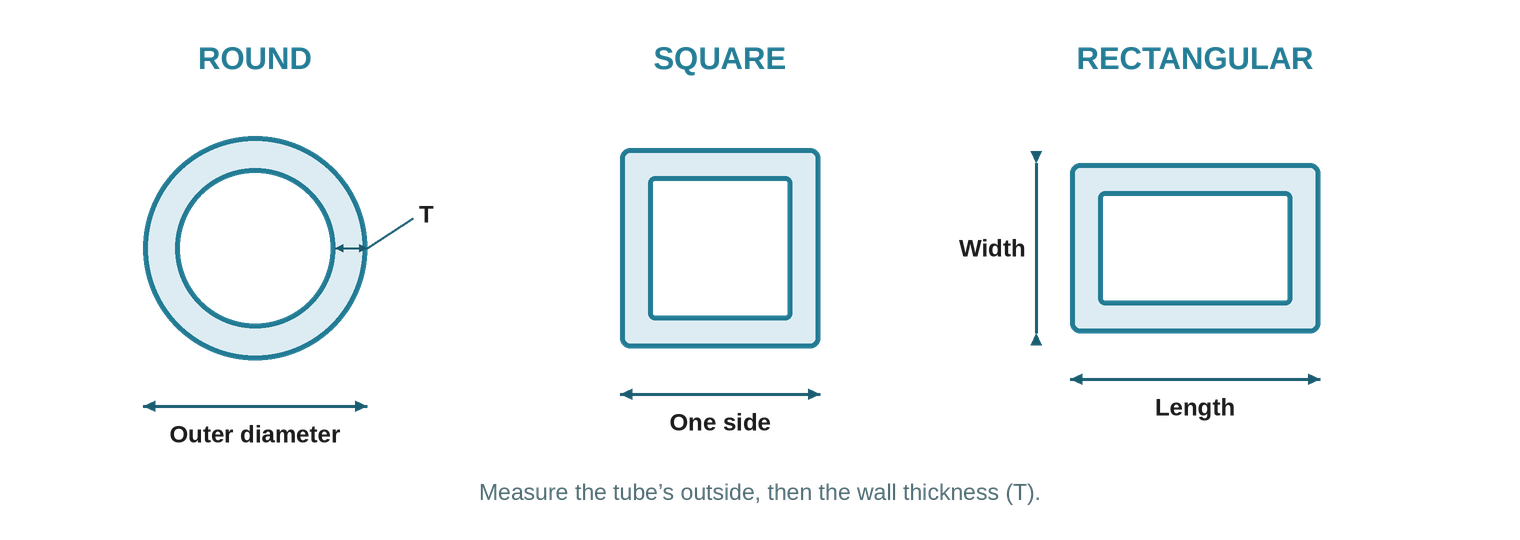
Finding your size: Tube plugs come in too many shapes and sizes to chart here. Measure the tube’s outer dimension and wall thickness, then filter the catalog by shape and check the fit range on each product page.
A plug that grips firmly is always better than one that fits loosely. A loose plug can fall out under vibration or when the furniture is moved.
Measure the tube before ordering, then match the plug to your shape and size.
Inner plugs are the largest group, with the most variants. Match the plug shape to your tube profile. The plugs outer dimension must equal the tube outer dimension. The wall-thickness range (T) must contain your measured tube wall. When in doubt between two T ranges, choose the tighter fit: a plug that grips firmly is better than one that fits loosely.
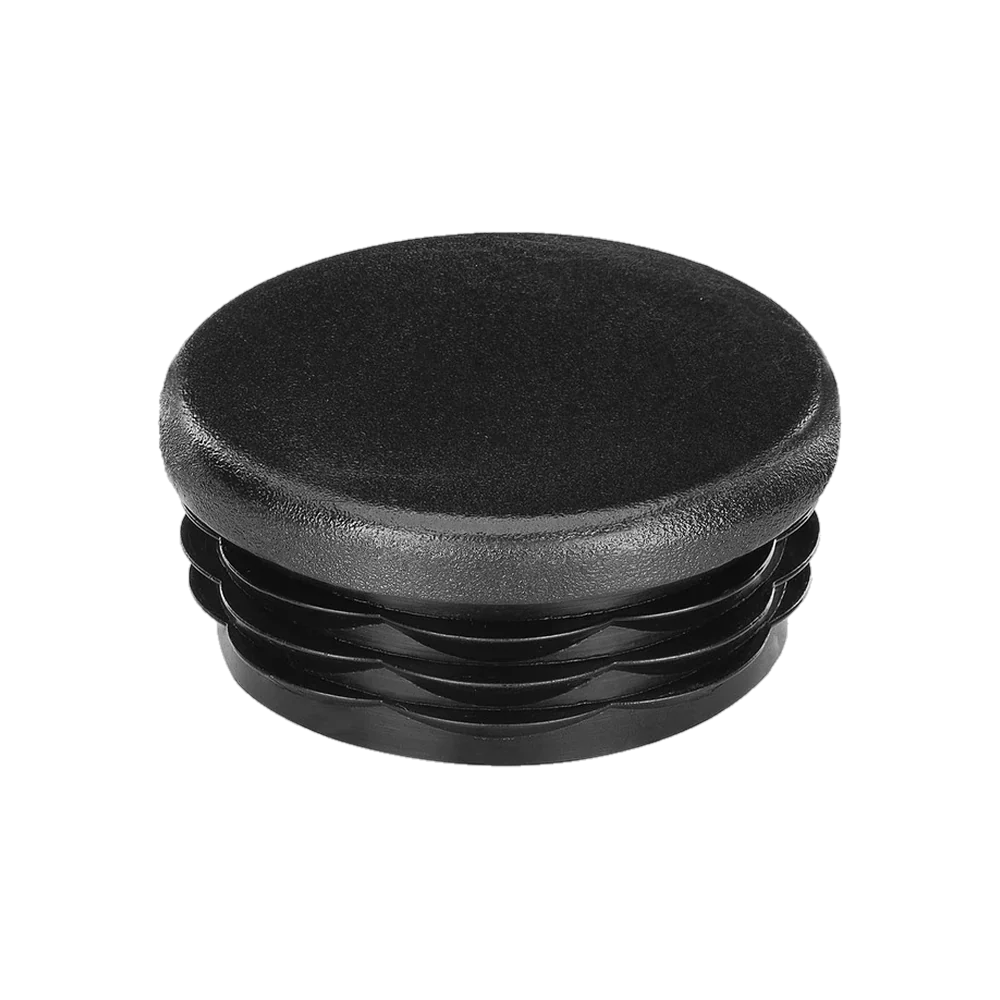
Use inner tube plugs when
Inner plug specifications
The most common profile: round plugs for chair and table legs. Ribbed walls grip the inside of round hollow steel tubing used in dining chairs, barstools, cafe furniture, and hospitality seating. Multiple wall-thickness (T) options per size, covering thin-wall pressed tubing up to heavy-gauge structural round tube.
T 1–1.5, 1.5–2 mm. Thin tube chair frame spindles
T 1–1.5, 1.5–2 mm. Small frame tubing
T 1–1.5, 2–2.5 mm. Light side chairs
T 1.5–2 mm. Standard dining chair legs
T 1–1.5, 1.5–2.5 mm. Dining chairs, cafe chairs
T 1.5–2, 2–2.5, 2.5–3 mm. Dining and accent chairs
T 1.5–2 mm. Standard commercial chair leg
T 1–2 mm. Barstools, heavier dining frames
T 1.5–2 mm. Tables, benches
T 1.5–2 mm. Heavy-duty commercial seating
T 1–2 mm. Table legs, pedestal bases
T 1.5–2.5 mm. Commercial tables
T 1–2, 1.5–2.5, 2.5–3.5 mm. Heavy chairs, tables
T 1.5–2, 3–4 mm. Dining and conference tables
T 1.5–2.5 mm. Large-diameter table legs
T 1.5–2 mm. Structural columns, heavy furniture bases
These are the most common sizes. Also available: Ø 17.2, 27, 33.7, 35, 45, 48.3, 60.3, 63, 77 mm for specialized tube sizes. Available in Black, Grey, and White.
Square plugs cover square-section steel legs common in dining chairs, stools, benches, and commercial tables. The four-sided ribbed body prevents rotation inside the tube. Sizes from 13 × 13 mm to 100 × 100 mm with multiple wall-thickness options for the most common sizes.
T 1–2 mm. Small square frame tubing
T 1–2 mm. Light side chairs
T 1–2 mm. Standard cafe chairs
T 1–2 mm. Dining chairs, bar stools
T 1–2 mm. Standard commercial chairs
T 1–2, 2–3 mm. Benches, heavy chairs
T 1–2 mm. Tables, heavier furniture
T 1–2, 3–4 mm. Commercial tables, heavy furniture
T 1–2 mm. Heavy hospitality seating
T 1–2, 2–3, 3.5–5 mm. Conference tables
T 1–2 mm. Large structural legs
T 1–2, 3–5 mm. Structural and architectural legs
T 2–3 mm. Heavy structural columns
Square plugs also cover: 18 × 18 mm, 22 × 22 mm, 70 × 70 mm. Available in Black, Grey, and White.
Rectangular plugs, the most versatile group, fit sled-base frames, H-frame tables, bench frames, and any furniture leg with a rectangular tube cross-section. The most versatile group in the plug catalog: 40+ standard sizes from 10 × 30 mm to 60 × 120 mm. Versions with an integrated PA6 pad are available for select sizes where the plug doubles as the floor contact point.
T 1–2 mm. Thin sled and H-frame tubing
T 1–2 mm. Small rectangular legs
T 1–2, 2–3 mm. Side chairs, light sled frames
T 1–2 mm. Bench and table frames
T 1–2 mm. Standard sled chair front tube
T 1–2, 2–3 mm. Commercial sled frames
T 0.8–1.5, 1.5–2 mm. Bench and shelf frames
T 1–2 mm. Medium sled frames, conference chairs
T 1–2 mm. Heavy sled bases
T 1–2, 3–4 mm. Commercial and hospitality sled chairs
T 1–2, 3–4 mm. Heavy conference and stacking chairs
T 1–2 mm. Heavy frame furniture
T 1–2, 3–4 mm. Large sled bases and bench frames
T 1.5–3.5 mm. Heavy structural sled and bench frames
T 1.5–3.5 mm. Large architectural and commercial frames
T 2.5–4.5 mm. Large architectural and commercial frames
Also available with integrated PA6 pad: Rectangular Tube Plugs with Pad (13.8 × 27.5 mm and 20 × 30 mm). Smooth-fit versions without ribs: Smooth Fit Rectangular Tube Plugs. Also available: 15 × 40, 15 × 80, 18 × 30, 20 × 25, 20 × 60, 20 × 80, 20 × 100, 25 × 35, 25 × 60, 25 × 100, 30 × 40, 30 × 70, 30 × 80, 30 × 100, 30 × 110, 40 × 50, 40 × 100, 50 × 70 mm. Available in Black, Grey, and White.
Designer and contemporary furniture often uses non-standard tube profiles. Oval and ellipse plugs cover the rounded tube profiles used in well-made chair frames. Half-oval plugs fit the D-profile sections common in sled-base and cantilever frames. Angled plugs are used when the tube leg meets the floor at an angle rather than perpendicular. Anti-slip TPE plugs provide a non-slip rubber contact surface for legs that must stay in place.
Seven sizes from 10 × 33 to 30 × 50 mm. Smooth oval profile for curved steel legs. Domed and extended-depth versions also available.
15 × 30 and 20 × 40 mm. Elongated profile with pointed ends. Domed and thin-head finishes available.
20 × 40, 30 × 40, and 30 × 60 mm. D-shaped profile, flat on one face.
Round, oval, and rectangular, 9° to 22°. For tube legs that meet the floor on an angle, like cantilever and sled frames.
Round Ø 22 and Ø 28 mm, plus angled oval. A built-in slot holds a strip of pad material, so the plug protects the floor.
Round Ø 16 to 30 mm. Raised head finishes: conical, domed, and half-sphere.
Round Ø 28 mm. A soft TPE body grips the floor so the piece stays put.
Rectangular 13.8 × 27.5 and 20 × 30 mm, with an integrated PA6 pad. Smooth-fit rectangular also available for larger profiles.
External end caps slide over the outside of the tube end. Use them when the tube wall is too thin for inner ribs to grip securely, or when a flush exterior cap appearance is preferred. Wider base footprint than most inner plugs.
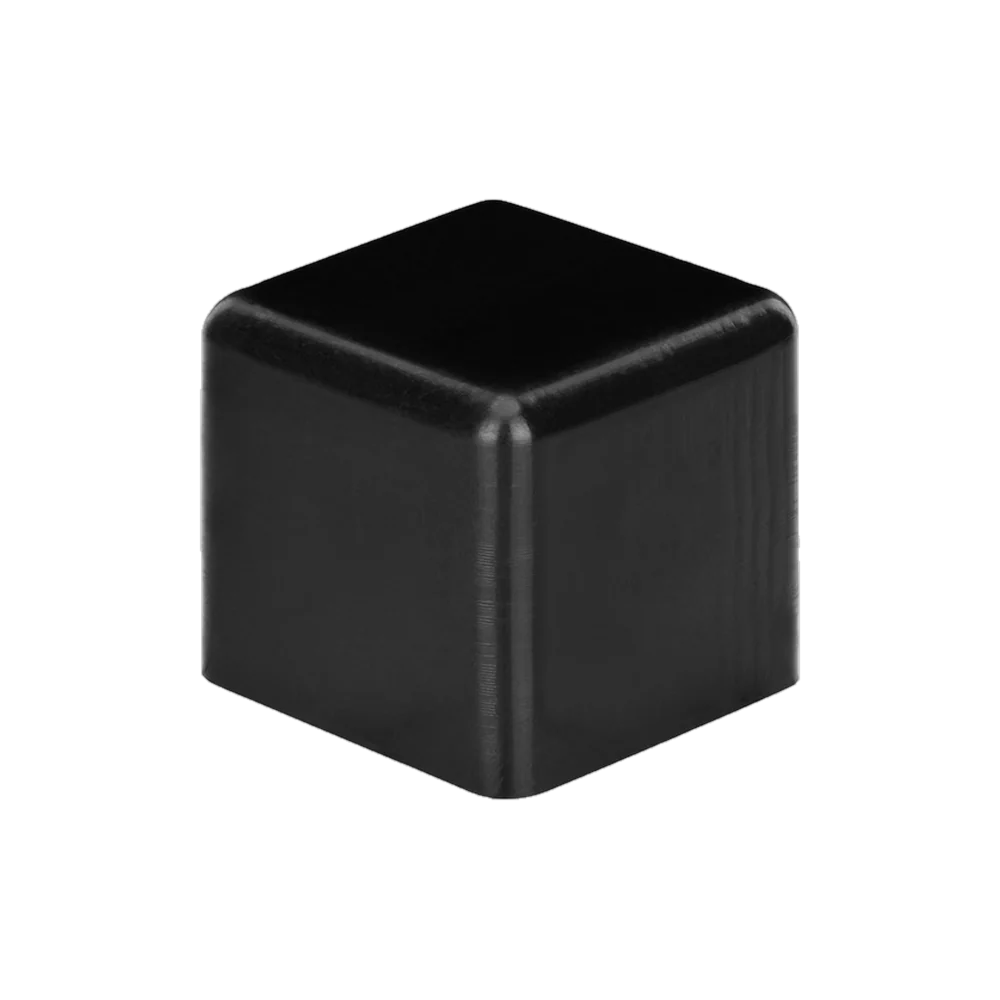
Use external end caps when
End cap specifications
Slide over the outside of round tube legs. Fits Ø 10 mm and Ø 12 mm tube. Both share a 15.5 mm outer body, 35 mm tall. Polyethylene (PE). Black.
Best when: the tube wall is too thin for inner ribs to grip, or you want a clean exterior cap that hides the cut tube end.
Fits 16 × 16 mm square tube (22 × 22 mm outer body) and 25 × 25 mm (28 × 28 mm outer body). Polyethylene (PE). The 16 × 16 mm comes in black or white; the 25 × 25 mm is black.
Best when: the square tube has thin walls, or you want a clean exterior cap look.
A rubber external cap for square tube legs with a PA6 pad on the floor-contact surface. Slides over the outside of the leg. No tools, no adhesive. The rubber body dampens vibration. The PA6 pad protects smooth hard floors from scratching. 38 × 38 mm. Black.
Best when: a square tube leg also needs floor protection at the cap itself.
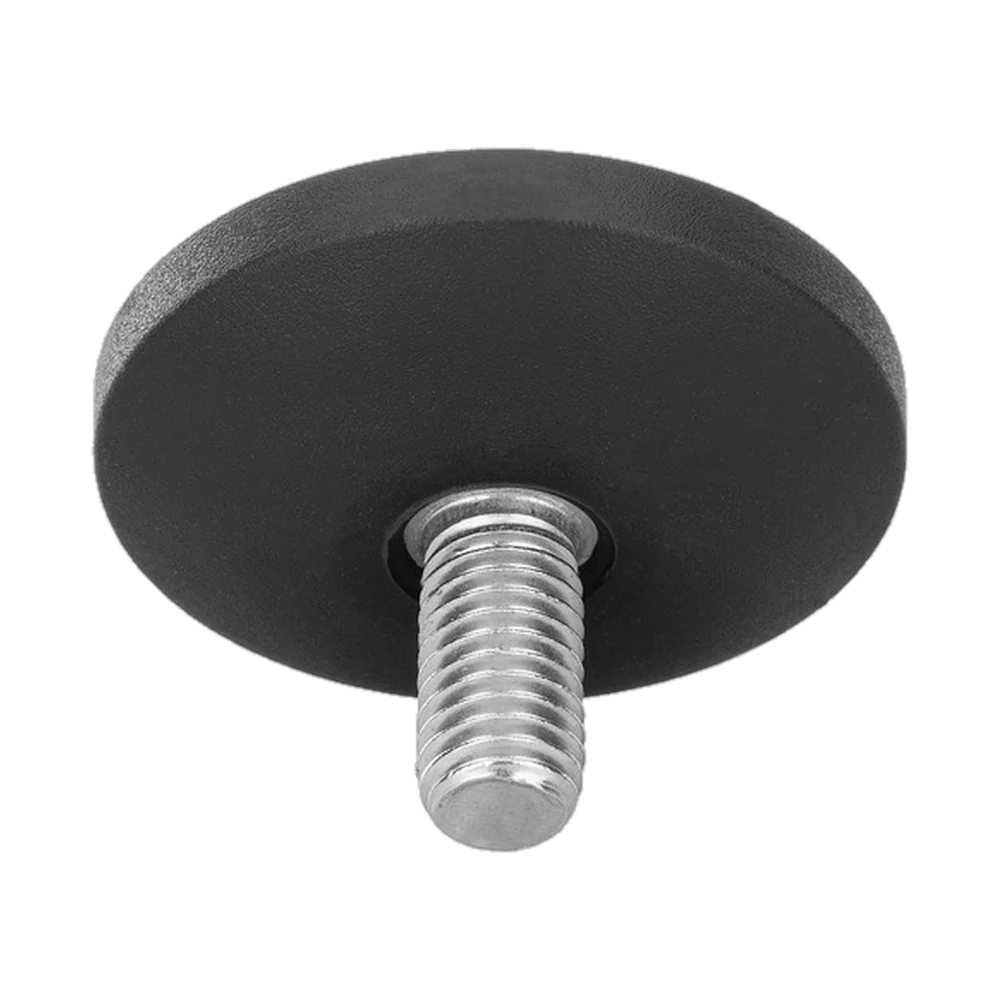
The threaded-insert section is the most asked-about. Press the plug into the tube leg, then thread in an adjustable leveling foot. The PA body grips the tube wall; the hot-dip galvanized iron (Fe HDG) insert provides the threaded socket. No additional hardware needed. Static load ratings from 60 to 150 kg per plug, depending on insert size. Stainless steel inserts available for outdoor and wet environments.
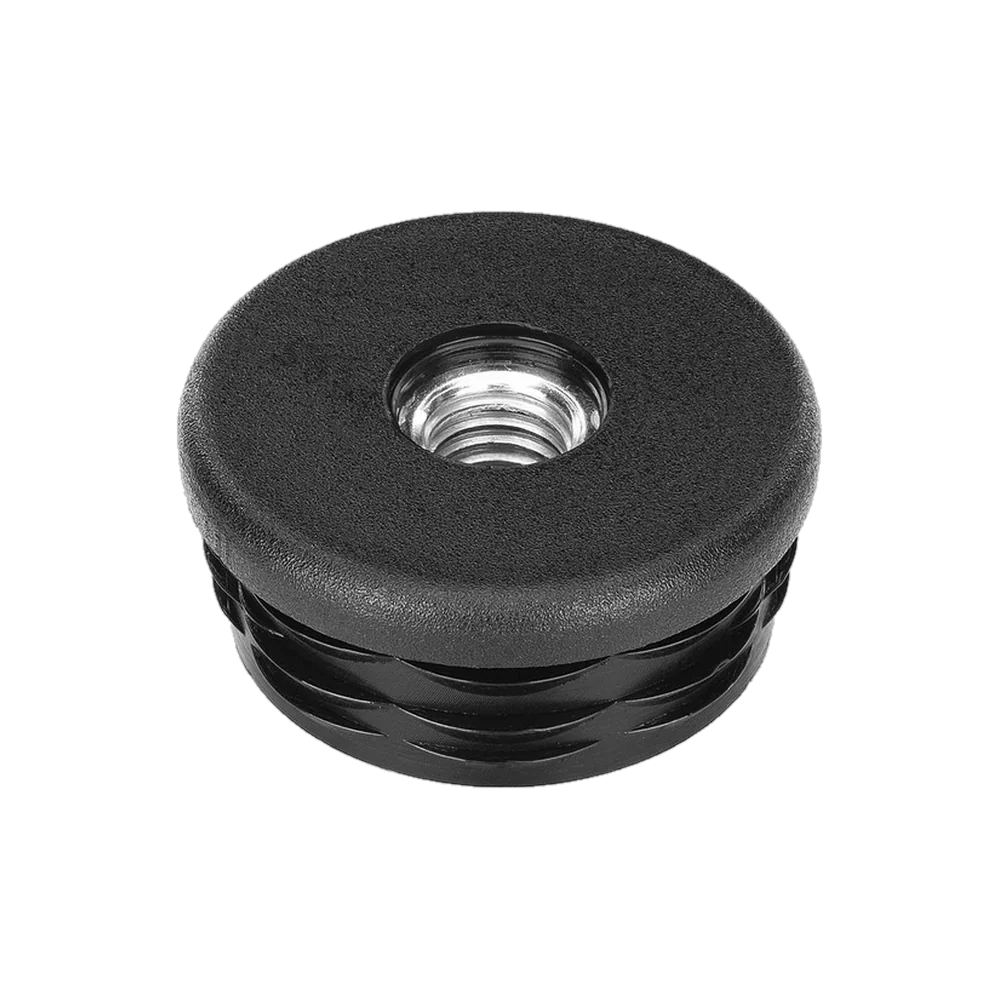
Use threaded inserts when
Threaded insert specifications
Press the plug into a round tube leg, then thread an adjustable leveling foot into the metal nut. The PA body grips the tube wall mechanically; the hot-dip galvanized iron insert provides the threaded socket. Stainless steel insert option available for outdoor and wet environments.
T 1–2 mm. 60 kg static load. Black, White.
T 1–2 mm. 80 kg static load. Black.
T 1–2 mm. 80 kg. Extended body. Black.
T 1–2 mm. 80 kg. Black.
T 1–2 mm. 120 kg. Black.
T 1–2 mm. 150 kg. Black, Grey.
T 1–2 mm. 80 kg. Black.
T 1–2 mm. 120 kg. Black.
The most common threaded-insert format. Square tube legs benefit from a four-sided ribbed plug body that prevents rotation when the leveling foot is being adjusted. Available in 20 × 20 mm through 60 × 60 mm with M8, M10, and M12 threads. Stainless steel insert versions available for select sizes.
T 1–2 mm. 80 kg. Black, Grey, White.
T 1–2 mm. 80 kg. Black, Grey.
T 1–2 mm. 80 kg. Black, Grey, White. Stainless steel available.
T 1–2 mm. 120 kg. Black, Grey, White. Stainless steel available.
T 1–2 mm. 150 kg. Black.
T 1–2 mm. 80 kg. Black, Grey. Stainless steel available.
T 1–2 mm. 120 kg. Black, Grey, White. Stainless steel available.
T 1–2 mm. 150 kg. Black, Grey.
T 1–2 mm. 80 kg. Black, Grey.
T 1–2 mm. 80 kg. Black, Grey, White.
T 1–2 mm. 120 kg. Black.
T 1–2 mm. 80 kg. Extended body. Black, Grey.
For rectangular tube legs (sled-base frames, bench frames). Available in 20 × 40 mm through 30 × 60 mm with M8 and M10 threads. Load ratings 80–120 kg per plug.
T 1–2 mm. 80 kg. Black.
T 1–2 mm. 80 kg. Black, Grey.
T 1–2 mm. 120 kg. Black.
T 1–2 mm. 80 kg. Black.
T 1–2 mm. 120 kg. Black, Grey.
Tube plugs seal and finish the open end of a hollow leg. On their own, they are not a floor-protection product. If your tube-leg furniture stays in place, slides, or rocks on an uneven floor, pair your plugs with the right add-on below. For furniture on wood, the National Wood Flooring Association publishes floor-care standards worth following.
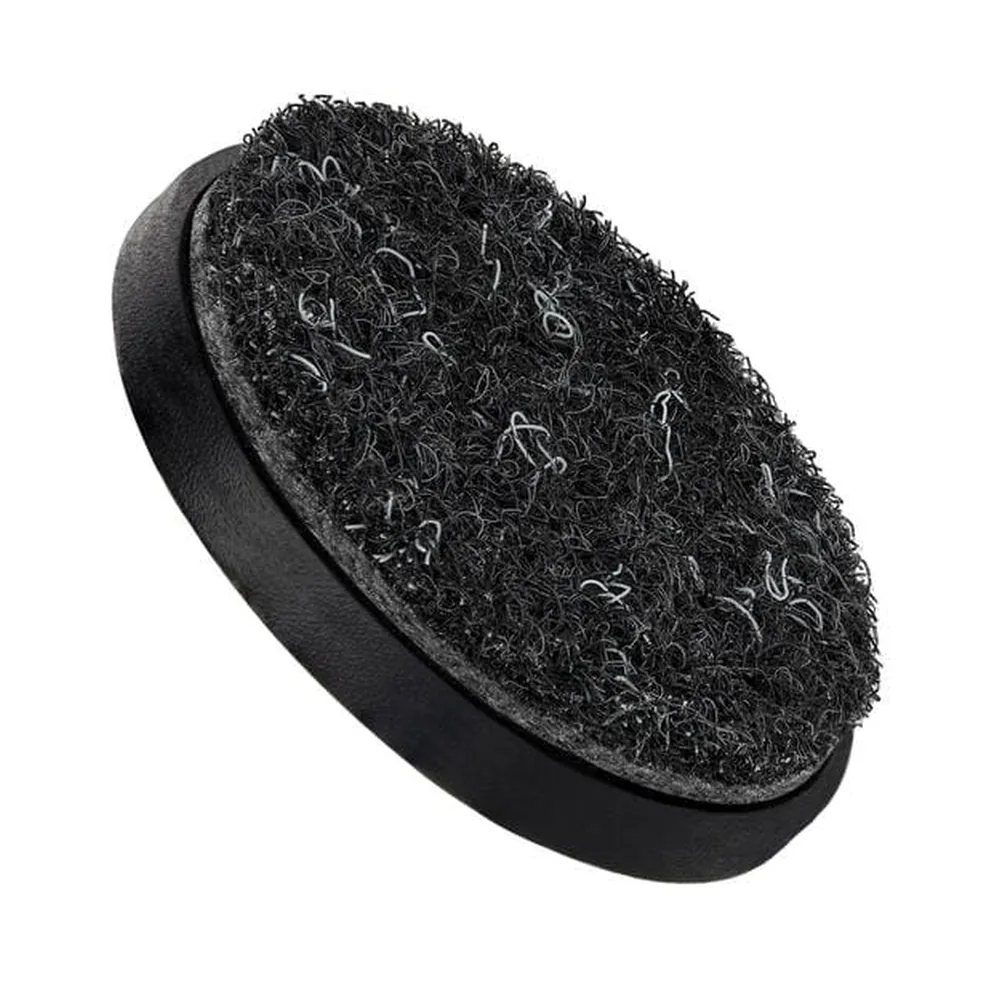
For furniture that slides instead of lifting. PA6 glides bond to the leg face for smooth hard floors. ABS slides handle carpet, area rugs, and rough hard floors like tile and stone.
Sled-frame or cantilever legs ride on a horizontal runner, not a capped end. Those take a different product: Sled Base Glides.
Installation is short on purpose. Tube plugs install with a simple press fit. No adhesive. No cure time. No tools required for most sizes. Larger or tighter-fit plugs may benefit from a rubber mallet and a wood block. The steps below cover the standard inner-plug install. Notes for end caps and threaded inserts follow.
Confirm tube outer dimension and wall thickness with calipers. The plug outer dimension must equal the tube OD; the wall must fall within the plug’s listed T range. Do this even if the manufacturer spec is listed, wall thicknesses vary by lot.
Set the plug against the tube end. The plug head should rest squarely on the tube face. If the body is too narrow to grip, the T range is wrong. If it won’t enter the tube, the OD is wrong. Stop and re-check the measurement, don’t force a wrong-size plug.
Hold the plug square to the tube face and press in with steady, even pressure. For tight fits, set a wood block on top of the plug head and tap gently with a rubber mallet. Never strike the plug directly with a metal hammer: the head will deform.
The plug head should sit flush against the tube face with no gap. Give the plug a gentle pull, it should resist firmly. If it pulls out, the T range is too loose. If the head sits proud, the plug isn’t fully seated; press again.
External end caps: these slide over the outside of the tube rather than pressing inside. Confirm the tube outer dimension and slide the cap on. If it requires force, the cap is too small. If it slides on loose, the cap is too big.
Threaded-insert plugs: press the plug into the tube using the four steps above. Then thread your adjustable leveling foot into the metal nut by hand until snug. Adjust foot height to level the furniture. The plug carries the load through the tube wall, no separate fasteners needed.
Removable and replaceable: To remove, pry the head with a flathead screwdriver or push from inside the tube if accessible. Replace with a new plug of the same size.
Press-fit plugs versus adhesive-backed caps comes down to one thing: whether the cap stays put and whether you can replace it. Both seal the open tube end, but they hold very differently over time, and that shows up the first time you drag the furniture across the floor.
Grip: A ribbed PE or PA body grips the tube wall mechanically as the plug goes in and the ribs compress.
Removal: No adhesive, so you can pull it out and swap it without damaging the tube.
Sizing: Tight wall-thickness variants for common tubes, the same outer diameter in several wall thicknesses.
Range: Dozens of sizes across round, square, rectangular, oval, ellipse, and half-oval profiles.
Threaded option: Threaded-insert versions add a metal thread so a leveling foot screws straight in.
Grip: A low-cost pressure-sensitive backing sticks the cap to the outside of the tube end. Common on flat-pack residential furniture.
Removal: The backing can let go with temperature swings and cleaning chemicals, and caps peel when furniture is dragged. Reattaching cleanly is hard once residue is left behind.
Sizing: One-size-fits-most, so it ignores the variation in tube wall thickness.
Range: A handful of shapes and sizes.
Threaded option: None.
Most tube plugs are a single molded polymer, so the material is the choice that matters. Here is what each one does and when to pick it.
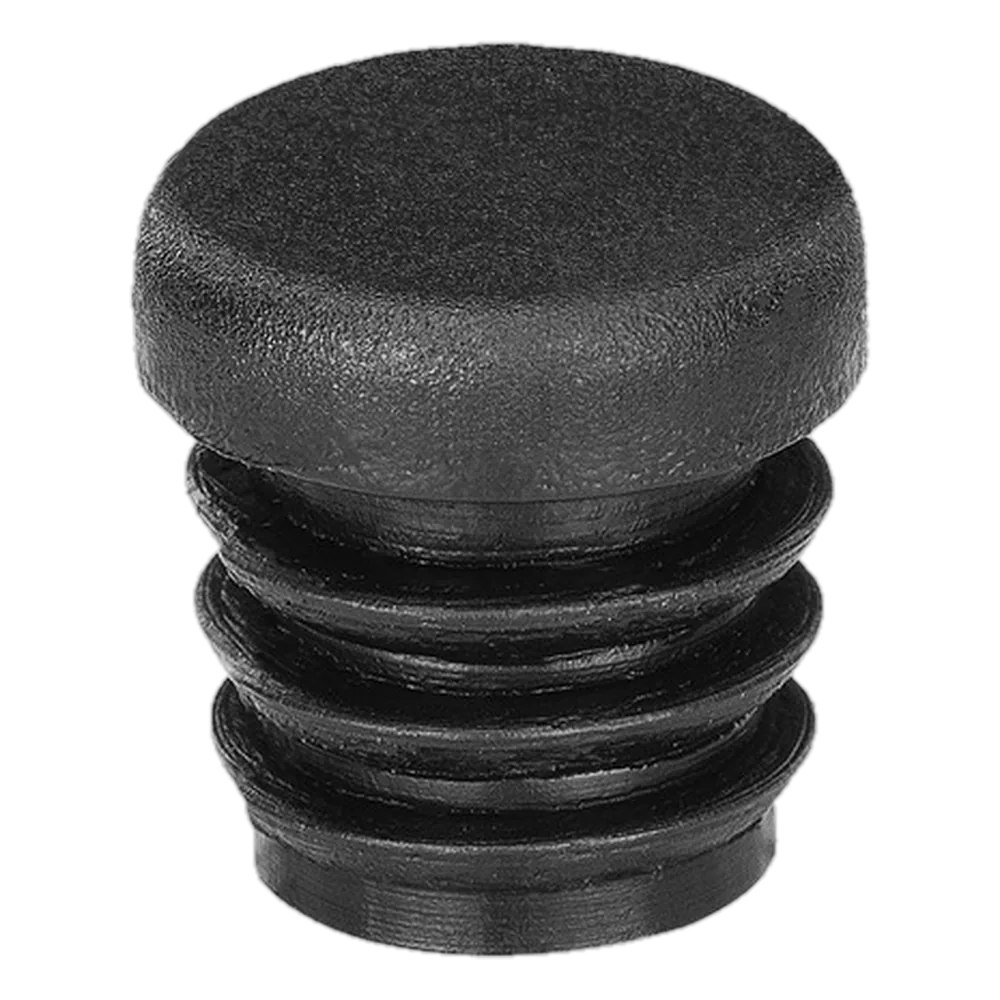
The flexible standard. PE bends a little as it enters the tube, so its ribs keep their grip even when the tube is slightly out of round or the wall thickness varies.
It handles the large majority of chairs, tables, and light frames. Pick PE when you want an easy, secure press-fit on everyday furniture.
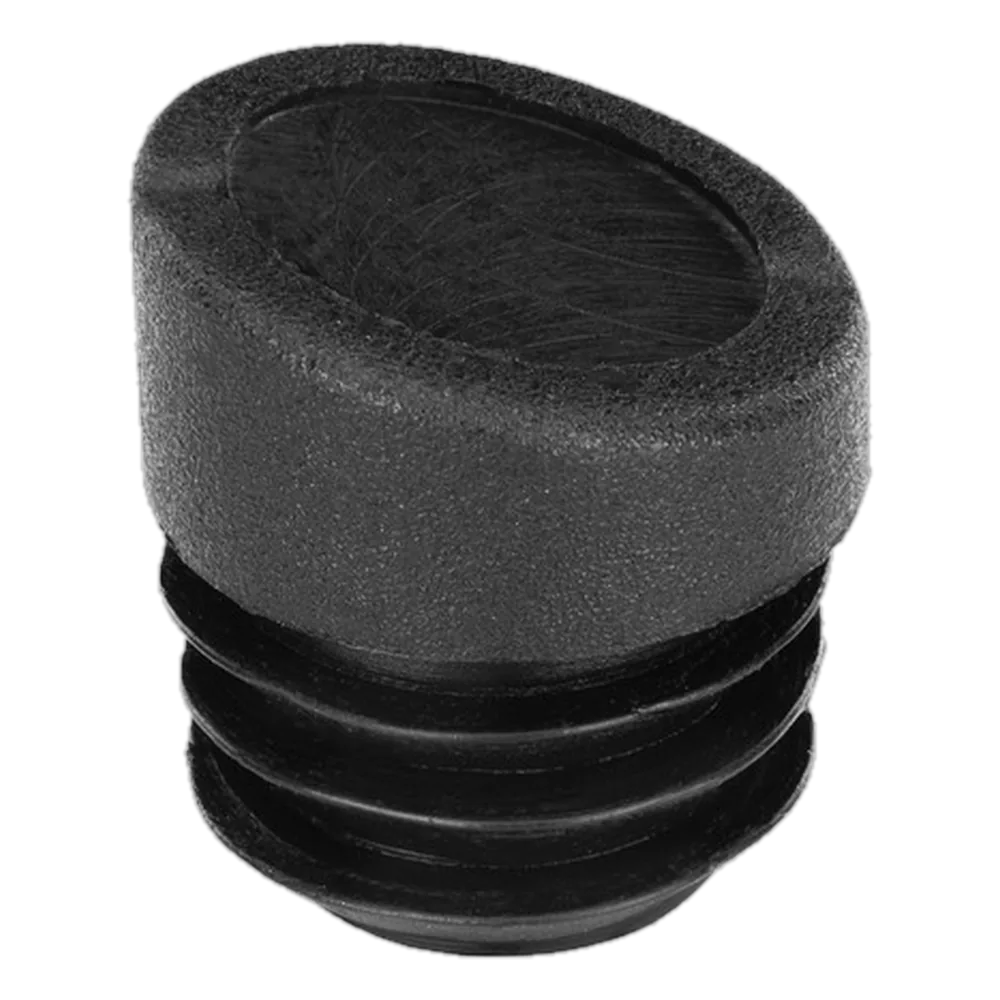
Stiffer and harder than PE. PA holds its shape under heavier load and resists deforming, so it suits furniture that carries real weight or gets dragged often.
Because it gives less, match the tube size closely. Pick PA when the leg works hard.
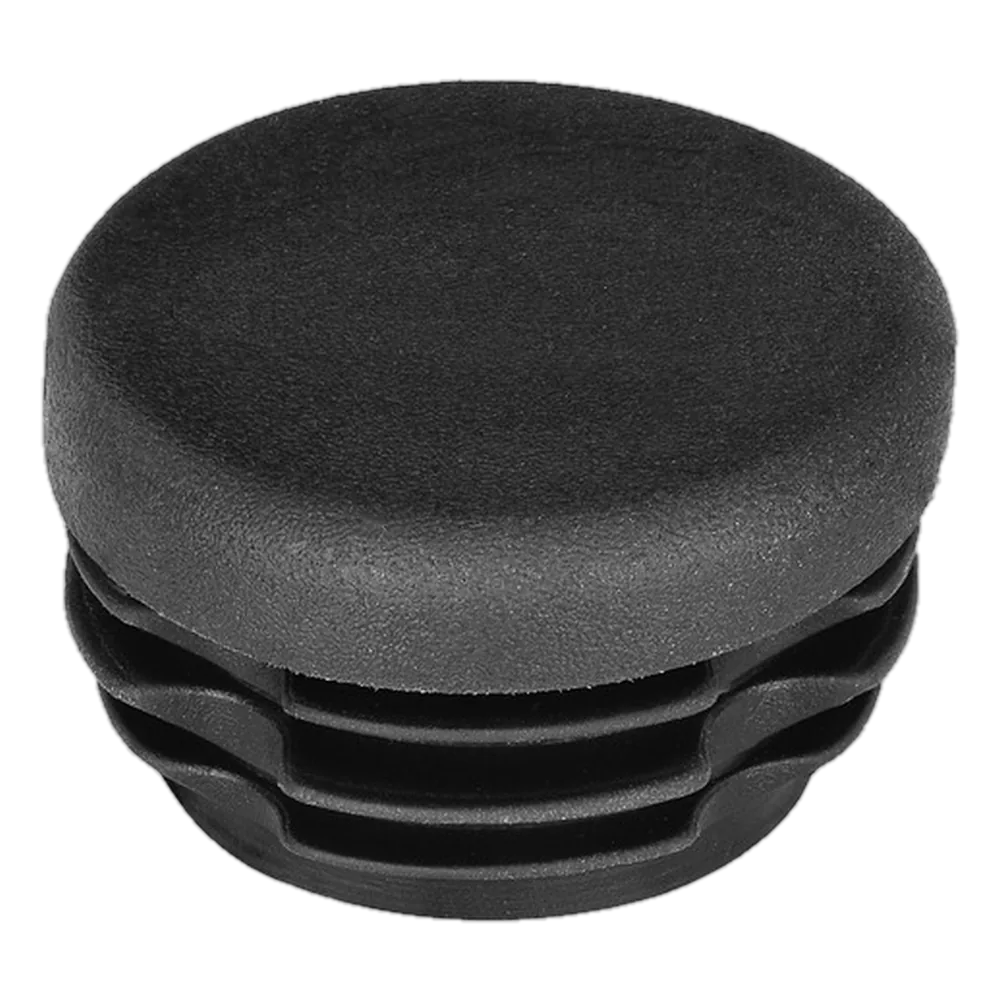
A soft, grippy face that holds the floor instead of sliding on it. TPE caps the tube and stops the furniture from creeping.
That is what you want on a bench or a frame that should stay exactly where you put it. One part does both jobs.
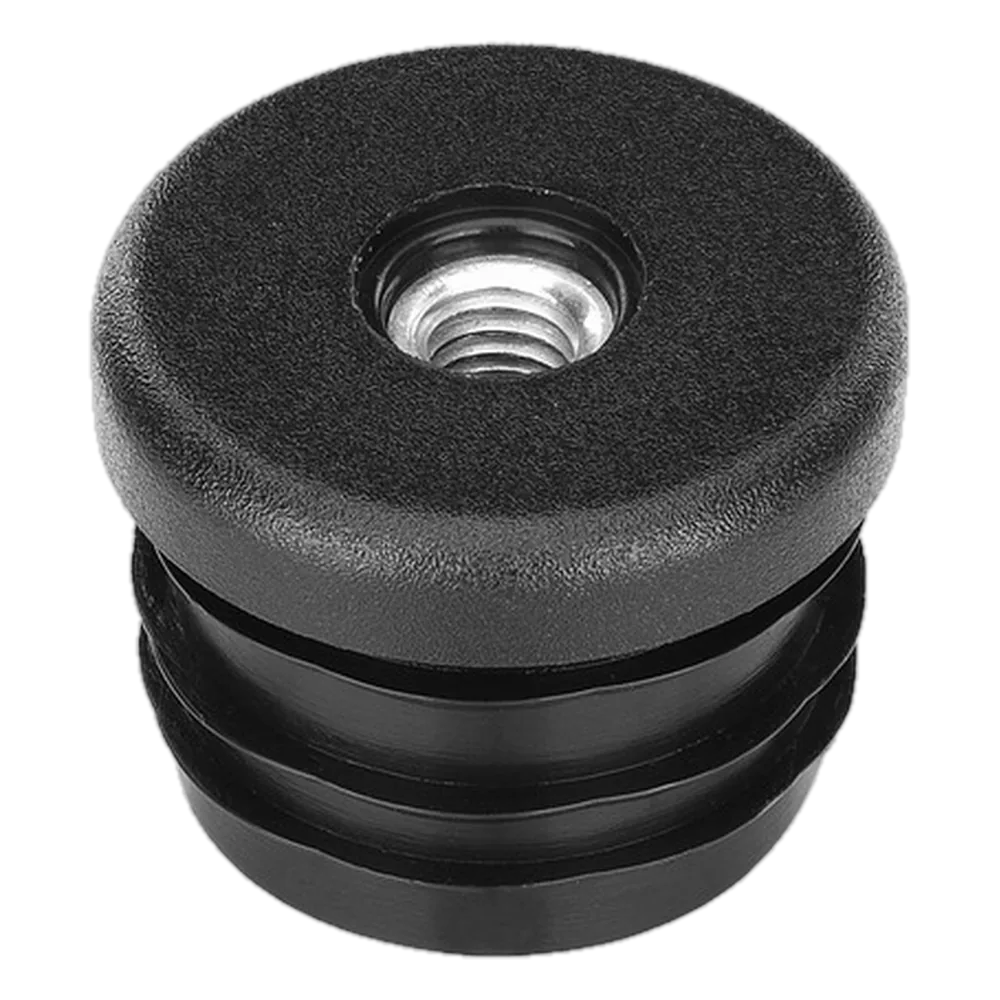
A nylon body presses into the tube and carries a metal thread, so a leveling foot screws straight in.
The thread comes in two metals: hot-dip galvanized steel for normal indoor use, and stainless steel when the insert meets moisture, washdown cleaning, or coastal air. Choose stainless wherever rust would be a problem.
These are the questions that come up most often about tube plugs.
An inner plug presses inside the tube and grips the tube wall from inside with ribs. The head sits flush with the tube face and is barely visible from the side. An external end cap slides over the outside of the tube, like a cap on a pen. Inner plugs are the standard choice when the tube wall is thick enough for the ribs to grip (typically 1 mm or more). External end caps are used when the tube wall is too thin for inner ribs, or when a flush exterior cap appearance is preferred. Both are covered in detail elsewhere in this tube plugs guide.
Measure two things with calipers: the outer diameter of the tube (or width × length for square and rectangular), and the wall thickness (T). You need both. The OD determines which plug size to order; the T determines which wall-thickness variant of that size. Most tube sizes have multiple T variants. For example, a Ø 22 mm round plug comes in T 1.5–2, 2–2.5, and 2.5–3 mm. Match both measurements. The measurement chapter of this tube plugs guide walks through every shape.
No. The plug cross-section must match the tube cross-section exactly. A round plug in a square tube leaves all four corners unsealed and grips the tube wall only at the four contact points where the round body touches the flat sides, not enough to hold under any movement. The plug head will rock and the plug will fall out. Order the matching shape.
Oval tubes have a more uniform curve with blunt rounded ends. Ellipse tubes are more elongated with pointed ends. An oval plug will gap at the ends of an ellipse tube; an ellipse plug will gap on the sides of an oval tube. The shapes look similar but are not interchangeable. If you’re not sure which you have, lay the tube end on paper and trace it, and the curve will tell you.
Use extended depth when the tube wall is at the thin end of the 1 to 2 mm range, when the furniture is heavy, or when the leveling feet are adjusted far out. The longer plug body distributes load over more tube wall, reducing stress on any single point. Standard depth is fine for most residential and commercial applications under 80 kg per leg.
Specify stainless steel when the insert will see moisture, humidity, steam, cleaning chemicals, or food acids. Common cases: commercial kitchens, healthcare facilities, outdoor furniture, marine applications, restaurant dining rooms with frequent floor washing. For dry indoor environments, hot-dip galvanized iron (Fe HDG) handles the same loads at lower cost.
Not recommended. Domed, conical, and half-sphere heads concentrate floor contact at a single central point instead of distributing weight across the full base. The result is more pressure on the floor and faster wear on the plug head. Decorative head plugs are designed for tube ends that face up or sideways, like chair stretchers, table aprons, vertical posts. For floor contact, use flat-head plugs.
Any adjustable leveling foot with a matching M thread. An M8 insert accepts any M8-threaded foot. The thread interface is universal across manufacturers. Match the thread size (M6, M8, M10, M12) and the leveling foot will screw in.
PE (polyethylene) is the standard for inner plugs and external end caps in residential and light commercial use. PA (polyamide) is used for threaded-insert plugs, angled plugs, high-load applications, and wider temperature ranges. TPE (thermoplastic elastomer) is used for anti-slip plug variants where the floor contact surface needs to grip rather than glide. As the materials chapter of this tube plugs guide explains, most orders are PE; specify PA or TPE only when the application calls for it.
Yes, with care. Press-fit plugs grip mechanically, not chemically, so they can be removed without damaging the tube. Pry the head with a flathead screwdriver, or push from inside the tube if accessible. The same plug can be reinserted if the ribs aren’t deformed. Replace plugs that show cracked heads, flattened ribs, or visible wear at the floor contact surface.
Specify anti-slip TPE when the furniture must stay in position on hard floors and you don’t want to add separate non-slip pads. Common cases: bedroom furniture that shouldn’t shift when bumped, accent chairs on hardwood floors, light commercial seating without floor anchors. Anti-slip plugs are only available in round Ø 28 mm currently. For other tube sizes, an inner plug plus separate anti-slip pad is the workaround.
Both are rounded-top plug heads, but Half-Sphere is a distinct head style with a more pronounced dome that sits higher above the tube face. Domed is a more shallow rounded profile. Half-Sphere is typically used as a decorative end on vertical tube terminations (chair stretchers, post tops). Domed is used where a clean rounded look is preferred but the plug shouldn’t protrude much. Both are available in round profiles only.
Yes. For commercial accounts, hospitality fit-outs, manufacturers, and contractors who order regularly, Business Solutions covers volume pricing, B2B accounts, custom invoicing, and dedicated support. Contact us with your tube spec, expected annual volume, and shipping location for a quote.
Browse the full lineup by type. Inner plugs press into hollow legs, end caps cover cut tube ends, and threaded inserts add a metal thread for leveling feet and bolts. Every size lives on its product page.
Press into the open end of a hollow leg to cap the sharp rim and protect the floor. Pick the shape that matches your tube.
Slip over the outside of a cut tube end for a clean, finished base on square and round legs.
Press in to add a metal thread inside the leg, so a leveling foot or bolt screws straight in.
Whether you’re capping one chair or a full restaurant’s worth of tube legs, the right plug is in the catalog.
Browse other furniture guides: Glides Guide · Slides Guide · Pads Guide · Leveling Feet Guide · Sled Base Guide
Product categories: Furniture Glides · Furniture Slides · Furniture Pads · Tube Plugs & End Caps · Leveling Feet · Sled Base Glides
Business accounts: Business Solutions for volume pricing, B2B accounts, and commercial orders.