Ships nationwide · In-stock and made-to-order sizes
Ships nationwide · In-stock and made-to-order sizes
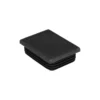
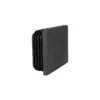
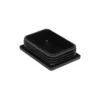


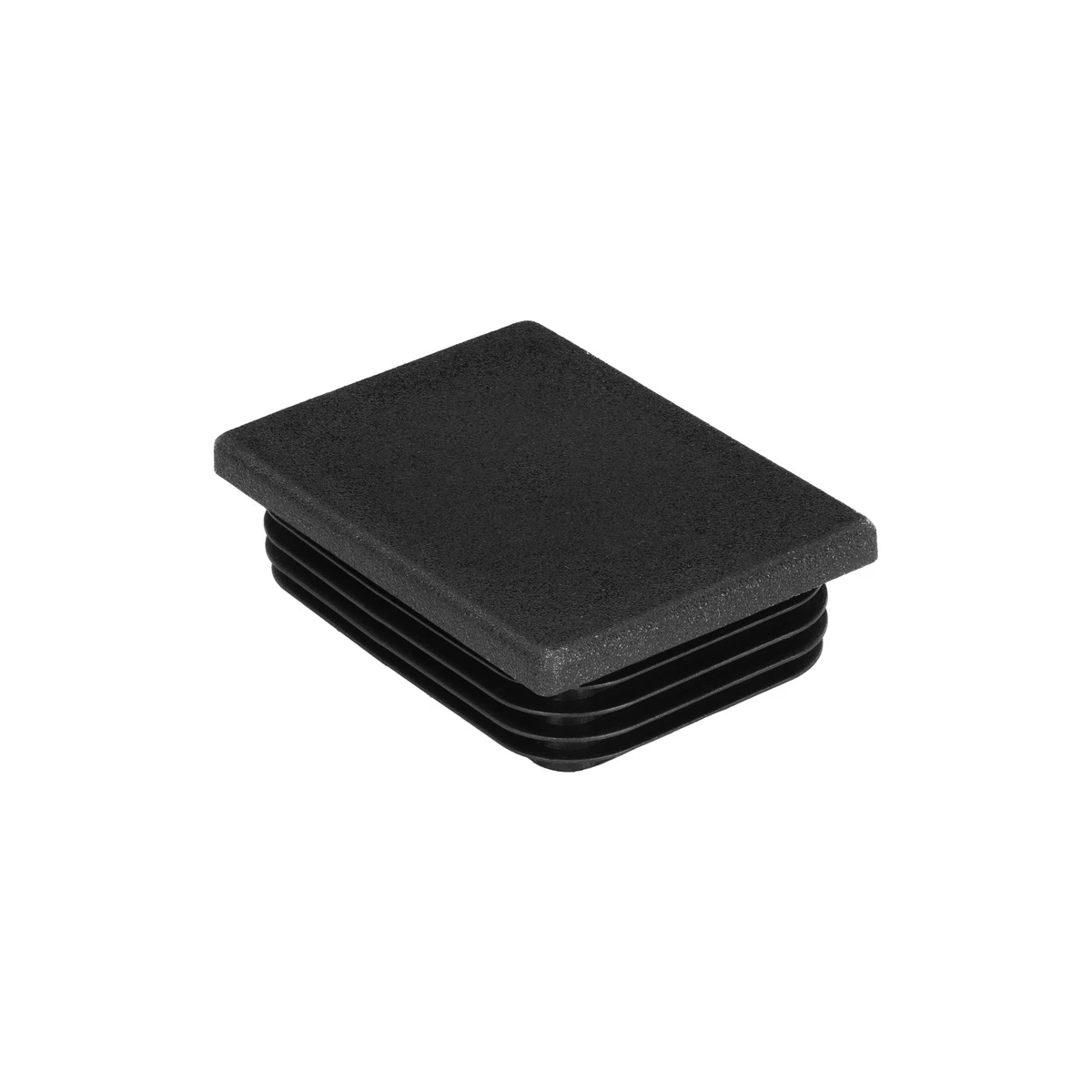
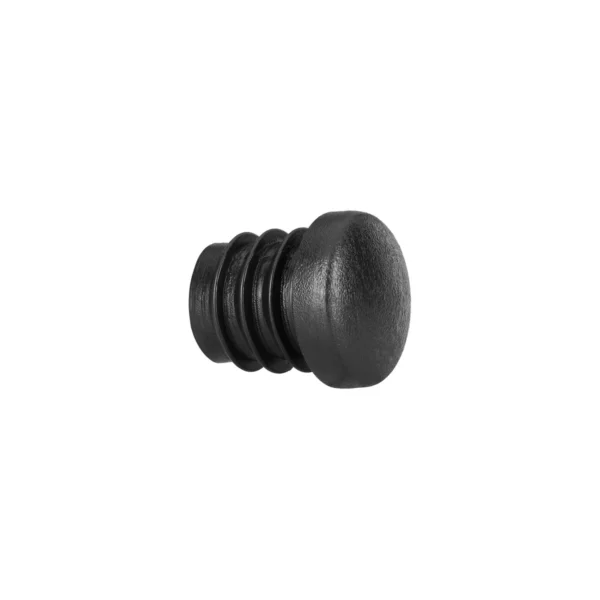
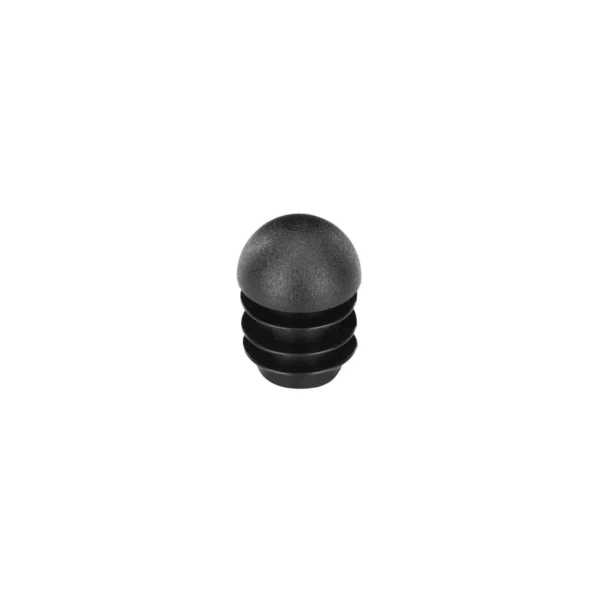
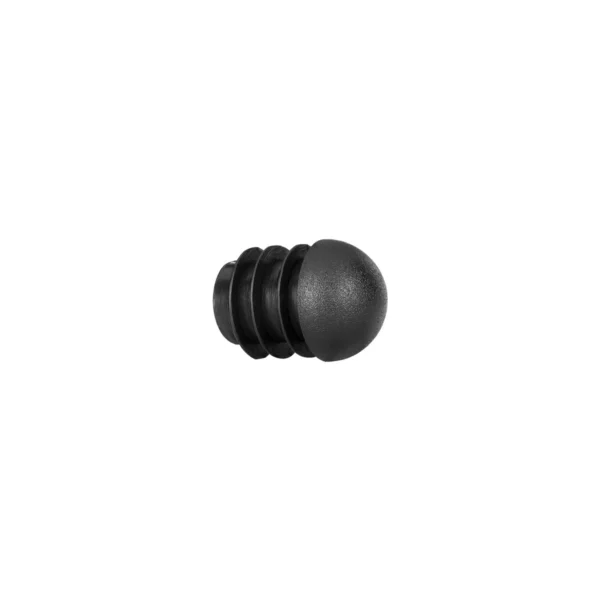
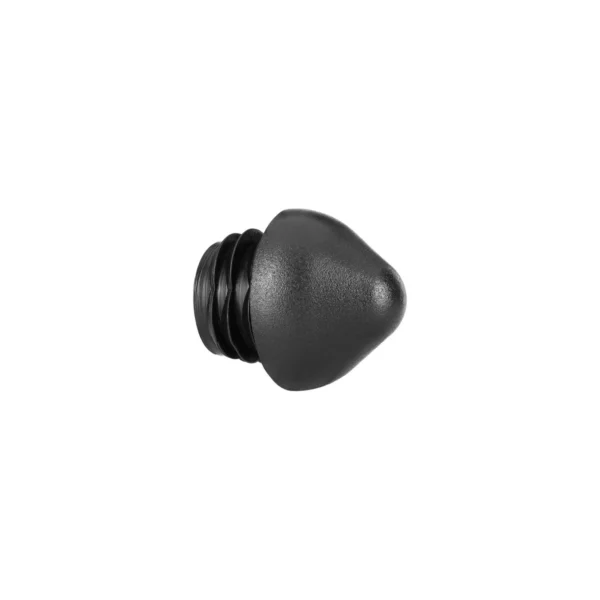
An open rectangular tube end catches dirt, scrapes floors with its sharp rim, and looks unfinished. This press-fit plug seals it, its flexible ribs gripping both the short and long interior walls with no glue or tools. Match the plug to your tube’s width, length, and wall. Black, gray, and white.
We run this size in a batch rather than keeping it on the shelf. Tell us how many you need and we will come back with a firm quote and a lead time, usually within one business day.
Nothing is charged here.
Buying in volume? See business samples and quotes ↓
In more detail
Square tube plugs handle equal-sided profiles. Rectangular tube plugs handle everything else: the unequal-sided tubing used in sled base runners, table frames, shelving structures, display fixtures, and any furniture where the tube width and length are different. The plug body press-fits inside the rectangular tube with flexible ribs that grip both the short walls and the long walls simultaneously. One plug seals the tube end, protects the floor, dampens noise, and gives the leg a clean, finished look. The broadest rectangular plug range available: from 3/8" x 1-3/16" (10 x 30 mm) to 2-3/8" x 4-3/4" (60 x 120 mm).
PE (polyethylene) construction. Press-fit installation with no adhesive, no screws, and no tools beyond an optional rubber mallet. Rectangular tube plugs come in black, gray, and white to match or contrast with the frame finish. Available across -and-wall combinations cover virtually every rectangular tubing specification in the furniture industry. Plugs for rectangular furniture legs and sled base runners that fit the first time. Rectangular tube end plugs for hollow metal profiles.
Three measurements: width (short side), length (long side), and wall thickness. All three must match for the plug to fit. If both sides are equal, you have a square tube and need square tube plugs instead.
Step 1. Measure both outside dimensions
Use calipers or a ruler across each side of the rectangular tube, outside edge to outside edge. Record the short side (width) and the long side (length). Always list the shorter dimension first when selecting rectangular tube plugs.
Step 2. Measure the wall thickness
Use calipers at the tube end, or calculate: (outside dimension minus inside dimension) / 2. Check both the short and long walls because some rectangular tubing has different wall thicknesses on different sides.
Step 3. Match all three values
Width, length, and wall thickness must all fall within the listed range. A 13/16" x 1-9/16" (20 x 40 mm) plug sized for 0.039" to 0.079" (1 to 2 mm) wall won't grip properly in a 13/16" x 1-9/16" (20 x 40 mm) tube with 0.118" (3 mm) walls. Use the 0.079" to 0.118" (2 to 3 mm) wall version instead.
Sled base runners: Rectangular tube plugs often go on the open ends of sled base runners. Measure the runner tube, not the legs. The runner is the horizontal tube that contacts the floor, and it frequently has a different rectangular profile than the vertical legs.
Same press-fit installation as square and round tube plugs, with attention to orientation. Rectangular tube plugs must enter the tube with the width and length aligned correctly. The plug won't fit if rotated 90°.
What you need
Installation steps
Removal: pry gently from one corner with a flat-head screwdriver. The PE body flexes without breaking. Rectangular tube plugs can often be reinstalled if the head and ribs are undamaged.
The same four problems as square and round tube plugs, adapted for rectangular geometry. The National Wood Flooring Association (NWFA) recommends protective measures on all furniture legs, and rectangular tube plugs provide that protection on hollow rectangular metal legs and sled base runners.
Floor protection
An open rectangular tube end puts four sharp metal edges and four sharp corners on the floor. On sled base chairs, the runner ends are the primary floor contact points, and unprotected metal runners scratch, gouge, and mark smooth, hard floors with every push and pull. The plugs replace the sharp metal with a smooth, flat PE head that distributes weight across the full rectangular area. Unlike leaving metal edges unprotected, the plug eliminates the damage at the source. For dedicated PA6 scratch protection, apply rectangular self-adhesive furniture pads to the plug head.
Tube sealing and moisture protection
An open rectangular tube collects moisture, debris, dust, and insects. On steel tubing, trapped moisture causes internal corrosion. The plugs seal the opening completely. The ribs grip all four walls, and the flat head covers the entire cross-section. On sled base runners that sit at floor level, the tube opening faces outward and is especially vulnerable to mopping water, spilled liquids, and tracked-in debris. Sealing with these plugs prevents all of these from entering the tube interior.
Noise dampening
Hollow rectangular tubes resonate and amplify contact noise. Sled base runners scraping across smooth, hard floors generate noise that multiplies across a room full of chairs. The plugs fill the tube opening with PE, absorbing vibration. The flat PE head replaces the metal-to-floor contact with a quieter surface. Press-fit these plugs that silence the rattle and reduce scraping noise in restaurants, cafeterias, offices, and schools.
Finished appearance
An open rectangular tube end exposes the hollow interior, any internal rust, weld marks, or manufacturing residue. The plugs cover the opening with a clean, flat PE head. On sled base chairs, the runner ends are visible at floor level and face outward toward the viewer. A plugged end signals a complete, professional product. Available in black, gray, and white to match or complement any frame finish. Rectangular tubing plugs PE that finish every exposed end.
Sled base chairs are one of the most common applications for rectangular tube plugs. The sled runner is a horizontal rectangular tube that contacts the floor along its bottom surface, with the open ends facing outward. These open ends need plugs for floor protection, moisture sealing, noise reduction, and appearance.
Common sled base runner sizes
Most sled base dining chairs use rectangular tubing in the 9/16" x 1-3/16" to 1" x 2" (15 x 30 to 25 x 50 mm) range. Commercial and conference chairs often use 20 x 40 or 1" x 2" (25 x 50 mm) runners. The width (short side) typically matches the chair leg width for a smooth transition. Rectangular tube plugs in these sizes are the most frequently ordered items in the rectangular range.
Adding floor protection to sled runners
The plug seals the runner end, but the runner bottom is the primary floor contact surface. For complete sled base protection, apply rectangular self-adhesive furniture pads along the runner bottom. The plug protects the end. The pad protects the length. Together they provide full sled base coverage. For rough hard floors like textured tile, furniture slides with ABS surfaces handle the texture better.
Match the plug shape to your tube shape. Every shape uses the same PE construction and ribbed grip mechanism.
Round
26+ sizes, Ø 3/8" to 3-1/8" (10 to 80 mm). 7 head styles.
Square
1/2" x 1/2" to 4" x 4" (13 x 13 to 100 x 100 mm).
Rectangular ← You're here.
3/8" x 1-3/16" to 2-3/8" x 4-3/4" (10 x 30 to 60 x 120 mm). Black, gray, white.
Oval
Oval cross-section profiles.
Ellipse
Ellipse cross-section profiles.
Half-Oval
D-shaped cross-section profiles.
Measure the widest point of the flat base of the leg, then choose the size on that row. The part should sit flush with the leg or just inside it. Not wider.
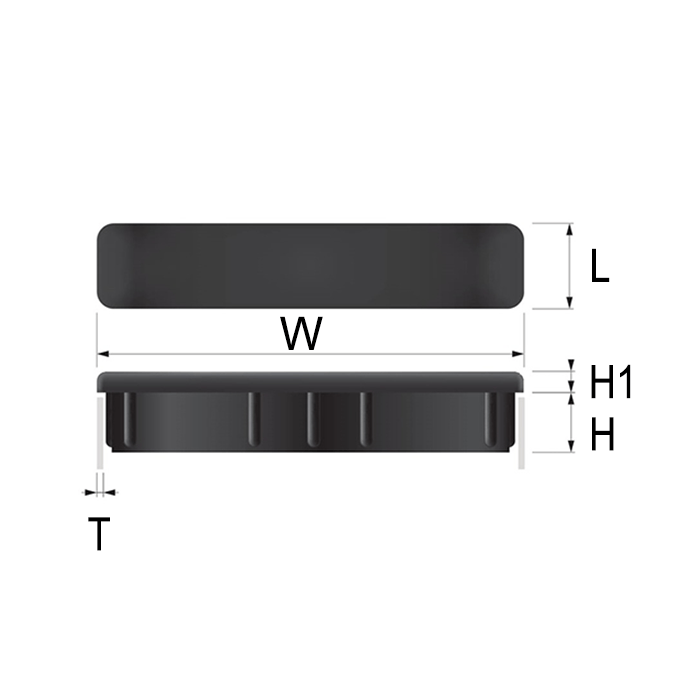
| Tube Width (W) | Tube Length (L) | Shank (H) | Head (H1) | Tube Wall (T) |
|---|---|---|---|---|
| 3/8" (10 mm) | 1-3/16" (30 mm) | 1/2" (12 mm) | 0.118" (3 mm) | 0.039" to 0.079" (1 to 2 mm) |
| 9/16" (15 mm) | 13/16" (20 mm) | 1/2" (12 mm) | 0.197" (5 mm) | 0.039" to 0.079" (1 to 2 mm) |
| 9/16" (15 mm) | 13/16" (20 mm) | 1/2" (12 mm) | 0.118" (3 mm) | 0.039" to 0.079" (1 to 2 mm) |
| 9/16" (15 mm) | 1-3/16" (30 mm) | 1/2" (12 mm) | 0.197" (5 mm) | 0.079" to 0.118" (2 to 3 mm) |
| 9/16" (15 mm) | 1-3/16" (30 mm) | 1/2" (12 mm) | 0.197" (5 mm) | 0.039" to 0.079" (1 to 2 mm) |
| 9/16" (15 mm) | 1-9/16" (40 mm) | 1/2" (12 mm) | 0.197" (5 mm) | 0.079" to 0.118" (2 to 3 mm) |
| 9/16" (15 mm) | 2" (50 mm) | 9/16" (14 mm) | 0.197" (5 mm) | 0.039" to 0.079" (1 to 2 mm) |
| 11/16" (18 mm) | 1-3/16" (30 mm) | 1/2" (12 mm) | 0.197" (5 mm) | 0.059" to 0.098" (1.5 to 2.5 mm) |
| 13/16" (20 mm) | 1" (25 mm) | 1/2" (12 mm) | 0.197" (5 mm) | 0.039" to 0.079" (1 to 2 mm) |
| 13/16" (20 mm) | 1-3/16" (30 mm) | 1/2" (12 mm) | 0.197" (5 mm) | 0.039" to 0.079" (1 to 2 mm) |
| 13/16" (20 mm) | 1-9/16" (40 mm) | 9/16" (14 mm) | 0.197" (5 mm) | 0.079" to 0.118" (2 to 3 mm) |
| 13/16" (20 mm) | 1-9/16" (40 mm) | 9/16" (14 mm) | 0.197" (5 mm) | 0.039" to 0.079" (1 to 2 mm) |
| 13/16" (20 mm) | 2" (50 mm) | 9/16" (14 mm) | 0.197" (5 mm) | 0.059" to 0.079" (1.5 to 2 mm) |
| 13/16" (20 mm) | 2" (50 mm) | 9/16" (14 mm) | 0.197" (5 mm) | 0.031" to 0.059" (0.8 to 1.5 mm) |
| 13/16" (20 mm) | 2-3/8" (60 mm) | 5/8" (16 mm) | 0.197" (5 mm) | 0.039" to 0.079" (1 to 2 mm) |
| 1" (25 mm) | 1-3/8" (35 mm) | 1/2" (13 mm) | 0.197" (5 mm) | 0.039" to 0.079" (1 to 2 mm) |
| 1" (25 mm) | 1-9/16" (40 mm) | 9/16" (14 mm) | 0.197" (5 mm) | 0.039" to 0.079" (1 to 2 mm) |
| 1" (25 mm) | 2" (50 mm) | 9/16" (14 mm) | 0.197" (5 mm) | 0.039" to 0.079" (1 to 2 mm) |
| 1" (25 mm) | 2-3/8" (60 mm) | 9/16" (15 mm) | 0.197" (5 mm) | 0.039" to 0.079" (1 to 2 mm) |
| 1-3/16" (30 mm) | 1-9/16" (40 mm) | 5/8" (16 mm) | 0.197" (5 mm) | 0.039" to 0.079" (1 to 2 mm) |
| 1-3/16" (30 mm) | 2" (50 mm) | 5/8" (16 mm) | 0.197" (5 mm) | 0.039" to 0.079" (1 to 2 mm) |
| 1-3/16" (30 mm) | 2" (50 mm) | 9/16" (15 mm) | 0.197" (5 mm) | 0.118" to 0.157" (3 to 4 mm) |
| 1-3/16" (30 mm) | 2-3/8" (60 mm) | 9/16" (14 mm) | 0.197" (5 mm) | 0.118" to 0.157" (3 to 4 mm) |
| 1-3/16" (30 mm) | 2-3/8" (60 mm) | 5/8" (16 mm) | 0.197" (5 mm) | 0.039" to 0.079" (1 to 2 mm) |
| 1-3/16" (30 mm) | 2-3/4" (70 mm) | 5/8" (16 mm) | 0.197" (5 mm) | 0.039" to 0.079" (1 to 2 mm) |
| 1-3/16" (30 mm) | 3-1/8" (80 mm) | 5/8" (16 mm) | 0.197" (5 mm) | 0.079" to 0.118" (2 to 3 mm) |
| 1-3/16" (30 mm) | 4" (100 mm) | 5/8" (16 mm) | 0.197" (5 mm) | 0.039" to 0.079" (1 to 2 mm) |
| 1-3/16" (30 mm) | 4-5/16" (110 mm) | 5/8" (16 mm) | 0.197" (5 mm) | 0.079" to 0.118" (2 to 3 mm) |
| 1-9/16" (40 mm) | 2" (50 mm) | 9/16" (14 mm) | 0.197" (5 mm) | 0.039" to 0.079" (1 to 2 mm) |
| 1-9/16" (40 mm) | 2-3/8" (60 mm) | 5/8" (16 mm) | 0.197" (5 mm) | 0.039" to 0.079" (1 to 2 mm) |
| 1-9/16" (40 mm) | 3-1/8" (80 mm) | 5/8" (16 mm) | 0.197" (5 mm) | 0.118" to 0.157" (3 to 4 mm) |
| 1-9/16" (40 mm) | 3-1/8" (80 mm) | 5/8" (16 mm) | 0.197" (5 mm) | 0.039" to 0.079" (1 to 2 mm) |
| 1-9/16" (40 mm) | 4" (100 mm) | 5/8" (16 mm) | 0.197" (5 mm) | 0.118" to 0.157" (3 to 4 mm) |
| 2" (50 mm) | 2-3/4" (70 mm) | 9/16" (15 mm) | 0.197" (5 mm) | 0.079" to 0.157" (2 to 4 mm) |
| 2" (50 mm) | 3-1/8" (80 mm) | 13/16" (21 mm) | 0.197" (5 mm) | 0.059" to 0.14" (1.5 to 3.5 mm) |
| 2" (50 mm) | 4" (100 mm) | 1" (25 mm) | 0.197" (5 mm) | 0.059" to 0.14" (1.5 to 3.5 mm) |
| 2-3/8" (60 mm) | 3-1/8" (80 mm) | 1" (25 mm) | 0.197" (5 mm) | 0.059" to 0.14" (1.5 to 3.5 mm) |
| 2-3/8" (60 mm) | 4" (100 mm) | 1" (25 mm) | 0.197" (5 mm) | 0.098" to 0.177" (2.5 to 4.5 mm) |
| 2-3/8" (60 mm) | 4-3/4" (120 mm) | 1" (25 mm) | 0.197" (5 mm) | 0.098" to 0.177" (2.5 to 4.5 mm) |
Tube wall thickness is a fit requirement, not a tolerance.
| Specification | Detail |
|---|---|
| Material | Polyethylene, a tough low-friction plastic |
| Sizes | 32 sizes, 3/8" to 2-3/8" (10 to 60 mm) |
| Mounting | Pushes into the tube, held by ribs |
| Colors | Black, Gray, White |
| Floor compatibility | Hollow tube legs |
| Sold as | Individual pieces. 4 is the smallest order. |
| Warranty | 90 days against defects in materials and workmanship |
Measure the outside dimension of both the short side and the long side in millimeters. Then measure the wall thickness with calipers at the tube end. You need all three measurements: width, length, and wall thickness. A tube measuring 13/16″ (20 mm) wide, 1-9/16″ (40 mm) long, with 0.059″ (1.5 mm) walls needs the 20 × 40 / 0.039″ to 0.079″ (1 to 2 mm) plug. Always list the shorter dimension first.
The plug will not seat properly. Square plugs have equal sides, so they gap along the longer dimension and compress along the shorter. The retention ribs cannot engage evenly, and the plug will either fall out under vibration or wedge at an angle. Use rectangular tube plugs matched to the exact tube opening dimensions for full-perimeter rib engagement and a secure press fit.
2-3/8″ x 4-3/4″ (60 x 120 mm) with 0.098″ to 0.177″ (2.5 to 4.5 mm) wall thickness. The 31-size range covers from 3/8″ x 1-3/16″ (10 x 30 mm) up to 2-3/8″ x 4-3/4″ (60 x 120 mm). For sizes outside this range, contact Business Solutions for custom production.
Measure the tube wall with calipers at the open end. The outside dimension tells you which plug size you need. The wall thickness tells you which variant within that size. Some rectangular tube sizes are manufactured in multiple wall thicknesses (1.0, 1/16″, 0.059″, 0.079″ (1.2, 1.5, 2.0 mm) are common). Each wall thickness requires a different rib profile for a secure press fit. The product variations list all available wall thickness options for each size.
Yes. Sled base chairs typically use rectangular tubing for the runners that contact the floor. Match the plug to the runner tube dimensions. For sled bases on smooth, hard floors, apply rectangular self-adhesive furniture pads to the plug head for PA6 scratch protection along the full runner length.
 Rectangular Tube Plugs
$0.81 – $1.15
For business
Same glide, by the hundred or the thousand. Free samples to check the fit, and a written quote for the project.

Reviews
There are no reviews yet