Sled Base Glides Guide
A sled frame does not stand on the floor, it lies on it, and every push drags that whole rail across the finish. Sled base chair glides fit the horizontal tubing that runs under cantilever and visitor chairs. This guide covers reading the frame, choosing screw-fix or clip-on, matching the bore to the tube, and fitting glides that stay on a chair that gets dragged all day.
Start here
Two questions and you have your sled base glides.
Where each glide sits on the frame is covered on the category page. Before that, two choices shape the whole order: the mounting, and the floor face.
Question 1. Can you put a screw in the frame?
Yes: screw-fix
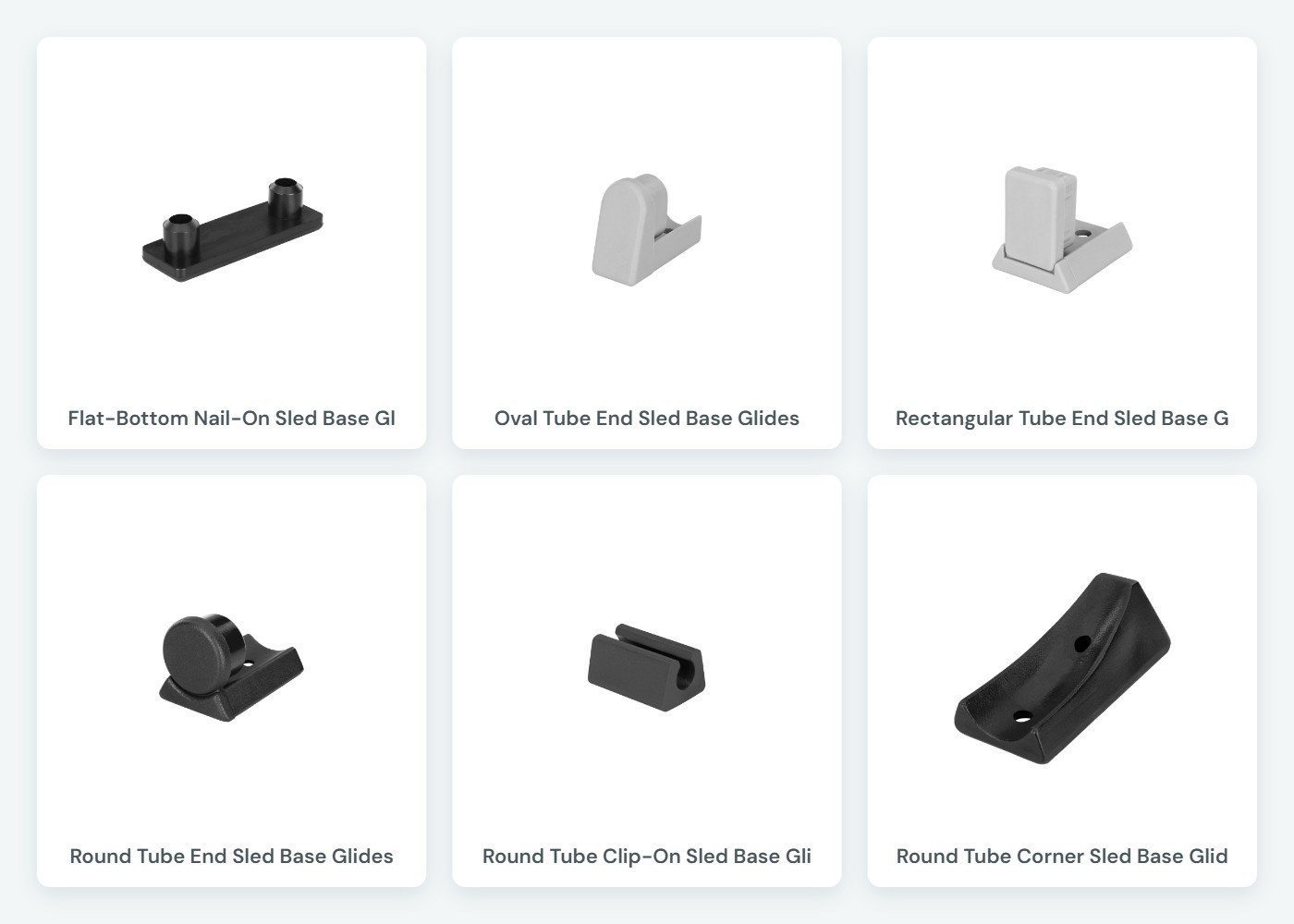
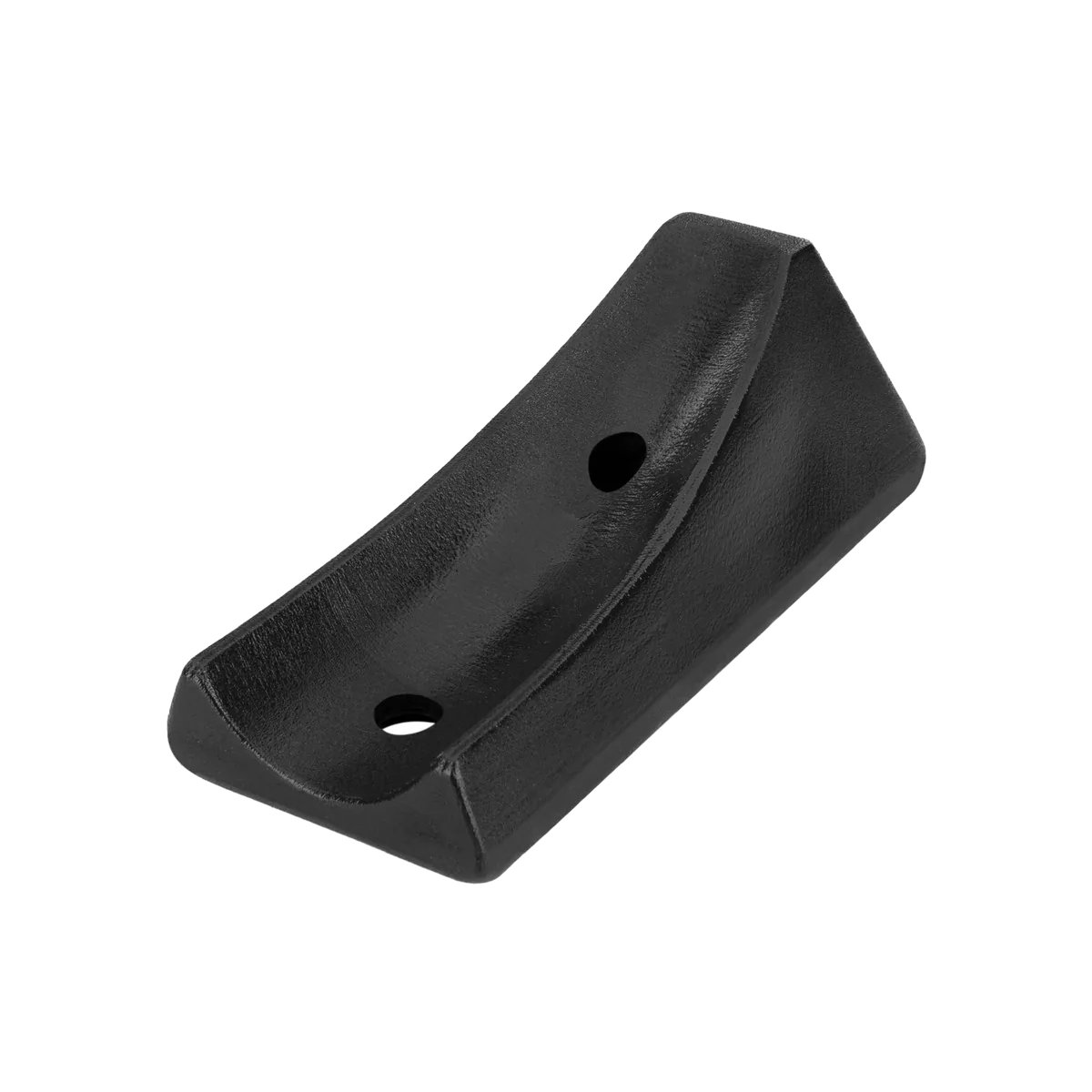
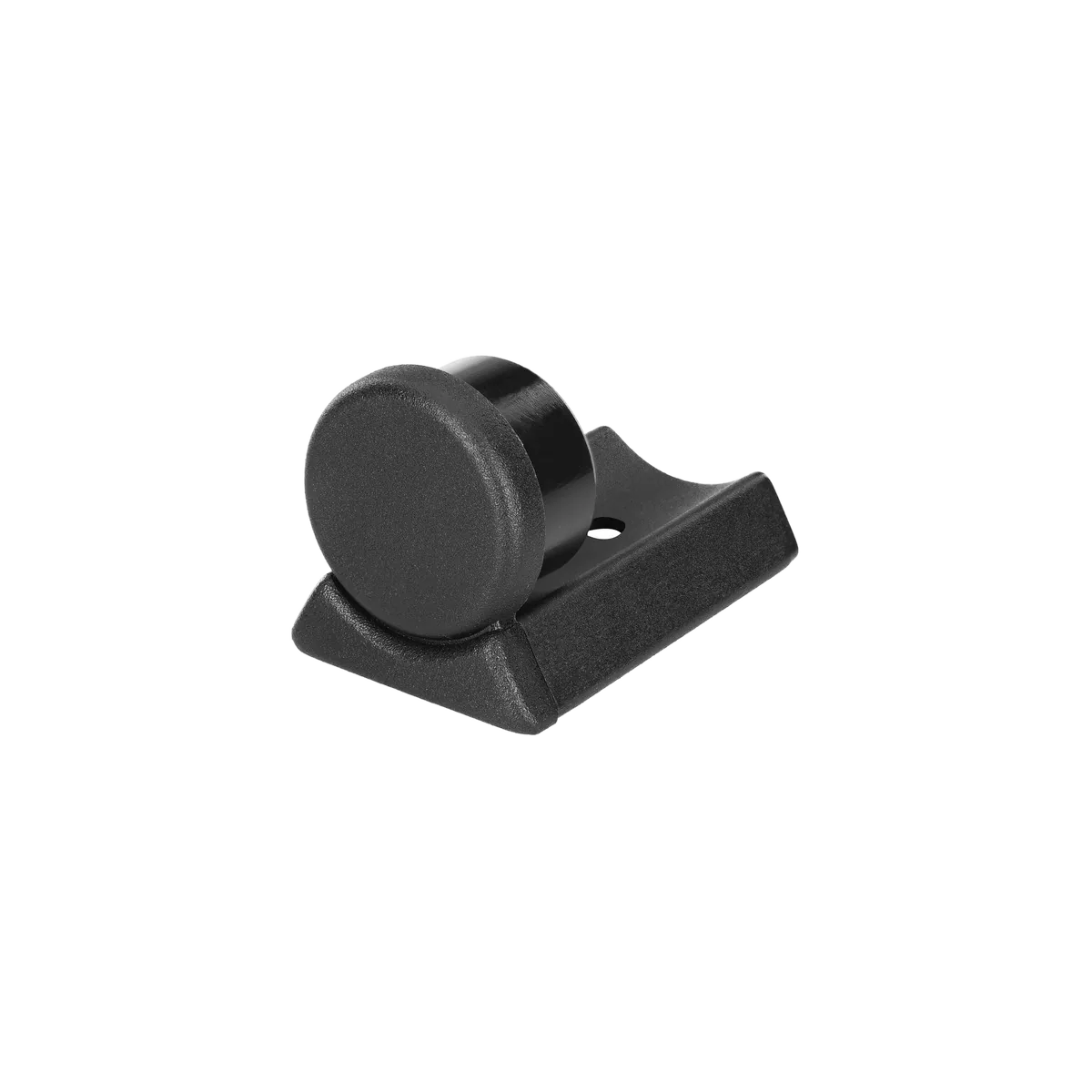
Mid-Runner, Corner and End types all fix with a screw into the tube, which is the hold that survives daily dragging. Most frames arrive with holes from the factory glides; reuse them and the job needs nothing but a screwdriver.
No: clip-on
Snaps over a round tube with no holes and no tools, and moves again later. The answer for hire stock, frames you cannot drill, and quick refits. Round tube only, and the tube diameter must match the clip exactly.
Question 2. What face should meet the floor?
Bare polyamide body
The molded PA body slides directly, and it covers hard floors and carpet both. The default for most rooms and every carpeted one.
Pad slot with a PA6 pad
A replaceable low-friction pad in the floor face, for smooth sealed floors that mark. When the pad wears, it lifts out and a new one drops in, without touching the glide or the frame.
The bore has no tolerance
How to measure sled frame tubing.
A glide bore is molded to one tube profile at one diameter. The category page says what to measure; this is how to measure it accurately on a bent, welded, painted frame.
01
Strip the old glides first
Old glides and their screws come off before anything is measured. Measuring over a worn glide, or over the flat it has ground into the tube, reads wrong by exactly the amount that matters.
02
Caliper the tube where each glide sits
Diameter for round tube; width and height for oval and rectangular. No calipers? Wrap a paper strip snugly round the tube, mark the overlap, and divide the length by 3.14 for the diameter.
03
Map the frame before ordering
Walk each runner from front bend to rear: straight sections take Mid-Runner, bends take Corner, open tube ends take End. Count contact points per chair and order per contact point, mixing types as the frame demands.
Measure every chair in a mixed room. Frames that look identical across a set of stacking chairs can carry different tube stock, especially where a venue has bought in batches over years. A glide a size off does not merely fit badly: it rocks on the tube and works its own screw loose.
Before anything else
Which face belongs on which floor.
A sled frame spreads its weight along rails rather than points, which is gentler on floors to begin with. The face you choose finishes the job.
Bare body: hard floors and carpet
The molded polyamide rides tile, wood, vinyl, concrete and carpet alike. On carpet it bridges the pile the way a slide does, and on hard floors it slides without the metal ever touching down.
Pad slot: smooth floors that mark
Polished timber, vinyl and stone in daily-drag rooms want the PA6 pad face. The pad is the sacrificial part: it does the wearing, and it swaps in seconds when it has.
Floor-care bodies say the same thing from the other side: the National Wood Flooring Association tells homeowners not to drag unprotected furniture across a wood floor at all, and to fit protectors to legs, in its care guidance at woodfloors.org.
Ten minutes a chair
How to fit sled base glides.
Screw-fix and clip-on go on differently, and each has one step that decides whether the glide is still there after a year of dragging.
Screw-fix: Mid-Runner, Corner and End
01
Seat the body on the tube
The bore should close over the tube with light hand pressure and no rock. Mid-Runners cup the straight rail from below, Corners wrap the bend, Ends cap the open tube. If it rocks, the size is wrong: stop.
02
Drive the screw home
Through the screw hole into the tube, snug but not crushing. Reuse factory holes where they exist. On two-hole versions fit both screws: the second is what stops the glide twisting under drag.
03
Drag-test before the room fills
Push the chair hard through a few meters and a turn. Nothing should shift, click or rotate. A glide that moves now will be off within a month of real use.
Clip-on
01
Match and align
Confirm the clip size against the tube measurement one last time, then align the opening square to the underside of the rail.
02
Snap it on
Press until it seats with a positive click all the way along. A clip that goes on too easily is a size too big and will shed itself in use.
03
Try to twist it off
Grip and rotate. Correct-size clips resist by design and come off only when peeled deliberately from one end. Easy rotation means wrong size, not a faulty clip.
What you are buying
What is inside a sled base chair glide.
One molded part, four features, and each one earns its place on a frame that spends its life being dragged.
The body
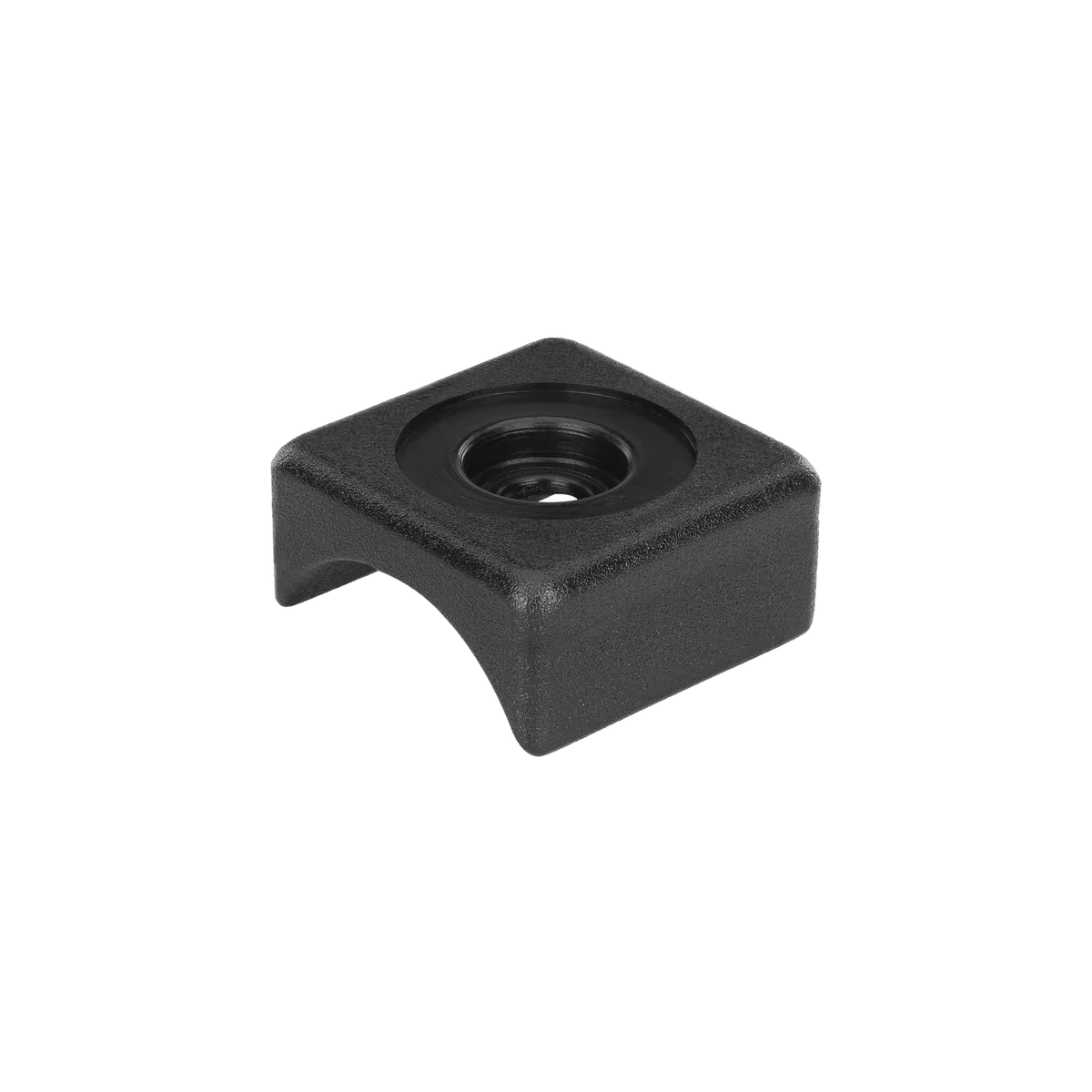
Molded polyamide, the same family as the PA6 face on the glides line but in solid section. It carries the chair, takes the impacts of stacking and dragging, and slides on the floor when there is no pad fitted.
The bore
Shaped to one tube profile at one diameter, which is why the measurement has no slack in it. A matched bore spreads grip along the whole contact, so the screw locates the glide rather than carrying it.
The fixing
A screw through the body into the tube on fixed types, one hole for domestic duty and two where chairs are dragged all day. Clip-ons replace the screw with sprung jaws sized to the tube.
The pad slot
On slot versions, a recess in the floor face holding a replaceable PA6 pad. The slot turns the wear surface into a consumable, which is the difference between re-padding a room and re-gliding it.
The same rail, two answers
A sled glide and a rectangular slide on the same frame.
Rectangular furniture slides will sit on a sled rail, and on older non-standard frames they are sometimes the only fit. Where both fit, the difference is mechanical.
A sled base glide
Saddles the tube, so the mounting is located by the whole bore and the load path runs through molded material shaped for the rail. It follows bends with Corner types and closes tube ends with End types, which flat parts cannot.
A rectangular slide on the rail
Fixes to one flat line of contact on a curved tube, so the screw or adhesive carries everything and drag works at it constantly. A reasonable answer on odd rail sections, a compromise on standard round tube where a matched bore exists.
If you would rather skip the theory
The right glides for each kind of frame.
Most sled and cantilever jobs match one of the six below, each linking into the right type.
Cantilever office and visitor chairs
The classic S-frame. Mid-Runners along the straights, Corners where the rail turns up, and the pad-slot face if the office floor is polished.
Café and meeting chairs that stack
Stacking multiplies fitting and knocks. Screw-fix with two holes where the frame allows, and count on a mix of types per chair.
Frames with open tube ends
Some frames finish with the tube itself meeting the floor. End types close that open face, held by a single screw, so the cut edge never lands on the finish.
Hire stock and undrillable frames
Clip-ons go on and come off without a mark, which suits furniture that is not yours to drill or that changes venue weekly.
Chairs crossing carpet and hard floor
The bare body handles both, so one fit covers a room with rugs, thresholds and tile. Choose pad-slot only if the hard floor marks easily.
Whole rooms and rolling refits
A hundred cantilever chairs is four to six glides each and at least two types per chair. Send frame photos and counts, and we will spec the mix.
Still open
Sled base chair glides: common questions
Which type sits where on the frame is the sled base glides for horizontal tubing page’s territory. This is the screwdriver-in-hand list.
How do I get the old glides off?
Screw-fix types unscrew; seized screws respond to a manual driver with a firm push rather than a powered one, which strips them. Old clip-ons peel off from one end. Riveted factory glides need the rivet head drilled off gently, after which the new screw usually takes the same hole.
The screw will not bite in the old hole. What now?
The hole has worn oversize. Move to the second screw hole if the glide has one, or rotate the glide slightly so the screw meets fresh metal, or step up one screw gauge. Never rely on a screw spinning in a slack hole: that glide is already leaving.
My tube is oval. Which measurements matter?
Both axes, measured with the chair standing so you know which way is down. Oval bores are molded to the profile, not just the size, so an oval tube in a round bore contacts at two points and rocks. If the numbers sit between listed sizes, send them over rather than rounding.
The chair squeaks after fitting. Did I do something wrong?
Usually one glide is a whisker loose and moving on the tube. Find it by loading each contact point in turn, then seat it and snug the screw. A squeak from the floor face on rubber flooring, by contrast, is friction rather than movement, and a pad-slot face usually silences it.
Can these live outside on a terrace?
The polyamide body is fine outdoors. The screw is the weak point, so fit stainless screws on anything that gets rained on, and expect grit on outdoor paving to wear faces faster than any interior floor would. Check terrace chairs each season.
The frame is powder-coated. Measure over the coating or under it?
Over it. The bore grips the finished outside of the tube, coating included. The same answer applies to clip-ons, and it is one more reason to measure the actual frame rather than trusting a spec sheet written before painting.
Do glides change the chair height noticeably?
By a few millimeters, evenly, which nobody feels on a chair. It only matters where sled chairs tuck under a low table lip or stack into a trolley with tight clearances: check one chair fully fitted before doing the room.
One rail is slightly bent. Will glides still fit?
On gentle bends, yes: fit the straight sections and let the bend go without a glide if no size seats properly there. A kinked rail is a frame repair, not a glide problem, and a glide forced onto a kink transfers every drag straight into its own mounting.
Other resources
Browse other furniture guides: Glides Guide · Slides Guide · Pads Guide · Tube Plugs Guide · Leveling Feet Guide · Tile Floors Guide · Nail-On Glides How-To
Product categories: Furniture Glides · Furniture Slides · Furniture Pads · Tube Plugs & End Caps · Leveling Feet · Sled Base Glides
Business orders: Business pricing for volume pricing, project quotes, and commercial orders.
That is the guide
Send a photo of the frame and we will spec the set.
One photo of the whole frame from the side and one close on the tube with a ruler across it. That is everything this sled base glides guide needs, and the reply lists types, sizes and counts per chair.