Ships nationwide · In-stock and made-to-order sizes
Ships nationwide · In-stock and made-to-order sizes
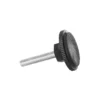
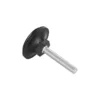
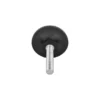

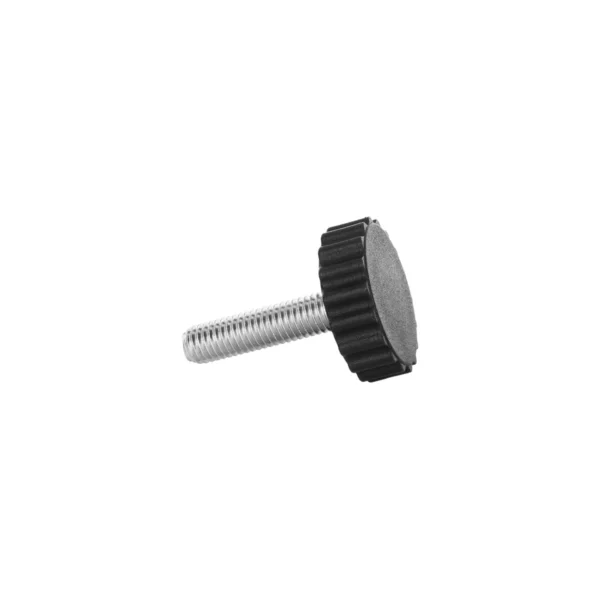
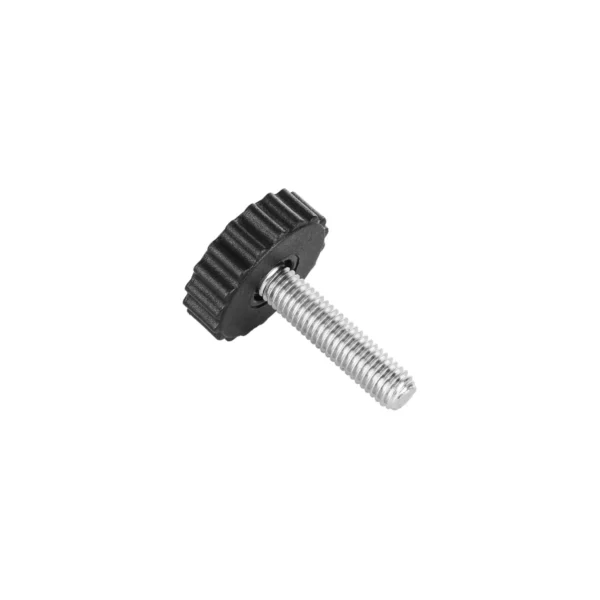
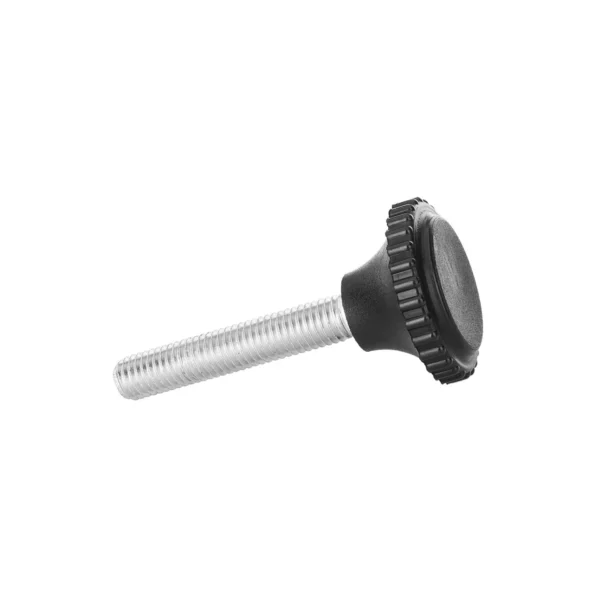
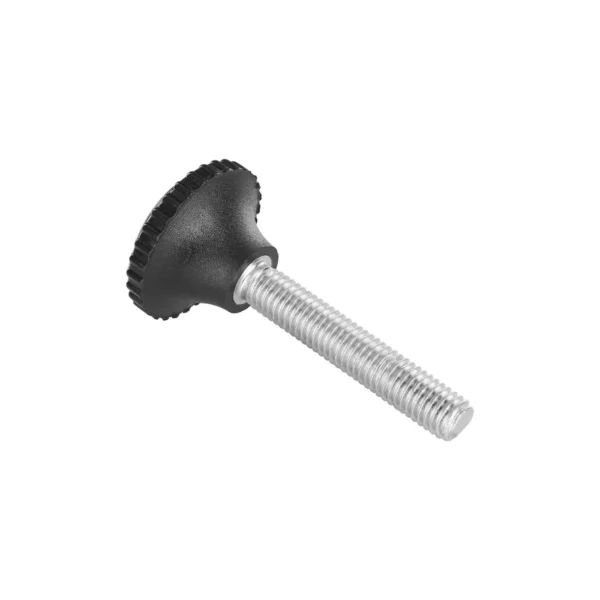
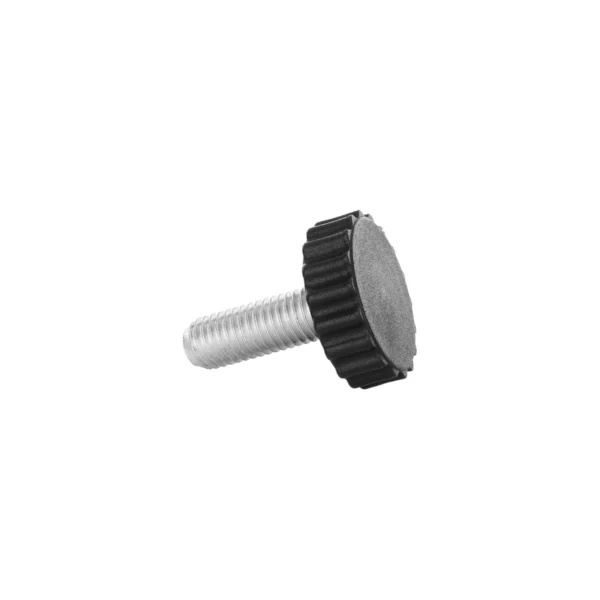
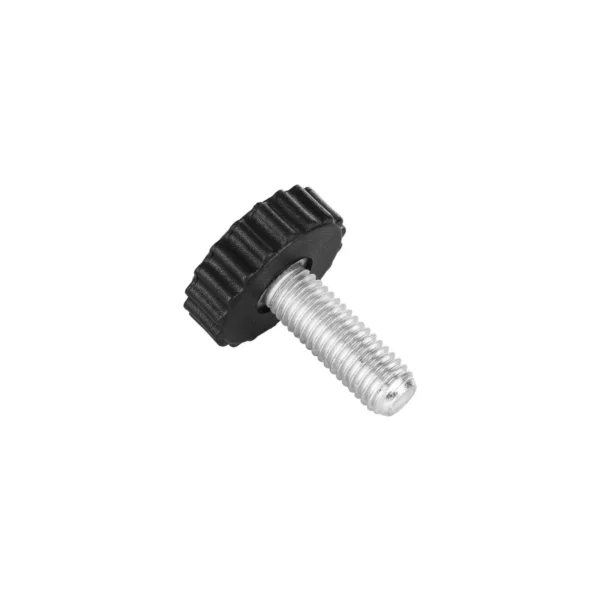
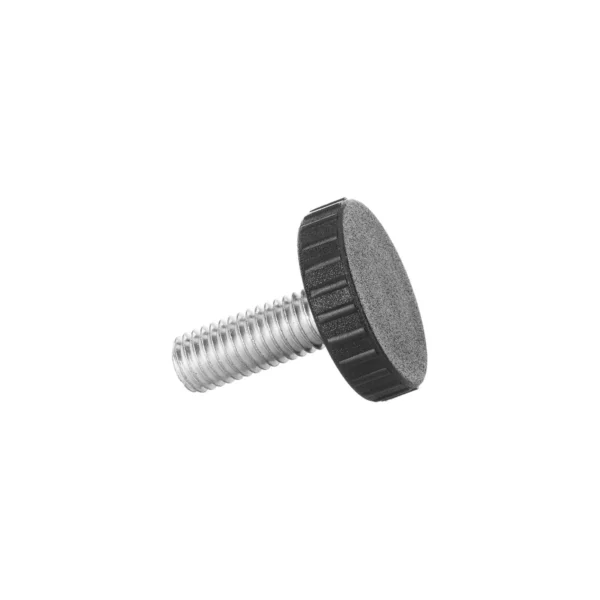
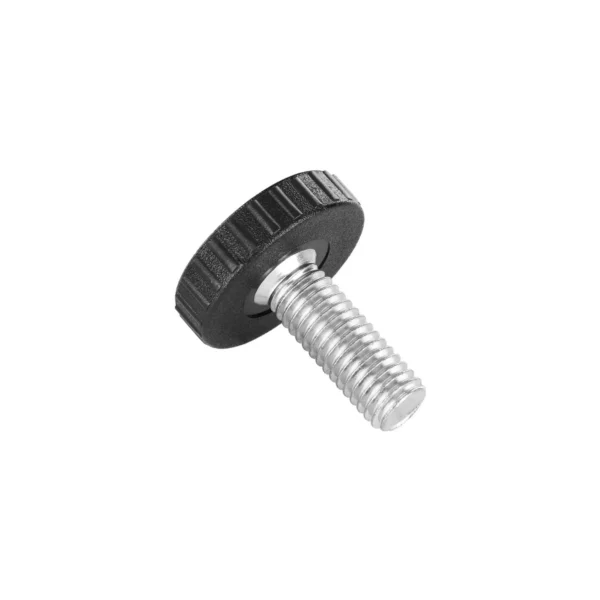
When the floor’s uneven and the table rocks, these screw into the threaded insert in a hollow leg so you can level it by hand. It’s the tallest base in the range, so even badly out-of-true floors come good. PA body, zinc-plated steel rod, in metric M6 to M12 and imperial 1/4″-20 and 5/16″-18.
We list a limited range here, and some listed sizes are made to order in production runs. Tell us the size you need and roughly how many, and we will confirm availability and pricing by email. When enough people ask for a size, we run it, and the people who asked hear first.
Buying in volume? See business pricing & samples ↓
In more detail
Tables wobble. Desks rock. Workbenches tilt. The floor is never perfectly level, and furniture with fixed-height legs cannot compensate. Standard base adjustable leveling feet solve this by screwing into a threaded insert inside the hollow furniture leg and providing a height-adjustable floor contact point. Turn the foot clockwise to extend it and raise that corner. Turn counterclockwise to retract it and lower that corner. Each leg adjusts independently until the furniture sits level and stable on any floor. Also known as adjustable leveling feet for furniture, furniture leveling feet threaded rod, or adjustable feet for table legs. Available in metric M6 to M12 and in the imperial 1/4"-20 and 5/16"-18 used on most North American furniture. If the leg already has an imperial insert, the 1/4-20 leveling feet drop straight in with no adapter.
The tallest base profile in the leveling foot range. PA (polyamide) body with zinc-plated steel threaded rod. For furniture with threaded inserts in round, square, or rectangular tube legs. 3 base diameters: Ø 30, 38 and 45 mm (1.18″, 1.50″ and 1.77″). Six threads: M6, M8, M10, M12 and the imperial 1/4"-20 and 5/16"-18. Rod lengths from 10 to 110 mm (0.39″ to 4.33″). Black, gray, and white. Sold in packs of 4, adjustable in steps of 2 at checkout.
Standard base adjustable leveling feet are organized by base diameter, thread size, and rod length. The base diameter determines the floor contact area. The thread must match the threaded insert in your furniture leg. The rod length determines the maximum height adjustment range.
Ø 30 mm base (H = 18 mm)
The compact base for light to medium furniture. M6 threads in 10, 20, and 25 mm rod lengths. M8 threads in 10, 28, and 43 mm. M10 threads in 28, 43, and 63 mm.Black, gray, and white on select sizes. The Ø 30 mm base fits neatly under furniture legs in the 28 to 35 mm diameter range.
Ø 45 mm base (H = 19 mm)
The wide base for heavy commercial and industrial furniture. M8 threads in 28, 43, 70, and 110 mm rod lengths. M10 in 28, 35, 43, and 60 mm. M12 in 25 and 45 mm.Black, gray on select sizes. The Ø 45 mm base provides broader floor contact and better load distribution on heavy tables and workbenches.
For a shorter base profile (9 mm instead of 18 mm), see low-profile adjustable leveling feet. For the shortest profile (6 mm), see ultra-low profile. For a wider base (Ø 50 mm), see wide-base. For stainless steel rods in corrosive environments, see stainless steel rod leveling feet. For self-leveling on uneven floors, see self-leveling tilt.
Two components work together. A threaded insert press-fits inside the hollow furniture leg and provides an M-threaded nut. The leveling foot screws into that nut. Turning the foot adjusts the height. The system converts fixed-height furniture into adjustable-height furniture without modifying the leg itself.
Step 1. Install the threaded insert
Press a round, square, or rectangular threaded insert into the hollow tube leg. The insert seals the tube and provides the M-threaded nut that the leveling foot screws into.
Step 2. Screw in the leveling foot
Thread the standard base leveling foot into the insert nut by hand. Turn clockwise. The threaded rod engages the nut and the PA base extends below the furniture leg.
Step 3. Adjust the height
Turn each foot independently until the furniture sits level. On a four-legged table, adjust each corner until all four feet contact the floor evenly and the tabletop is level.
Thread matching: the leveling foot's M thread must match the threaded insert's M thread. An M8 foot screws into an M8 insert. An M10 foot screws into an M10 insert. They are not interchangeable. Confirm the thread size before ordering either component.Pack quantity: standard base adjustable leveling feet come in packs of 4, adjustable in steps of 2 at checkout. Order the quantity you need for each piece of furniture. A four-legged table needs 4 feet and 4 matching threaded inserts. A six-legged conference table needs 6 of each. You can mix different rod lengths on the same table if different legs need different adjustment ranges.
The thread size must match your threaded insert. The rod length determines how much height adjustment is available. Longer rods provide more adjustment range but extend further below the leg when fully deployed.
Thread size and static load capacity
M6: 60 kg per foot. For small side tables, display fixtures, and lightweight furniture. Smallest inserts (Ø 28 mm round). M8: 80 kg per foot. The most common thread across the furniture industry. Handles standard dining tables, office desks, and commercial tables. M10: 120 kg per foot. Heavy conference tables, library tables, and substantial commercial furniture. M12: 150 kg per foot. Heaviest applications including industrial workbenches, laboratory tables, and furniture supporting heavy equipment. On a four-legged table, multiply the per-foot capacity by 4 for the total supported load.
Rod length guide
10 mm: minimal adjustment for nearly level floors. Fine-tuning only. 20 to 28 mm: the standard range for most residential and commercial furniture on typical floors. 35 to 43 mm: moderate unevenness. Old buildings, uneven tile, slightly sloped floors. 50 to 63 mm: significant unevenness or applications where the furniture needs to be raised above standard height. 70 to 110 mm: maximum adjustment for severely uneven floors or intentional height increase.
Standard base adjustable leveling feet come in two base diameters. The choice depends on the furniture leg size, the load, and the visual proportion you want between the foot and the leg.
Ø 30 mm: the compact option
Fits under furniture legs in the 28 to 35 mm range without the base extending significantly beyond the leg edge. The base is wider than the leg but not dramatically so. M6, M8, and M10 threads. Rod lengths from 10 to 63 mm. For residential dining tables, office desks, side tables, and light commercial furniture. Standard base adjustable leveling feet in the Ø 30 mm diameter handle the majority of residential and light commercial leveling needs.
Ø 45 mm: the stability option
Provides 2.25 times the floor contact area of the Ø 30 base. The wider footprint distributes load more evenly, which matters on heavy furniture where a narrow base would concentrate pressure and potentially indent soft surfaces. M8, M10, and M12 threads. Rod lengths from 25 to 110 mm. For heavy commercial tables, conference tables, industrial workbenches, and any furniture where maximum stability and load distribution matter. Standard base adjustable leveling feet in the Ø 45 mm diameter handle the heaviest applications in the range.
The fundamental problem of furniture on uneven floors. The National Wood Flooring Association (NWFA) recommends protective contact surfaces on all furniture legs, and standard base adjustable leveling feet provide both height adjustment and a PA floor contact surface that protects finished floors.
Wobble elimination
The primary function. A table with four fixed-height legs wobbles when the floor is not perfectly level. Standard base adjustable leveling feet let each leg adjust independently until all four contact the floor evenly. No more folded napkins under table legs. No more cardboard shims. No more rocking that spills drinks and frustrates customers.
Floor protection
The PA base contacts the floor instead of bare metal. PA is smoother, softer, and quieter than steel on smooth, hard floors. The Ø 30 or 45 mm base distributes weight across a broader area than the bare tube end. Unlike leaving metal legs on finished floors, the PA base prevents scratching.
Height adjustment
Beyond leveling, these feet can raise or lower the overall furniture height. A table designed for 720 mm can be raised to 740 mm with longer rod lengths, or fine-tuned to exact working height. On workbenches where tool accuracy depends on precise height, the threaded adjustment provides millimeter-level control that fixed legs cannot. In manufacturing environments where different operators prefer different working heights on the same bench, longer rods allow the height to be adjusted between shifts without replacing any components.
Noise reduction
The PA base absorbs contact noise between the furniture and the floor. Metal-on-floor contact creates scraping and rattling every time the furniture moves or shifts. The PA base cushions this contact. In restaurants, offices, and conference rooms where dozens of tables sit on smooth, hard floors, the collective noise reduction from PA-based leveling feet is significant.
Standard base is the default choice for most furniture. Here is how it compares to the other profiles in the range and when to choose something different.
vs. Low-Profile Leveling Feet
Low-profile leveling feet have a 9 mm base (half the height of standard). Choose low-profile when the foot must protrude as little as possible below the leg. Choose standard when the taller base provides better stability and you do not mind the additional 9 mm of visible foot below the furniture.
vs. Wide-Base Leveling Feet
Wide-base leveling feet have a Ø 50 mm base for maximum floor contact on heavy furniture. Standard base at Ø 45 mm is close in width but has a taller profile (19 mm vs. 11 mm). Choose wide-base for the broadest footprint. Choose standard for the tallest profile.
vs. Self-Leveling Tilt
Self-leveling tilt feet have a pivoting base that compensates for 9° of floor unevenness automatically. Standard base feet are rigid and require manual adjustment at each leg. Choose tilt for furniture on significantly uneven floors where manual adjustment is impractical. Choose standard for precise, manual control.
vs. Ball-Joint Leveling Feet
Ball-joint feet have a spherical contact point that swivels in any direction. Standard base feet have a flat, broad contact area. Choose ball-joint for point-contact leveling on very irregular surfaces. Choose standard for the broadest, most stable floor contact.
Measure the widest point of the flat base of the leg, then choose the size on that row. The glide should sit flush with the leg or just inside it, never wider.

| Base Ø (Ø) | Thread Length (L) | Base Height (H) | Thread (M) | Static Load (SL) |
|---|---|---|---|---|
| 30 mm (1.18″) | 10 mm (0.39″) | 18 mm (0.71″) | M8 | 80 kg (176 lb) |
| 30 mm (1.18″) | 10 mm (0.39″) | 18 mm (0.71″) | M6 | 60 kg (132 lb) |
| 30 mm (1.18″) | 20 mm (0.79″) | 18 mm (0.71″) | M6 | 60 kg (132 lb) |
| 30 mm (1.18″) | 25 mm (0.98″) | 18 mm (0.71″) | M6 | 60 kg (132 lb) |
| 30 mm (1.18″) | 28 mm (1.10″) | 18 mm (0.71″) | M10 | 120 kg (265 lb) |
| 30 mm (1.18″) | 28 mm (1.10″) | 18 mm (0.71″) | M8 | 80 kg (176 lb) |
| 30 mm (1.18″) | 43 mm (1.69″) | 18 mm (0.71″) | M10 | 120 kg (265 lb) |
| 30 mm (1.18″) | 43 mm (1.69″) | 18 mm (0.71″) | M8 | 80 kg (176 lb) |
| 30 mm (1.18″) | 63 mm (2.48″) | 18 mm (0.71″) | M10 | 120 kg (265 lb) |
| 45 mm (1.77″) | 25 mm (0.98″) | 19 mm (0.75″) | M12 | 150 kg (331 lb) |
| 45 mm (1.77″) | 28 mm (1.10″) | 19 mm (0.75″) | M8 | 80 kg (176 lb) |
| 45 mm (1.77″) | 28 mm (1.10″) | 19 mm (0.75″) | M10 | 120 kg (265 lb) |
| 45 mm (1.77″) | 35 mm (1.38″) | 19 mm (0.75″) | M10 | 120 kg (265 lb) |
| 45 mm (1.77″) | 43 mm (1.69″) | 19 mm (0.75″) | M8 | 80 kg (176 lb) |
| 45 mm (1.77″) | 43 mm (1.69″) | 19 mm (0.75″) | M10 | 120 kg (265 lb) |
| 45 mm (1.77″) | 45 mm (1.77″) | 19 mm (0.75″) | M12 | 150 kg (331 lb) |
| 45 mm (1.77″) | 60 mm (2.36″) | 19 mm (0.75″) | M10 | 120 kg (265 lb) |
| 45 mm (1.77″) | 70 mm (2.76″) | 19 mm (0.75″) | M8 | 80 kg (176 lb) |
| 45 mm (1.77″) | 110 mm (4.33″) | 19 mm (0.75″) | M8 | 80 kg (176 lb) |
Thread size must match the insert in your furniture leg.
| Specification | Detail |
|---|---|
| Material | Polyamide body with a hot-dip galvanized steel thread |
| Sizes | 30, 38, 45 mm |
| Mounting | Screws into a threaded insert |
| Colors | Black, Gray, White |
| Floor compatibility | Any floor, levels on uneven ground |
The Ø 30 mm base fits furniture where the leg diameter is 28 to 35 mm and a compact footprint matters. M6 (60 kg), M8 (80 kg), and M10 (120 kg) threads. The Ø 45 mm base provides a wider, more stable floor contact area for heavier furniture with larger legs (40 to 50 mm tubes). M8 (80 kg), M10 (120 kg), and M12 (150 kg) threads. For light to medium tables and desks, Ø 30 is standard. For heavy commercial tables, workbenches, and conference tables, Ø 45 provides better load distribution.
Rod length determines the maximum height adjustment range. A 10 mm rod provides minimal adjustment for nearly level floors. A 28 mm rod is the most common for standard furniture. A 43 mm rod handles moderate floor unevenness. Rods of 60 mm and above handle significant unevenness or applications where the furniture needs to be raised noticeably above standard height.
No. Standard base adjustable leveling feet screw into round, square, or rectangular threaded inserts that are already press-fit inside the hollow tube leg. The threaded insert provides the M-threaded nut. The leveling foot screws into that nut. Two components work together.
Standard base leveling feet have a taller base (18 to 19 mm high) that provides more clearance between the floor and the bottom of the furniture leg. Low-profile leveling feet have a shorter base (9 mm) for furniture where minimal protrusion below the leg matters. Choose based on how much visible foot you want below the furniture.
It depends on the thread, not the base. Static load per foot: 60 kg on M6, 80 kg on M8, 120 kg on M10 and 150 kg on M12. Four feet on M8 carry 320 kg between them.
It depends on the thread, not the base. Static load per foot: 60 kg on M6, 80 kg on M8, 120 kg on M10 and 150 kg on M12. Four feet on M8 carry 320 kg between them.
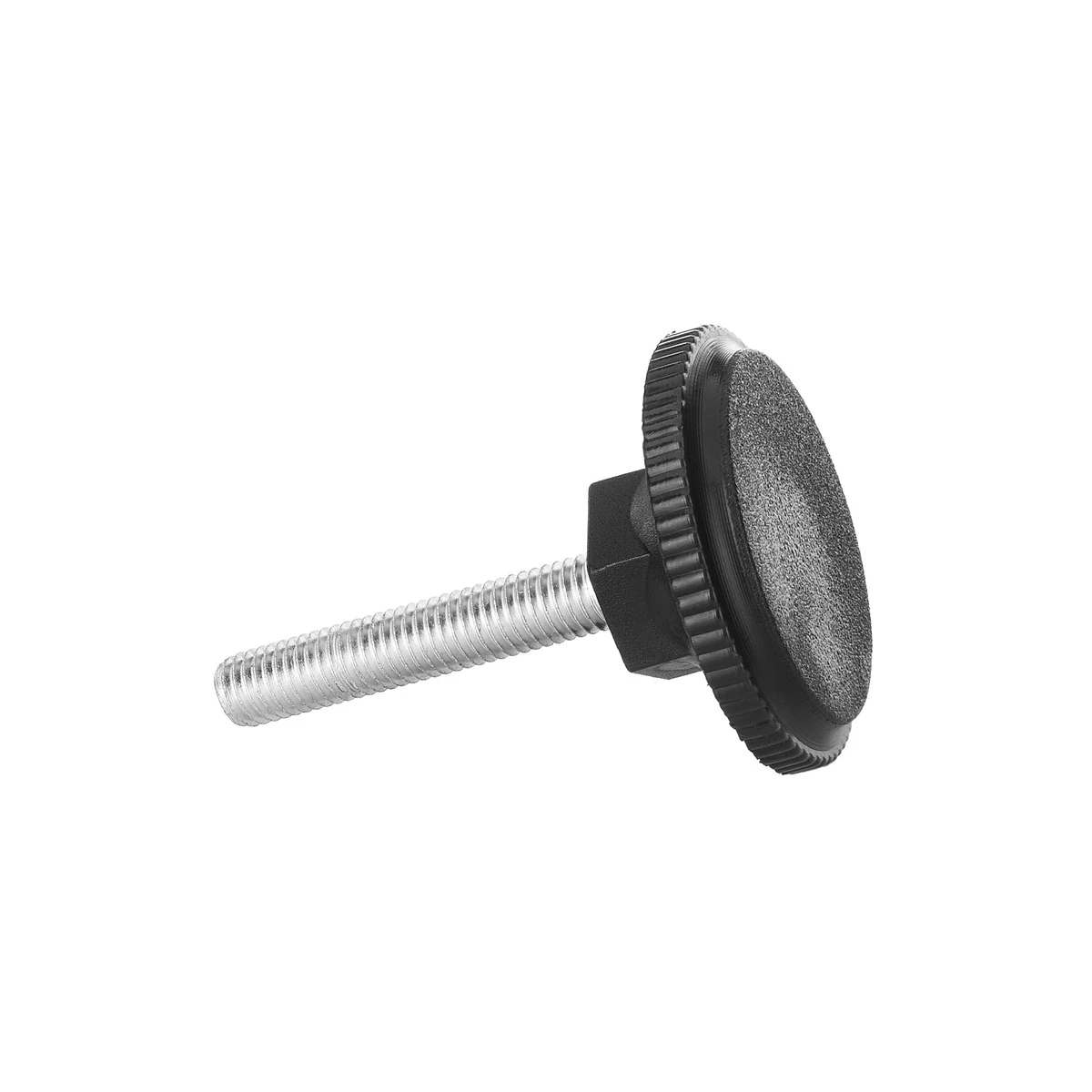 Standard Base Adjustable Leveling Feet
$1.41 – $4.70
For business
Same glide, by the hundred or the thousand. Volume pricing, free samples to check the fit, and a written quote for the project.
Every size, in one place
Dimensions, materials, load ratings and part numbers for the whole range: glides, slides, pads, tube plugs, threaded inserts, leveling feet and sled base glides. Millimeters and inches side by side, with a drawing for every part.

Reviews
There are no reviews yet