
Hospitality-grade floor protection · Ships in 1–3 business days · 90-day limited warranty
You move the dresser and find four dents pressed into the floor where the feet sat. This furniture pads guide shows you how to pick, measure, and install the right pad so the feet cushion the floor instead of marking it.
Widest size range available: Ø 12 to 300 mm
Every pad is one thickness tier and one base type. Answer both and you’ve narrowed the catalog to exactly what fits.
1 Thickness tier
If everyday furniture, light to medium weight
5.5 mm PA6 fiber for chairs, tables, and most household pieces. The most-ordered tier.
If heavy or concentrated-load pieces
11 mm PA6 fiber, double the thickness, for pianos, safes, cabinets, and heavy pieces that press hard on small feet.
2 Base type
If the floor has dips, lippage, or transitions
A closed-cell foam core compresses to fill gaps on uneven floors, so the pad sits flat and the leg doesn’t rock. Also helps with warped leg bases.
If the floor is flat and even
Standard or Heavy-Duty bonds flat, no foam core needed. Pick the thickness from question one.
Got both answers? You know exactly what to buy. Next, see where pads work, then measure your legs for the right size. Or skip ahead and browse the full lineup.
Furniture pads use the same chemically inert PA6 needle-punched fiber as our glides, so they work on all the same smooth, hard floor finishes. The fiber leaves no marks, scuffs, or residue on any sealed floor. The National Wood Flooring Association recommends protective pads on furniture legs as a primary measure for maintaining hardwood floor condition. Read the rest before adding to cart: the wrong tier or size won’t protect your floor properly.
Why it matters: Protective pads on furniture legs help prevent dents, traffic patterns, and finish wear on hardwood floors.
For carpet or rough hard floors: use Furniture Slides instead. Slides have a hard ABS base that handles abrasive textures and carpet fibers that would wear through PA6 fiber quickly.
This is the tier most people order, the default for furniture that stays put. The 5.5 mm PA6 fiber spreads the leg weight across the whole pad instead of one hard point, and the fiber is chemically inert, so it sits against a sealed finish without reacting.
Best for: stationary furniture on smooth hard floors. Tables, cabinets, sofas, bed frames, bookshelves, and dressers are the typical cases.

Use Standard pads when
✓ Furniture stays in place most of the time (tables, cabinets, sofas, bed frames)
✓ Standard residential or light commercial weight
✓ You need a wide size range or large surface coverage
✓ Floor is smooth and hard (hardwood, tile, vinyl, laminate)
Standard pad specifications
Available shapes: Round, square, rectangular (long strips included)
Surface: PA6 needle-punched fiber, 5.5 mm thick, 1,450 g/m² pile density
Sizes (round): Ø 12 mm to 300 mm
Sizes (square): 20 × 20 mm to 300 × 300 mm
Sizes (rectangular): 100+ sizes across 5 width groups, plus strips up to 510 mm
Adhesive: EHBT fiberglass mesh tape, full-back coverage
Installation: Clean with isopropyl alcohol, then press firmly for 30 seconds. Full strength comes over 48 hours, which happens on its own on stationary furniture. The specs are also reviewed in the materials section.
Ø 12–300 mm. 5.5 mm PA6 fiber.
20 × 20 to 300 × 300 mm. 5.5 mm PA6 fiber.
Five width groups, wide size range. 5.5 mm PA6 fiber. Also comes as cut-to-length strips.
Hundreds of individual sizes per shape. Filter by shape and size on the category page to find your exact dimension.
Heavy-Duty pads are the same PA6 fiber and EHBT bond as Standard, built at 11 mm, double the thickness. The extra fiber resists the slow compression that flattens a thinner pad under concentrated weight, so it keeps its cushion where the load is punishing.
Best for: pianos, pool tables, gun safes, server racks, stone or marble furniture, and heavy commercial equipment that drives serious weight onto small feet.

Use Heavy-Duty pads when
✓ Furniture is heavy: piano, pool table, safe, server rack, appliance
✓ Small contact area concentrates load on a tight footprint
✓ Standard pads have compressed or flattened in past use
✓ Commercial or industrial application
Heavy-Duty pad specifications
Available shapes: Round, square, rectangular
Surface: PA6 needle-punched fiber, 11 mm thick (vs 5.5 mm Standard)
Sizes (round): Ø 30 mm to 300 mm
Sizes (square): 30 × 30 mm to 300 × 300 mm
Sizes (rectangular): 100+ sizes across 5 width groups
Adhesive: EHBT fiberglass mesh tape (same as Standard)
Installation: Clean with isopropyl alcohol, then press firmly for 30 seconds. Full strength comes over 48 hours, which happens on its own on stationary furniture. See the materials section for layer-by-layer breakdown.
Ø 30–300 mm. 11 mm PA6 fiber.
30 × 30 to 300 × 300 mm. 11 mm PA6 fiber.
Five width groups. 11 mm PA6 fiber.
Hundreds of individual sizes per shape. Filter by shape and size on the category page to find your exact dimension.
Foam pads add a closed-cell foam core under the PA6 fiber, so the pad compresses to fill the gap when a floor dips or a leg base sits uneven. That closer contact is what stops the rocking and wobble, and the same give dampens vibration and sound.
Best for: slightly uneven floors, warped or antique leg bases, lightweight decor like lamps and vases, and anything that hums while it runs, such as speakers and small appliances.

Use Foam pads when
✓ Floor has minor irregularities, dips, or transitions
✓ Furniture rocks or wobbles even on a level floor (uneven leg bases)
✓ Lightweight decorative objects (lamps, vases, ceramics)
✓ Antique furniture with imperfect or warped leg bases
✓ Vibration or sound dampening is important
Foam pad specifications
Available shapes: Round, square, rectangular
Surface: PA6 needle-punched fiber bonded to closed-cell foam core
Sizes (round): Ø 18 mm to 300 mm
Sizes (square): 18 × 18 mm to 300 × 300 mm
Sizes (rectangular): 5 width groups, 30–300 mm lengths
Adhesive: EHBT mesh tape + EHBF acrylic foam tape (dual adhesive)
Installation: Press firmly for 30 seconds; allow 48 hours for full cure. The Foam tier rounds out the three tiers covered.
Ø 18–300 mm. PA6 fiber on closed-cell foam core.
18 × 18 to 300 × 300 mm. PA6 + foam core.
30–300 mm across five width groups. PA6 + foam core.
Hundreds of individual sizes per shape. Filter by shape and size on the category page to find your exact dimension.
Once you know which pad you want, measure the leg base for the right size. Sizes are in millimeters with imperial conversions. The right size sits just inside the edge of the leg, fully hidden when viewed from the side.
Lay the furniture on its side or upside down. The flat face at the very bottom of the leg is where the pad will sit. That’s the surface you measure.
Use a ruler, tape measure, or calipers. Round legs: measure the diameter across the widest point. Square legs: measure one side. Rectangular legs: measure both width and length.
Many modern and mid-century legs taper, meaning the bottom is narrower than the top. Always measure at the bottom, not the top. The pad must fit the actual base it’s attaching to.
If your measurement falls between two sizes, choose the smaller one. A pad that overhangs the leg edge catches on things and lifts at the corner. A slightly tucked-under pad stays hidden and bonded.

Finding your size: Pads come in too many sizes to chart here. Once you have your leg measurement, filter the catalog by shape, round, square, or rectangular, then open the size chart on each product page to match your leg base.
Here’s how to install pads. All pads install the same way: clean the leg with isopropyl alcohol, peel, and press for 30 seconds. The bond reaches full strength over 48 hours. Because pads go on furniture that stays put, that cure happens on its own with no waiting.

Wipe the bottom of every furniture leg with isopropyl alcohol (70% or higher). The surface needs to be clean and dry, dust, wax, or oily residue weakens the adhesive bond. Let the alcohol evaporate before moving on.
Peel the protective film off the adhesive backing. Discard immediately so it doesn’t stick back on the pad. Don’t touch the adhesive with your fingers, skin oils reduce bond strength.
Place the pad on the leg base with the PA6 fiber side facing the floor. Center it so the leg sits in the middle. Press firmly for 30 seconds with even pressure.
Lower the furniture onto the floor gently. The adhesive bond reaches full strength over the next 48 hours, but since the furniture stays put, that cure happens on its own and you can use it as normal.
Foam pads: two things to know.
Pads versus glides comes down to one decision: does the furniture stay in place, or does it move regularly? Both products use the same PA6 fiber surface and protect the same floors. The difference is structural: pads are thin and flexible with the widest size range, while glides have a rigid carrier and a nail-on mounting option. This comparison helps you pick correctly the first time.

Floor contact surface: PA6 needle-punched fiber bonded directly to EHBT adhesive. No rigid platform underneath.
For: Furniture that stays in place, tables, sofas, cabinets, bed frames, dressers, decorative objects.
Mounting: Self-adhesive only. No nail-on.
Size range: Widest in the catalog. Round Ø 12 mm to 300 mm, square 20 × 20 mm to 300 × 300 mm, plus an extensive range of rectangular sizes, including cut-to-length strips.
Three tiers: Standard, Heavy-Duty, and Foam, each engineered for a different use case.

Floor contact surface: PA6 fiber on a rigid carrier.
For: Furniture that moves frequently, dining chairs, desk chairs, side chairs, bar stools. The rigid carrier distributes load when furniture moves across the floor.
Mounting: Nail-on (zinc-plated steel rivet into solid wood) or self-adhesive (EHBF acrylic foam tape on any clean surface).
Size range: Smaller. Round Ø 23 mm to 75 mm, square 23 × 23 to 75 × 75 mm, rectangular 19 × 33 mm.
Two surfaces: Smooth Glide (movement) and Anti-Slip (fixed seating that needs grip).
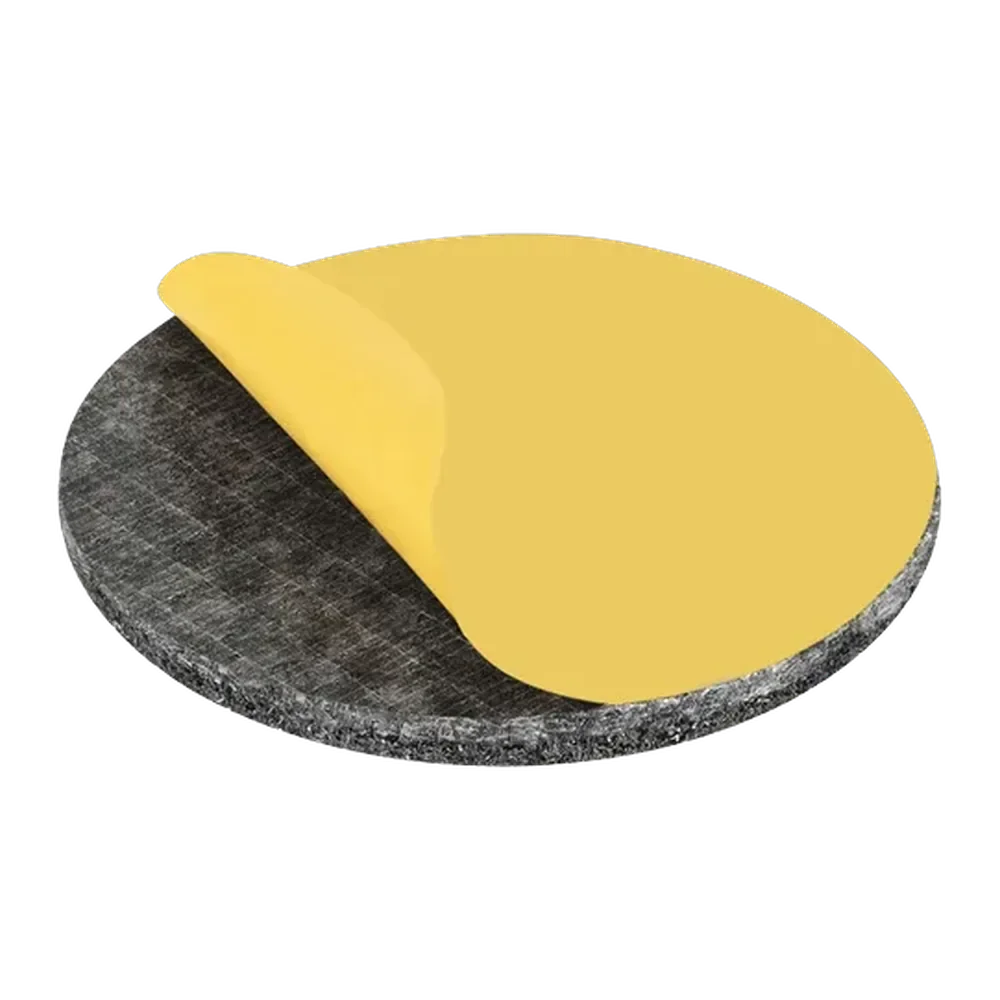
Every pad is built as a complete unit. Here is each component and the role it plays in protecting your floor from dents, scratches, and traffic marks. Each tier (Standard, Heavy-Duty, Foam) uses the same PA6 fiber surface, but the construction underneath changes based on what the pad needs to do.
Two precision-engineered components protect your floors from the weight of everyday furniture. The PA6 fiber surface sits against the floor while the EHBT adhesive bonds to the furniture leg base.
PA6 (Polyamide 6) needle-punched fiber, 5.5 mm thick. The chemically inert face sits against the floor and presses out heat, water, and traffic marks without scratching hardwood, tile, or laminate.
EHBT fiberglass mesh tape that bonds to the furniture leg base. Clean the leg with isopropyl alcohol, peel, then press firmly for 30 seconds. Full bond strength comes over 48 hours, which happens on its own on stationary furniture.
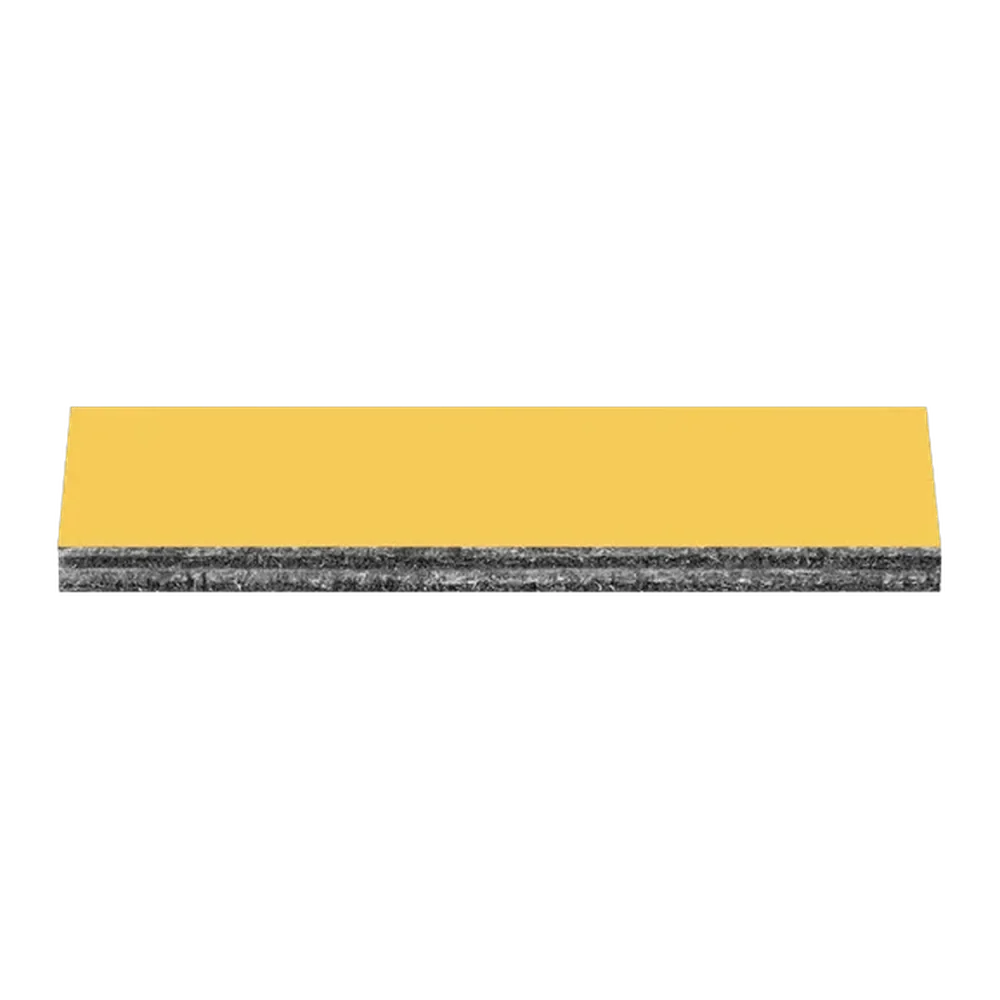
Two precision-engineered components handle extreme weight loads from pianos, safes, marble furniture, and commercial equipment. Same construction as Standard pads, but with doubled thickness for maximum compression resistance.
The same PA6 needle-punched fiber as Standard pads, at 11 mm thick (double the 5.5 mm Standard). The extra depth resists compression under pianos, safes, and other heavy loads, so the fiber keeps its cushion instead of flattening.
The same EHBT fiberglass mesh tape used on Standard pads. Clean the leg with isopropyl alcohol, peel, then press firmly for 30 seconds. Full strength comes over 48 hours.
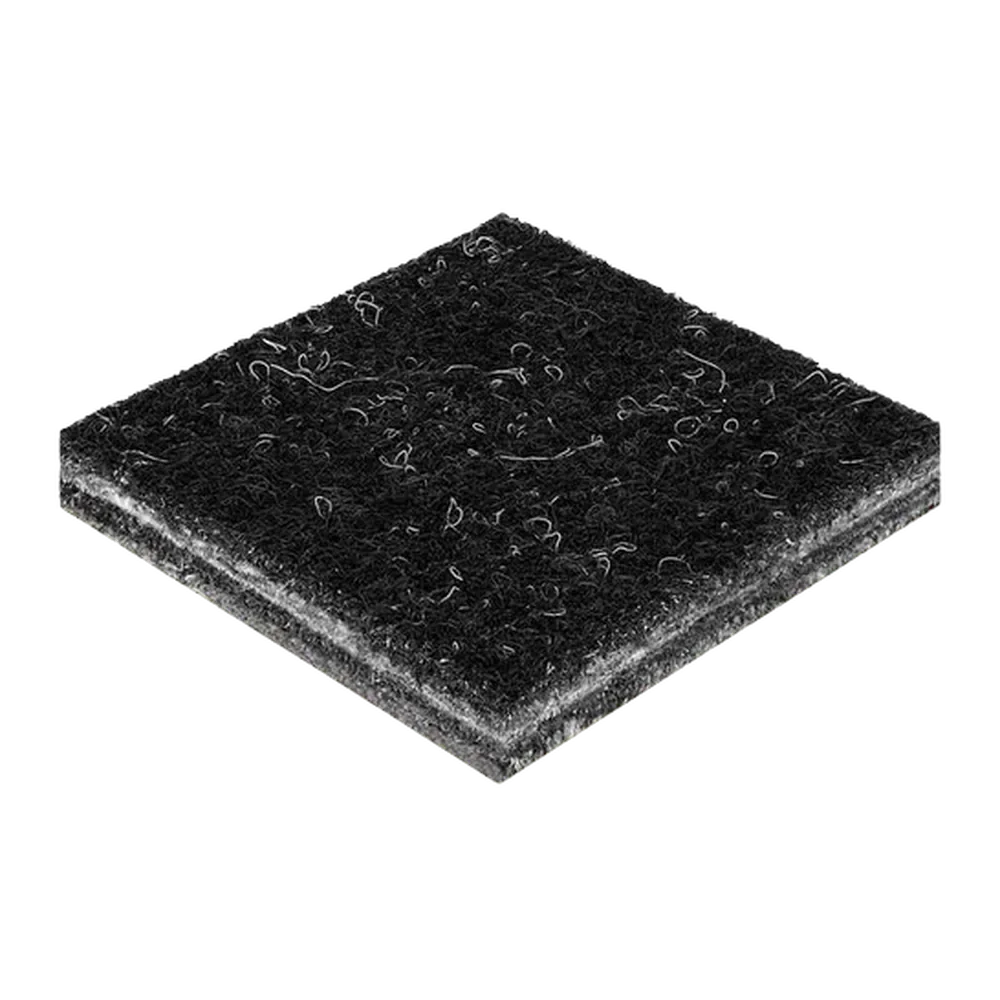
Three layers solve the uneven-floor problem, and uneven leg bases too. The PA6 fiber surface protects the floor, the closed-cell foam core conforms to surface irregularities, and a dual adhesive backing bonds the pad to the leg.
The same PA6 needle-punched fiber face that protects the floor from scratches and traffic marks.
A closed-cell foam core that conforms to surface irregularities, on the floor or the leg base. It lets the pad sit flat on uneven surfaces and warped leg bottoms where a rigid pad would rock.
Foam pads use two adhesives: an EHBT fiberglass mesh in the middle of the stack and an EHBF acrylic foam tape that bonds to the leg. Only the bottom backing peels off, so leave the inner layer in place. Both reach full strength over 48 hours, so avoid moving the furniture during the cure.
These are the questions that come up most about furniture pads. If you don’t see your question, our specialists can help. Reach out via Contact & Support, or browse the rest of the furniture pads guide for more detail.
Furniture pads are self-adhesive PA6 needle-punched fiber discs that attach to the bottom of furniture legs to protect smooth, hard floors from dents, scratches, and traffic marks. They’re ideal for furniture that stays in place: tables, sofas, cabinets, bed frames, dressers. Available in three tiers: Standard (everyday furniture), Heavy-Duty (pianos and heavy equipment), and Foam (uneven bases and lightweight objects).
Both use the same PA6 fiber surface. Pads attach directly to the leg with EHBT mesh adhesive, no rigid platform underneath. Glides have a rigid carrier that distributes load when furniture moves across the floor. Choose pads for furniture that stays put. Choose glides for furniture that moves regularly (dining chairs, desk chairs).
Standard pads (5.5 mm thick) handle everyday furniture weight: tables, sofas, cabinets, dressers. Heavy-Duty pads (11 mm thick) are for concentrated loads on small contact points: pianos, pool tables, gun safes, server racks, large appliances, marble or stone furniture. If a Standard pad would be compressed flat by what you’re putting on it, use Heavy-Duty instead.
Foam pads are for three specific cases: (1) furniture on slightly uneven floors, like old hardwood that has shifted, tile with minor lippage, board-to-board transitions, where the foam compresses to fill the gap; (2) furniture with uneven, warped, or bowed leg bases that rocks even on a flat floor; and (3) lightweight decorative objects (lamps, vases, ceramics, speakers) where the foam dampens vibration and absorbs sound. They’re not for heavy furniture, since the foam compresses under load.
Measure your leg base (round = diameter, square or rectangular = width × length), then pick the closest size that sits flush with the base or just inside it. If you fall between two sizes, go smaller. A pad that overhangs the edge catches on things and lifts at the corner, while one tucked just under the edge stays hidden and bonded. For example, a 38 mm round leg takes the Ø 35 mm pad.
No. The PA6 needle-punched fiber is chemically inert and leaves no marks, scuffs, or residue on any sealed floor finish. The National Wood Flooring Association (NWFA) recommends protective pads on furniture legs as a primary measure for maintaining hardwood floor condition.
No. Pads are designed for smooth, hard floors only. The PA6 fiber surface presses into carpet pile and provides no benefit, and the EHBT adhesive doesn’t bond well to the bottom of a leg that’s already pressed into carpet. For carpet, use Furniture Slides with a hard ABS surface instead.
The PA6 fiber surface is dimensionally stable and chemically inert. Replacement intervals depend on traffic, weight, and how often furniture moves. Standard pads typically need replacement when the fiber has compressed to a thin film or the edges have started to delaminate. Heavy-Duty pads hold up better under sustained heavy weight. Foam pads have the shortest service life because the foam core eventually loses some compression resistance.
Yes. Wipe the leg base with isopropyl alcohol (70% or higher) and let it fully evaporate before installing. Dust, wax, or oily residue weakens the EHBT bond. Then press the pad on firmly for 30 seconds. The adhesive keeps building strength over the next 48 hours, and because pads sit on furniture that stays put, that cure happens on its own, no waiting required.
Press the pad on firmly for 30 seconds and you can set the furniture back in place right away. The adhesive keeps building strength over the next 48 hours, but since pads go on furniture that stays put, that happens on its own. Just avoid sliding the piece across the floor during the first 48 hours.
This is where the size range matters. We carry rectangular pad sizes across five width groups (20, 30, 40, 50, 60 mm), plus 510 mm adhesive strips that you can cut to length for non-standard shapes. For oversized round bases, pads go up to Ø 300 mm. For square bases, up to 300 × 300 mm. If your furniture has a truly unusual contact shape, contact us via Contact & Support for a recommendation.
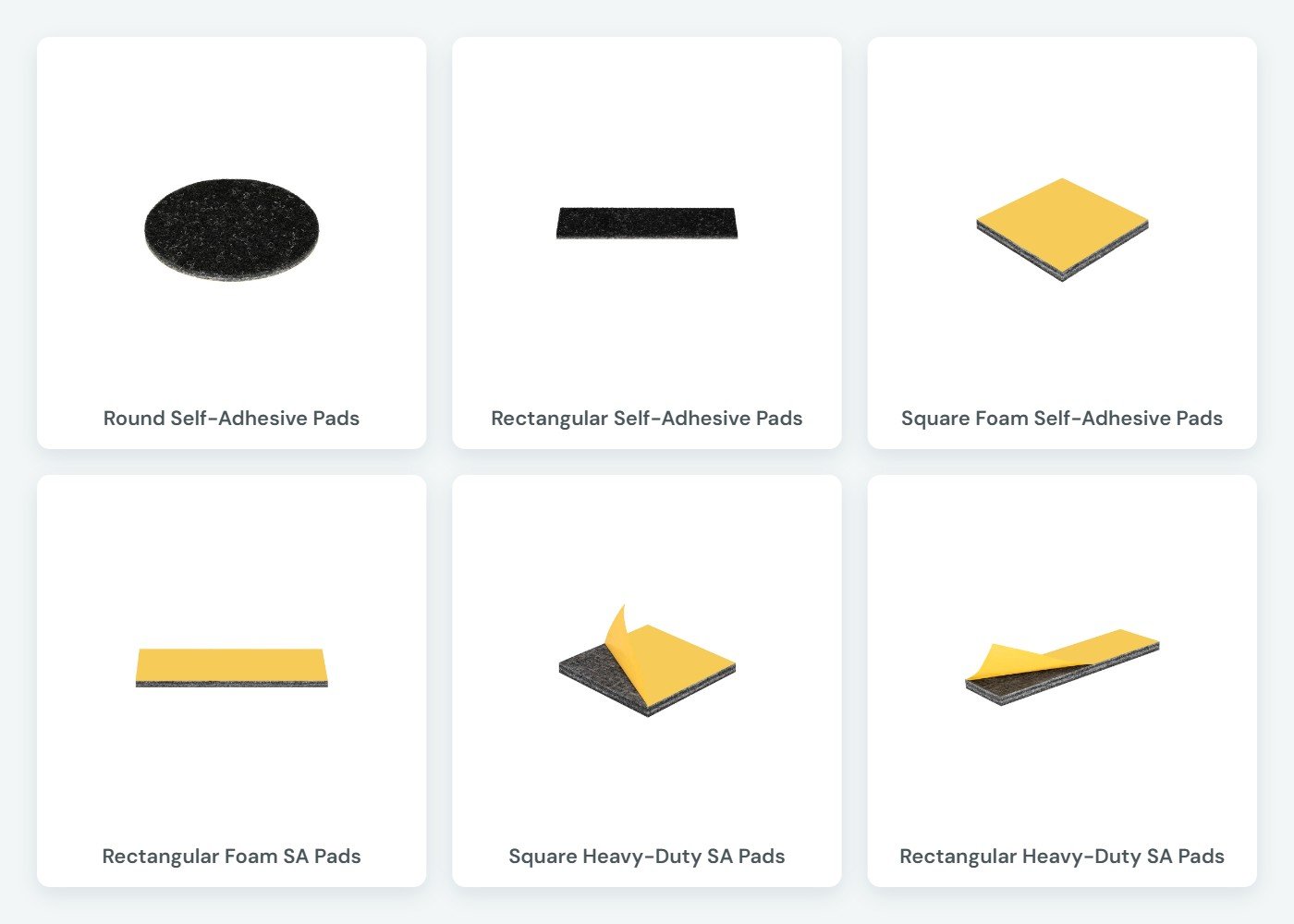
Browse the full pad lineup by type. Pick Standard for everyday furniture, Heavy-Duty for concentrated loads, and Foam for uneven legs and floors. Every size lives on its product page.
Everyday furniture on hardwood, tile, and laminate.
Pianos, safes, and equipment that concentrate weight.
Uneven leg bases and uneven floors that need to conform.
Now shop the catalog with all the knowledge you need.
Browse other furniture guides: Glides Guide · Slides Guide · Tube Plugs Guide · Leveling Feet Guide · Sled Base Guide
Product categories: Furniture Glides · Furniture Slides · Furniture Pads · Tube Plugs & End Caps · Leveling Feet · Sled Base Glides
Business accounts: Business Solutions for volume pricing, B2B accounts, and commercial orders.