Furniture Slides Guide
Carpet fights back. A leg digs in, the chair judders, and the pile takes the damage. Furniture sliders and furniture slides are two names for the same part, so if you searched for sliders, you are in the right place. This guide covers the whole job: picking the floor type and mounting, measuring the leg, fitting them, and knowing when a slide is the wrong part entirely.
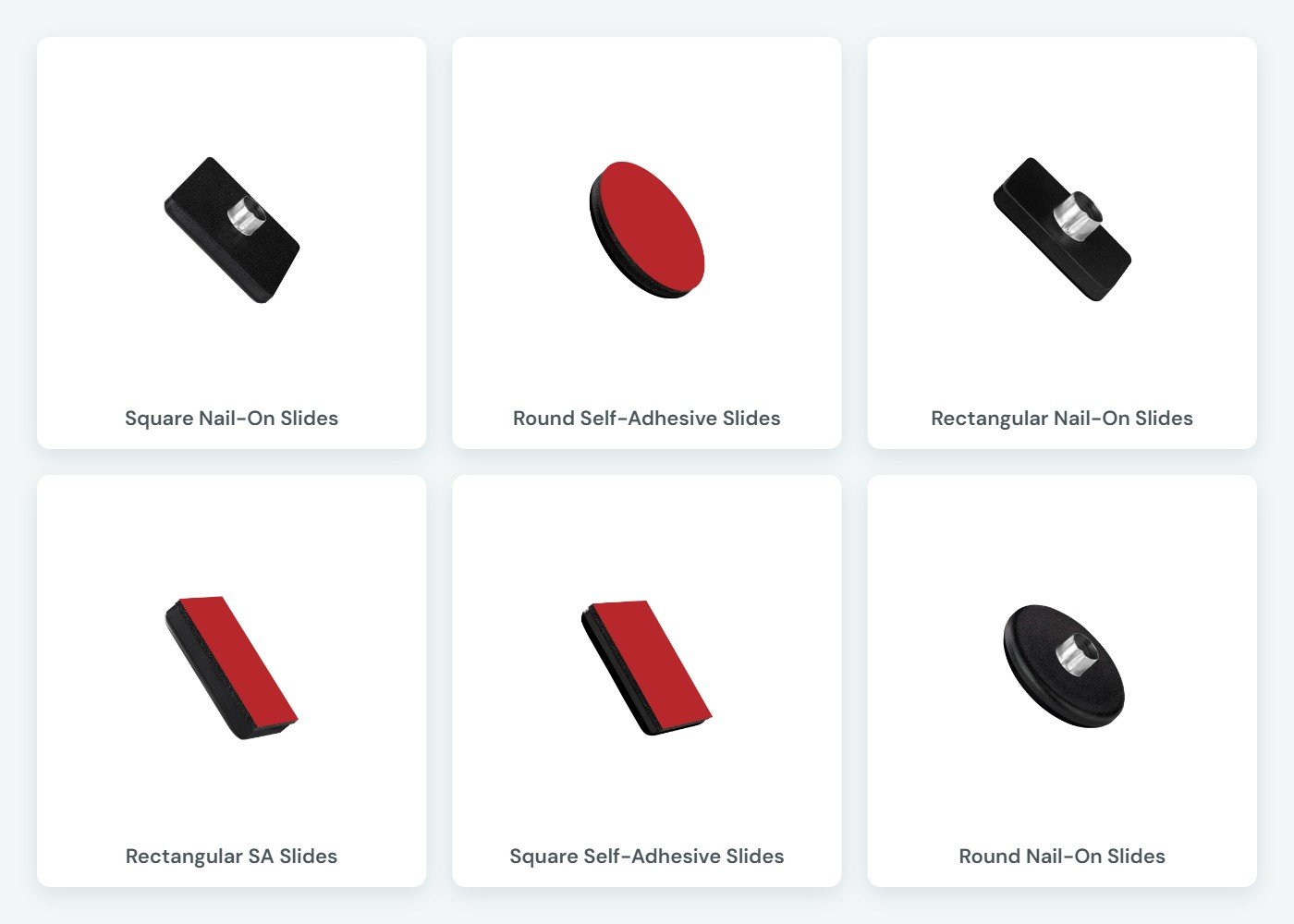
Start here
Two questions and you have your furniture slides.
A slide is defined by two things: the surface it has to cross, and how it attaches. Settle those and only the size is left to pick.
Question 1. What are you protecting?
Carpet, carpet tile, or area rugs
The hard ABS face rides on top of the pile instead of sinking into it, so a loaded sofa or bed frame shifts without the legs ploughing a channel or catching a loop.
Rough or textured hard floors
Slate, stamped concrete, brick, textured tile, wide grout lines. Anything abrasive enough that a fiber face would dip in and wear through. The ABS face bridges the texture.
Question 2. What are the legs made of?
Solid wood: nail-on
The anchor here is mechanical: a zinc rivet tapped home with a mallet, working immediately, with a notch that keys into the grain so dragging cannot spin the slide on the leg.
Metal, plastic, or anything you cannot pierce: self-adhesive
Here the tape does the holding: EHBF acrylic foam grips the full footprint of the leg, and it does not care whether that leg is chrome, powder-coat, aluminum, hollow tube, or a rental you are not allowed to mark.
The part people get wrong
How to measure a leg for slides.
Carpet hides a badly sized slide until the damage is done, because the pile closes over an overhanging rim and you never see it. Measure the leg base itself, not the dent it leaves.
01
Turn the furniture over
Sofas and beds rarely invert. Tip the piece back onto two legs against a wall, or walk it onto its side with a second pair of hands. You need to see the flat face at the bottom of the leg, not reach under and guess at it.
02
Measure at the widest point
Round legs: the diameter. Square: one side. Rectangular: both, width first. Ignore any castor cup or plastic foot already fitted, unless you plan to leave it on, in which case that part is now the leg.
03
Watch for taper
A leg that has stood on carpet for years often has a compressed disc of pile under it and a slightly flared foot from the weight. Measure the hard edge of the leg, not the flattened ring around it.
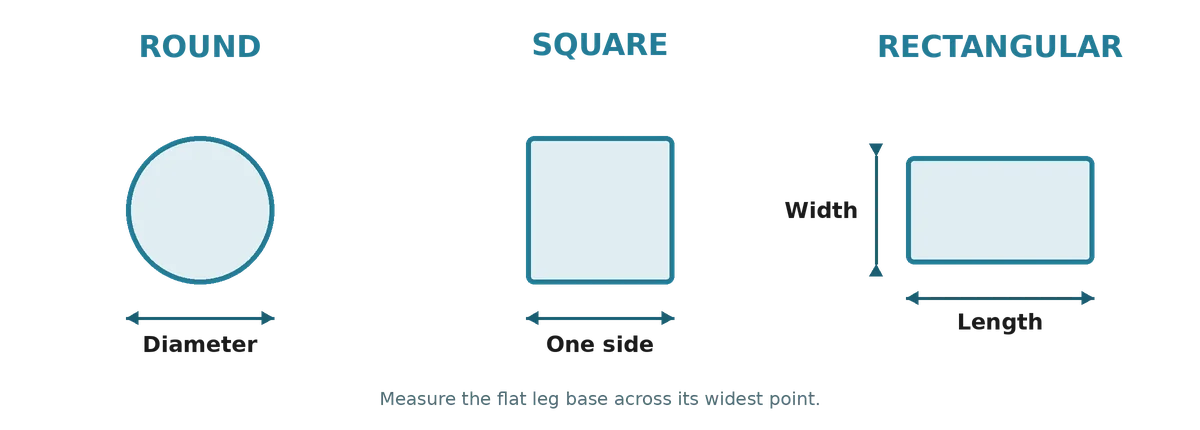
Where to measure the leg base
Between two sizes? Take the smaller one. On carpet the reason is a little different from a hard floor. An overhanging rim digs into the pile at the edge rather than riding on it, so the leg tips slightly and the slide starts levering off its own corner. Sized under the leg, the load stays flat.
Before anything else
Which floors furniture sliders belong on.
Furniture slides cover two situations that look unrelated and behave the same way: carpet, and hard floors with texture. Both chew through a fiber face.
Use slides here
Wall-to-wall carpet, commercial carpet tile, area rugs, runners, indoor-outdoor carpet. Also textured ceramic tile, natural cleft slate, travertine, stamped and unsealed concrete, brick, rough terrazzo, and rubber gym flooring.
Use glides instead here
Sealed hardwood, engineered wood, polished tile, luxury vinyl, laminate, sealed stone, marble, polished concrete. A hard ABS face on a polished finish can scuff it, and it moves more freely than most people want.
The Carpet and Rug Institute’s maintenance bulletin recommends fitting glides or cups under the legs of heavy furniture to stop the weight concentrating in one spot and pressing a depression into the pile. Their bulletin is at carpet-rug.org.
Five minutes for a set of four
How to fit furniture slides.
Two methods, three steps each. Do the work before the furniture goes back down: once a loaded sofa is on the pile again, nobody is lifting it twice.
Nail-on, into solid wood
01
Center it on the leg
Square the slide to the leg, not to the room. On rectangular slides the long axis usually wants to run along the direction the furniture travels, which on a sofa is front to back.
02
Tap it home
Drive it with a rubber mallet until it seats flat. Nothing needs pre-drilling. Keep a steel hammer away from it: ABS scars, and a scarred face holds grit that then works against the pile every time the piece moves.
03
Twist it
Give it a twist by hand. Movement means the anti-rotation notch is not into the grain yet. On carpet furniture this matters more than usual, because pile drag applies a turning force every time the piece moves.
The large sizes work differently. The bigger nail-on slides carry EHBF acrylic foam around the rivet, so they hold mechanically and adhesively at once. Wipe the leg base with isopropyl alcohol before you drive those in, or half the mounting is doing nothing.
Self-adhesive, onto anything flat and clean
01
Clean the leg base
Isopropyl alcohol, 70% or higher, then let it dry. On furniture that has lived on carpet, expect fiber dust and lint compacted onto the foot. Scrape that off first or the tape is bonding to fluff.
02
Peel and place
Peel and go straight on. Do not rest the exposed face against carpet even for a second, which is easy to do when you are working on the floor and is the fastest way to ruin the bond.
03
Press, then wait
Lean on it for a full half minute, working corner to corner. Then lower the furniture and walk away for two days. Weight helps the bond cure, but dragging before it has is what pulls a new slide straight back off.
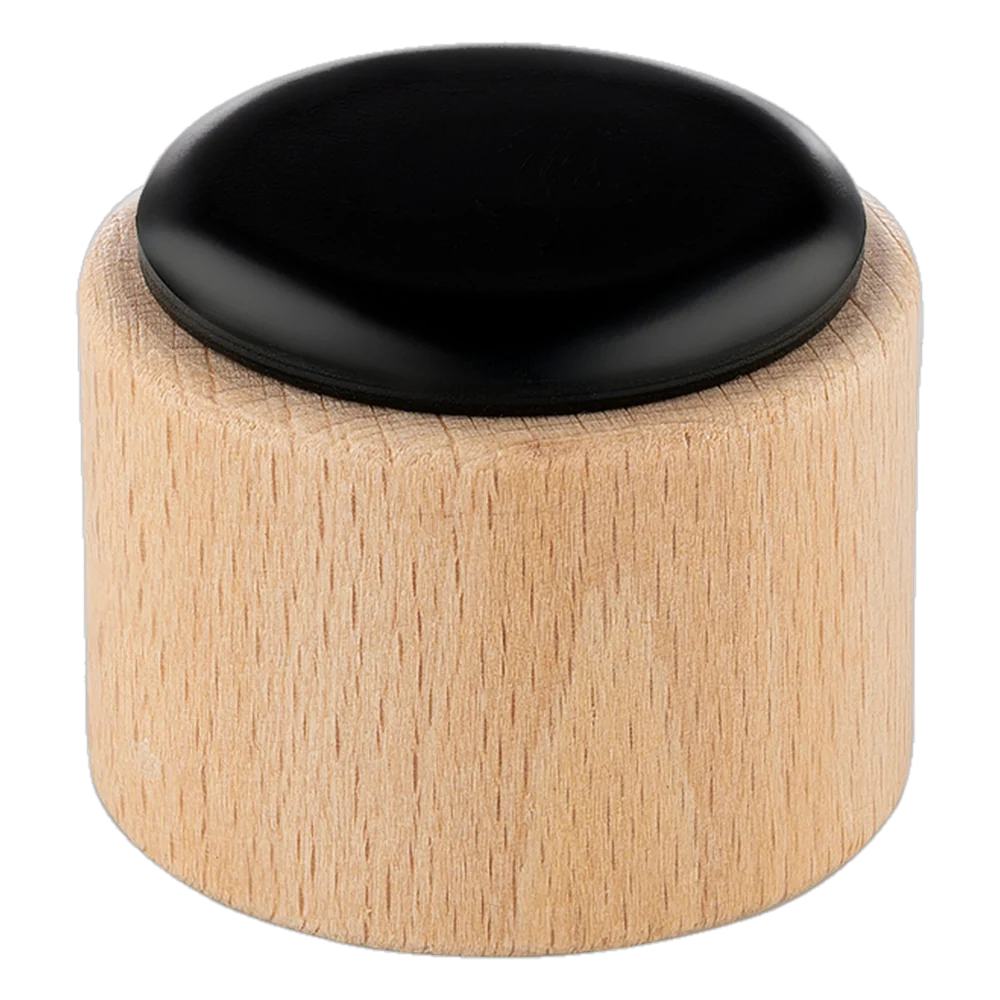
Nail-on furniture slides fitted to a solid wood leg
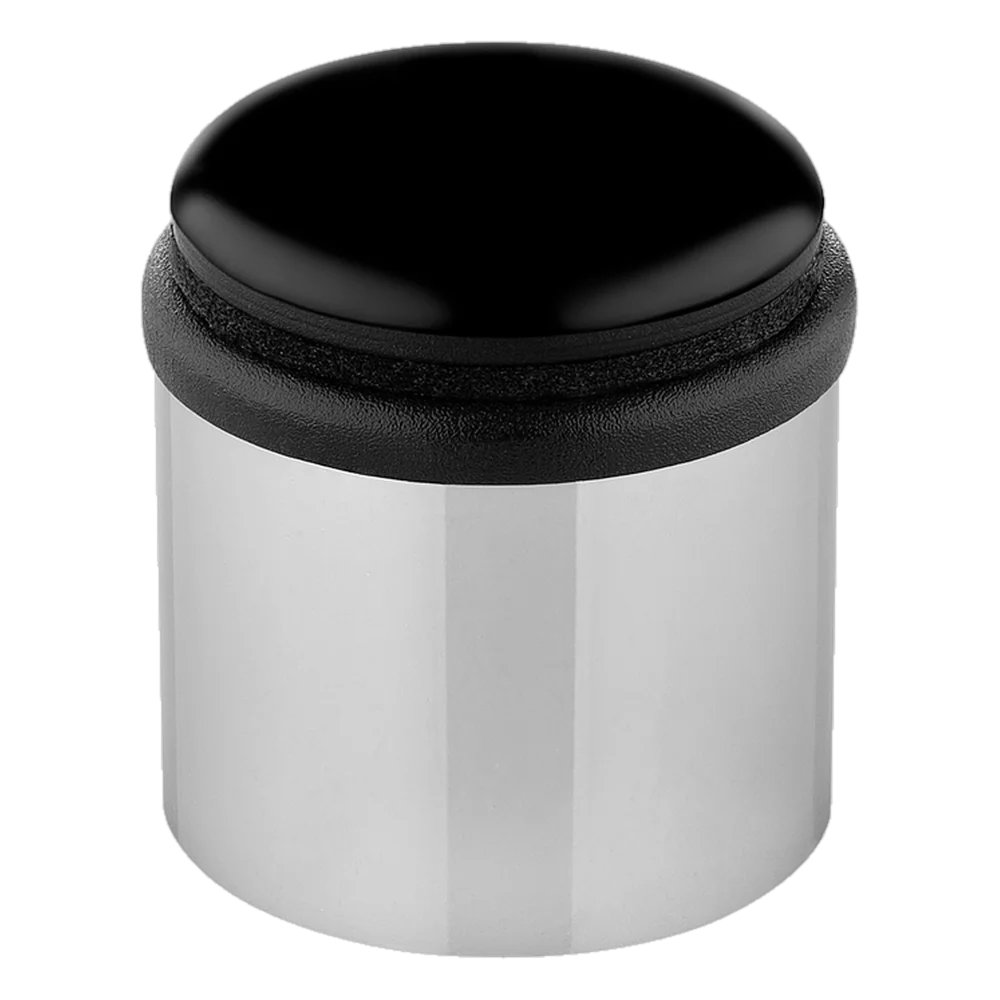
Self-adhesive furniture slides on a metal leg
What you are buying
What is inside a furniture slide.
The ABS face is the part everyone looks at, but it is the layer behind it that decides whether the slide survives being dragged. Switch views and tap a number.
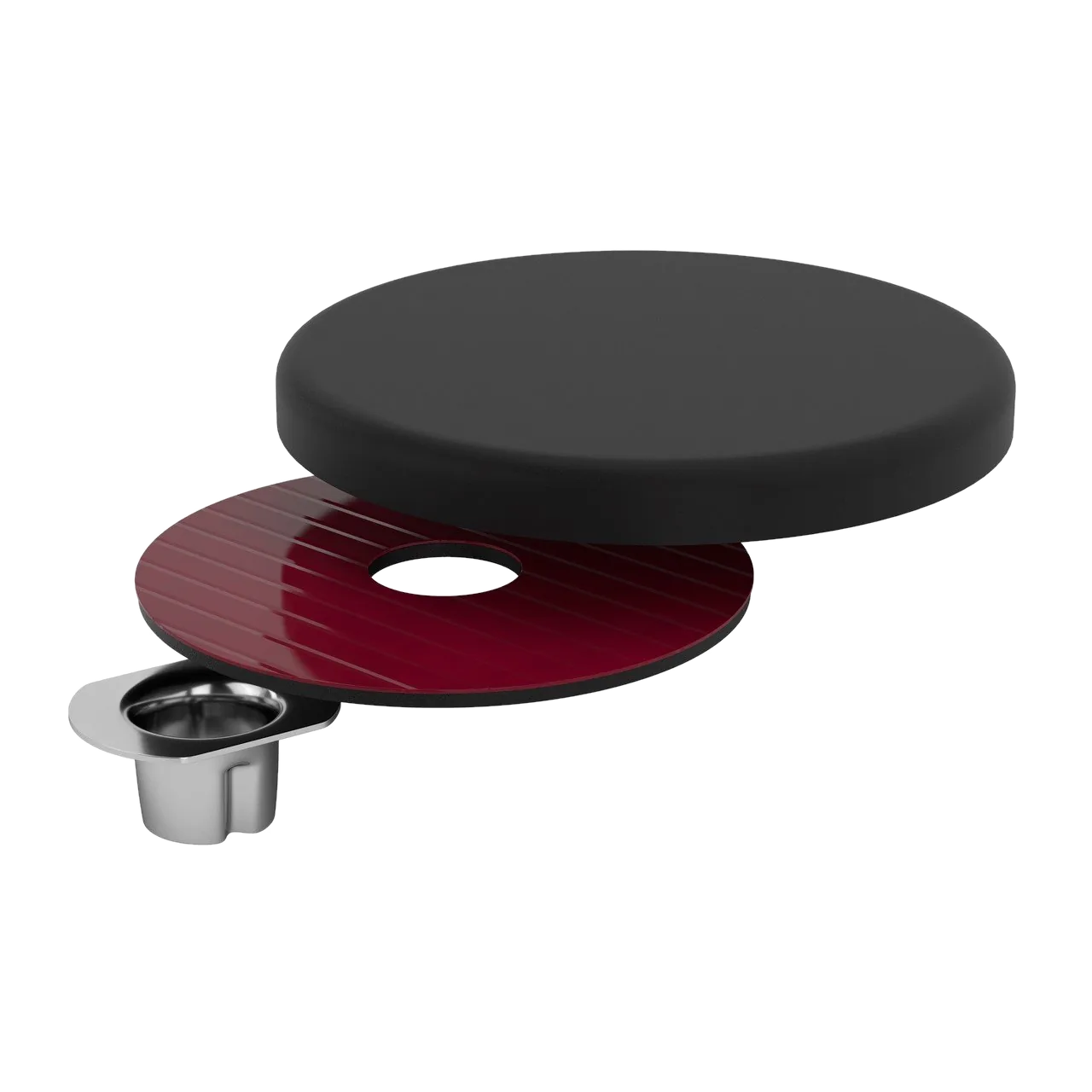
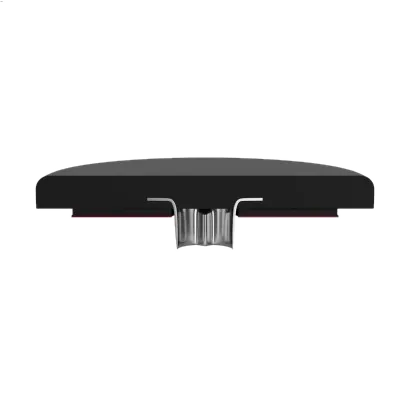
Built for Carpet and Rough Floors
The hard ABS face does the sliding over carpet and rough floors. The zinc-plated steel rivet anchors it into solid wood, and the anti-rotation notch keeps it from spinning. No pre-drilling required.
Automotive-grade ABS (Acrylonitrile Butadiene Styrene), the same rigid material used in car dashboards. Its hard, low-friction face slides over carpet, carpet tile, area rugs, and rough hard floors like grout lines, slate, and textured tile.
An engineered acrylic foam layer bonded inside the slide. It distributes load across the ABS plate and dampens vibration, so movement stays smooth and quiet.
Zinc-iron plated steel tubular rivet with a sharp edge that separates wood fibers without pre-drilling. The head is molded directly into the ABS plate, so the rivet and plate seat together as one piece.
A notch molded into the back of the plate that seats against the leg. It keeps the slide from spinning in place, so the face stays oriented the way you set it.
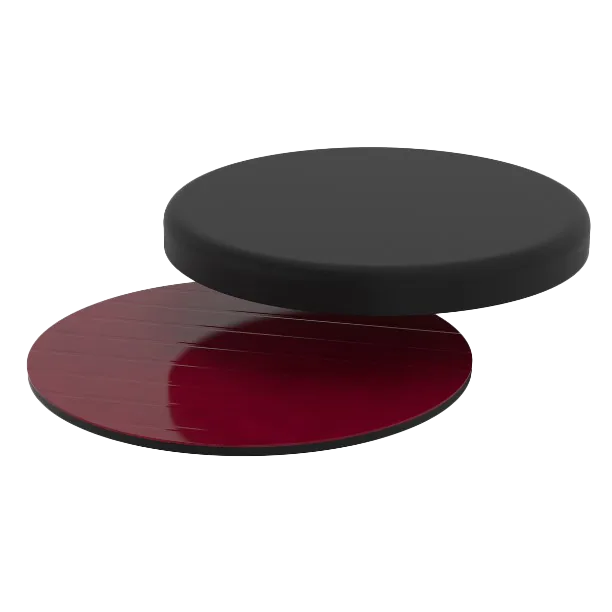
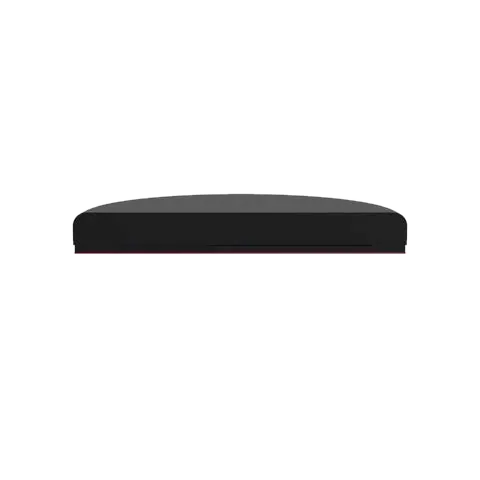
Designed for Easy Application
The same hard ABS face as the nail-on version, mounted with EHBF acrylic foam tape instead of a rivet. It peels and sticks onto metal, plastic, or any clean, smooth leg, and reaches full bond strength after 48 hours.
The same hard ABS face used on the nail-on slides. It glides over carpet and rough hard floors, with no fiber pad to flatten or wear down.
Engineered acrylic foam tape that bonds to any clean, smooth leg: chrome, powder-coated steel, anodized aluminum, finished wood, and most rigid plastics. Clean the leg with isopropyl alcohol, peel, then press firmly for 30 seconds. It reaches full bond strength after 48 hours.
The one that gets bought wrong
Slides and glides do opposite jobs.
They look almost identical in a photograph and they are built to opposite assumptions. Buying the wrong one is the single most common mistake on this catalog. Our glide vs slide comparison sets them side by side.
A furniture slide
Hard ABS face. Low-friction, impact-resistant, dimensionally stable. It rides on top of carpet pile and bridges grout lines and abrasive texture. On a polished floor it can scuff the finish and the furniture moves more freely than you want.
A furniture glide
Soft PA6 needle-punched fiber, or NR+CR rubber on the anti-slip line. Quiet and gentle on a sealed floor. On carpet the fiber grips instead of sliding, and on abrasive stone it wears through.
If you would rather skip the theory
The right slide for each piece of furniture.
Carpet jobs sort into a handful of shapes. Find yours and go straight to the right part of the range.
Sofas and armchairs
Heavy, moved for cleaning, and the worst offenders for pressing depressions into pile. Wide leg bases, so take the largest slide that still sits within the base.
Bed frames
Rarely moved but very heavy, and usually a metal or engineered-wood foot. Self-adhesive covers both, and the load spreads across a wider face.
Dining chair sliders for carpet
Dragged over pile several times a day, which loads the mounting sideways rather than down. Wood legs want nail-on here; adhesive alone is asking a lot.
Sled-base and cantilever frames
The frame touches along a rail rather than at a point. Rectangular slides follow the rail without hanging off the side, and a dedicated sled base glide is often the better answer.
Desks, cabinets and storage
Static most of the time, then dragged once a year. A rectangular slide suits a long narrow foot; a square one suits a plinth corner.
Offices, hotels and function rooms
Contract carpet gets rearranged daily and replaced on a budget cycle someone has to defend. Volumes at that level are worth a conversation rather than a cart.
Still open
Furniture slides and sliders: common questions
Sizing and ordering are covered on the slides category page. What follows is the awkward stuff: castors, rugs on rugs, splayed legs, and commercial pile.
Can I put slides on a chair that already has castors?
Take the castors off first, or leave them. Fitting a slide next to a castor means the castor still carries the load and the slide never touches the floor. If the castors are the reason the carpet is marking, pull them and fit slides in the same sockets only if the socket accepts a flat base. Otherwise the leg needs a plug first to give the slide something flat to sit on.
Will slides work on a sled-base or cantilever frame?
Rectangular slides at 33 × 19 mm (1.30″ × 0.75″) follow a rail without hanging off the side, so they suit older frames. If the frame is round tube, a sled base glide is the better part because it saddles the tube rather than sitting on a flat that is not there.
There is a rubber-backed rug on top of my carpet. Does that change anything?
The slide only ever meets the top surface, so size and choice do not change. What does change is that the rug can now travel with the furniture instead of staying put, because you have lowered the friction above it and not below it. A rug pad or a grippier backing solves that; the slide will not.
Do slides make furniture noisier?
On carpet, quieter, because the leg stops catching and juddering. On a hard floor a slide is louder than a glide, since ABS on stone or tile is a harder contact than polyamide fiber. That is one of the reasons the two lines are separate.
The chair legs splay outward rather than pointing straight down. Does that matter?
It matters more on carpet than on a hard floor. A splayed leg meets the floor on an edge, so a flat slide only makes partial contact and the pile takes the load through that edge. Measure the actual contact face rather than the leg diameter, and if the angle is pronounced an angled plug fitted first gives you a flat face to work from.
How do I get an old nail-on slide off without wrecking the leg?
Grip the rim with pliers and rock it rather than pulling straight down. The tubular rivet parted the wood fibers going in, so it comes back out through the same gap. Expect a small mark. A replacement of the same size drives into the same hole and sits tight.
Will they hold up on commercial loop pile that gets vacuumed every day?
That is the duty they are built for, and the wear point is the mounting rather than the face. On contract furniture use nail-on where the legs are wood and take the two-hole option where it exists. A beater-bar vacuum run against a self-adhesive slide daily will find any weakness in the bond, so the alcohol wipe matters more in a commercial fit than a domestic one.
Is there an anti-slip version of a slide?
No, and it would work against itself. Anti-slip is a rubber face made to grip a smooth sealed floor, and it belongs on the glides line. A slide exists to reduce friction on carpet. If furniture is moving on carpet when you do not want it to, the fix is usually weight distribution or a rug pad rather than a different part under the leg.
How do I choose the right size furniture sliders for my furniture legs?
Measure each leg at its widest point where it meets the floor, then choose a slide that matches that footprint — flush with the leg edge or slightly smaller. For sled-base chairs with tubular runners, measure the tube diameter instead. Full walkthrough: how to measure furniture legs.
Do slides work on hard floors too?
On rough or textured hard floors, yes: ABS slides bridge texture that would chew up a felt pad. On smooth sealed hard floors, PA6 glides are the better tool — see the furniture glides guide.
Other resources
Browse other furniture guides: Glides Guide · Pads Guide · Tube Plugs Guide · Leveling Feet Guide · Sled Base Guide · Tile Floors Guide · Nail-On Glides How-To
Related reading: furniture glides vs slides · how to measure furniture legs for glides and slides
Product categories: Furniture Glides · Furniture Slides · Furniture Pads · Tube Plugs & End Caps · Leveling Feet · Sled Base Glides
Business orders: Business pricing for volume pricing, project quotes, and commercial orders.
That is the guide
Show us the leg and the carpet, and we will choose.
Carpet and rough stone both hide their problems well, so if this furniture slides guide has not settled it, show us instead. A photo of the leg base and one of the floor, and we will tell you which line you actually need.