Hospitality-grade floor protection · Sizing help before you order · Apply for a business account
Sizing help · Apply for a business account
Hospitality-grade floor protection · Sizing help before you order · Apply for a business account
Sizing help · Apply for a business account
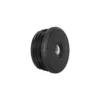
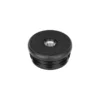
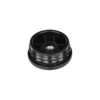

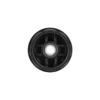
A hollow round leg has nothing to screw a leveling foot into. These inserts fix that. Press one inside the tube, the flexible ribs grip the wall, and the zinc-plated nut takes any M6 to M12 foot. Match the insert to your tube diameter, then dial the wobble out of tables, desks, and workbenches.
We make this size in production runs, so there is none on the shelf today. Tell us how many you would want and you go on the list for it. When enough people ask for a size, we run it, and the people who asked hear about it first.
We stock a limited range of tube sizes and wall thicknesses. Tell us the size you need and we will confirm availability and pricing by email.
Buying in volume? See business pricing & samples ↓
Standard tube plugs seal and finish hollow round legs. Round threaded inserts do that and add something standard plugs cannot: a built-in threaded metal nut that accepts adjustable leveling feet. The PA body press-fits inside the tube the same way a plug does. But instead of a flat PE head, a zinc-plated steel nut sits centered in the insert, ready to receive any leveling foot with a matching M thread. Tables, desks, workbenches, and commercial furniture that need height adjustment on uneven floors start with round threaded inserts. Also known as threaded inserts for round tube legs or furniture leg threaded inserts round, commonly used as round tube threaded inserts leveling hardware in sizes including round threaded inserts M8 M10.
PA (polyamide) body for structural rigidity under load. Zinc-plated steel (Fe HDG) threaded nut for corrosion-resistant thread engagement. Flexible internal ribs grip the tube wall without adhesive. Round threaded inserts are used for round tube legs and bridge the gap between the hollow tube and the leveling foot. 3 tube diameters: Ø 28, 40, and 50 mm. 4 thread sizes: M6, M8, M10, and M12. Wall thickness 1 to 2 mm. Black, grey, and white.
Two components in one product. The PA body handles the tube connection. The steel nut handles the leveling foot connection. Together, they create a threaded interface inside a hollow round tube that was never designed to accept a screw.
The PA body with flexible ribs press-fits into the hollow round tube, the same way a standard tube plug does. The ribs compress during insertion and expand against the tube interior. No adhesive, no screws. The insert body grips the tube wall through friction. The threaded nut is centered and exposed at the bottom of the insert, facing the floor.
Any leveling foot with the matching M thread screws into the nut. Turn the foot clockwise until it engages the threads, then continue turning to adjust the height. The leveling foot extends below the insert, creating an adjustable contact point between the furniture and the floor. Turn to raise. Reverse to lower. Height adjusts in seconds.
Two measurements for the insert: tube outside diameter and wall thickness. One decision for the system: which M thread size matches your leveling foot or your load requirements.
Use calipers across the outside of the round tube. These inserts are available for Ø 28, 40, and 50 mm. The insert must match the tube diameter exactly.
Use calipers at the tube end. All these inserts require 1 to 2 mm wall thickness. If your tube has thicker walls, the insert body will not seat fully.
M6 for the lightest loads (small side tables, display stands). M8 for light to medium (dining tables, desks). M10 for medium to heavy (conference tables, commercial furniture). M12 for heavy-duty (workbenches, industrial tables). If you already have leveling feet, match the thread to them.
Same press-fit installation as standard round tube plugs. The PA body with ribs slides into the tube and grips the interior wall. A rubber mallet is recommended for the PA body, which is more rigid than PE and requires a firmer push to seat fully.
The fundamental problem: hollow round tubes have no threads. Without round threaded inserts, there is no way to screw a leveling foot into a hollow tube leg. The National Wood Flooring Association (NWFA) recommends protective contact on all furniture legs, and leveling feet installed through these inserts provide adjustable, floor-friendly contact that standard plugs cannot.
The primary function. Tables, desks, and workbenches wobble on uneven floors. Leveling feet screw into these inserts and extend or retract to compensate for floor irregularities. Each leg adjusts independently, so one low corner can be raised without affecting the other three.
Leveling feet have broad, flat bases (often with anti-slip or PA6 pads) that distribute weight and protect floors. Unlike bare metal tube ends that scratch and gouge, a leveling foot base provides controlled, designed floor contact. Round threaded inserts are the bridge that connects the hollow tube to the leveling foot.
The threaded nut transfers the full furniture load from the leveling foot through the insert body into the tube wall. PA handles this concentrated compressive and shear stress. The zinc-plated steel nut handles the thread engagement and rotational forces from height adjustment. Together, the PA body and steel nut create a load path that a standard PE tube plug cannot provide.
Like every other press-fit product in the range, these inserts seal the tube opening. Moisture, debris, and insects are kept out. The PA body fills the tube opening around the nut, providing the same moisture barrier as a standard plug. The insert seals the tube whether or not a leveling foot is installed, though the exposed nut threads should be protected from debris if the foot is removed.
Round threaded inserts are designed for any hollow round furniture tube that needs to accept an adjustable leveling foot. The insert bridges the gap between the hollow tube and the threaded foot.
Choosing the right thread size depends on the load the furniture carries and the leveling foot you plan to use. Here is a general guide for these inserts across the three available tube diameters.
The smallest thread. For lightweight furniture: small side tables, display stands, and accent tables. Low load capacity. Available only in the Ø 28 mm tube diameter.
The most versatile thread. Available across all three tube diameters. Handles light to medium furniture loads: dining tables, home office desks, and light commercial tables. The most commonly specified thread for general furniture leveling.
Medium to heavy duty. For conference tables, commercial dining tables, institutional furniture, and equipment with moderate to substantial loads. Available in the two larger tube diameters, where heavier furniture is most common.
Heavy-duty. For workbenches, industrial tables, heavy commercial equipment, and any furniture where the per-leg load is substantial. Available only in Ø 40 mm. Black and grey.
| Fits Tube (Ø) | Insert Depth (H) | Thread (M) | Static load (SL) |
|---|---|---|---|
| 28 mm (1.10″) | 15 mm (0.59″) | M8 | 80 kg |
| 28 mm (1.10″) | 15 mm (0.59″) | M6 | 60 kg |
| 40 mm (1.57″) | 12 mm (0.47″) | M12 | 150 kg |
| 40 mm (1.57″) | 13 mm (0.51″) | M8 | 80 kg |
| 40 mm (1.57″) | 13 mm (0.51″) | M10 | 120 kg |
| 50 mm (1.97″) | 14 mm (0.55″) | M10 | 120 kg |
| 50 mm (1.97″) | 14 mm (0.55″) | M8 | 80 kg |
Tube wall thickness is a fit requirement, not a tolerance.
| Specification | Detail |
|---|---|
| Material | Polyamide body with a hot-dip galvanised steel thread |
| Sizes | 7 sizes |
| Diameter (Ø) | 28 to 50 mm (1.10″ to 1.97″) |
| Height (H) | 12 to 15 mm (0.47″ to 0.59″) |
| Head height (H1) | 5 mm (0.20″) |
| Tube wall thickness (T) | 1 to 2 mm (0.04″ to 0.08″) |
| Thread (M) | M6, M8, M10, M12 |
| Static load (SL) | 60 to 150 kg |
| Mounting | Pushes into the tube, takes a threaded foot |
| Colors | Black, Gray, White |
| Floor compatibility | Hollow tube legs |
| Minimum order | Sold in a minimum of 4, then any quantity you need |
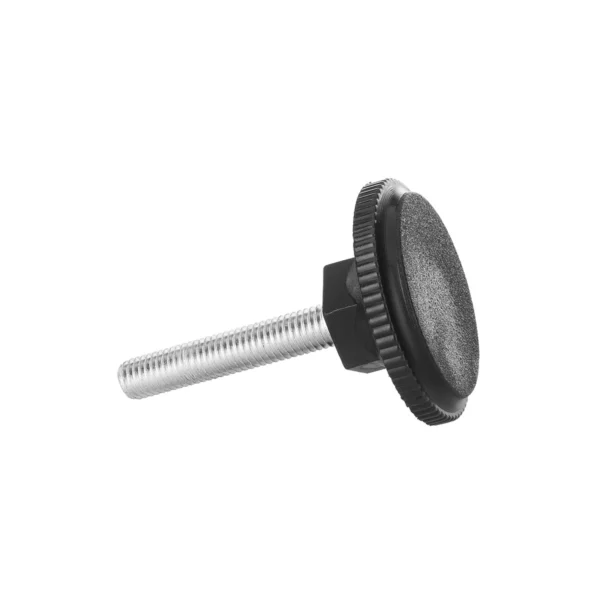
Any leveling foot with a matching M thread. An M8 insert accepts any M8 leveling foot. An M10 insert accepts any M10 foot. Browse our adjustable leveling feet range for standard base, low-profile, anti-slip, ball-joint, tilt, and stainless steel rod options. The thread interface is universal, so third-party leveling feet with the same thread also work.
PA (polyamide) has higher tensile strength and rigidity than PE. The threaded nut transfers the full weight of the furniture and its load through the insert body into the tube wall. PA handles this concentrated stress without deforming. PE would compress under the same load and lose grip over time.
Fe HDG stands for iron (steel) hot-dip galvanized. The steel nut is coated with zinc for corrosion resistance. This protects the threads from rust in normal indoor environments. For wet or chemically aggressive environments like commercial kitchens, stainless steel threaded inserts are available in square profiles.
Load capacity depends on the thread size and tube diameter. Larger threads and larger tube diameters handle heavier loads. As a general guideline, M8 supports light to medium furniture, M10 handles medium to heavy furniture, and M12 is for heavy commercial and industrial applications. Distribute the total furniture weight plus expected load across all four inserts when calculating per-insert capacity.
Technically yes, but it is not the intended use. The insert seals the tube and the threaded nut is recessed, so the PA body contacts the floor. However, the insert costs more than a standard round tube plug and the exposed thread opening collects debris. Use standard plugs for tube finishing and threaded inserts only when you need leveling feet.
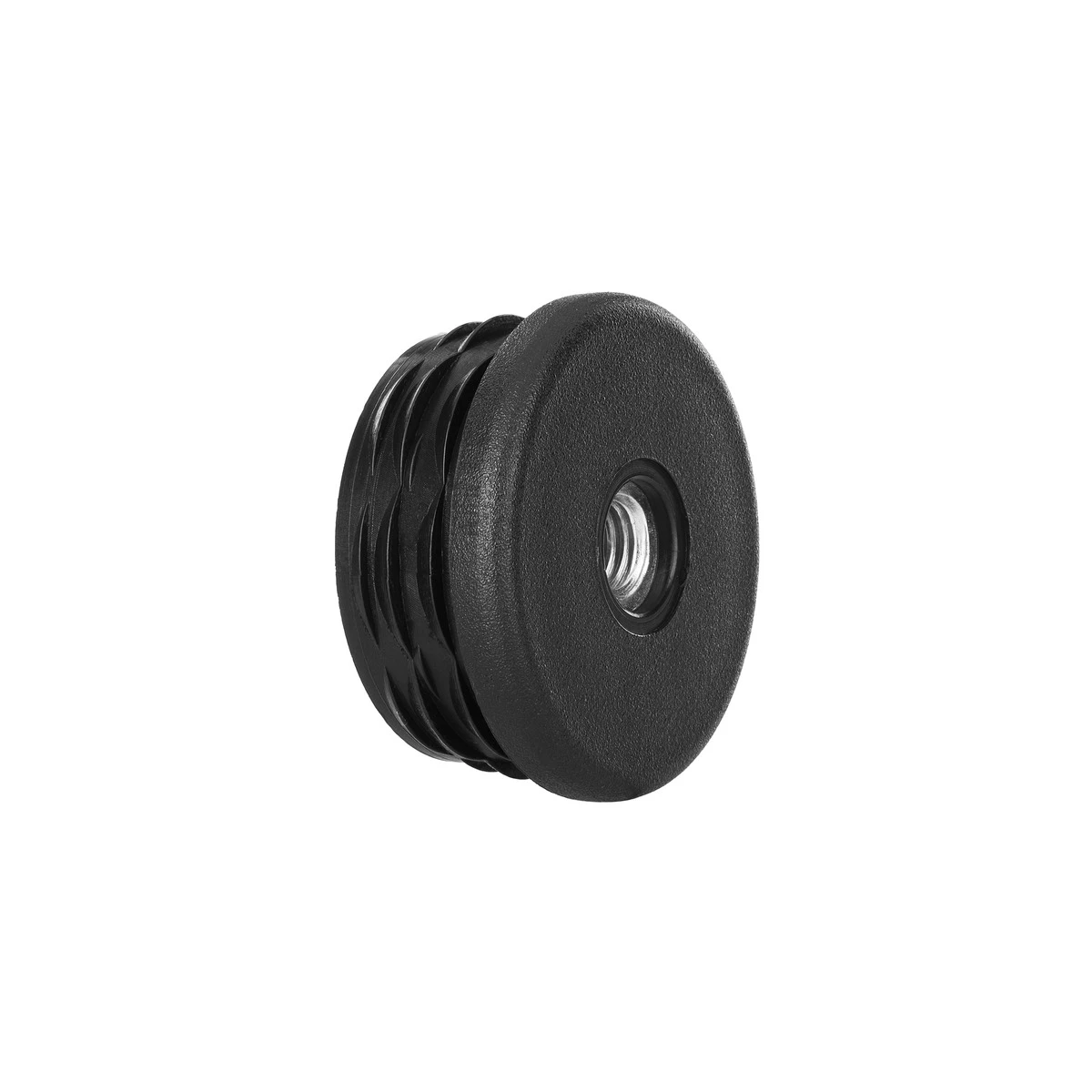 Round Threaded Inserts
Outfitting a hotel, restaurant, school, healthcare facility, or large furniture build? Superior Glide supports volume orders with bulk pricing tiers, free physical samples, and dedicated quote pricing for accounts placing larger orders.
Bulk pricing tiers, net terms for qualified buyers, and dedicated support for facility managers and procurement teams.
Hold the product, test the fit, check the finish. We ship samples free so you can evaluate before committing to a full order.
For orders above standard volume tiers, we’ll prepare a custom quote with consolidated shipping and your account’s tier pricing.

Reviews
There are no reviews yet