Hospitality-grade floor protection · Sizing help before you order · Apply for a business account
Sizing help · Apply for a business account
Hospitality-grade floor protection · Sizing help before you order · Apply for a business account
Sizing help · Apply for a business account
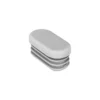
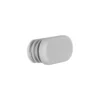
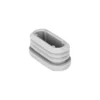
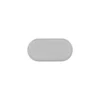
An open oval tube end on a metal leg catches dirt, scrapes floors with its sharp rim, and looks unfinished. This press-fit plug seals it, its flexible PE walls gripping the curved interior with no glue or tools. Match the plug to your tube’s short and long axis. Black, grey, and white.
We make this size in production runs, so there is none on the shelf today. Tell us how many you would want and you go on the list for it. When enough people ask for a size, we run it, and the people who asked hear about it first.
We stock a limited range of tube sizes and wall thicknesses. Tell us the size you need and we will confirm availability and pricing by email.
Buying in volume? See business pricing & samples ↓
Round plugs fit circles. Square plugs fit squares. But oval tubing has two different radii on two different axes, and no symmetrical plug can match that geometry. Oval tube plugs are molded to the exact oval cross-section of your tube: wider on the long axis, narrower on the short axis, curved continuously around the entire perimeter. The plug body press-fits inside the oval tube with flexible internal walls that grip the curved interior on both axes simultaneously.
PE (polyethylene) construction. Flat head. Press-fit installation with no adhesive, no screws, and no tools beyond an optional rubber mallet. Oval tube plugs come in from 10 × 33 mm to 30 × 50 mm. Black, grey, and white. Plugs for oval furniture legs on dining chairs, bar stools, commercial seating, and any furniture that uses hollow oval tubing. Oval tube end plugs that seal, protect, and finish every open oval tube end.
Three measurements: short axis (width), long axis (length), and wall thickness. Oval tubing has two different outside dimensions, and both must match the plug specification. If the two axes are equal, your tube is round, not oval.
Use calipers across the narrowest point of the oval opening, outside edge to outside edge. This is the first number in the size designation (10, 15, 18, 20, 25, or 30 mm for oval tube plugs).
Use calipers across the widest point of the oval, outside edge to outside edge. This is the second number (30, 33, 35, 36, 40, or 50 mm). The long axis is always perpendicular to the short axis.
Use calipers at the tube end. Check at both the narrow and wide points, as oval tubing can have slightly different wall thicknesses on different parts of the curve.
Same press-fit concept as all our tube plugs. Oval tube plugs must enter the tube with the short axis aligned to the short axis and the long axis aligned to the long axis. The plug will not fit if rotated 90° because the two axes are different lengths.
The same four problems as every other tube plug, applied to a cross-section that only oval-specific plugs can handle. The National Wood Flooring Association (NWFA) recommends protective measures on all furniture legs, and oval tube plugs provide that protection on hollow oval metal profiles.
An open oval tube end puts a sharp metal edge on the floor that follows a continuous curve with two different radii. This creates uneven floor contact that no round, square, or rectangular plug can address. Oval tube plugs cover the entire oval opening with a smooth PE head that distributes weight across the full curved area. Unlike leaving metal edges unprotected, the plug prevents damage at the source.
An open oval tube collects moisture, debris, and insects. On steel tubing, trapped moisture causes internal corrosion that weakens the frame. The plugs seal the entire curved opening. The flexible walls conform to the oval interior for a complete seal with no gaps at any point along the continuous curve. On chair legs that sit at floor level, the open tube ends are especially vulnerable to mopping water and tracked-in debris.
Hollow oval tubes resonate and amplify contact noise. The curved walls vibrate differently than flat walls, producing a distinctive metallic ring when the tube contacts smooth, hard floors. The plugs fill the opening with PE, absorbing the vibration across the full curved interior. In restaurants, offices, and schools where oval-legged chairs move constantly, every sealed tube end reduces the cumulative noise level.
Oval tubing is chosen for its visual appeal. The continuous curve creates a softer, more refined look than angular square or rectangular profiles. An open tube end undermines that design choice by exposing the hollow interior. The plugs cover the opening with a clean PE head that follows the oval contour exactly. The finished end maintains the tube’s visual language. These are the press-fit oval tube plugs that complete the design.
If your furniture has oval tubing, only oval-specific plugs fit correctly. Here is why other shapes do not work and what other oval variants are available.
Round tube plugs are circular and cannot match the two different radii of an oval cross-section. A round plug that fits the short axis will gap on the long axis. One that fits the long axis will not enter the short axis. Oval tube plugs match both axes.
Rectangular tube plugs have four flat sides. An oval tube has no flat sides. The rectangular plug cannot conform to the continuous curve, leaving gaps at every point along the perimeter. No seal, no grip, no floor protection.
Ellipse tube plugs fit tubes with a more elongated, pointed profile. If your tube ends are rounded (like an oval), use these plugs. If the ends are more pointed (like an ellipse), use ellipse plugs. The difference matters because the plug body curvature must match the tube curvature at every point.
Half-Oval Tube Plugs fit D-shaped tubes (one flat side, one curved side). If your tube is curved on both sides, it is oval, not half-oval. Use these plugs for fully curved profiles.
Domed Oval Tube Plugs have a rounded, raised head instead of flat. Available in 15 × 40, 20 × 40, and 25 × 50 mm. Decorative, non-floor-contact use. This product (these plugs) covers the flat head for floor contact and general finishing.
The flat PE head of oval tube plugs provides basic floor protection on smooth, hard floors and carpet. Not recommended for rough hard floors like textured tile or stamped concrete, where the PE material wears quickly. PE is smoother and softer than bare metal, adequate for most surfaces without scratching. The oval head distributes weight across the full curved area rather than concentrating it at a sharp metal edge.
On scratch-sensitive floors like engineered hardwood or luxury vinyl, apply a round self-adhesive furniture pad to the plug head for dedicated PA6 protection. Choose a round pad size that covers the oval head as completely as possible. On rough hard surfaces like textured tile or stamped concrete, furniture slides with ABS surfaces handle the texture better than PE.
Oval tube plugs are designed for any hollow oval furniture tube that needs a finished, sealed, protected endpoint. Oval tubing is a design-forward profile choice found in furniture where visual softness and ergonomic curves matter.
Match the plug shape to your tube shape. Every shape uses the same PE construction and press-fit concept.
10 × 33 to 30 × 50 mm. Flat head.
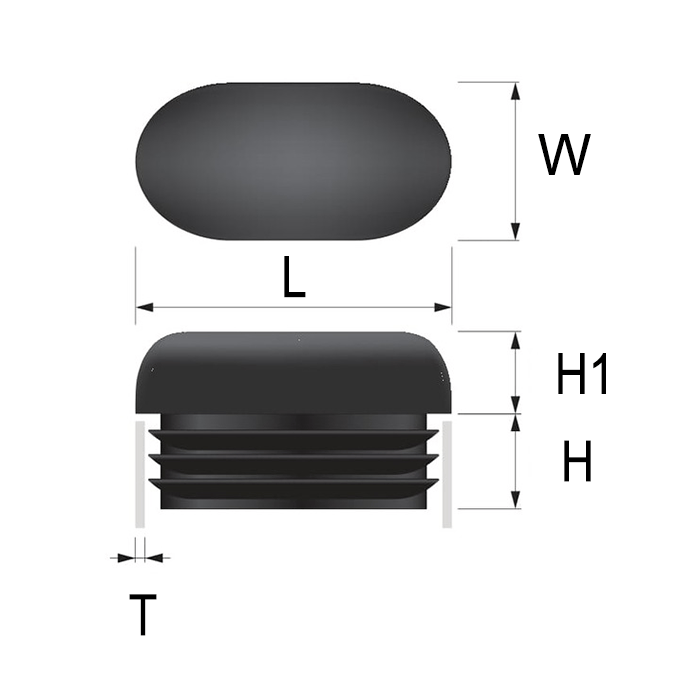
| Fits Tube (W) | Fits Tube (L) | Insert Depth (H) | Head Height (H1) | Tube Wall Thickness (T) |
|---|---|---|---|---|
| 10 mm (0.39″) | 33 mm (1.30″) | 12 mm (0.47″) | 3 mm (0.12″) | 1.5 to 2 mm (0.06″ to 0.08″) |
| 15 mm (0.59″) | 30 mm (1.18″) | 13 mm (0.51″) | 5 mm (0.20″) | 1.5 to 2 mm (0.06″ to 0.08″) |
| 18 mm (0.71″) | 36 mm (1.42″) | 12 mm (0.47″) | 5 mm (0.20″) | 1.5 to 2 mm (0.06″ to 0.08″) |
| 20 mm (0.79″) | 30 mm (1.18″) | 14 mm (0.55″) | 5 mm (0.20″) | 1 to 1.5 mm (0.04″ to 0.06″) |
| 20 mm (0.79″) | 40 mm (1.57″) | 12 mm (0.47″) | 5 mm (0.20″) | 1 to 2 mm (0.04″ to 0.08″) |
| 25 mm (0.98″) | 35 mm (1.38″) | 12 mm (0.47″) | 5 mm (0.20″) | 1 to 2 mm (0.04″ to 0.08″) |
| 30 mm (1.18″) | 50 mm (1.97″) | 15 mm (0.59″) | 5 mm (0.20″) | 1 to 2 mm (0.04″ to 0.08″) |
Tube wall thickness is a fit requirement, not a tolerance.
| Specification | Detail |
|---|---|
| Material | Polyethylene, a tough low-friction plastic |
| Sizes | 7 sizes |
| Width (W) | 10 to 30 mm (0.39″ to 1.18″) |
| Length (L) | 30 to 50 mm (1.18″ to 1.97″) |
| Height (H) | 12 to 15 mm (0.47″ to 0.59″) |
| Head height (H1) | 3 to 5 mm (0.12″ to 0.20″) |
| Tube wall thickness (T) | 1 to 2 mm (0.04″ to 0.08″) |
| Mounting | Pushes into the tube, held by ribs |
| Colors | Black, Gray, White |
| Floor compatibility | Hollow tube legs |
| Minimum order | Sold in a minimum of 4, then any quantity you need |
Measure the short axis (width) and the long axis (length) of the oval opening in millimeters. Then measure the wall thickness with calipers at the tube end. You need all three measurements to select the correct oval tube plug. A tube measuring 20 mm on the short axis, 40 mm on the long axis, with 1.5 mm walls needs the 20 × 40 / 1 to 2 mm plug. Always list the shorter dimension first.
Oval and ellipse are similar but not identical. Oval tubes have a more uniform, symmetrical curve on both axes. Ellipse tubes have a more elongated, pointed profile. Measure your tube and compare to the size charts for both shapes. If your tube has pointed ends rather than rounded ends, it is likely ellipse rather than oval.
No. A round plug is circular and cannot match the two different radii of an oval cross-section. It would gap on the long axis and bind on the short axis. Oval tube plugs are molded to match the oval profile exactly. Shape must match shape.
Yes, as a separate product. Domed oval tube plugs (rounded head) are available in 15 × 40, 20 × 40, and 25 × 50 mm. This product (oval tube plugs) covers the flat head standard range.
Yes, also separate products. Angled oval tube plugs are available in 20 × 40 mm (18°) and 30 × 60 mm (9°). An angled oval with pad slot is available in 25 × 35 mm (15°). These correct leg tilt on splayed oval-legged furniture.
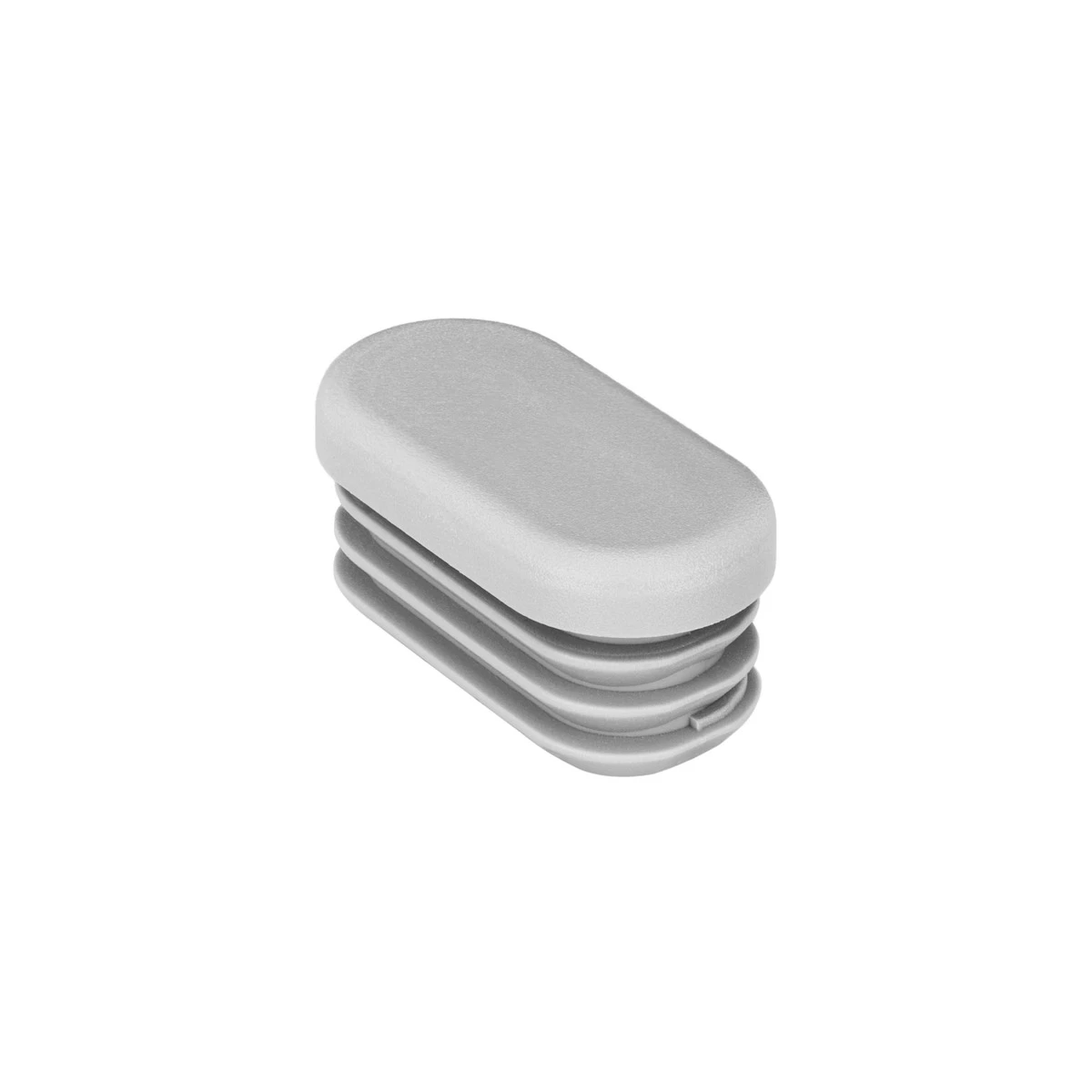 Oval Tube Plugs
Outfitting a hotel, restaurant, school, healthcare facility, or large furniture build? Superior Glide supports volume orders with bulk pricing tiers, free physical samples, and dedicated quote pricing for accounts placing larger orders.
Bulk pricing tiers, net terms for qualified buyers, and dedicated support for facility managers and procurement teams.
Hold the product, test the fit, check the finish. We ship samples free so you can evaluate before committing to a full order.
For orders above standard volume tiers, we’ll prepare a custom quote with consolidated shipping and your account’s tier pricing.

Reviews
There are no reviews yet