
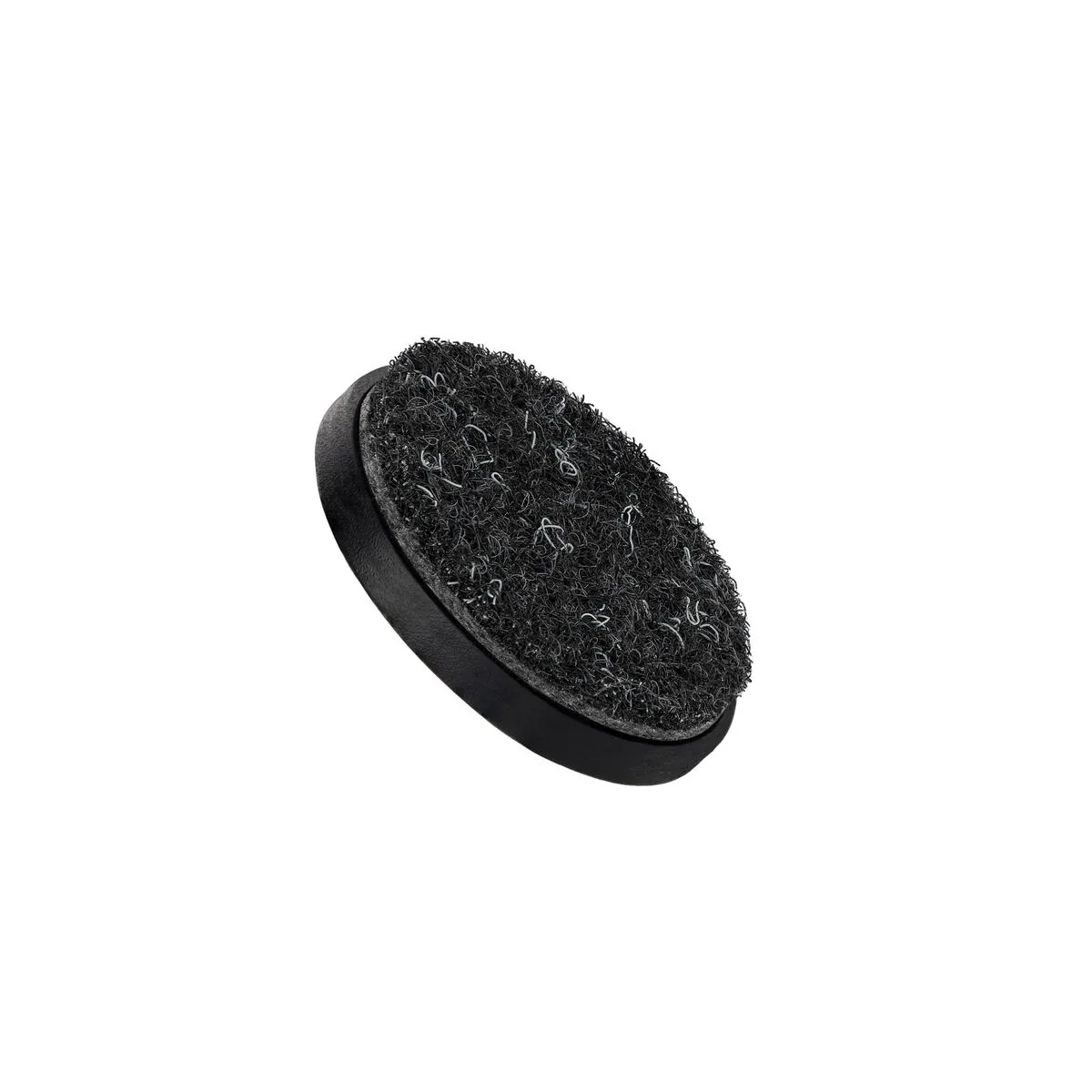
Every glide that peels off, rocks, or catches on a doorway has the same cause. It was bought a size too big. Learning how to measure furniture legs properly takes a ruler and about two minutes per chair, and it is the step that decides whether a glide fits or fails.
Not sure yet whether you need glides or slides? That decision comes first, and the floor makes it: furniture glides vs slides. Then come back here for the size.
The rule
Whatever else you learn about how to measure furniture legs, this is the rule. Take the size that sits flush with the bottom of the leg, or slightly smaller. Never larger.
A glide that overhangs the leg has an edge sticking out. That edge catches on rug fringes, door thresholds and the seams in vinyl plank. Under weight the chair rocks on it. On a self-adhesive glide the overhang flexes the bond every time somebody sits down and works it loose from the edges in. On a nail-on glide it levers against the rivet.
A glide slightly smaller than the leg does none of that, and nobody has ever looked under a chair and noticed two millimeters of bare wood.
Carpet is the one exception, and it goes the other way. A slide has to float on the pile rather than sink into it, so coverage matters more there. On carpet, aim flush rather than deliberately small. The Carpet and Rug Institute publishes guidance on protecting carpet from furniture, which is the same problem seen from the other side.
How to measure furniture legs, by leg shape
Tip the chair on its side so the bottom of the leg faces you. Measure the surface that actually touches the floor.
Round legs: straight across the bottom. That is the diameter.
Square legs: one side.
Rectangular legs: both sides. Write both down, you need the pair.
Tapered legs: at the very bottom, not partway up. A leg that is 30 mm in the middle and 25 mm at the floor takes a 23 mm glide.
Legs with a ring, flare or rounded edge at the foot: measure the flat surface that touches the floor, not the widest point of the decoration above it.
That is how to measure furniture legs, one at a time. Then measure two or three legs from the same set. They usually match. When they do not, use the smaller number for the whole set so nothing overhangs.
The size chart for glides
Each size covers a range of leg sizes upward from its own measurement. Find your number in the right-hand column.
Round glides
- 23 mm (0.91″) fits legs 23 to 27 mm (0.91″ to 1.06″)
- 28 mm (1.10″) fits legs 28 to 37 mm (1.10″ to 1.46″)
- 38 mm (1.50″) fits legs 38 to 49 mm (1.50″ to 1.93″)
- 50 mm (1.97″) fits legs 50 to 74 mm (1.97″ to 2.91″)
- 75 mm (2.95″) fits legs 75 to 95 mm (2.95″ to 3.74″)
Square glides
- 23 x 23 mm fits legs 23 to 27 mm a side
- 28 x 28 mm fits legs 28 to 37 mm a side
- 38 x 38 mm fits legs 38 to 49 mm a side
- 50 x 50 mm fits legs 50 to 74 mm a side
- 75 x 75 mm fits legs 75 to 95 mm a side
Rectangular glides
- 33 x 19 mm (1.30″ x 0.75″) fits legs 33 x 19 mm up to 40 x 25 mm
A leg wider than 95 mm is past the largest glide. Use a self-adhesive pad instead. A pad only has to cover the base and stick to it, so it goes on legs far wider than any glide will fit, right up to 300 mm.
The size chart for slides
Slides run the same sizes with one difference: there is no 75 mm.
Round and square slides
- 23 mm fits legs 23 to 27 mm
- 28 mm fits legs 28 to 37 mm
- 38 mm fits legs 38 to 49 mm
- 50 mm fits legs 50 to 65 mm
50 mm is the largest slide made, so a leg wider than about 65 mm is outside the slide range. For a wide leg on carpet, talk to us rather than guessing.
Worked examples
A round leg measures 24 mm. The 23 mm glide covers 23 to 27 mm, so that is your size.
A dining chair leg measures 30 mm, the most common size there is. The 28 mm glide covers 28 to 37 mm.
A square table leg measures 55 mm. The 50 mm square glide covers 50 to 74 mm.
Five chairs: three legs measure 26 mm and two measure 27 mm. The 23 mm glide covers all five without overhang. One size, whole set.
Rectangular legs need both numbers
This is the trap in how to measure furniture legs. Say the leg is 33 x 19 mm. The round chart says a 28 mm glide fits legs 28 to 37 mm, and 33 is inside that range, so it looks like a match. But the leg is only 19 mm wide, so a 28 mm round glide would overhang it on both sides, and that overhang is what catches and peels.
Rectangular legs take rectangular glides, sized on both dimensions.
Replacing worn glides
If glides are already fitted, there is a shortcut to how to measure furniture legs: pull one off and measure it. That is your starting point. It might also be the wrong size, which could be why it failed, so measure the leg too and check both numbers against the chart.
Five mistakes we see every week
Sizing up to be safe. Oversizing is the number one cause of peeling. Flush or smaller.
Measuring the middle of the leg. Legs taper. Only the bottom touches the floor.
Measuring a decorative ring instead of the flat surface below it.
Assuming every chair in the set matches. Check two or three.
Loading the furniture too soon. A self-adhesive glide needs the leg cleaned with 70% isopropyl alcohol and 48 hours to reach full strength. A nail-on glide can be used straight away.
Once you know how to measure furniture legs, fit them
Nail-on: center the glide on the leg and tap it in with a rubber mallet until it sits flat with no gap. The anti-rotation notch on the rivet stops it turning once it is in. The nail-on glides how-to has the full steps.
Self-adhesive: clean the bottom of the leg with 70% isopropyl alcohol, let it dry, press firmly, and leave it 48 hours. Same for pads, and for the 50 mm and 75 mm nail-on glides, which carry a foam backing behind the rivet.
Take the chart with you
Nobody remembers how to measure furniture legs from memory in a furniture shop. There is a printable version of the glides and slides size chart you can put on the table next to the furniture while you measure. Print it at full size, do not scale it to fit.
That is all there is to how to measure furniture legs: measure the leg, write down the number, match it to the chart. If you are between sizes or the leg is an odd shape, email a photo of the bottom of the leg with a ruler beside it to support@superiorglide.com, or use the chat, and we will confirm the size before you order.
Browse furniture glides for hard floors or furniture slides for carpet. Measuring for stick-on pads instead? The pads sizing guide covers those, and the sizes go much wider.
Fitting out a restaurant, hotel, school or office? Business Solutions covers free samples so you can test the fit on your own chairs, plus volume pricing and a quote for the whole job.