Ships nationwide · In-stock and made-to-order sizes
Ships nationwide · In-stock and made-to-order sizes
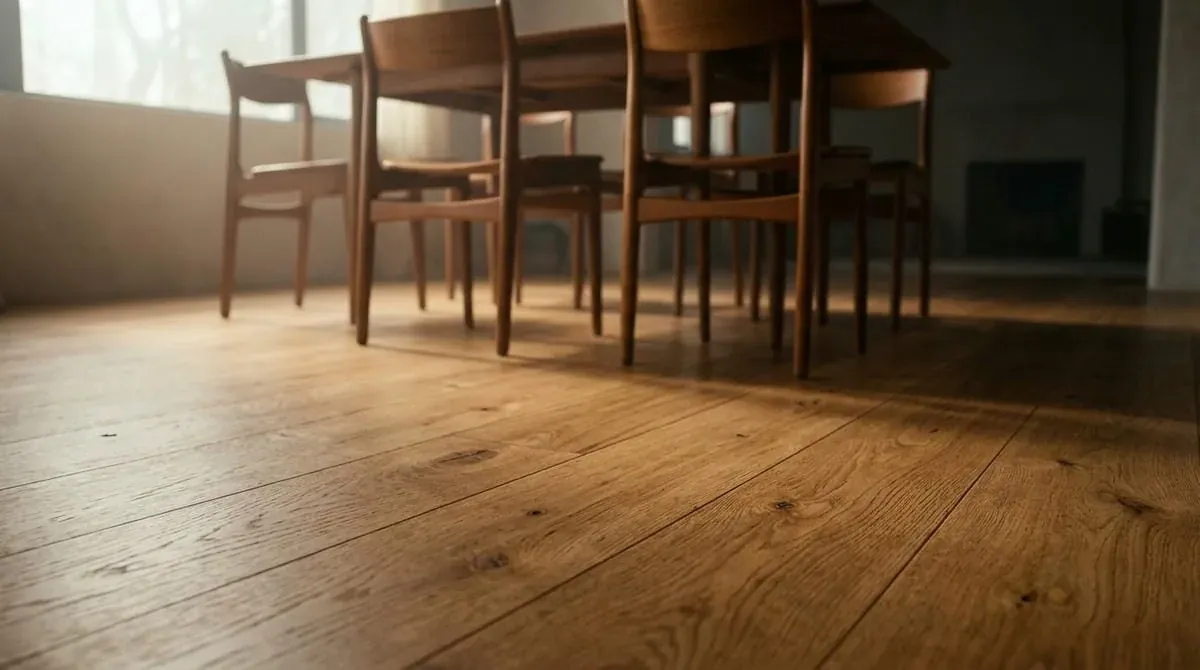
Installers get blamed for damage they did not cause. The customer buys felt at the hardware store, the felt collects grit, and the grit goes back and forth across the finish you laid. Hand them the right part at handover instead.
The problem
Flat felt is an open fiber mat. It picks up grit from the floor and holds it against the finish. A needle-punched PA6 face does not trap debris the way flat felt does.
Pressure-sensitive backing creeps under shear and releases at the leg face, usually within weeks. Then the bare leg is on your floor.
Fiber on grouted tile shreds. PTFE on carpet wears flat. Matching the face to the floor is most of the job, and it is the part of the job nobody tells the homeowner.
What goes where
Every card links to the line. Sizes and mountings are on the product pages; the quote names them for you.
Sized PA6 glides for chairs; pads for pieces that stay put. Nail-on for wood legs, self-adhesive for metal.
The floor most vulnerable to trapped grit. A PA6 glide is the better choice over standard felt for exactly that reason.
Hard ABS slides. Grout overrides the tile finish, even on glossy tile with wide joints.
ABS slides again. Harder than the fiber they cross, so they last where a white PTFE slide wears out.
Proof
Tell us the floors you lay most and the legs you meet on them. Once we have that, we send samples of the parts we would recommend, with a size card and a one-page sheet on which face suits which floor. If you have worn felt pads you were going to throw away, put them in the return envelope; we photograph the grit.
How buying works
Floor type, furniture type, a rough count. A photo of a leg with a ruler beside it saves a round of email.
Once we know the furniture and the floor, we put the product, size and mounting in writing and send samples of what we recommend. Free for businesses.
The quote says which sizes are in stock and which are made to order, with the ship date in writing.
Reply to the quote and we set the order up by email, the way your business normally buys. Reorders run off the spec on file.
Straight answers
Yes. Tell us roughly how many jobs a month and we set the account up by email.
The in-stock sizes cover much of the leg range on dining chairs, stools and side tables. Once we know what you meet most, we can narrow it to the few worth carrying.
Yes. Order online with their address, or send us the job sheet and we ship direct.
Ready when you are
Floor types, rough monthly volume, and the legs you see most often.
