Ships nationwide · In-stock and made-to-order sizes
Ships nationwide · In-stock and made-to-order sizes
An open steel tube scores a floor every time the chair moves. This guide covers the three parts that close a tube (ribbed plugs, end caps and threaded inserts), the two measurements that decide the fit, how to seat a plug so it doesn’t wobble, and when the leg wants a glide or a sled-base part instead.

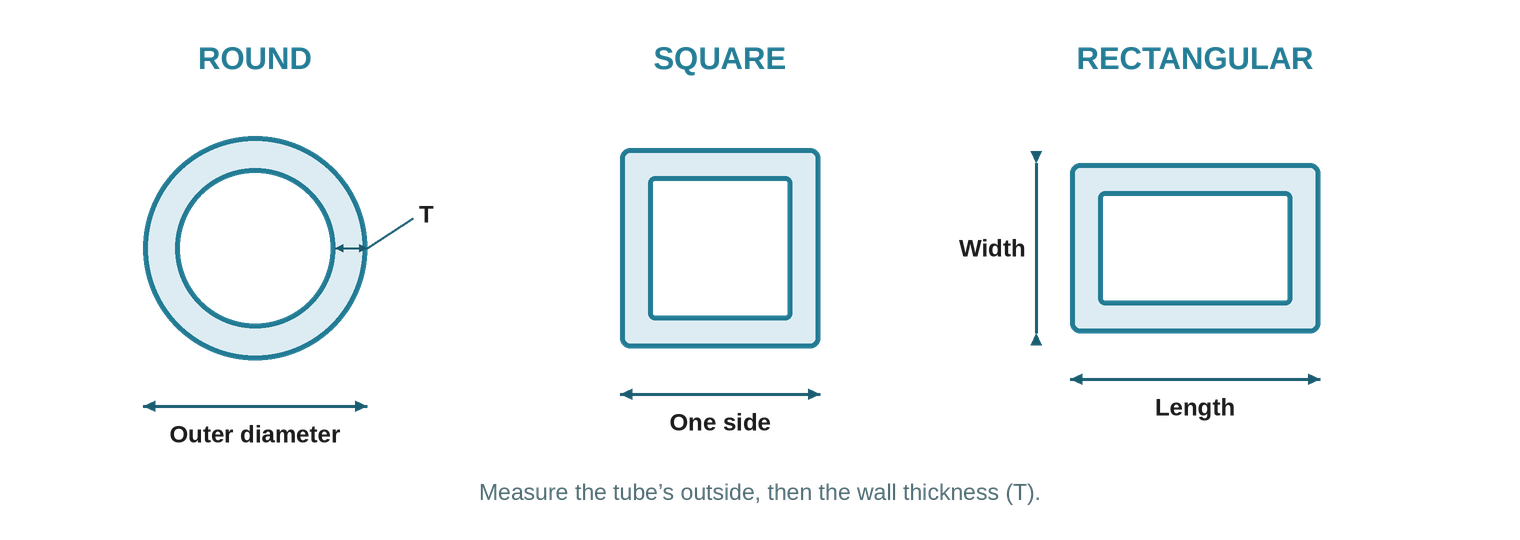
Round, square, rectangular, oval, half-oval or ellipse. Look at the cut end; the plug is molded to one profile.
Measure across the outside of the tube: diameter for round, both sides for square and rectangular, wide then narrow for oval.
The ribs grip the inside of the wall. Most furniture tube is 0.039″ to 0.079″ (1 to 2 mm); commercial frames run thicker. End caps skip this question.
The part is decided by what the leg needs from it. The size is decided by two measurements, which come next.
Question 1. What does the open end need?
A ribbed finishing plug pushes inside the tubing and grips the wall with molded ribs, leaving a finished face toward the floor. Domed and flat heads both sit flush once seated. This is the default for a bare tube that only needs to stop being bare.
Fits over the tube rather than into it, so it hides a rough cut edge and covers the outside diameter. The choice when the rim itself is the problem, or the inside is obstructed.
An inner plug with a metal nut molded into it. Fit one and the hollow leg will take a leveling foot, a castor stem, or a bolt. The insert decides the thread size, so pick the foot after the insert.
Question 2. How does the leg meet the floor?
The tube is vertical, so a flat-based plug lands flat. Most tables and square-set chairs are this.
Splayed chair and stool legs meet the floor on an edge unless the base is cut to the lean. Angled versions cover legs leaning between 9 and 22 degrees, and the angle is part of the size.
Every plug in this tube plugs guide is sized to an outside dimension and a wall thickness. The first tells you the family, the second tells you which plug in that family actually grips.
01
Across the open end, at the widest point of the metal. Round tubes: the diameter. Square and rectangular: the outside of each side, width first. Calipers if you have them; a ruler held square across the end if not.
02
The thickness of the metal itself, read at the cut end. Furniture tube is usually 0.039″ to 0.079″ (1 to 2 mm), and half a millimeter is the difference between a plug that bites and one that rattles back out.
03
Round, square, rectangular, oval or half-oval, and whether the leg is vertical or splayed. An angled leg needs the base angle in the spec, not an upright plug forced in crooked.
The wall thickness is the grip. The ribs on a plug are sized to spring against a particular wall. Too thick a wall and the plug won’t enter; too thin and the ribs don’t load up, so the plug walks out the first time the chair is dragged. Measure the metal, not the hole.
Closing the tube is half the job. The other half is what the closed end does to the surface under it, and there are three answers.
Solid PE or PA against the floor. It keeps bare metal off the surface, which is most of the damage prevented already, and it suits carpet and floors that don’t mark easily.
A PA6 pad set into the floor face, for sealed hard floors that scratch. The pad does the sliding and the wearing, and on slot versions it lifts out and replaces without touching the plug.
A rubbery face that grips instead of sliding, for furniture that must not creep on a smooth floor. The trade-off is deliberate: this base holds position rather than making the leg easy to move.
Keeping bare legs off the finish is standard wood-floor advice, not ours alone: the National Wood Flooring Association’s consumer notes put protectors under furniture legs among the basics of preventing scratches, at woodfloors.org.
Press-fit parts go in by hand or with a tap. The step people skip is the first one, and it’s the difference between a plug that seats square and one that shaves its own ribs going in.
Inner plugs and end caps
01
Run a file or a fold of sandpaper around the cut edge. A burr inside the rim shaves the ribs as the plug passes, and shaved ribs are what a loose plug looks like six months later.
02
Sit the plug in the opening and press until the ribs engage evenly all round. If it tilts, back it out and restart. A plug driven in crooked rarely recovers its grip.
03
Press firmly or tap with a rubber mallet until the base sits against the tube end. End caps go over the outside the same way: square first, then home.
Threaded inserts, then the foot
01
Same routine: deburr, start square, seat home. The metal nut sits inside the plug body, so nothing about the fitting changes.
02
Thread the leveling foot all the way in, then back it out only as far as leveling needs. The more thread inside the insert, the more side load the joint takes.
03
Set the piece down, lean on it, and check nothing shifts. A correctly sized insert under load is effectively part of the leg.
Four materials across the range, and the differences are practical rather than cosmetic. Tap through the tabs to see where each belongs.
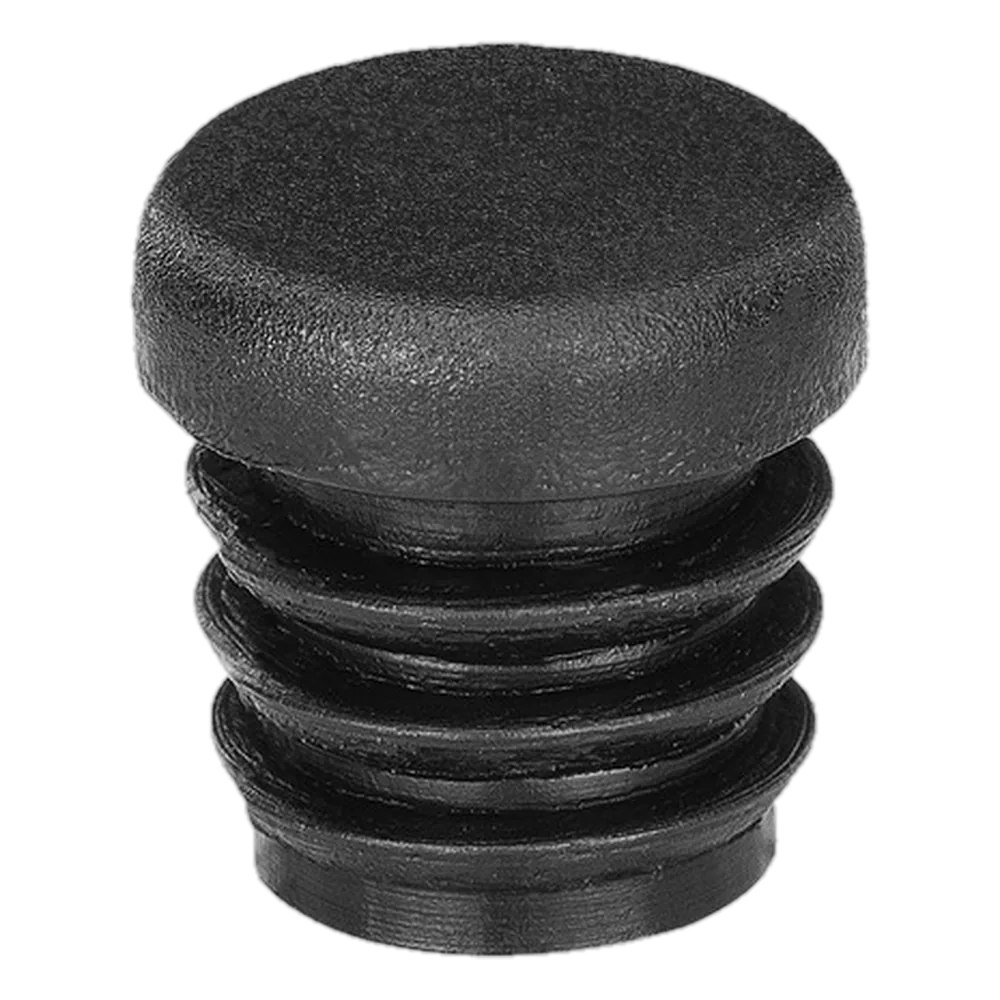
The flexible standard. PE bends a little as it enters the tube, so its ribs keep their grip even when the tube is slightly out of round or the wall thickness varies.
It handles the large majority of chairs, tables, and light frames. Pick PE when you want an easy, secure press-fit on everyday furniture.
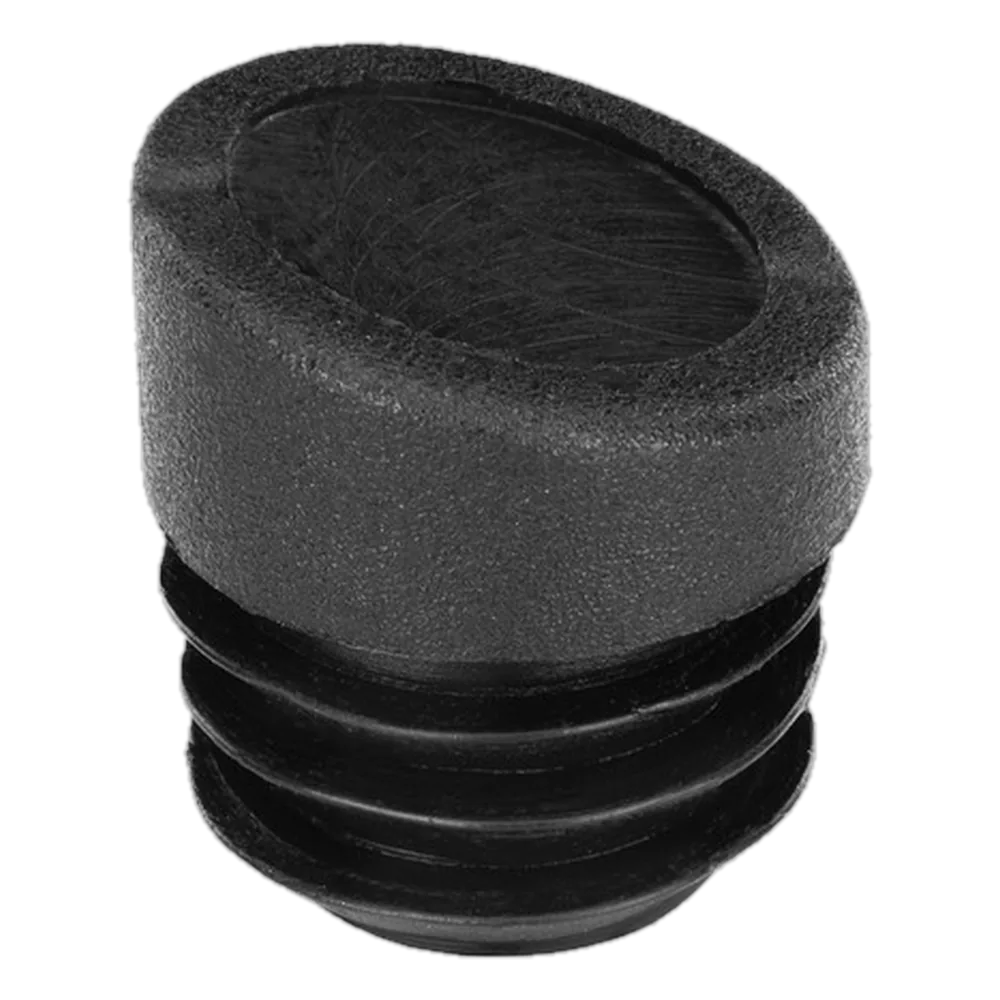
Stiffer and harder than PE. PA holds its shape under heavier load and resists deforming, so it suits furniture that carries real weight or gets dragged often.
Because it gives less, match the tube size closely. Pick PA when the leg works hard.
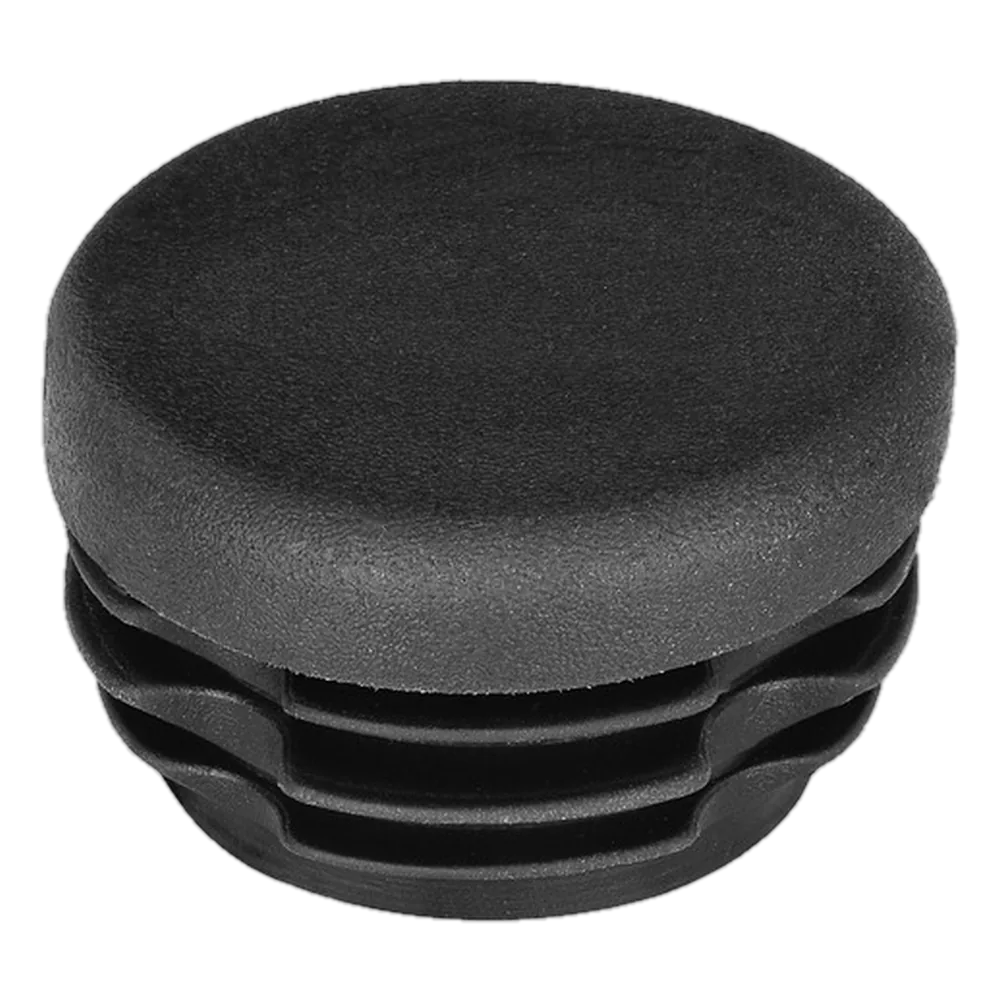
A soft, grippy face that holds the floor instead of sliding on it. TPE caps the tube and stops the furniture from creeping.
That is what you want on a bench or a frame that should stay exactly where you put it. One part does both jobs.
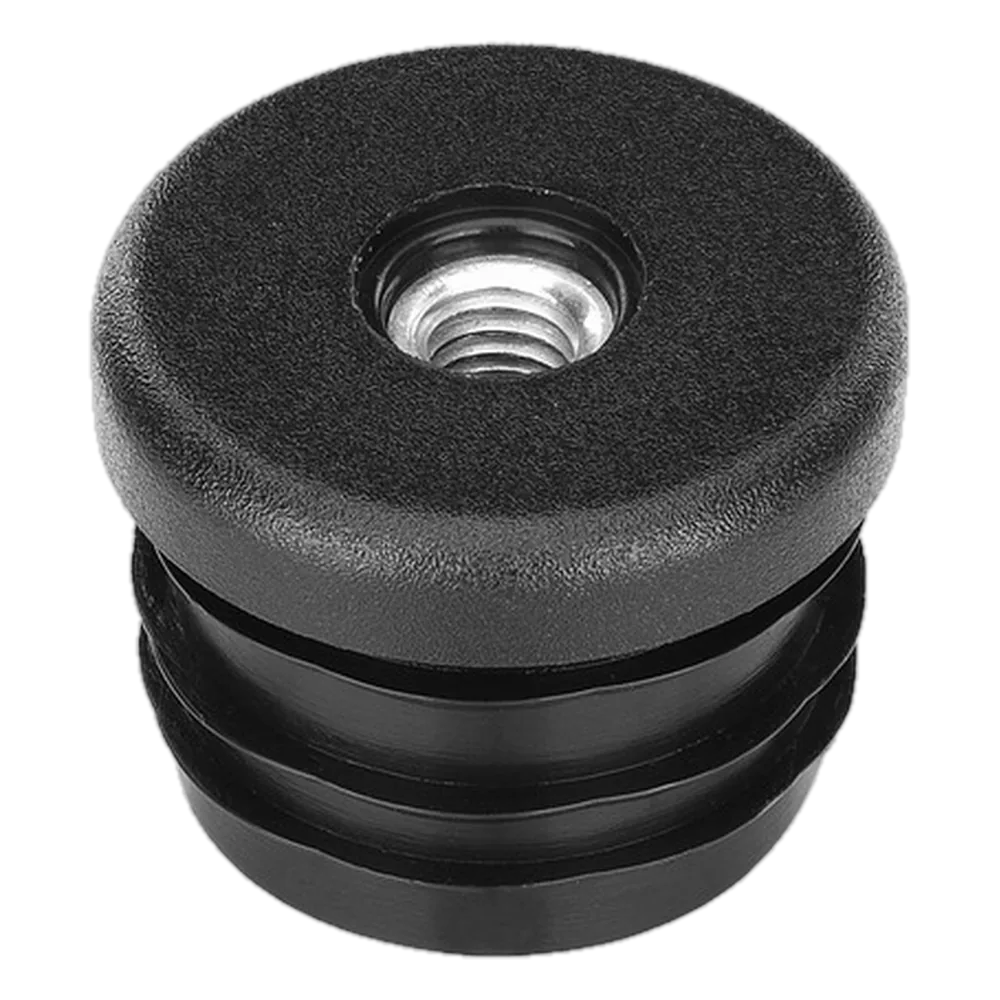
A polyamide body presses into the tube and carries a metal thread, so a leveling foot screws straight in.
The thread comes in two metals: hot-dip galvanized steel for normal indoor use, and stainless steel when the insert meets moisture, washdown cleaning, or coastal air. Choose stainless wherever rust would be a problem.
They close the same tube and they’re not interchangeable. Which one you need follows from what’s wrong with the tube end.
Disappears into the tube, so the leg keeps its outside dimension and its look. It needs a clean bore to grip, and its size is the inside of the tube: outside dimension minus two walls. The floor face is the plug base itself.
Adds a collar over the outside, so the leg gets slightly larger and the cut edge is covered. It grips the outside, so a rough or out-of-round bore doesn’t matter. The choice for damaged rims and for tubes with an internal weld seam a plug can’t pass.
Most tube-leg jobs are one of these. Each links into the filtered range.
Round tube, vertical or nearly so. An inner plug with a pad base where the floor is sealed and marks.
The lean is the spec. Measure the angle or send us a photo, and fit the angled version so the base lands flat.
Square plugs for square tube, rectangular for rectangular, sized by outside dimension and wall. A strip of leftover carpet isn’t a plan.
Threaded insert first, foot second. The insert fixes the thread size, and the leveling range comes from the foot you choose after it.
An anti-slip TPE base holds a piece where it was put. Fixed seating, consoles against walls, anything nudged out of place by use.
Hundreds of chairs means hundreds of tubes, and mixed frames mean mixed sizes. Send the list and we’ll spec it once, correctly.
Which plug and what size are settled on the finishing plugs for round and square tubing page. What’s left is the workshop end of the job: stuck plugs, odd tubes, and a chair upside down on a blanket.
Grip whatever shows with pliers and pull while rocking gently, or run a screw a few turns into the plug body and pull on the screw. Plastic that has been in a tube for years goes brittle, so expect it to come out in pieces. Clear every fragment before the new plug goes in, because debris in the bore costs grip.
No. Something is in the way: a weld seam inside the tube, a burr, or the wrong wall-thickness rating. Pull it back out and look into the bore with a light. A seam that runs the length of the tube rules out inner plugs at that depth, and an end cap over the outside becomes the answer.
Once, usually, if it came out clean. The ribs deform slightly every time they pass the tube edge, so each removal costs grip. A plug that has been in and out more than a couple of times should be replaced rather than trusted, and they cost little enough that replacing is the sane default.
On the outside, slightly, which matters for end caps: measure over the coating, since that’s the surface the cap grips. Inside the tube the coating rarely reaches, so inner plugs size from the bare metal as usual.
They close it, but they’re a friction fit rather than a gasket. Rain running down a leg outdoors will find its way past eventually. For outdoor furniture the more important choices are PE for the plug body and a stainless setup for anything threaded, so what does get in can’t rust anything.
It’s not, and it will not. Plug ribs are sized for a working load pointing down the tube, not a cantilevered pin load. For fixings, use a threaded insert and a bolt, which turns the plastic part into a carrier for a metal joint.
Measure the largest and smallest outside dimensions. If they differ by more than about half a millimeter, an inner plug will grip unevenly and an end cap over the outside is the safer part. Dented tube ends can often be rounded back gently with pliers before you decide.
Most of the range is black because most furniture tube is dark or hidden. Where a line carries other colors, the option shows on the product page. If the plug will be visible on pale furniture, say so when you ask us to size it and we’ll steer to what exists.
Yes. Different trades use different names for the same part. A finishing plug for round or square tubing is what this guide calls a ribbed inner plug; a pipe plug is the same part sized to pipe rather than furniture tubing. Whatever your drawing calls them, the sizing works the same way: outside dimension plus wall thickness.
Ribbed inner plugs with a rounded, domed head instead of a flat one, a common choice where the tube end stays visible and a soft profile looks better. They size exactly like flat-head ribbed plugs: measure the outside of the tube and the wall thickness, then browse tube plugs and end caps by shape.
Browse other furniture guides: Glides Guide · Slides Guide · Pads Guide · Leveling Feet Guide · Sled Base Guide · Tile Floors Guide · Nail-On Glides How-To
Product categories: Furniture Glides · Furniture Slides · Furniture Pads · Tube Plugs & End Caps · Leveling Feet · Sled Base Glides
Business orders: Business solutions for project quotes, samples and commercial orders.
Outside dimension, wall thickness, and a photo if the leg leans. That’s everything this tube plugs guide needs from you, and the reply names the exact part.
Every size, in one place
Dimensions, materials, load ratings and part numbers for the whole range: glides, slides, pads, tube plugs, threaded inserts, leveling feet and sled base glides. Millimeters and inches side by side, with a drawing for every part.
