
Tile is the floor people assume they can’t hurt. It survives dropped pans, wet boots and a decade of traffic, so a dining chair seems like nothing.
The tile is usually fine. What isn’t fine is the glaze on top of it, the grout between, and whatever you put under the chair leg, which on tile wears out faster than on any other floor in the house. Choosing furniture protectors for tile floors comes down to one question, and you can answer it in about ten seconds without measuring anything.
The ten-second test
Run a fingernail across the gap between two tiles. Then run it across the face of a tile.
Nothing catches. Shallow gaps, a face that feels slick. That’s a smooth floor, and it takes a soft fiber glide or pad.
Something catches. Deep or wide grout lines, or a face with grip you can feel. That’s a rough floor, and it takes a hard slide.
That’s the whole decision. Every other choice in furniture protectors for tile floors, nail-on or self-adhesive, glide or pad, which size, follows from it.
Why it works: a fiber face is built to slide across a smooth surface. A deep grout line tears at it every time a leg crosses one, and a textured face wears it down everywhere it touches, not just at the gaps. A hard molded face has nothing to tear. It bridges the gap and rides over the texture instead.
Find your tile in this list
Most homes have one of these six. Find yours, and the furniture protectors for tile floors you need follow from the word at the end of the line.
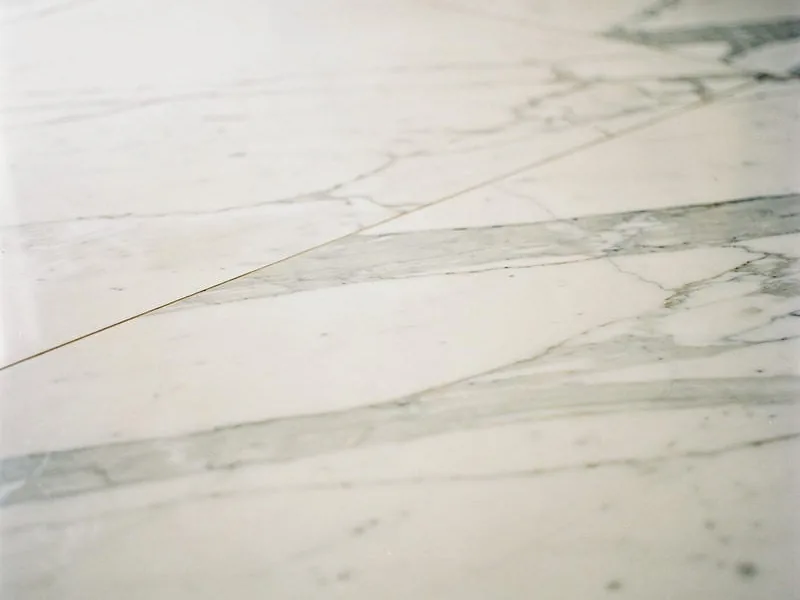
Shiny or matte porcelain. Smooth. The glazed tile in most newer homes. The face is slick and the grout lines are usually thin.
Large-format tile. Smooth. Fewer gaps across the room, and the ones that are there tend to be narrow. A chair leg rarely meets an edge.
Polished porcelain. Smooth. The slickest floor in the house. A protector here is about stopping marks, not about helping the chair move.
Slate and natural stone. Rough. Uneven on purpose. The whole face has texture, not just the gaps, so it wears a fiber surface everywhere it touches.
Anti-slip and textured tile. Rough. Chosen for grip in kitchens, bathrooms and entryways. That grip is exactly what chews through fiber.
Brick, quarry tile and stamped concrete. Rough. Deep gaps and a coarse face. The hardest floor in the building on anything you put under a leg.
If yours sits on the line between two of these, go back and use the fingernail test. It beats guessing from a photo, including this one.
Smooth tile: fit a glide or a pad
On a smooth floor the furniture protectors for tile floors you want have a fiber face. The face is PA6 fiber, needle-punched so the fibers stand upright like a brush and are held mechanically rather than glued. A sideways shove meets the ends of the fibers instead of sliding one glued layer off another, which is what happens to felt.
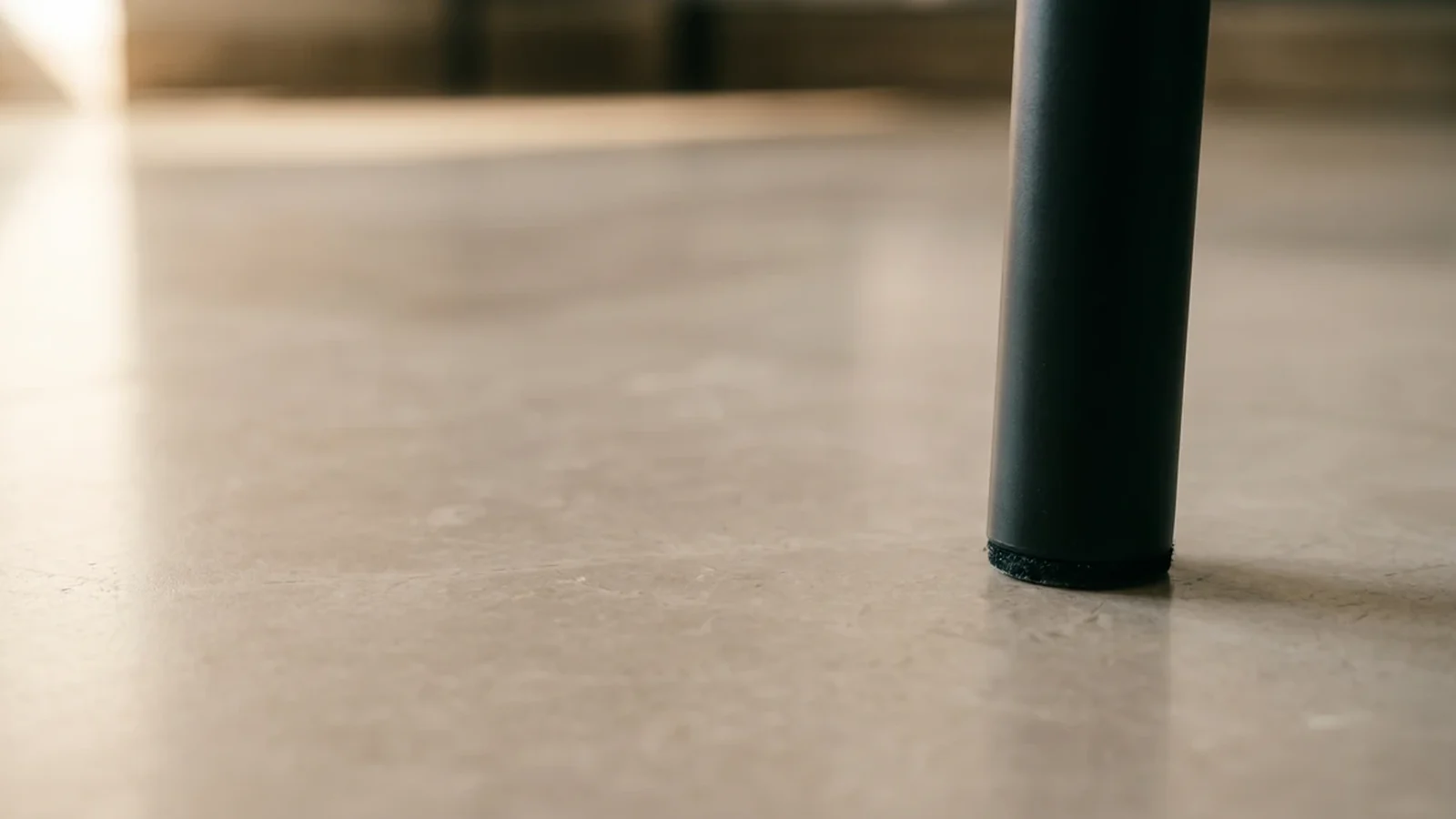
Which version you fit is decided by the leg, not the floor. Turn the chair over.
Solid wood. Most dining chairs, kitchen chairs and older furniture. Use a nail-on glide. A hollow zinc-plated tubular rivet taps into the wood with a rubber mallet, no drilling, and a small anti-rotation notch on the rivet keeps the glide from turning in the leg.
A flat, closed bottom in metal, chrome, laminate or veneer. Bar stools, café chairs, patio sets. Use a self-adhesive glide. Clean the bottom of the leg with 70% isopropyl alcohol, let it dry, press firmly, and give it 48 hours to reach full strength.
An open tube you can look up into gives adhesive nothing to hold. That leg takes a push-in tube plug, which is a different product.
Furniture that stays where it is, or a base wider than any glide. A sideboard, a bed frame, a wide table pedestal. Use a self-adhesive pad. Same fiber face on a thin backing, same alcohol wipe, same 48 hours.
Rough tile: fit a slide
Rough tile is where most furniture protectors for tile floors give up, and the reason is always the face. A slide has a smooth molded ABS face with rounded edges instead of fiber. It keeps its shape, so it bridges a grout line and rides over texture rather than wearing away on it.
The mounting choice is exactly the same. Solid wood takes a nail-on slide, with the same rivet and the same anti-rotation notch. Metal, chrome, laminate and veneer take a self-adhesive slide, with the same alcohol wipe and the same 48 hours.
One product, two jobs, which is worth knowing if your house is mixed: the same slides work on carpet, carpet tile and area rugs. Rough tile in the kitchen and carpet in the living room is one purchase, not two.
Getting the size right
Flush with the leg, or slightly smaller. Never larger. That rule holds for all furniture protectors for tile floors, glide, slide or pad.
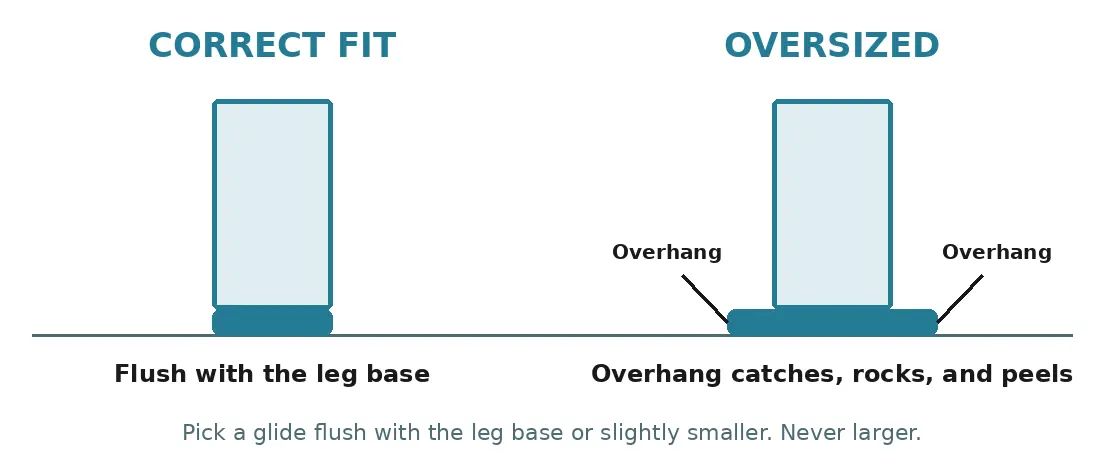
An oversized protector is the first thing to catch a grout line or a door threshold, and tile gives it an edge to snag on every few inches. Under load the chair rocks on the overhang, and on a self-adhesive fitting that flexing works the bond loose from the edges in.
Measure the bottom of the leg at its widest point: the diameter on a round leg, both sides on a square or rectangular one. If the leg tapers, measure the very bottom.
- 7/8″ (23 mm) fits legs 7/8″ to 1″ (23 to 27 mm)
- 1-1/8″ (28 mm) fits legs 1-1/8″ to 1-7/16″ (28 to 37 mm)
- 1-1/2″ (38 mm) fits legs 1-1/2″ to 1-15/16″ (38 to 49 mm)
- 2″ (50 mm) fits legs 2″ to 2-15/16″ (50 to 74 mm)
- 3″ (75 mm) fits legs 3″ to 3-3/4″ (75 to 95 mm)
Rectangular legs take a rectangular protector, 1-5/16″ x 3/4″ (33 x 19 mm), fitting legs up to 1-9/16″ x 1″ (40 x 25 mm). Measure the wide side first.
Slides stop at 2″ (50 mm), so a leg wider than about 2-9/16″ (65 mm) is outside the slide range. Pads go the other way and run from 1/2″ (12 mm) up to 11-13/16″ (300 mm), which is why a wide sideboard foot on tile takes a pad rather than a glide. How to measure furniture legs for glides and slides has the full chart and the printable version.
Why felt gives up quickly on tile
An ordinary felt pad is fibers laid flat in layers and glued together. Push a chair sideways and you’re pushing along the plane those layers sit in, so they shear apart one layer at a time and the pad opens into a shag.
Tile punishes that faster than a wood floor does, for two reasons. Grout lines catch the loose edge and pull at it. And tile is the floor people mop most, which is hard on the glue holding those layers to each other.
Ours is built the other way around, with the fibers driven upright and held mechanically, no glue in the pile. A shedding felt pad is the most common reason furniture protectors for tile floors are replaced within a season. The article on why felt furniture pads scratch hardwood floors goes through the mechanism in full.
Mixed floors, one house
Kitchens and bathrooms often get anti-slip tile while the rest of the house gets smooth, so the furniture protectors for tile floors in one room aren’t always the ones in the next. Check each room on its own and fit what that room needs. Chairs that live in one room get the protector for that room; a chair that travels between rough tile and carpet takes a slide, because a hard face copes with a smooth floor well enough while a soft face doesn’t cope with a rough one at all.
Looking after them
A protector is meant to be the thing that wears out instead of your floor, which only works if you replace it when it does. The Tile Council of North America publishes guidance on cleaning and protecting tile and grout, and abrasion under furniture is the part of it people forget.
Every so often, tip a chair and look. On tile there are two things to check: whether the fiber has worn flat or the ABS face has scuffed, and whether the protector still sits flush with the leg. Replace before the leg itself starts meeting the glaze.
Browse the furniture protectors for tile floors that match your test result: furniture glides for hard floors, or furniture slides for carpet and rough floors. Not sure which side of the fingernail test your floor falls on? Send a photo of the floor and the bottom of a chair leg to support@superiorglide.com, or use the chat, and we’ll tell you what to fit.
Fitting out a restaurant, hotel, school or office where the tile changes from room to room? Business Solutions covers free samples so you can test on the actual floor, plus volume pricing and a quote for the whole job.