
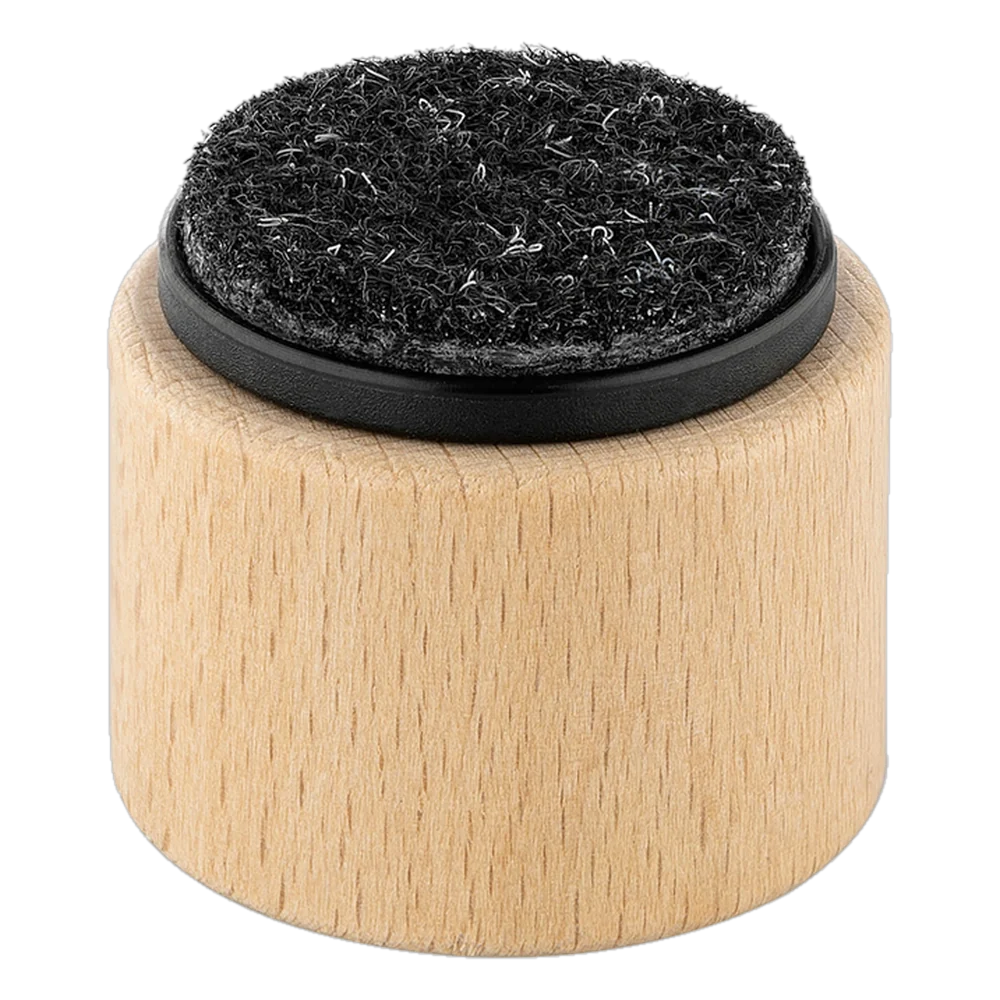
Nail-on glides are the oldest and most reliable way to protect a hard floor from a wooden chair. A zinc-plated steel rivet taps into the base of the leg, and a hard PA6 nylon head does the gliding. No adhesive to fail, no felt to trap grit. Fitted once, they stay fitted.
When nail-on beats self-adhesive
Choose nail-on furniture glides when three things line up. First, the leg is solid wood, because the rivet needs material to bite into. Second, the furniture moves every day, like dining chairs and cafe chairs, where adhesive pads eventually creep and peel. Third, the room works against glue: heat, humidity, and daily cleaning all shorten an adhesive bond, but a mechanical fixing does not care.
Skip nail-on when the leg is metal, plastic, or hollow, or when it is a piece you do not want to pierce. For those, use self-adhesive glides instead, and for chairs with tubular runners use sled-base glides.
How to install nail-on furniture glides
1. Turn the furniture over. Work with the leg base facing you, not lying on your back under a table.
2. Remove whatever is there now. Lever out old nail-on glides with pliers or a flat screwdriver. Scrape off old felt and adhesive so the base is bare wood.
3. Measure the leg base at its widest point. The glide should sit flush with the edge of the leg or a couple of millimeters inside it. Our measuring guide shows this step by step.
4. Center the glide and tap it home. No pilot hole, no drill, no screws: the tubular zinc rivet parts the wood fibers on entry rather than boring them out. Hold the glide steady and strike the rivet head with a rubber mallet, or a hammer over a cloth. Two to three firm strikes seat it fully on hardwood, MDF, and softwood. Drive it until the head sits flat against the leg with no gap; a tilted glide wears unevenly, so check it from the side.
Sizing and shapes
Match the shape of the leg base: round nail-on glides for round legs, rectangular nail-on glides for rectangular ones, and square for square. Size to the base itself, measured at the widest point, not to the leg above it. Every line runs a full size range, so you can fit the glide flush instead of almost covering it.
Which floors they suit
PA6 nail-on glides belong on smooth sealed hard floors: hardwood, laminate, vinyl, and smooth tile. On textured or rough tile, read furniture protectors for tile floors first. On carpet, glides are the wrong tool; you want furniture slides. For the full picture of choosing, measuring and fitting, start with the furniture glides guide.