Stainless steel rod low-profile adjustable leveling feet replace the standard zinc-plated rod with a stainless steel (INOX) threaded rod for corrosion resistance in wet, humid, or chemical environments. Same 9 mm low-profile PA base as standard low-profile feet. The stainless rod does not rust, corrode, or degrade in moisture-rich conditions. Static load capacity: 80 kg per foot.
Not sure what size? See the size chart ↓
📦 Sold in packs of 4 — quantity adjustable at checkout
Standard leveling feet use zinc-plated steel (Fe HDG) threaded rods. Zinc plating provides adequate corrosion resistance in dry indoor environments. But in commercial kitchens, food processing facilities, laboratories, bathrooms, and outdoor covered areas, moisture and chemicals attack the zinc plating over time, leading to rust, thread degradation, and eventually a weakened connection. Stainless steel rod low-profile adjustable leveling feet replace the zinc-plated rod with a stainless steel (INOX) rod that does not rust, corrode, or degrade in these conditions.
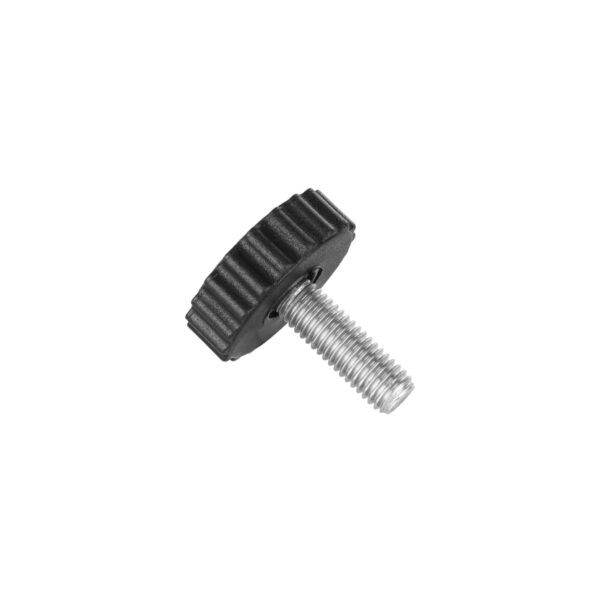
Ø 30 mm PA base at 9 mm height (low-profile, Type E). Stainless steel (INOX) M8 threaded rod at 24 mm. Static load capacity: 80 kg per foot. Stainless steel rod low-profile adjustable leveling feet are corrosion resistant low-profile leveling feet for furniture in wet, humid, or chemical environments. Black. Sold individually.
This product is available in one configuration that combines the low-profile base with the stainless steel rod.
Low-profile base (9 mm). Static load: 80 kg per foot (320 kg on four legs). Stainless steel threaded rod. Weight: 20.1 g. PA body. Black. Compatible with M8 round, square, and rectangular threaded inserts.
For stainless rod on standard base (M6/M8/M10, Ø 30/45): stainless steel rod standard base. For anti-slip stainless: anti-slip stainless steel. For zinc-plated low-profile: low-profile adjustable leveling feet. For custom stainless configurations, contact Business Solutions.
The threaded rod is the only metal component in a leveling foot. It connects the PA base to the threaded insert inside the furniture leg. In dry environments, zinc plating protects the steel rod from corrosion adequately. In wet or chemical environments, the zinc plating degrades, exposing the underlying steel to moisture, cleaning chemicals, and food acids. The steel rusts, the threads degrade, and the connection weakens.
Adequate for dry indoor environments. The zinc layer provides sacrificial corrosion protection. In the presence of sustained moisture, cleaning chemicals, food acids, or salt air, the zinc layer erodes over time. Once the zinc is consumed, the underlying steel corrodes. Corroded threads become difficult to adjust and eventually lose load-bearing integrity.
Corrosion-resistant in wet, humid, and chemical environments. Stainless steel forms a passive chromium oxide layer on its surface that self-heals when scratched. The rod maintains its thread profile, adjustment function, and load capacity regardless of moisture exposure. INOX leveling feet for furniture that will encounter water, steam, cleaning chemicals, or food acids throughout its service life.
Stainless steel rod low-profile adjustable leveling feet combine minimal foot visibility with corrosion-resistant hardware. The 9 mm base keeps the foot nearly invisible. The INOX rod keeps the connection intact in wet environments.
The same Ø 30 mm base at 9 mm height as standard low-profile leveling feet. Minimal protrusion below the leg. Nearly invisible from standing or seated viewing angles. On design-focused furniture in upscale kitchens, hospitality bathrooms, and clean-room environments, the low-profile base preserves the furniture aesthetic while the stainless rod handles the environmental demands.
INOX rod that resists corrosion from water, steam, cleaning chemicals (bleach, quaternary ammonium, citric acid), food acids, humidity, and salt air. The rod maintains its thread integrity and adjustment function in environments that would corrode a zinc-plated rod within months. Stainless steel leveling feet low profile that handle the environment while staying invisible.
Stainless steel rod low-profile adjustable leveling feet are specified when the environment presents moisture, chemicals, or humidity that would degrade a zinc-plated rod over the furniture’s service life.
Same screw-in process as any leveling foot. The stainless steel rod threads into the insert the same way a zinc-plated rod does. No special installation procedure is needed for the stainless version.
Stainless steel contains chromium (typically 10.5% or more by mass). The chromium reacts with oxygen to form a thin, invisible chromium oxide layer on the steel surface. This passive layer is the corrosion barrier. If the surface is scratched, the chromium oxide layer reforms immediately on exposure to air. This self-healing property is why stainless steel maintains its corrosion resistance throughout its service life, even in abrasive or chemically active environments.
Zinc plating on standard steel rods works differently. The zinc layer is sacrificial: it corrodes preferentially to protect the underlying steel. Once the zinc is consumed, the steel corrodes. In wet environments, the zinc consumption accelerates, and the rod may begin rusting within months to a few years. Stainless steel rod low-profile adjustable leveling feet bypass this mechanism entirely. There is no sacrificial layer to consume. The base metal itself resists corrosion.
Stainless steel rod low-profile adjustable leveling feet resist the cleaning chemicals commonly used in commercial kitchens, laboratories, and healthcare facilities. Both the PA base and the INOX rod tolerate repeated exposure to these agents.
These aggressive chemicals can attack even stainless steel with prolonged direct contact. Standard cleaning protocols in food service and healthcare do not use these at concentrations that affect stainless steel.
For furniture manufacturers, stainless steel rod low-profile adjustable leveling feet are a single-SKU specification: Ø 30 mm, M8 x 24 mm, low-profile base, INOX rod. Specify alongside M8 threaded inserts in the bill of materials. The stainless rod adds a cost premium over zinc-plated, but the elimination of corrosion-related replacement across the furniture’s service life in wet or chemical environments typically offsets the upfront premium within the first year of operation.
For facility managers retrofitting existing furniture, stainless steel rod low-profile adjustable leveling feet replace corroded zinc-plated feet on the same M8 inserts without modification. On a kitchen with 30 tables showing corroded feet, the retrofit is a one-time investment that eliminates the recurring corrosion-replacement cycle permanently. For production quantities, visit Business Solutions.
All leveling feet share the same M-thread interface regardless of rod material. You can use stainless steel rod low-profile adjustable leveling feet on legs exposed to moisture and zinc-plated low-profile feet on legs in dry areas of the same furniture. Both use M8, both have the same Ø 30 mm base at 9 mm height. However, in most wet environments, all legs are equally exposed, so using stainless on all legs is typically the practical choice.
Corrosion-proof leveling on design-focused furniture in wet environments. The National Wood Flooring Association (NWFA) recommends protective contact surfaces on all furniture legs, and the PA base provides the same non-scratching floor contact as standard low-profile feet.
The primary advantage. The stainless steel rod maintains its thread profile and adjustment function in wet environments indefinitely. The threaded connection between the rod and the insert stays clean, smooth, and fully functional even after exposure to water, steam, cleaning chemicals, and food acids. Stainless rod leveling feet M8 that keep adjusting smoothly in conditions that seize zinc-plated rods.
Upscale restaurant kitchens, spa treatment rooms, and hospitality bathrooms demand both design quality and environmental durability. The 9 mm low-profile base stays invisible. The stainless rod stays corrosion-free. Unlike using standard zinc-plated feet in wet environments, stainless steel rod low-profile adjustable leveling feet do not compromise durability for appearance or appearance for durability.
Stainless steel has comparable or higher tensile strength than zinc-plated carbon steel. The M8 thread at 80 kg per foot performs identically to the zinc-plated version. The material upgrade affects only corrosion resistance, not structural performance. On a four-legged table, 320 kg total capacity handles standard commercial furniture weight in any environment.
A zinc-plated rod in a wet environment eventually corrodes and needs replacement. The corroded rod may seize in the insert, requiring insert replacement as well. Stainless steel eliminates this replacement cycle. The rod stays functional for the service life of the furniture. In commercial kitchens with dozens of tables, eliminating the corrosion-replacement cycle across the fleet represents meaningful maintenance savings.
PA body (same as all leveling feet) with stainless steel (INOX) threaded rod instead of the standard zinc-plated steel.
The Ø 30 mm PA base at 9 mm height provides 707 mm² of floor contact. PA is inherently corrosion-proof by its material nature: it does not rust, degrade, or change its mechanical properties in wet or chemical environments. The PA base needs no upgrade for corrosive environments because it is already resistant to moisture, chemicals, UV, and impact by its material nature.
M8 x 24 mm stainless steel rod. The chromium content in stainless steel forms a passive oxide layer that prevents rust. This layer self-heals when the surface is scratched, maintaining protection throughout the rod’s service life. The 24 mm rod provides fine to moderate adjustment. For longer stainless rods on standard bases, see stainless steel rod standard base (rods to 40 mm).
Standard low-profile uses a zinc-plated rod and costs less. Same base, same thread, same load. Choose zinc-plated for dry environments. Choose stainless for wet, humid, or chemical environments.
Stainless rod standard base offers M6, M8, and M10 on 18-19 mm standard bases with rods to 40 mm. Choose standard base for more thread and rod options at a taller profile. Choose low-profile for minimal visibility at M8.
Anti-slip stainless steel combines a TPE anti-slip base with a stainless rod. Choose anti-slip when the furniture must not slide on wet floors. Choose stainless rod low-profile when foot invisibility matters more than anti-slip grip.
Restaurant kitchen furniture, food prep tables in catering facilities, bar furniture exposed to spills, hotel bathroom vanity tables, and spa treatment room furniture. These environments combine design expectations (low-profile invisible feet) with harsh conditions (water, steam, cleaning chemicals, food acids). Stainless steel rod low-profile adjustable leveling feet handle both without compromise.
In commercial kitchens where tables are cleaned with chemical sanitizers multiple times per day, the stainless rod maintains its thread integrity through thousands of cleaning cycles over the furniture’s service life. On bar furniture where spilled drinks, citrus juice, and ice melt create constant moisture exposure at floor level, the INOX rod stays corrosion-free while the 9 mm base keeps the foot invisible under the bar table legs. The combination of durability and design discretion is what makes stainless steel rod low-profile adjustable leveling feet the specification choice for upscale food service and hospitality environments. Available for bulk orders. For commercial pricing, visit Business Solutions.
Laboratory workbenches, clean room furniture, and healthcare facility tables where frequent sanitization with chemical solutions is standard protocol. The stainless rod resists the sanitizing agents. The PA base resists them as well. In laboratories where furniture is wiped down with bleach or hydrogen peroxide solutions after each use session, the stainless rod shows no degradation where a zinc-plated rod would begin rusting within months. For smaller laboratory equipment that needs corrosion-resistant leveling at a smaller scale, see mini leveling feet (POM body, M6). For furniture with round, square, or rectangular threaded inserts, stainless steel rod low-profile adjustable leveling feet provide corrosion-proof leveling at the lowest visible profile in the stainless range.
The stainless rod requires less maintenance inspection than a zinc-plated rod in wet environments because there is no plating to monitor for degradation. Check periodically that the foot is tight and the furniture remains level. The stainless surface may develop a light patina in some chemical environments, but this does not affect function or structural performance. The 9 mm low-profile base is hard to see during visual inspections, so run a finger under each leg to confirm the foot is seated and the base is intact.
Stainless steel rod low-profile adjustable leveling feet are sold individually for single-foot replacement. In environments where zinc-plated feet are being replaced due to corrosion, stainless rod feet can be used as direct replacements on the same M8 threaded inserts with no modification to the furniture. The stainless rod threads engage the insert nut identically to the zinc-plated version with the same torque and thread pitch. On a fleet of commercial kitchen tables, replacing all corroded zinc-plated feet with stainless steel rod low-profile adjustable leveling feet during one scheduled maintenance cycle eliminates all future corrosion-related foot replacements for that entire fleet.
Stainless Steel Rod Standard Base: M6/M8/M10, Ø 30/45, rods to 40 mm.
Anti-Slip Stainless Steel: TPE base + INOX rod.
| Specification | Details |
|---|---|
Product Type |
Adjustable Leveling Feet – Stainless Steel (Type E) |
Materials |
PA (Polyamide) base + INOX (Stainless Steel) stem |
Fit Style |
Screw-in adjustable height |
Floor Compatibility |
Hard floors (tile, wood, concrete, laminate, etc) |
Furniture Compatibility |
Foodservice equipment, lab furniture, modular setups |
Leg Compatibility |
Metal or plastic threaded inserts |
Base Diameter |
Ø 30 mm |
Thread Sizes |
M8 |
Thread Lengths |
24 mm |
Weight Capacity |
80 kg (176 lbs) static load per foot |
Color Options |
Black |
Installation Type |
Hand or wrench installation, adjustable height |
Key Benefits |
Corrosion resistance, compact footprint, floor protection |
Indoor / Outdoor |
Indoor | Covered Outdoor | Uncovered Outdoor |
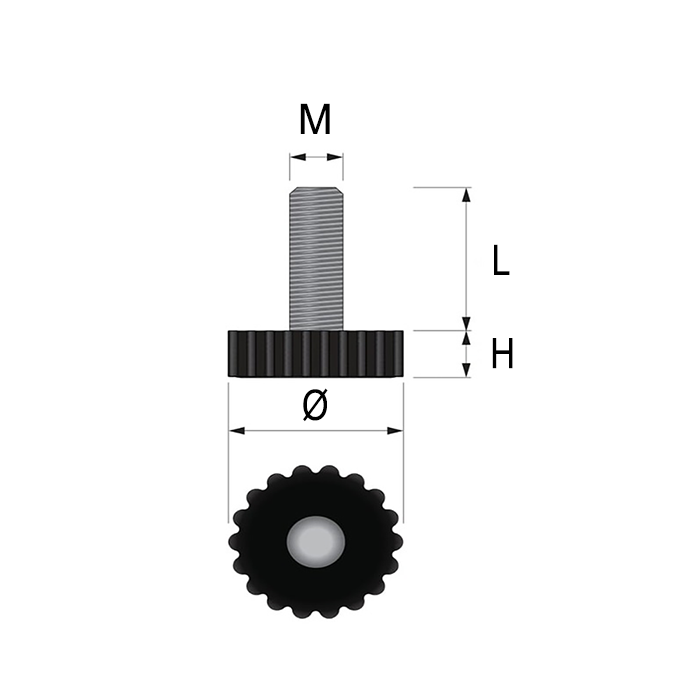
| Base Diameter (Ø) | Thread Size (M) | Threaded Stem Length (L) | Base Height (H) | Static Load Capacity (SL) |
|---|---|---|---|---|
30 mm (1.18") |
M8 (8 mm) |
24 mm (0.94") |
9 mm (0.35") |
80 kg (176 lbs) / pc |
Zinc plating provides adequate corrosion resistance for standard dry indoor environments. In wet, humid, or chemical-exposure environments (commercial kitchens, food processing, laboratories, bathrooms, outdoor covered areas), zinc plating can corrode over time. Stainless steel resists corrosion in these conditions, maintaining the threaded connection’s integrity and load capacity for the service life of the furniture.
No. The base is PA (polyamide), the same material as all other leveling feet. PA is inherently corrosion-proof, moisture-proof, and chemical-resistant. Only the threaded rod is upgraded to stainless steel because the rod is the component susceptible to corrosion in wet environments.
You can, but there is rarely a reason to. If any leg is exposed to moisture or chemicals, all legs likely are. Use stainless on all legs for consistent corrosion resistance. The M8 thread is compatible with the same round, square, and rectangular threaded inserts.
No. Stainless steel has comparable or higher tensile strength than zinc-plated steel. The M8 thread at 80 kg per foot is the same rating as the zinc-plated version. The material change affects corrosion resistance, not structural performance.
The Ø 30/M8 x 24 mm covers the most common specification for low-profile furniture in corrosive environments. For more stainless steel options on standard bases (M6, M8, M10, rods to 40 mm), see stainless steel rod standard base. For custom stainless low-profile configurations, contact Business Solutions.
Only logged in customers who have purchased this product may leave a review.



Reviews
There are no reviews yet