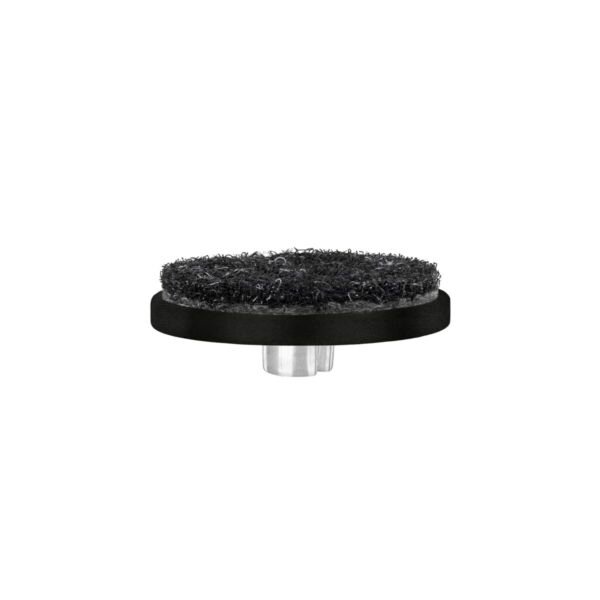
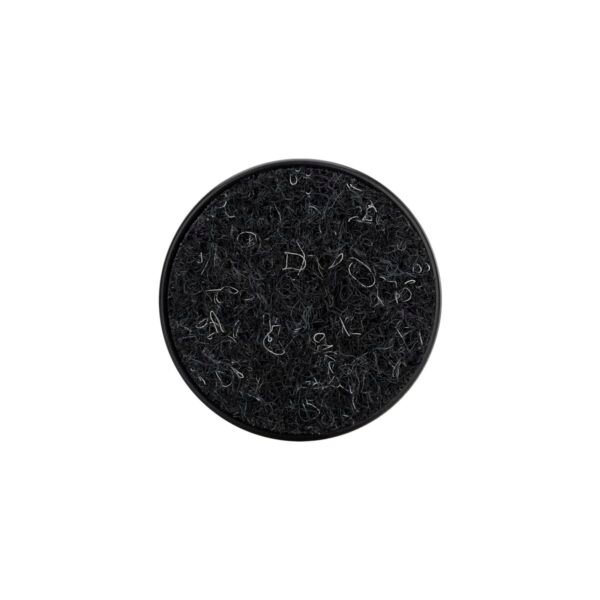
Round nail-on furniture glides protect smooth, hard floors from scratches. PA6 needle-punched fiber glides silently with no scuffing or marks. Zinc-plated rivet taps into solid wood legs. No pre-drilling, no adhesive.
Not sure what size? See the size chart ↓
📦 Sold in packs of 4 — quantity adjustable at checkout
Every time a bare wooden chair leg drags across hardwood, it grinds grit into the finish and cuts scratches you won’t notice until you notice them everywhere. Round nail-on furniture glides put a PA6 needle-punched fiber barrier between the leg and your floor.
The same material is used in professional floor protection systems. Silent, low-friction, and built to last.
Unlike felt, PA6 won’t compress flat, trap debris, or peel off in a month. These are the chair glides for hardwood floors that commercial facilities and homeowners trust for long-term protection.
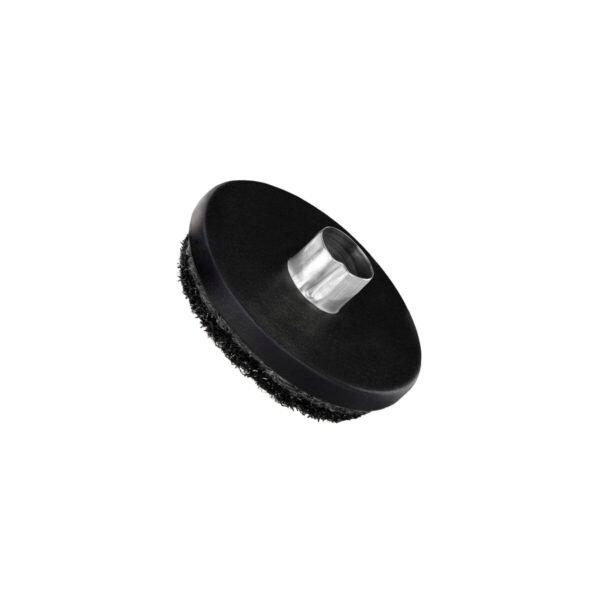
A zinc-plated tubular rivet drives into solid wood legs with a rubber mallet. An anti-rotation notch molded into the rivet locks the glide in place and prevents it from spinning under load. No pre-drilling, no adhesive, no curing time.
Round nail-on furniture glides are available in from Ø 23 mm to Ø 75 mm. Nail-on chair leg protectors for round wooden legs on hardwood, tile, laminate, vinyl, stone, and every other smooth, hard floor. For solid wood legs only. Sold in multiples of 4.
Five diameters cover every standard round furniture leg. The glide should be slightly smaller than the leg diameter so it stays hidden beneath the leg edge.
Too large, and the overhang catches on the floor transitions. Too small, and the leg perimeter contacts the floor directly. If your measurement lands on a boundary, choose the smaller furniture floor protector.
For legs Ø 23–27 mmSide chairs, lightweight accent furniture
For legs Ø 28–37 mmDining chairs, kitchen chairs, desk seating
For legs Ø 38–49 mmAccent chairs, heavier seating, lounge chairs
For legs Ø 50–74 mmDining tables, coffee tables, heavy furniture
For legs Ø 75 mm and aboveLarge tables, heavy commercial furniture
For metal, plastic, or hollow tube legs, round self-adhesive furniture glides use EHBF adhesive instead of a rivet. For an anti-slip grip, round anti-slip nail-on furniture glides use NR+CR rubber. For bulk orders, visit Business Solutions.
The most common mistake is guessing the leg size. A glide that’s too small wobbles and leaves the leg edge in direct contact with the floor. A glide that’s too large overhangs and catches on transitions.
With at standard increments, measuring takes 30 seconds and gets you the right nail-on chair leg protectors for every leg on the piece.
Lay the piece on its side or turn it upside down. You need full access to the flat bottom face of each leg where the round nail-on furniture glide will sit.
Use a ruler or calipers across the widest point of the leg base. For turned legs that taper, measure at the very bottom. The base is the only measurement that matters.
Select the round nail-on furniture glide whose range includes your measurement. A Ø 32 mm leg falls within the Ø 28 mm range (fits legs Ø 28–37 mm). If you’re right on a boundary, go with the smaller size so the glide stays slightly inside the leg edge.
Installation takes under a minute per leg. No pre-drilling required on any hardwood, MDF, or softwood species.
The zinc-plated tubular rivet separates wood fibers without removing them. This creates the strongest connection method for furniture that moves frequently on smooth, hard floors.
PA6 is chemically inert and leaves no marks, scuffs, or residue on any sealed floor finish. The National Wood Flooring Association (NWFA) recommends furniture protectors on every leg as a primary hardwood maintenance step.
Round nail-on furniture glides meet that standard across every smooth, hard floor type. These hardwood floor protectors are safe for every surface listed below.
Three components work together in every round nail-on furniture glide. One touches your floor. One connects the glide to your furniture leg. One sits between them and distributes the load.
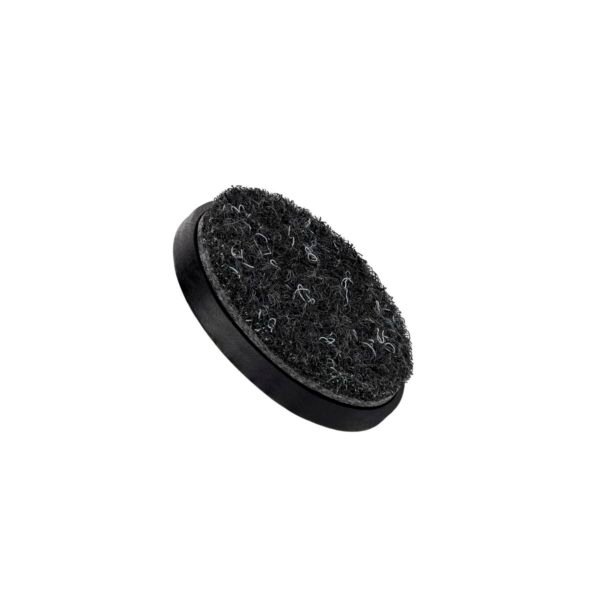
PA6 fibers are forced through the base material by thousands of barbed needles during manufacturing. Each fiber is mechanically interlocked with its neighbors. No glue holding it together. No layers to separate.
When you push a chair, the shear force hits the end-grain of the fibers instead of trying to peel them apart. Unlike cheap felt pads that compress and trap grit, PA6 deflects debris and maintains its smooth surface through extended daily use on hardwood, tile, and every other sealed floor.
The tubular rivet parts wood fibers on entry rather than boring them out. The fibers spring back when the rivet is removed, so the same hole accepts a fresh rivet at full strength.
An anti-rotation notch molded into the rivet locks the glide in position and prevents it from spinning under load. Zinc-iron plating provides corrosion resistance in humid environments.
The rigid circular disc between the PA6 surface and the rivet distributes compression load evenly across the full glide surface. No concentrated stress at the edges, no curling under asymmetric weight.
An EHBF acrylic foam layer is bonded beneath the ABS platform on the Ø 50 mm and Ø 75 mm sizes only. It provides additional surface-area contact and vibration damping under heavier loads.
If you’ve been replacing felt pads every few months or wondering why your chair leg protectors keep falling off, here’s how nail-on floor protectors compare to the alternatives.
Felt compresses flat under load, absorbs moisture from floor cleaning, and traps abrasive grit that scratches the finish. Within weeks, a felt pad becomes the problem instead of the solution.
PA6 needle-punched fiber can’t compress flat, doesn’t absorb moisture, and deflects debris instead of trapping it. The mechanical rivet holds long-term. No more monthly replacements.
Rubber grips the floor instead of gliding across it. That works if you want furniture to stay put, but not if you need to move a dining chair back and forth throughout the day.
Some rubber compounds also stain floor finishes over time. If you need grip, use round anti-slip nail-on furniture glides with NR+CR rubber formulated not to stain. If you need smooth movement, PA6 is the right surface.
Same ABS platform, same rivet, same sizes. The difference is the contact surface. Anti-slip uses NR+CR rubber for furniture that must hold its position. Round nail-on furniture glides use PA6 for furniture that needs to move freely. Choose based on the job: movement or grip.
Same PA6 surface, same ABS platform. The difference is the attachment method. Round nail-on furniture glides use a tubular rivet for solid wood legs, providing the strongest possible mechanical bond.
Round self-adhesive furniture glides use EHBF adhesive for metal, plastic, or hollow tube legs. Choose based on leg material.
Round nail-on furniture glides share the same ABS platform and rivet as the anti-slip range. The only difference is the contact surface, which determines whether furniture moves freely or holds position.
Low-friction PA6 fiber for round-legged furniture that repositions regularly. Dining chairs, kitchen chairs, desk seating, and accent chairs. These are the nail-on chair glides for hardwood floors you’re viewing now.
Controlled grip for round-legged furniture that must stay put. Accent tables, display furniture, bar stools, and piano benches. Anywhere sliding is a problem or a safety concern.
Both variants use the same ABS platform and ZnFe tubular rivet with an anti-rotation notch. The PA6 and NR+CR surfaces cannot be swapped in place. Removal and replacement with the correct variant is required.
The glide shape must match the leg cross-section. A mismatch leaves part of the leg base unprotected, and unprotected contact points are where floor damage happens. All three shapes use the same PA6 surface, ABS platform, and ZnFe rivet.
For circular, turned, tapered, and cylindrical legs. Available in from Ø 23 mm to Ø 75 mm. The most common round chair leg protectors for dining chairs.
For equal-sided square legs. Full corner-to-corner PA6 coverage. from 23 × 23 mm to 75 × 75 mm.
For rectangular legs with unequal sides. Mid-century and Scandinavian furniture. 33 × 19 mm.
Any situation where round wooden legs meet smooth, hard flooring, and the furniture needs to move freely. These are the professional-grade furniture floor protectors for round-legged furniture when felt pads fail, rubber caps drag, and adhesive alternatives peel off.
Dining chairs on hardwood are the single most common residential application. Kitchen chairs, accent chairs, side tables, coffee tables, bed frames, nightstands, desks, and bookcases all benefit from nail-on chair glides.
The Ø 28 mm and Ø 38 mm sizes cover the majority of residential dining chairs with turned or tapered legs. Chair leg protectors for hardwood floors that install in seconds and hold long-term.
Restaurant dining chairs, hotel banquet halls, conference rooms, assisted living facilities, office furniture, and event venues. Round nail-on furniture glides reduce staff strain during repositioning and extend floor life across high-traffic areas.
Available in bulk for venue fit-outs. For commercial pricing, visit Business Solutions.
Identical PA6 surface and ABS platform. EHBF adhesive instead of a rivet, for metal, plastic, or hollow round legs that cannot accept a nail-on fastener.
Same ABS platform and ZnFe rivet. NR+CR rubber surface instead of PA6, for round-legged furniture that must hold position on smooth, hard floors.
| Specification | Details |
|---|---|
Product Type |
Nail-On Furniture Glides |
Shape |
Round |
Surface Material |
PA6 Needle-Punched Polyamide 6 |
Surface Material |
ABS Acrylonitrile Butadiene Styrene |
Platform Material |
ZnFe Zinc-Iron Plated Tubular Steel Rivet |
Pile Density |
1,450 g/m² |
Leg Compatibility |
Solid wood legs only |
Floor Compatibility |
Smooth, hard floors |
Sizes Available |
Ø 23 mm – Ø 75 mm (0.91″ – 2.95″) |
Pack Quantity |
Sold in multiples of 4 |
Color |
Black |
Installation |
Tap in with a rubber mallet. No pre-drilling required |
Indoor/Outdoor Use |
Indoor | Covered Outdoor |
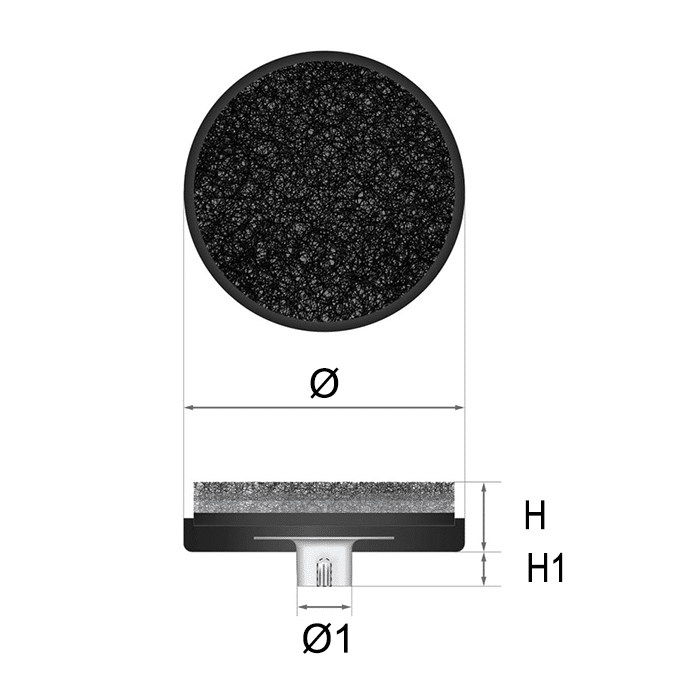
| Ø (Diameter) | Compatible Leg Size | Ø1 (Rivet) | H (Height) | H1 (Rivet Height) | Weight |
|---|---|---|---|---|---|
23 mm (0.91″) |
23 – 27 mm (0.91″ – 1.06″) |
9.2 mm (0.36″) |
12 mm (0.47") |
5.5 mm (0.22″) |
2.5 g |
28 mm (1.10″) |
28 – 37 mm (1.10″ – 1.46″) |
9.2 mm (0.36″) |
12 mm (0.47") |
5.5 mm (0.22″) |
3.4 g |
38 mm (1.50″) |
38 – 49 mm (1.50″ – 1.93″) |
9.2 mm (0.36″) |
12 mm (0.47") |
5.5 mm (0.22″) |
6.5 g |
50 mm (1.97″) |
50 – 74 mm (1.97″ – 2.91″) |
9.2 mm (0.36″) |
12 mm (0.47") |
5.5 mm (0.22″) |
12.8 g |
75 mm (2.95″) |
75 mm and above (2.95″+) |
9.2 mm (0.36″) |
12 mm (0.47") |
5.5 mm (0.22″) |
28.1 g |
PA6 stands for Polyamide 6, a needle-punched synthetic fiber with a pile density of 1,450 g/m². Thousands of barbed needles mechanically interlock the fibers during manufacturing, so no glue holds the surface together. The result is a dense, low-friction contact layer that deflects debris, resists compression, and glides silently across hardwood, tile, laminate, vinyl, and stone. PA6 won’t absorb moisture, trap grit, or stain any sealed floor finish.
Flip the furniture and measure the diameter at the very bottom of the leg base with a ruler or calipers. Match your measurement to the size chart: Ø 23 mm (fits 23–27 mm), Ø 28 mm (fits 28–37 mm), Ø 38 mm (fits 38–49 mm), Ø 50 mm (fits 50–74 mm), Ø 75 mm (fits 75 mm and above). If your measurement falls on a boundary between two sizes, choose the smaller glide so it stays hidden beneath the leg edge. For tapered legs, always measure at the very bottom, not mid-leg.
Yes. The zinc-plated tubular rivet is designed to part wood fibers on entry rather than bore them out. Center the glide on the leg base, hold it steady, and strike the rivet head with a rubber mallet. Two to three firm strikes seat the rivet fully on hardwood, MDF, and softwood. No pilot hole, no drill, no screws. The anti-rotation notch locks the glide in place once seated.
Both use the same ABS platform, the same ZnFe rivet, and the same five sizes. The difference is the floor-contact surface. Round nail-on furniture glides (Smooth Glide) use low-friction PA6 fiber for furniture that needs to move freely, like dining chairs. Round anti-slip nail-on furniture glides use NR+CR rubber for furniture that must stay put, like bar stools and piano benches. Both fit the same rivet hole, so you can swap between them if your needs change.
Yes. PA6 is chemically inert and non-staining on all sealed floor finishes, including LVP, LVT, and sheet vinyl. The National Wood Flooring Association (NWFA) recommends furniture protectors on every leg as a primary maintenance step. PA6 will not discolor, mark, or leave residue on light-colored vinyl or any other sealed smooth, hard floor.
Only logged in customers who have purchased this product may leave a review.



Reviews
There are no reviews yet