Ships nationwide · In-stock and made-to-order sizes
Ships nationwide · In-stock and made-to-order sizes

Reaching under heavy furniture to twist a foot by hand is a chore. This low-profile foot adds a screwdriver slot in the rod end, so you level it from above with a flathead while the 9 mm base keeps the foot barely visible. Rated to 80 kg per foot.
We list a limited range here, and some listed sizes are made to order in production runs. Tell us the size you need and roughly how many, and we will confirm availability and pricing by email. When enough people ask for a size, we run it, and the people who asked hear first.
Buying in volume? See business pricing & samples ↓
In more detail
Low-profile leveling feet keep the foot nearly invisible at 9 mm base height. But adjusting them requires reaching under the furniture to turn the base by hand. On furniture positioned against walls, in corners, or loaded with heavy items on top, that hand access is difficult. Notched thread low-profile adjustable leveling feet solve this by adding a screwdriver slot to the threaded rod end. Insert a standard flathead screwdriver through the furniture tube from above, turn the rod, and adjust the height without reaching under the furniture or tipping it.
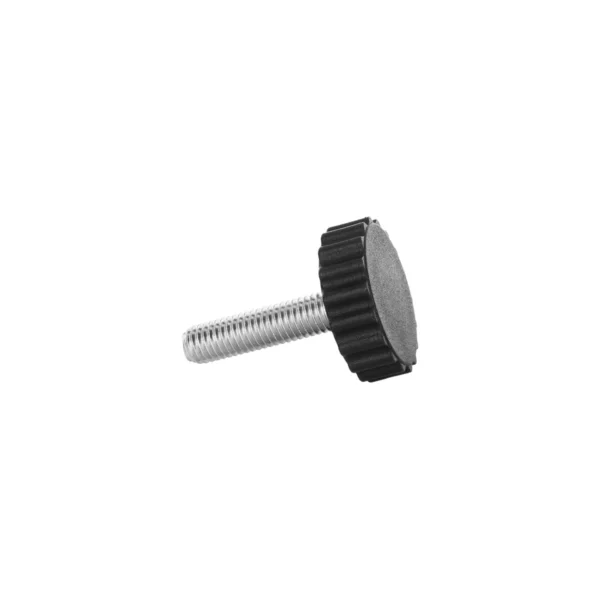
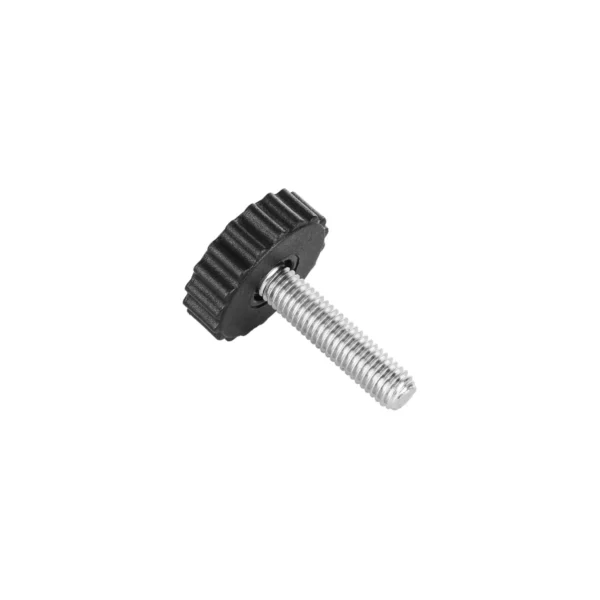
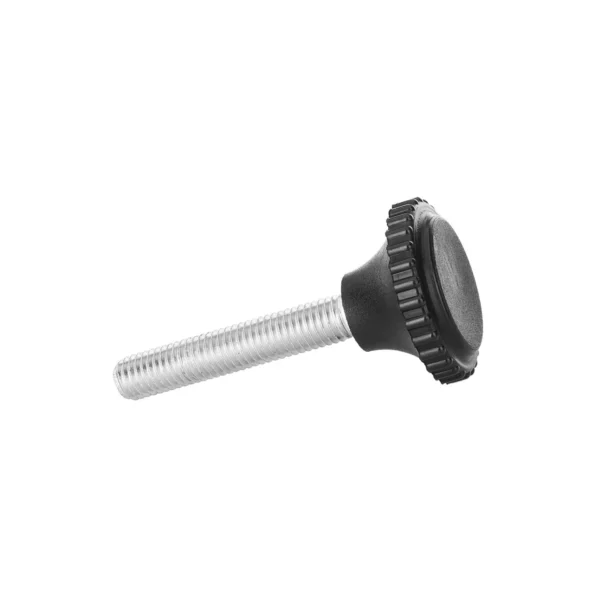
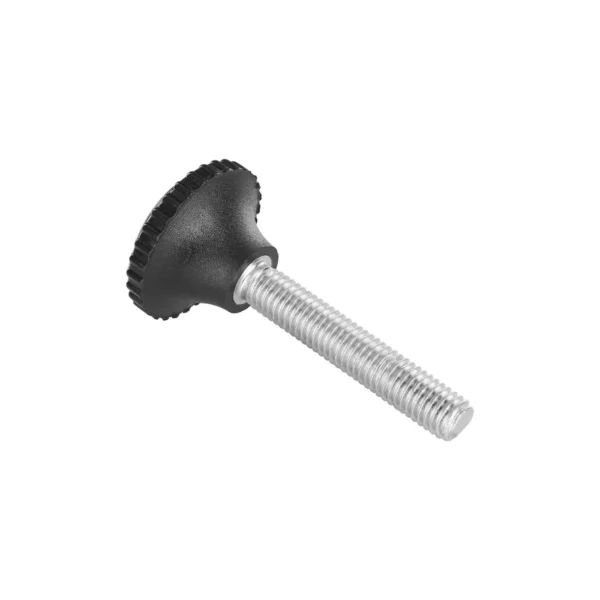
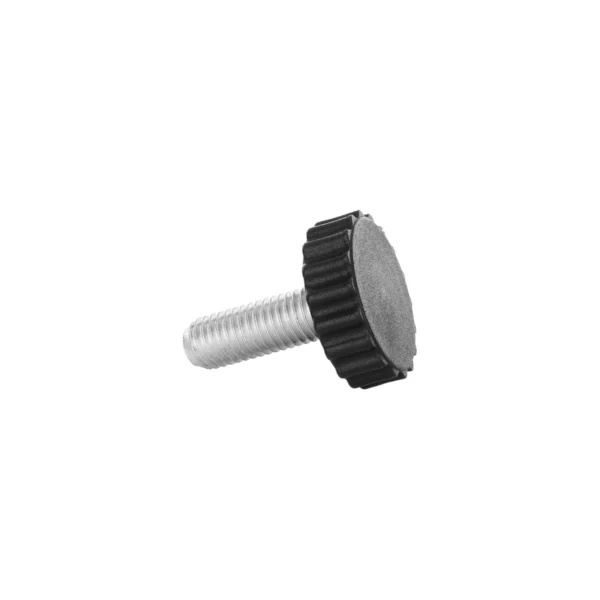
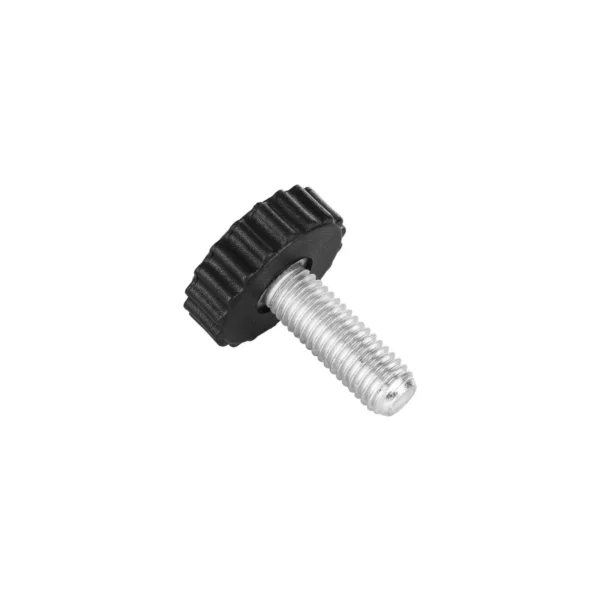
Ø 30 mm PA base at 9 mm height (low-profile). Zinc-plated steel M8 threaded rod at 35 mm with screwdriver notch. Static load capacity: 80 kg per foot. Notched thread low-profile adjustable leveling feet combine minimal foot visibility with from-above screwdriver adjustment. Black. Sold in packs of 4, adjustable in steps of 2 at checkout.
Notched thread low-profile adjustable leveling feet combine two features that serve different needs but work together on design-focused furniture that sits in hard-to-reach positions.
Feature 1: 9 mm low-profile base
The same Ø 30 mm base at 9 mm height as standard low-profile leveling feet. Minimal protrusion below the furniture leg. From standing or seated viewing angles, the foot is nearly invisible. On design-focused furniture, stackable seating, and short-legged pieces, the low-profile base preserves the intended leg aesthetic without visible hardware below.
Feature 2: screwdriver notch
The screwdriver slot in the rod end allows height adjustment using a flathead screwdriver from above. On furniture with hollow tube legs, the screwdriver reaches the notch through the tube interior. No reaching under the furniture. No gripping the base. Notched thread leveling feet low profile that adjust from above while keeping the foot invisible below. Flathead adjustable leveling feet low profile that use the most common hand tool.
The combination matters on furniture where both visibility and access are concerns simultaneously. A conference table pushed against a wall in a design-focused boardroom needs invisible feet (low-profile) and from-above adjustment (notch) because hand access to the back legs is blocked by the wall. Notched thread low-profile adjustable leveling feet satisfy both requirements in one component.
The notch is a straight slot machined into the top end of the threaded rod. When installed in a threaded insert inside a hollow tube leg, the slot faces upward and is accessible through the tube from above.
Step 1. Access the notch
If the tube top has a tube plug, remove it first. Insert a flathead screwdriver down through the tube interior to reach the rod end. The screwdriver blade seats in the straight slot.
Step 2. Turn the rod
Clockwise extends the foot (raises that corner). Counterclockwise retracts (lowers that corner). Each turn provides precise height change based on the M8 thread pitch. The 35 mm rod provides moderate total adjustment range.
Step 3. Check the level
After adjusting, check the furniture level. Move to the next leg. Replace any tube plugs removed for access. The foot stays invisible under the low-profile base throughout the process.
Dual adjustment: the screwdriver notch does not replace hand adjustment. Both methods work on the same foot. Use the screwdriver from above when the base is inaccessible. Use hand-turning from below when the base is easy to reach. From-above low-profile leveling feet that offer both adjustment methods.
Same installation as any leveling foot. The notch does not change how the foot installs. It only adds an additional way to adjust the height after installation.
What you need
Installation steps
For furniture manufacturers, notched thread low-profile adjustable leveling feet are a single-SKU specification: Ø 30 mm, M8 × 35 mm, low-profile base, screwdriver notch. This simplifies the bill of materials because there is only one part number for the notched low-profile foot. Include this in the furniture bill of materials alongside M8 threaded inserts. The 35 mm rod provides more adjustment range than the typical 14 to 28 mm rods on standard low-profile feet, which is practical for furniture that will be deployed across different sites on floors with varying unevenness across different installation sites.
For facility managers retrofitting existing furniture, notched thread low-profile adjustable leveling feet replace any existing M8 low-profile foot without changing the threaded insert. Unscrew the old foot, screw in the notched version. From-above adjustment is immediately available on furniture that previously required hand access below. On a floor of 30 desks pushed against walls, the retrofit takes only minutes per desk and eliminates the need to pull each desk away from the wall for future leveling. For production quantities, visit Business Solutions.
Notched thread low-profile adjustable leveling feet use the same PA base as standard low-profile feet. Floor compatibility is identical: hardwood, engineered wood, luxury vinyl, tile, polished concrete, laminate, sealed stone, and any other standard smooth, hard floor surface. The PA base provides non-scratching, non-marking contact at the Ø 30 mm diameter.
For floors that require dedicated PA6 scratch protection, see low-profile with pad (no notch available on pad version). For floors where anti-slip grip is needed, see wide-base anti-slip. The notched thread low-profile foot is designed for standard PA floor contact on hard surfaces where the priority is minimal visibility combined with from-above adjustment convenience.
Notched thread low-profile adjustable leveling feet serve the intersection of two needs: invisible feet and from-above adjustment. Not all furniture needs both. The decision tree is straightforward.
Choose notched thread low-profile when
Consider alternatives when
All leveling feet share the same M-thread interface. On a desk against a wall, you could use notched thread low-profile adjustable leveling feet on the two back legs (against the wall, needing from-above access) and standard low-profile without notch on the two front legs (easily accessible from below). Both use M8, both have the same Ø 30 mm base at 9 mm height, so they look identical from the outside.
This selective approach uses notched thread feet only where the from-above access provides practical value, reducing cost on legs where hand access is already easy. On commercial furniture orders, this can mean specifying notched thread on just the two wall-side legs per desk rather than all four, cutting the notched thread quantity in half while maintaining full from-above access where it matters.
The screwdriver slot is a precision-machined feature. Using the right screwdriver maximizes adjustment performance and minimizes slot wear over the service life of the foot.
Correct technique
Avoid
Minimal foot visibility plus from-above adjustment access. The National Wood Flooring Association (NWFA) recommends protective contact surfaces on all furniture legs, and the low-profile PA base provides the same non-scratching floor contact as standard low-profile feet.
Invisible feet that adjust from above
The primary advantage. On design-focused furniture where both foot invisibility and easy adjustment matter, notched thread low-profile adjustable leveling feet deliver both. The 9 mm base stays hidden. The screwdriver notch eliminates the need to reach under the furniture. Screwdriver low-profile leveling feet that look invisible and adjust conveniently.
Easier maintenance on wall-placed furniture
Desks against walls, conference tables in corners, display fixtures in tight layouts. All positions where the back legs are inaccessible from below. A flathead screwdriver through the tube from above reaches every foot. Unlike leaving furniture improperly leveled due to access difficulty, the notch makes re-leveling simple enough that it actually gets done.
35 mm rod for moderate adjustment
The 35 mm rod provides more adjustment range than the 8 to 28 mm rods on standard low-profile feet. Combined with the from-above access, this gives more leveling flexibility for furniture that moves between positions on floors with varying unevenness. One foot, one screwdriver, more range, minimal visibility.
Common tool, no specialty hardware
A flathead screwdriver is the most universally available hand tool. Every maintenance toolkit, kitchen drawer, and office supply closet has one. No hex keys to lose or match to a specific size. Notched thread low-profile adjustable leveling feet adjust with whatever flathead screwdriver is closest. The simplest from-above adjustment method on the most discreet base profile.
Measure the widest point of the flat base of the leg, then choose the size on that row. The glide should sit flush with the leg or just inside it, never wider.

| Base Ø (Ø) | Thread Length (L) | Base Height (H) | Thread (M) | Static Load (SL) |
|---|---|---|---|---|
| 30 mm (1.18″) | 35 mm (1.38″) | 9 mm (0.35″) | M8 | 80 kg (176 lb) |
Thread size must match the insert in your furniture leg.
| Specification | Detail |
|---|---|
| Material | Polyamide body with a hot-dip galvanized steel thread |
| Sizes | 30 mm |
| Mounting | Screws into a threaded insert |
| Colors | Black |
| Floor compatibility | Any floor, levels on uneven ground |
The threaded rod has a screwdriver slot (notch) cut into the end. Standard low-profile leveling feet adjust by hand-turning the base from below. Notched thread low-profile leveling feet can also be adjusted from above by inserting a flathead screwdriver through the tube leg to turn the rod. Same Ø 30 mm base, same 9 mm height, same M8 thread. Added screwdriver access.
The 35 mm rod provides moderate adjustment range for floors with minor to moderate unevenness. This is longer than the 14 to 28 mm rods on standard low-profile feet, giving more leveling range. Combined with from-above screwdriver access, the 35 mm rod makes re-leveling quick at each new furniture position.
No. The screwdriver notch is at the top end of the rod, accessible through the furniture tube from above. The base type (low-profile vs. standard) does not change how the screwdriver reaches the notch. The base type only determines the floor contact profile.
You can, but mixing base heights (9 mm low-profile and 18-19 mm standard) on the same furniture creates a height difference that the threaded rod must compensate for. If different base heights are needed, adjust the rod extension at each leg to bring the furniture level despite the different base heights.
Each leveling foot has a slot cut into the end of its threaded rod, so you can set it from above with a screwdriver without tipping the cabinet. The 9 mm base then sits almost flush under the leg.
Each leveling foot has a slot cut into the end of its threaded rod, so you can set it from above with a screwdriver without tipping the cabinet. The 9 mm base then sits almost flush under the leg.
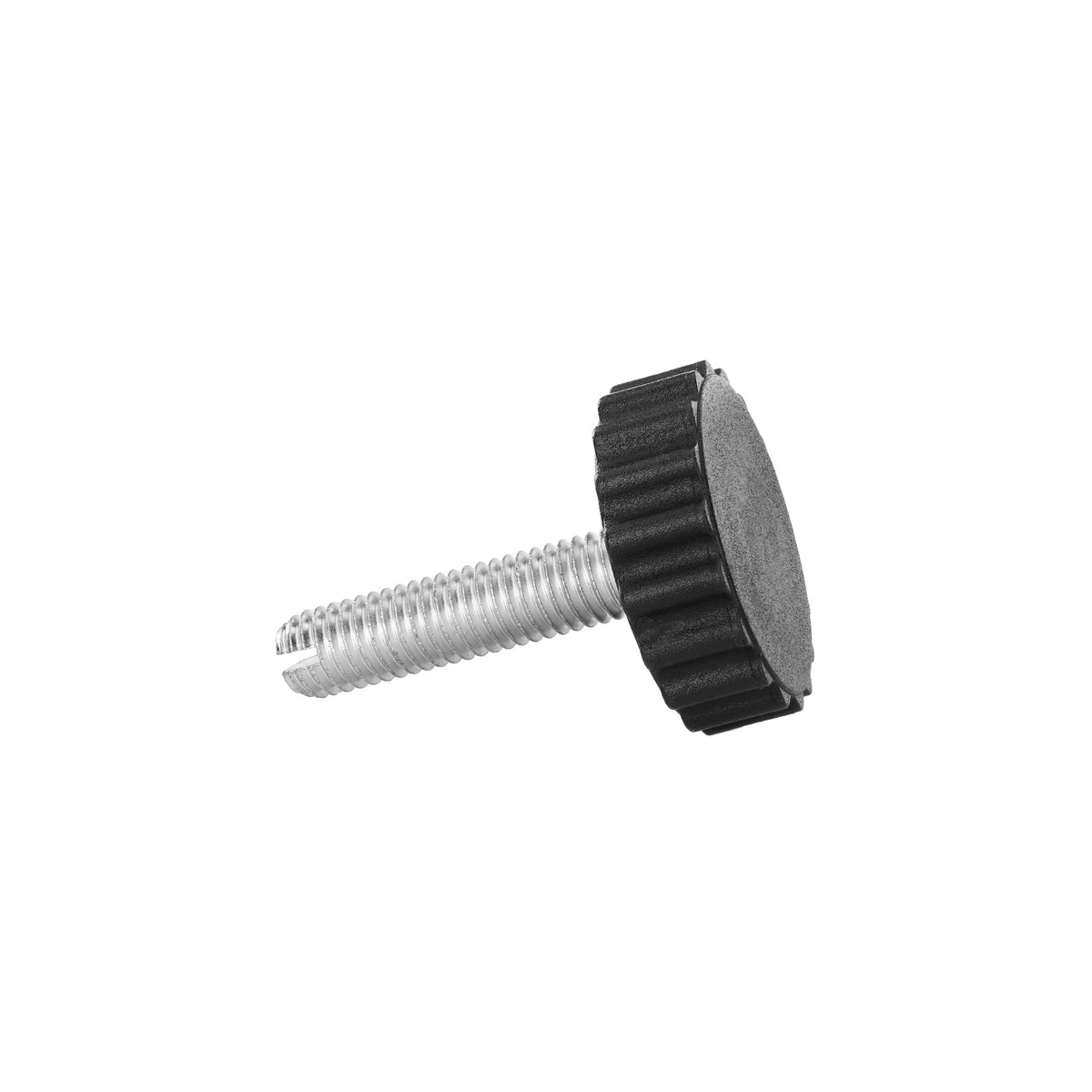 Notched Thread Low-Profile Adjustable Leveling Feet
$1.41 – $4.70
For business
Same glide, by the hundred or the thousand. Volume pricing, free samples to check the fit, and a written quote for the project.
Every size, in one place
Dimensions, materials, load ratings and part numbers for the whole range: glides, slides, pads, tube plugs, threaded inserts, leveling feet and sled base glides. Millimeters and inches side by side, with a drawing for every part.

Reviews
There are no reviews yet