Hospitality-grade floor protection · Sizing help before you order · Apply for a business account
Sizing help · Apply for a business account
Hospitality-grade floor protection · Sizing help before you order · Apply for a business account
Sizing help · Apply for a business account
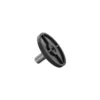
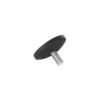
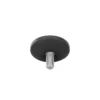
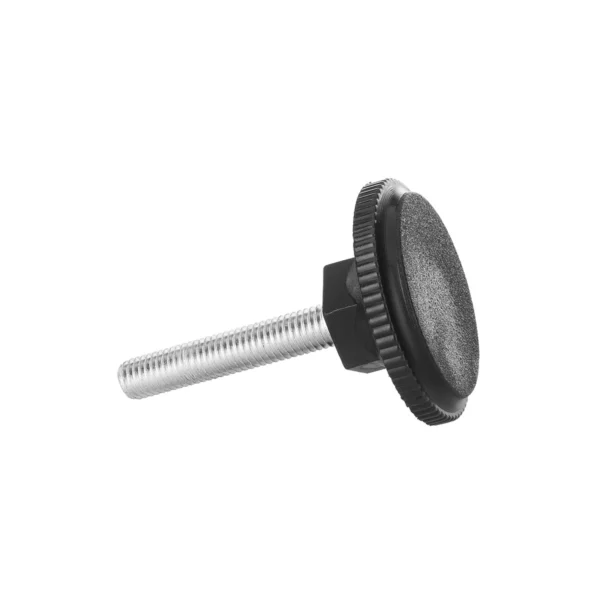
On heavy furniture, a small foot can press into the floor or feel tippy. This one carries the largest base in the range at Ø 50 mm, spreading the load across the broadest contact area for maximum stability. PA body, zinc-plated M8 rod. Rated to 80 kg per foot.
We make this size in production runs, so there is none on the shelf today. Tell us how many you would want and you go on the list for it. When enough people ask for a size, we run it, and the people who asked hear about it first.
We stock a limited range of threads and lengths. Tell us what you need and we will confirm availability and pricing by email.
Buying in volume? See business pricing & samples ↓
Standard base leveling feet come in Ø 30 and 45 mm. Low-profile comes in Ø 20 and 30 mm. Ultra-low profile is Ø 25 mm. Wide-base adjustable leveling feet go to Ø 50 mm: the largest base diameter in the entire leveling foot range. The wider base distributes the furniture’s weight across a broader floor contact area, reducing pressure per square millimeter. On heavy furniture where concentrated weight can indent soft surfaces or create instability, the Ø 50 mm base provides the most stable platform available.
Ø 50 mm PA base at 11 mm height. Zinc-plated steel M8 threaded rod. Static load capacity: 80 kg per foot. Wide-base adjustable leveling feet are large base adjustable leveling feet for heavy furniture where maximum stability and load distribution matter more than foot invisibility. Rod lengths 23 and 28 mm. Black and grey. Sold in packs of 4, adjustable in steps of 2 at checkout.
The Ø 50 mm base provides the most floor contact area of any leveling foot in the range. Here is how it compares in terms of floor contact surface.
Ø 20 mm: 314 mm². Ø 25 mm: 491 mm². Ø 30 mm: 707 mm². Ø 45 mm: 1,590 mm². Ø 50 mm: 1,964 mm². The wide base provides 2.8 times the floor contact of the Ø 30 mm base and 6.3 times the Ø 20 mm base. More contact area means lower pressure per square millimeter on the floor surface. Wide-base adjustable leveling feet spread the load across the broadest possible footprint.
On heavy furniture (conference tables, industrial workbenches, commercial display fixtures), concentrated weight at a narrow contact point can indent soft surfaces materials like luxury vinyl, cork, and certain hardwoods. The Ø 50 mm base reduces point pressure. On hard surfaces like tile and concrete, the wider base increases stability by lowering the center of gravity relative to the support area. 50 mm base leveling feet that provide the most stable foundation for heavy furniture.
The standard base Ø 45 mm and the wide base Ø 50 mm are only 5 mm apart in diameter. But they are designed for different priorities.
Choose wide-base adjustable leveling feet when the broadest contact area and lowest profile are the priorities. Choose standard base Ø 45 when you need M10 or M12 threads, longer rods, or a taller base clearance.
The same leveling function as every foot in the range, with the widest floor contact area. The National Wood Flooring Association (NWFA) recommends protective contact surfaces on all furniture legs, and wide-base adjustable leveling feet provide the broadest PA contact surface for maximum floor protection and stability.
The primary advantage. Heavy conference tables, industrial workbenches, and commercial display fixtures carry hundreds of kilograms. The Ø 50 mm base provides the most stable leveling platform, reducing the risk of tipping or rocking. Wide base leveling feet for furniture where stability is the top priority, not foot invisibility. Wide base leveling feet M8 that anchor heavy furniture firmly to the floor.
On luxury vinyl, cork, linoleum, and certain softer hardwoods, concentrated weight from a narrow leveling foot can indent the floor surface over time. Wide-base adjustable leveling feet spread the same weight across 1,964 mm² instead of the 707 mm² of a Ø 30 base. The pressure per square millimeter drops by 64%. Unlike leaving heavy furniture on narrow contact points, the wide base prevents indentation by distributing load broadly.
Same independent height adjustment as every leveling foot. Turn each foot to raise or lower that corner. The wider base makes each contact point more stable, which reduces micro-rocking even after leveling. On heavy tables where slight rocking is amplified by the mass, the wide base dampens this more effectively than narrower bases. A heavy conference table that rocks on a Ø 30 mm base may sit perfectly still on a Ø 50 mm wide base at the same leveling adjustment because the wider footprint provides more geometric stability against tilting forces.
More PA surface contacting the floor means more vibration dampening at the contact point. The Ø 50 mm base absorbs more contact noise than narrower bases. On heavy furniture that resonates when bumped or when items are placed on the surface, the wide base reduces the transmitted vibration at each leg. In open-plan offices where heavy desks sit on smooth, hard floors, the cumulative noise reduction from wider bases across dozens of desks creates a noticeably quieter work environment compared to narrower leveling feet on the same furniture.
Floor indentation is a specific damage type where concentrated furniture weight compresses the floor surface over time, leaving visible depressions. It is most common on luxury vinyl plank, cork, linoleum, and softer hardwoods. Wide-base adjustable leveling feet address indentation by spreading the load across the largest possible contact area.
A four-legged table weighing 40 kg with a 20 kg load on top distributes 15 kg per foot. On a Ø 20 mm base (314 mm²), that is 0.048 kg/mm². On the Ø 50 mm wide base (1,964 mm²), that drops to 0.008 kg/mm². The difference matters over months and years of continuous static load. Softer flooring materials compress under sustained pressure, and the compression becomes visible as a circular depression at each leg. The wider the base, the lower the pressure, and the less likely the floor is to show indentation marks.
Luxury vinyl plank (LVP) and luxury vinyl tile (LVT) are the most common flooring types where indentation is reported. Cork flooring compresses under sustained load. Linoleum shows depression marks from heavy furniture. Certain softer hardwoods (pine, cedar) are more susceptible than harder species (oak, maple). On all of these surfaces, wide-base adjustable leveling feet provide the best protection against indentation because of the larger contact footprint.
Same installation as every other leveling foot. The wider base does not change the process. The Ø 50 mm base may be visible below the furniture leg, which is expected and by design.
For furniture manufacturers and facility managers specifying wide-base adjustable leveling feet, the M8-only thread simplifies the specification. All variations share the same Ø 50 mm base and M8 thread. The only choice is the rod length (23 vs. 28 mm) and the base color (black or grey). For commercial projects where indentation prevention or maximum stability are specified requirements, wide-base adjustable leveling feet satisfy these requirements with the broadest contact area in the range.
On projects where some furniture legs need anti-slip grip and others need standard PA contact, mix wide-base adjustable leveling feet with wide-base anti-slip on the same furniture. Both use the same Ø 50 mm base diameter and M8 thread, so the visual footprint is consistent across all legs. For production quantities, visit Business Solutions.
Wide-base anti-slip uses the same Ø 50 mm base but with TPE instead of PA. TPE grips the floor and resists sliding. PA provides standard smooth contact. Choose anti-slip when the furniture must not slide. Choose standard wide-base when normal contact is sufficient and you want grey or black color options.
Standard base Ø 45 provides M8, M10, and M12 threads with rods up to 110 mm. Wide-base provides M8 only with rods up to 28 mm. Choose standard when you need heavier thread capacity or longer adjustment. Choose wide-base for the widest contact area and lowest profile.
Slim base is Ø 40 mm at 12 mm height. A middle ground between Ø 30 standard and Ø 50 wide. Choose slim when you want a wider base than Ø 30 but do not need the full Ø 50.
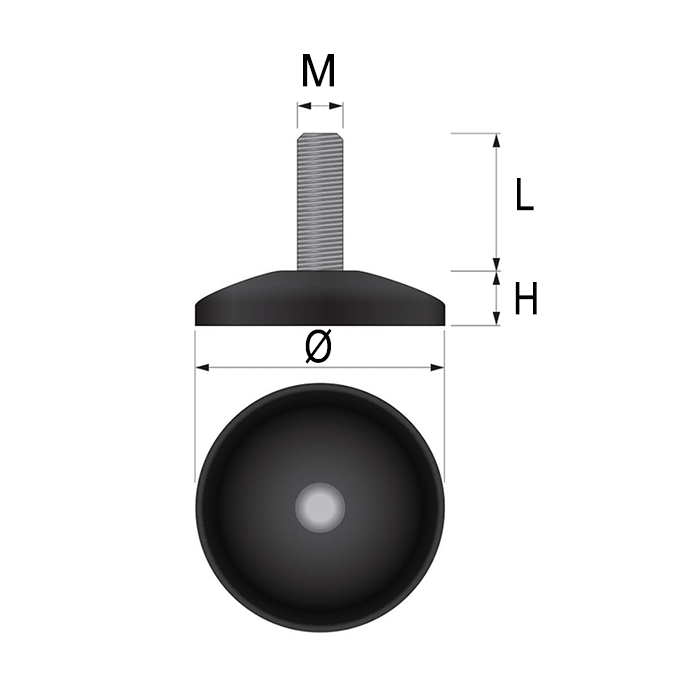
| Length (L) |
|---|
| 23 mm (0.91″) |
| 28 mm (1.10″) |
Thread size must match the insert in your furniture leg.
| Specification | Detail |
|---|---|
| Material | Polyamide body with a hot-dip galvanised steel thread |
| Sizes | 2 sizes |
| Diameter (Ø) | 50 mm (1.97″) |
| Length (L) | 23 to 28 mm (0.91″ to 1.10″) |
| Height (H) | 11 mm (0.43″) |
| Thread (M) | M8 |
| Static load (SL) | 80 kg |
| Mounting | Screws into a threaded insert |
| Colors | Black, Gray |
| Floor compatibility | Any floor, levels on uneven ground |
| Minimum order | Sold in a minimum of 4, then any quantity you need |
The Ø 50 mm wide base is designed for maximum floor contact area, not maximum thread load. M8 at 80 kg per foot handles standard to heavy furniture weight. For M10 (120 kg) or M12 (150 kg), the standard base Ø 45 mm provides those threads with a nearly comparable base diameter. The wide base prioritizes stability and load distribution over raw load capacity.
The Ø 50 mm base provides 23% more floor contact area than Ø 45 mm (1,964 mm² vs. 1,590 mm²). The wide base is also shorter (11 mm vs. 19 mm), so it sits closer to the floor. Choose wide-base for maximum contact area. Choose standard Ø 45 for more thread options and longer rods.
On legs under 50 mm in diameter, yes. The base will be visible as a wider disc below the leg. On 40 mm legs, 5 mm of base extends on each side. If visible overhang is a concern, use standard base Ø 45 mm or low-profile Ø 30 mm instead.
Wide-base adjustable leveling feet have a PA base for standard floor contact. Wide-base anti-slip uses a TPE (thermoplastic elastomer) base that grips the floor and resists sliding. Choose anti-slip when the furniture must not move on the floor. Choose standard wide-base when normal PA floor contact is sufficient.
The wider the base, the more floor the load is spread across. One wide base foot presses far more gently on timber, vinyl and epoxy than a small base carrying the same weight.
The wider the base, the more floor the load is spread across. One wide base foot presses far more gently on timber, vinyl and epoxy than a small base carrying the same weight.
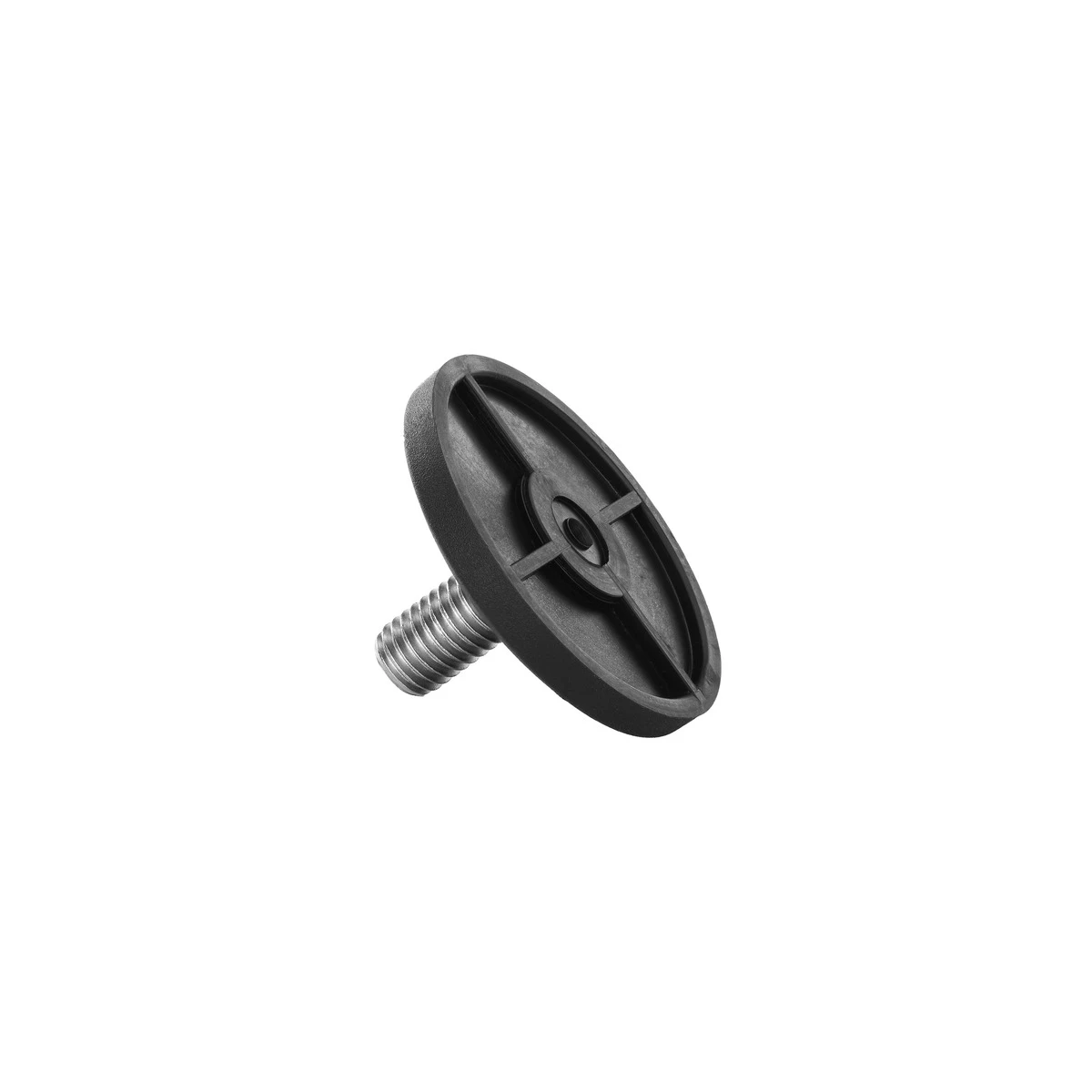 Wide-Base Adjustable Leveling Feet
Outfitting a hotel, restaurant, school, healthcare facility, or large furniture build? Superior Glide supports volume orders with bulk pricing tiers, free physical samples, and dedicated quote pricing for accounts placing larger orders.
Bulk pricing tiers, net terms for qualified buyers, and dedicated support for facility managers and procurement teams.
Hold the product, test the fit, check the finish. We ship samples free so you can evaluate before committing to a full order.
For orders above standard volume tiers, we’ll prepare a custom quote with consolidated shipping and your account’s tier pricing.

Reviews
There are no reviews yet