Hospitality-grade floor protection · Sizing help before you order · Apply for a business account
Sizing help · Apply for a business account
Hospitality-grade floor protection · Sizing help before you order · Apply for a business account
Sizing help · Apply for a business account
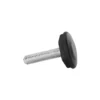
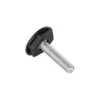
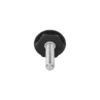

Most leveling feet have ribbed bases that grip and resist being nudged. This one is flat and rib-free, so once it’s leveled you can still slide the furniture to reposition it on a smooth, hard floor. Rated from 80 kg (M8) to 120 kg (M10) per foot.
We make this size in production runs, so there is none on the shelf today. Tell us how many you would want and you go on the list for it. When enough people ask for a size, we run it, and the people who asked hear about it first.
We stock a limited range of threads and lengths. Tell us what you need and we will confirm availability and pricing by email.
Buying in volume? See business pricing & samples ↓
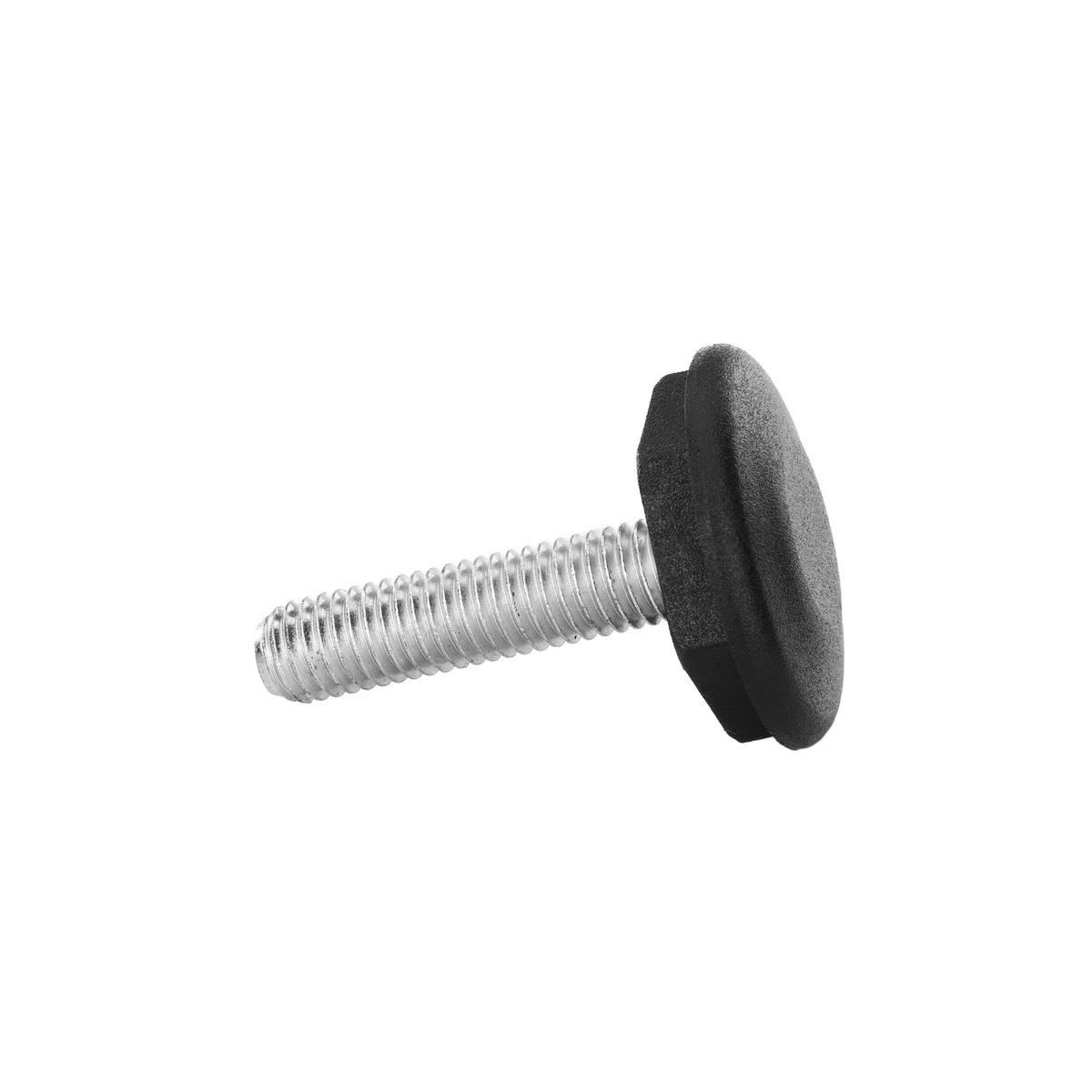
Most leveling feet have textured or ribbed bottom surfaces that grip the floor and resist sliding. That grip is an advantage on furniture that should stay put. But on furniture that gets repositioned frequently, the grip becomes resistance that makes sliding harder. Smooth-base adjustable leveling feet remove the ribs and texture from the base bottom, leaving a flat, polished PA surface that slides easily on smooth, hard floors. Same Ø 30 mm base, same 9 mm height, same M8 and M10 threads. Different bottom surface. Different floor interaction.
Ø 30 mm PA base at 9 mm height with a flat, rib-free bottom surface. Zinc-plated steel threaded rod. Static load capacity: 80 kg (M8) to 120 kg (M10) per foot. Smooth-base adjustable leveling feet are rib-free base leveling feet for furniture that needs easy repositioning on smooth, hard floors after leveling. Black. Sold in packs of 4, adjustable in steps of 2 at checkout.
The bottom surface of a leveling foot determines how it interacts with the floor. Ribs and texture create friction that holds the furniture in place. A smooth surface reduces friction and allows easier sliding. Neither is universally better. The right choice depends on whether the furniture should stay put or move easily.
The ribs on a standard leveling foot base create micro-grooves that increase friction against the floor. This is desirable on furniture that should not slide: dining tables, workbenches, display fixtures. The ribs grip the floor surface and resist lateral force from bumping, leaning, and pushing. Most leveling feet in the range have ribbed or textured bases.
These feet have a flat, polished PA surface with no ribs, grooves, or texture. The smooth surface reduces friction against the floor, allowing the furniture to slide more easily when pushed. This is desirable on furniture that gets repositioned frequently: conference tables rearranged for different meeting layouts, restaurant tables pushed together for large parties, or office desks moved during floor cleaning. Smooth base leveling feet sliding that makes repositioning easier.
Smooth-base adjustable leveling feet serve furniture that needs both adjustable leveling and easy repositioning. The smooth base provides leveling adjustment through the threaded rod and easy sliding through the rib-free contact surface.
The smooth base works through simple physics: a flat, polished surface creates less friction against a smooth, hard floor than a ribbed or textured surface. When you push furniture with smooth-base adjustable leveling feet, the flat PA bottom glides over the floor surface with minimal resistance. The furniture moves as a unit without needing to be lifted.
The leveling adjustment stays set during sliding because lateral movement does not turn the threaded rod. The rod only turns when rotational force is applied to the base. Pushing the furniture sideways slides the entire foot, insert, and rod assembly as one piece. This means you can level the furniture once and then reposition it as many times as needed without re-leveling, as long as the new position has similar floor conditions.
Same installation as every other leveling foot. The smooth base does not change the screw-in process. The only difference is that once installed and set on the floor, the furniture slides more easily than with ribbed bases.
Smooth-base adjustable leveling feet provide the best sliding performance on smooth, hard floor surfaces. On textured or soft surfaces, the sliding advantage diminishes.
Polished concrete, glazed ceramic tile, sealed hardwood with polyurethane finish, luxury vinyl plank and tile, laminate flooring, sealed natural stone. These surfaces are smooth enough for the PA base to glide with minimal friction. The smoother the floor, the easier the furniture slides.
Textured ceramic tile (matte or anti-slip finish), raw concrete, rubber flooring, carpet. These surfaces have inherent texture or softness that creates friction regardless of the base surface. On textured tile, smooth-base adjustable leveling feet still slide better than ribbed bases, but the improvement is less dramatic than on smooth surfaces.
For furniture manufacturers and facility managers, smooth-base adjustable leveling feet are specified when the furniture will be repositioned frequently on smooth, hard floors. The four available configurations (M8 × 28, M8 × 33, M10 × 18, M10 × 33) cover standard to heavy furniture with fine to moderate adjustment range.
On conference room projects where tables are reconfigured between meetings, specify smooth-base on all table legs. On restaurant projects where tables combine for large parties, specify smooth-base so staff can push tables together without lifting. The M8 at 80 kg per foot handles standard dining tables. The M10 at 120 kg per foot handles heavier conference tables and commercial furniture. For production quantities, visit Business Solutions.
Smooth-base adjustable leveling feet are available in three rod lengths across the two thread sizes. The rod length determines the maximum height adjustment range and should match the floor unevenness the furniture will encounter.
Fine adjustment for nearly level commercial floors. Minimal rod protrusion below the base when at low extension. For heavy furniture on floors with minor imperfections that need precise leveling with 120 kg load capacity.
Standard adjustment for typical residential and commercial floors. The most common rod length for smooth-base applications. Handles moderate floor unevenness while keeping the rod protrusion reasonable at full extension.
Extended adjustment for floors with more significant unevenness. Available on both thread sizes. Choose 33 mm when 28 mm might not be enough or when you want extra adjustment range as a safety margin for furniture that moves between rooms with different floor conditions.
The same leveling function as every foot in the range, with a bottom surface optimized for easy sliding. The National Wood Flooring Association (NWFA) recommends protective contact surfaces on all furniture legs, and the smooth PA base actually provides gentler floor contact than a ribbed base because there are no texture points that concentrate pressure during sliding.
The primary advantage. Level the table once, then slide it to different positions as needed without lifting. The leveling adjustment stays set during sliding because the threaded rod does not turn during lateral movement. Smooth-base adjustable leveling feet combine the precision of threaded height adjustment with the convenience of easy sliding. Smooth base leveling feet for furniture that moves but still needs to be level at every position.
When furniture with ribbed bases is dragged across a floor, the ribs can scuff the finish. Smooth-base leveling feet slide without ribbed contact points scraping the surface. On hardwood and luxury vinyl where every scuff mark is visible, the smooth base is the gentler option during repositioning. Unlike dragging furniture with unprotected or ribbed contact, the smooth PA surface glides over finished floors.
Same independent height adjustment as all leveling feet. The smooth bottom does not affect the threaded rod mechanism. Turn each foot to raise or lower that corner until the furniture sits level. The smooth surface contacts the floor evenly across the full Ø 30 mm area. Smooth bottom adjustable leveling feet that level precisely and slide easily.
A ribbed base dragged across smooth, hard floor creates a rumbling noise from the ribs chattering against the surface. A smooth base slides quietly. In offices and conference rooms where tables are rearranged during meetings, the quieter sliding reduces disruption. The smooth PA surface glides over tile, concrete, and hardwood with minimal sound.
Low-profile shares the same Ø 30 mm base at 9 mm height but with a ribbed bottom that grips the floor. Choose low-profile when the furniture should stay in place. Choose smooth-base when the furniture needs to slide easily for repositioning.
Smooth-base hex-key has the same smooth bottom but with a hex socket in the rod head for Allen wrench adjustment. Standard smooth-base adjusts by hand-turning the base. Choose hex-key when hand access to the base is limited (recessed legs, tight spaces, furniture already on the floor).
Wide-base anti-slip is the functional opposite of smooth-base. Anti-slip uses TPE to grip the floor and prevent sliding. Smooth-base uses smooth PA to allow sliding. Opposite goals, opposite base surfaces.
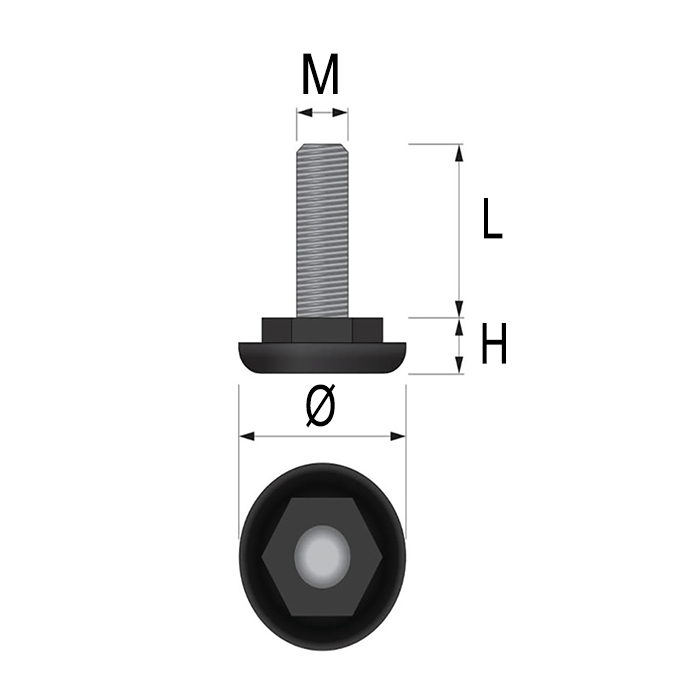
| Length (L) | Thread (M) | Static load (SL) |
|---|---|---|
| 18 mm (0.71″) | M10 | 120 kg |
| 28 mm (1.10″) | M8 | 80 kg |
| 33 mm (1.30″) | M8 | 80 kg |
| 33 mm (1.30″) | M10 | 120 kg |
Thread size must match the insert in your furniture leg.
| Specification | Detail |
|---|---|
| Material | Polyamide body with a hot-dip galvanised steel thread |
| Sizes | 4 sizes |
| Diameter (Ø) | 30 mm (1.18″) |
| Length (L) | 18 to 33 mm (0.71″ to 1.30″) |
| Height (H) | 9 mm (0.35″) |
| Thread (M) | M8, M10 |
| Static load (SL) | 80 to 120 kg |
| Mounting | Screws into a threaded insert |
| Colors | Black |
| Floor compatibility | Any floor, levels on uneven ground |
| Minimum order | Sold in a minimum of 4, then any quantity you need |
Both have the same Ø 30 mm base at 9 mm height. The difference is the bottom surface. Low-profile leveling feet have a textured or ribbed bottom that provides grip. Smooth-base leveling feet have a flat, rib-free bottom that allows the furniture to slide more easily on smooth, hard floors. Choose smooth-base when the furniture needs to be repositioned frequently without lifting.
No. The PA material is the same. The smooth surface actually creates less friction against the floor, which means less risk of scuffing or scraping during repositioning. The smooth contact is gentler on floor finishes than a ribbed base dragged across the surface.
You can, but mixing smooth and textured bases on the same furniture creates uneven sliding behavior. If you push the furniture, the smooth-base legs slide while the textured legs grip, causing the furniture to pivot. Use the same base type on all legs for consistent floor interaction.
On carpet, the smooth base provides less grip than a ribbed base. If the furniture tends to slide on carpet, use standard low-profile or wide-base anti-slip instead. Smooth-base leveling feet are designed for smooth, hard floor applications where easy sliding is the goal.
Finished floors you do not want marked. The smooth base spreads the load of one foot across its full face, with no ribs or texture to press a pattern into vinyl or timber.
Finished floors you do not want marked. The smooth base spreads the load of one foot across its full face, with no ribs or texture to press a pattern into vinyl or timber.
 Smooth-Base Adjustable Leveling Feet
Outfitting a hotel, restaurant, school, healthcare facility, or large furniture build? Superior Glide supports volume orders with bulk pricing tiers, free physical samples, and dedicated quote pricing for accounts placing larger orders.
Bulk pricing tiers, net terms for qualified buyers, and dedicated support for facility managers and procurement teams.
Hold the product, test the fit, check the finish. We ship samples free so you can evaluate before committing to a full order.
For orders above standard volume tiers, we’ll prepare a custom quote with consolidated shipping and your account’s tier pricing.

Reviews
There are no reviews yet