Hospitality-grade floor protection · Sizing help before you order · Apply for a business account
Sizing help · Apply for a business account
Hospitality-grade floor protection · Sizing help before you order · Apply for a business account
Sizing help · Apply for a business account
Not all tile is the same. Smooth tile takes one kind of protector. Rough tile takes another. Two things decide which one you need: how deep the gaps are between your tiles, and how rough the tiles feel. Your fingernail can check both in about ten seconds.
Two things wear out a floor protector on tile: the gaps between your tiles, and how rough the tiles feel. Check both. Run a fingernail across a gap between two tiles. Then run it across the middle of a tile. If it catches either time, treat your whole floor as rough.
Shallow gaps, and tiles that feel slick under your nail. Shiny or matte porcelain, ceramic, big-format tile.
Fit PA6 glides or pads.
Deep or wide gaps, or tiles with grip you can feel. Slate, stone, anti-slip tile, brick, stamped concrete. Rough tiles wear PA6 down even when the gaps are shallow.
Fit ABS slides.
Why it matters. PA6 is a fiber. It is built to slide on smooth surfaces. A deep gap tears it where the leg crosses over, and a rough tile wears it down everywhere it touches. ABS is a hard plate. It bridges the gaps and keeps its shape against rough tile. That is why rough floors get ABS, even though PA6 is the better choice on smooth tile.
Most homes have one of these six. Smooth tile takes PA6 glides or pads. Rough tile takes ABS slides. If yours sits on the line, go back and use the fingernail check. That beats guessing from a photo.
The glazed tile in most newer homes. The face is slick and the gaps are usually thin.
Fewer gaps across the room, and the ones there are tend to be narrow. Your chair legs rarely meet an edge.
The slickest floor in the house. A glide here is about stopping marks, not helping the chair move.
Uneven on purpose. The whole tile has texture, not just the gaps, so it wears a fiber surface everywhere.
Chosen for grip in kitchens, bathrooms, and entryways. That grip is exactly what chews through PA6.
Deep gaps and a coarse face. The hardest floor in the building on anything you put under a leg.
Mixed floors? Kitchens and bathrooms often get anti-slip tile while the rest of the house gets smooth. Check each room on its own and fit what that room needs. Not sure where a floor lands? Send a photo of your tile and a leg base and you will get a straight answer back.
PA6 is a dense nylon fiber. On smooth glazed tile it slides across the surface instead of dragging on it, and it stays quiet doing it. Which one you pick comes down to what your furniture legs are made of.
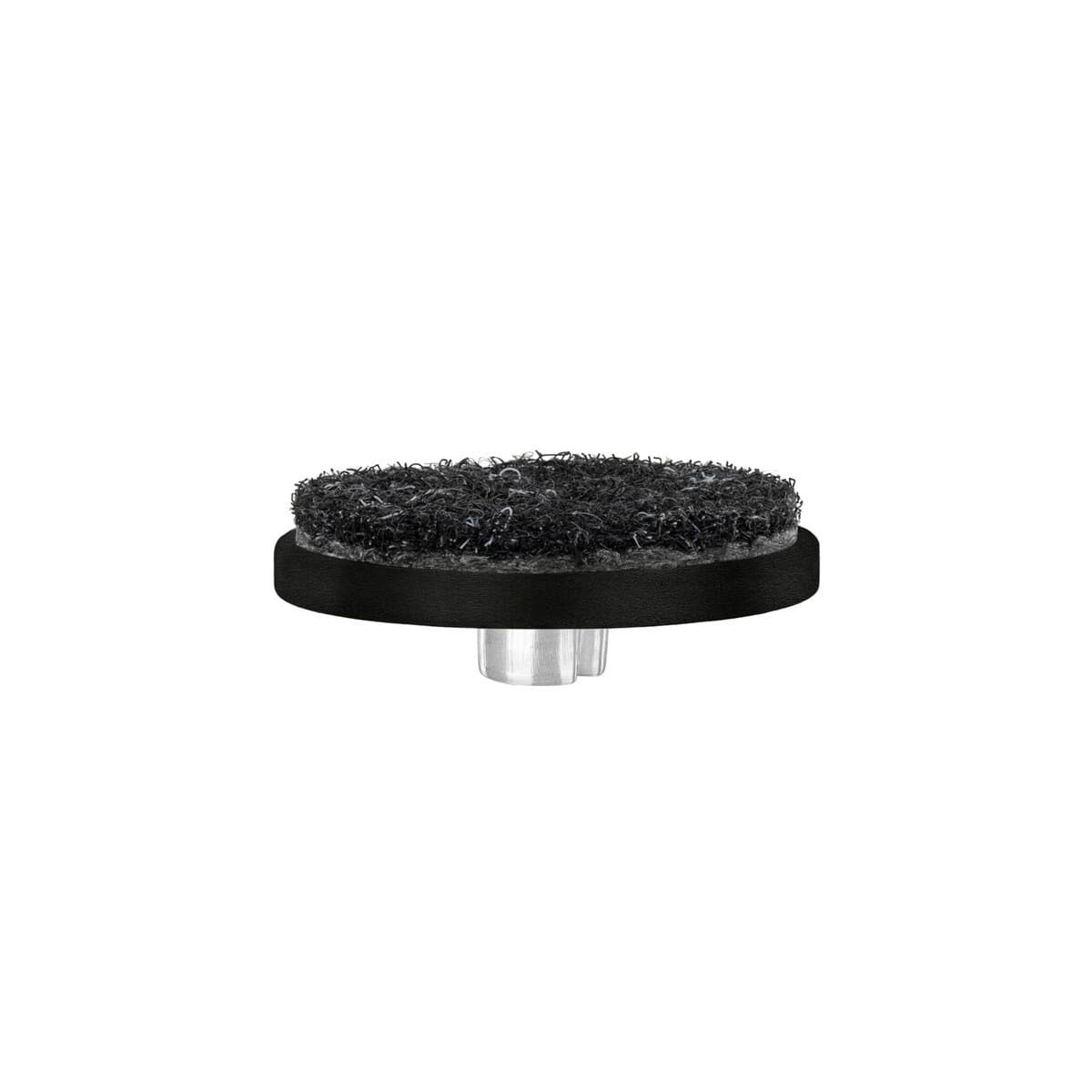
A small zinc rivet on the back taps into the leg with a rubber mallet. A notch underneath stops it spinning loose as the chair moves. Solid wood legs only, since the rivet needs something to bite into.
Five sizes, 23 to 75 mm (0.91″ to 2.95″).
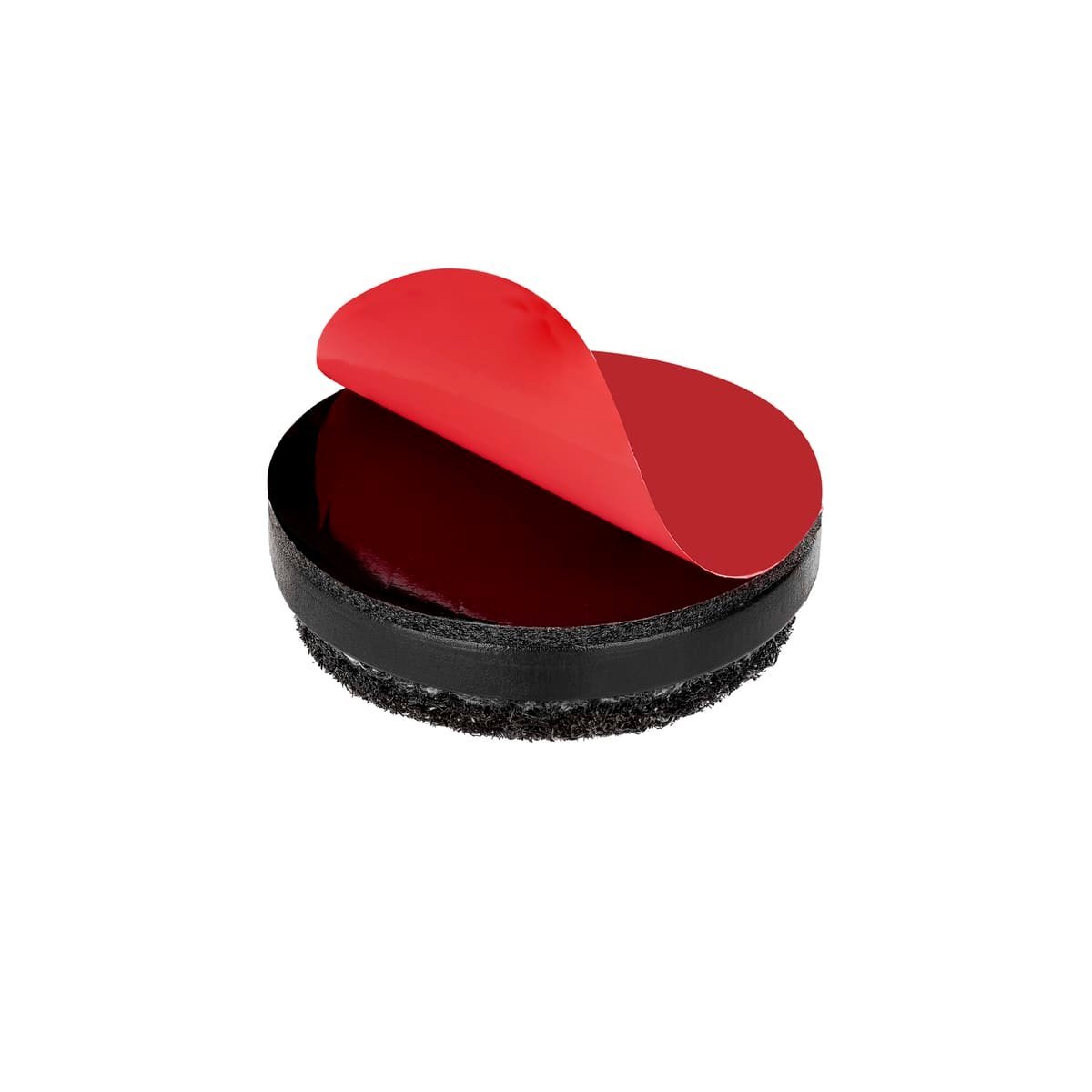
No tools. Wipe the leg with rubbing alcohol, peel the backing, press hard for 30 seconds, then leave it 48 hours to set. The EHBF acrylic foam grips wood, metal, plastic, chrome and composite. Use these on wood too when you would rather not put a rivet hole in the leg.
Five sizes, 23 to 75 mm (0.91″ to 2.95″).
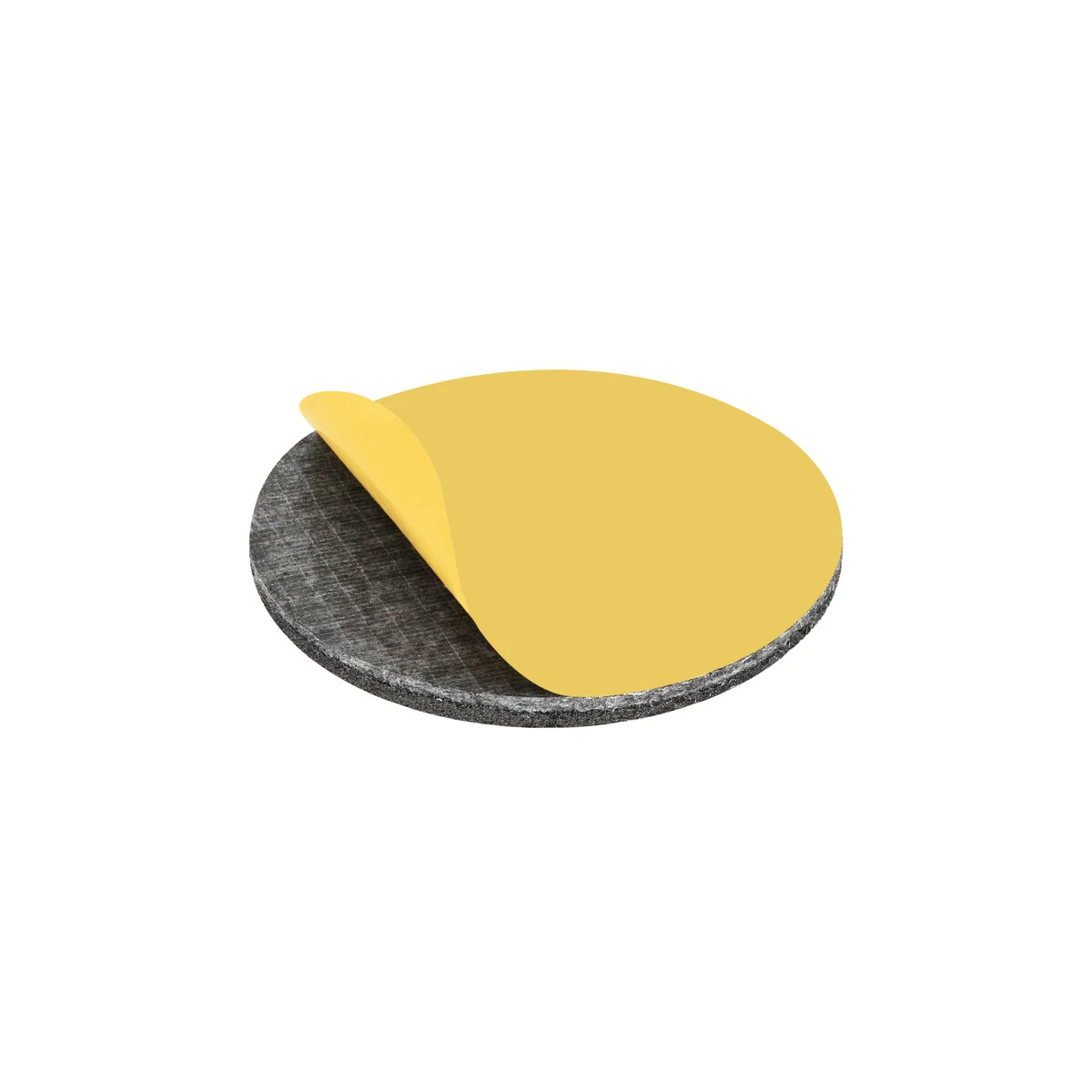
The same PA6 surface in a flatter, wider format. Same install: clean, peel, press 30 seconds, wait 48 hours.
Round, square and rectangular, up to 300 mm (11.81″).
ABS is a hard plastic, not a fiber. The face stays smooth and keeps its shape, so it bridges a deep gap and rides over a textured tile instead of wearing away on it. You fit it the same two ways as a glide.
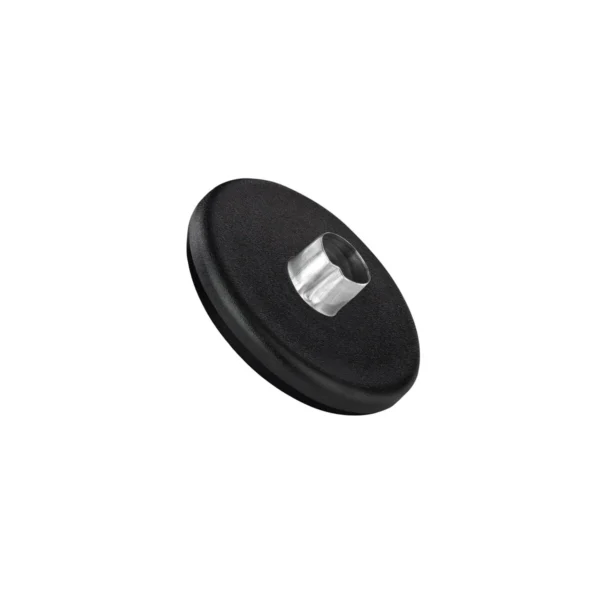
A zinc rivet taps into the leg with a rubber mallet, the same fitting as the nail-on glide. What changes is the face: hard ABS instead of nylon fiber, so it rides over a rough tile instead of wearing down on it.
Four sizes, 23 to 50 mm (0.91″ to 1.97″). Round, square and rectangular.
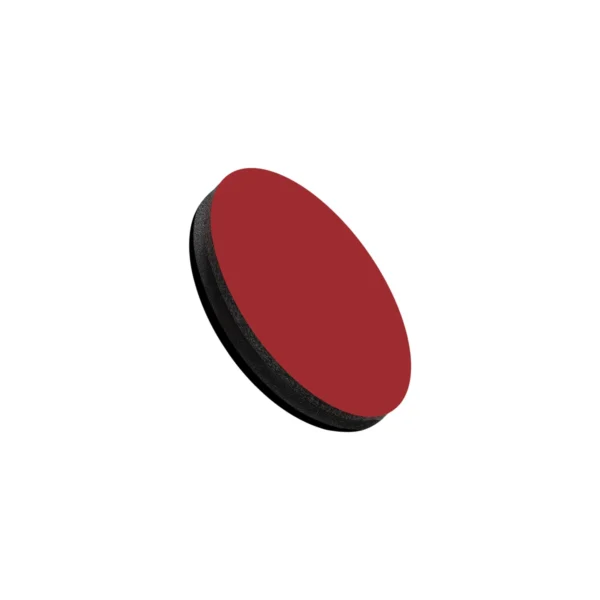
Same fitting as the adhesive glide. Wipe the leg with rubbing alcohol, peel, press hard for 30 seconds, then leave it 48 hours to set. The EHBF acrylic foam grips metal, plastic, chrome and sealed wood.
Four sizes, 23 to 50 mm (0.91″ to 1.97″). Round, square and rectangular.
One product, two jobs. These same slides work on carpet, carpet tile and area rugs. If you have rough tile in the kitchen and carpet in the living room, one product covers both rooms. They are not the right choice on smooth tile, though. That floor wants PA6.
Never bigger. A protector that hangs over the edge of the leg is the first thing to catch a grout line or a door threshold. It levers the bond and works the protector loose. Measure the flat part of the leg that actually touches the floor, then pick the size that covers it.
Rectangular legs. One size, 33 × 19 mm, and it fits legs from 33 × 19 mm up to 40 × 25 mm (1.30″ × 0.75″ up to 1.57″ × 0.98″). Measure the wide side first. Anything larger takes a rectangular pad instead.
Glides come in five sizes with gaps between them, which is why the printable guide is worth using. Pads step every 10 mm from 30 mm all the way to 300 mm (1.18″ to 11.81″), so there is almost always a size that fits and nothing to look up.
Measure the leg, then round down to the nearest 10 mm. A 67 mm leg takes a 60 mm pad. A 124 × 46 mm leg takes 120 × 40 mm. Round and square run 30 to 300 mm. Rectangular comes in five widths, 20, 30, 40, 50 and 60 mm, against lengths from 30 to 300 mm.
Print the size guide and skip the ruler. Hold each leg against the shapes on the page and pick the one it covers. Print at 100 percent, not fit to page, and check the calibration line measures 100 mm before you use it.
One last thing: check every leg. Chairs from the same set are not always identical, and a leg that has already worn down measures smaller than a fresh one.
Still open
Short answers to the questions we hear about protecting tile floors. If yours is not covered, the ten-second surface test at the top of the page settles most of them — or ask us directly.
The porcelain body is hard, but the glaze on top scratches and grout lines chip. Grit trapped under a bare metal or plastic leg works like sandpaper every time the chair moves. A PA6 glide sheds that grit instead of holding it against the surface.
For a while. Felt holds grit on its face, and on anything textured it abrades away in weeks. On smooth tile, PA6 glides outlast felt many times over; on rough or textured tile, use ABS slides instead — see the two fitting sections above.
Choose a protector face wider than the grout joint so it bridges the gap instead of dropping in. If a leg sits directly on a wide joint, size up one step — the sizing section above shows how to measure the leg base.
Run a fingernail across the tile. If it glides without catching, treat it as smooth and fit PA6. If it catches on texture, treat it as rough and fit ABS. That is the whole surface test from the top of this page.
Not for nail-on fittings. For self-adhesive, the bond cures best at room temperature: clean the leg base, press for thirty seconds, and give it a little time before sliding the furniture hard.
Yes — that is exactly their job. Anti-slip glides swap the PA6 face for an NR+CR rubber one that holds position on polished floors. Fit them to the furniture that should stay put, and smooth PA6 to the furniture that moves.
Treat slate and textured stone as rough tile: ABS slides. Honed or polished stone behaves like smooth tile: PA6 glides. The tile list above maps each surface to the right fitting.
The same as any hard floor: turn the furniture over, measure the leg base at its widest point, and fit a protector that sits flush with the edge or a touch smaller. Full steps: how to measure furniture legs.
Browse other furniture guides: Glides Guide · Pads Guide · Tube Plugs Guide · Leveling Feet Guide · Sled Base Guide · Nail-On Glides How-To
Product categories: Furniture Glides · Furniture Slides · Furniture Pads · Tube Plugs & End Caps · Leveling Feet · Sled Base Glides
Business accounts: Business pricing for volume pricing, B2B accounts, and commercial orders.
