Wide-base anti-slip adjustable leveling feet use a TPE (thermoplastic elastomer) base instead of PA to grip the floor and prevent the furniture from sliding. The rubber-like TPE surface creates friction between the foot and the floor, holding the furniture in position. Same Ø 50 mm base diameter as standard wide-base leveling feet. Static load capacity: 80 kg per foot.
Not sure what size? See the size chart ↓
📦 Sold in packs of 4 — quantity adjustable at checkout
Standard leveling feet use PA bases that provide smooth, low-friction floor contact. That works when the furniture can be repositioned easily. But on smooth, hard floors like polished concrete, sealed tile, and glossy hardwood, PA bases can allow the furniture to slide when bumped, leaned on, or pushed. Wide-base anti-slip adjustable leveling feet replace the PA base with TPE (thermoplastic elastomer), a rubber-like material that grips the floor and holds the furniture in position. Same Ø 50 mm wide base for maximum stability. Same M8 threaded connection. Different floor interaction.
Ø 50 mm TPE base at 11 mm height. Zinc-plated steel M8 threaded rod at 23 mm. Static load capacity: 80 kg per foot. Wide-base anti-slip adjustable leveling feet are anti-slip leveling feet for furniture on smooth, hard floors where sliding is a problem. Black. Sold individually.
Wide-base anti-slip adjustable leveling feet are currently available in one configuration. The Ø 50 mm TPE base with M8 x 23 mm rod covers the most common specification for furniture that needs both anti-slip grip and wide-base stability.
TPE anti-slip base. 11 mm height. Static load: 80 kg per foot (320 kg on four legs). Weight: 35.2 g. Black. Compatible with M8 round, square, and rectangular threaded inserts.
For the same Ø 50 mm base without anti-slip (PA), see wide-base adjustable leveling feet (M8, 23 and 28 mm rods, black and grey). For anti-slip with a stainless steel rod, see anti-slip stainless steel leveling feet. For custom TPE configurations, contact Business Solutions.
The base material determines how the foot interacts with the floor. PA and TPE serve different purposes. Understanding the difference is the key to choosing between standard and anti-slip leveling feet.
PA is rigid, smooth, and slides easily on smooth, hard floors. This is an advantage when furniture needs to be repositioned: slide a table across the floor without lifting. PA is the default for most furniture applications where sliding is acceptable or desirable. All other leveling feet in the range use PA bases (except this product and the anti-slip stainless steel version).
TPE is soft, flexible, and has a rubber-like surface texture that creates friction against the floor. The foot resists sliding when the furniture is bumped, leaned on, pushed, or jostled. TPE grips through mechanical friction, not adhesion, so it does not bond to the floor or leave residue when the furniture is moved or the foot is replaced. Non-slip wide base leveling feet that hold furniture in place through the natural grip of the TPE surface against the floor.
Wide-base anti-slip adjustable leveling feet solve a specific problem: furniture that slides on smooth floors when it should stay put. Not all furniture needs anti-slip. The decision depends on the floor surface, the furniture’s use, and how much the furniture gets pushed or bumped.
The same leveling function as every foot in the range, with the added benefit of anti-slip floor grip. The National Wood Flooring Association (NWFA) recommends protective contact surfaces on all furniture legs, and wide-base anti-slip adjustable leveling feet provide a TPE contact surface that protects the floor while holding the furniture in position.
The primary advantage. On polished concrete restaurant floors, tables slide when servers lean against them. On glossy hardwood in offices, desks creep across the floor when drawers are opened. On glazed tile, display fixtures shift when bumped by customers. Wide-base anti-slip adjustable leveling feet eliminate all of these. The TPE base grips the floor and resists the lateral forces that cause sliding. Anti-slide adjustable leveling feet that keep furniture exactly where it belongs.
Not all floors are level, and not all unevenness can be corrected by leveling the foot height. Some floors have a deliberate slope (drainage in commercial kitchens, accessibility ramps in public spaces). On sloped floors, gravity pulls furniture downhill. Standard PA bases allow this sliding. TPE bases resist it. The grip holds the furniture against the slope. Unlike leaving furniture unsecured on sloped floors, the anti-slip base provides passive resistance without mechanical anchoring.
Same independent height adjustment as all leveling feet. Turn each foot to raise or lower that corner. The TPE base adds the benefit that once leveled, the furniture is also locked in position by the floor grip. On standard PA bases, a leveled table can still slide. On TPE, the leveled table stays put. TPE leveling feet anti-slip grip that combines height adjustment with position locking in one component.
The Ø 50 mm base provides the broadest contact area in the range (1,964 mm²), and the TPE material adds friction across that entire area. More grip surface area means more total friction force. The combination of the widest base and the grippiest material creates the most slide-resistant leveling foot available. Anti-slip leveling feet for furniture that must not move under any normal use condition.
Same installation as every other leveling foot. The TPE base does not change the process. Screw the foot into the threaded insert, adjust the height, and the anti-slip grip engages automatically when the furniture is set on the floor.
Wide-base anti-slip adjustable leveling feet provide the most benefit on smooth, low-friction floors where PA bases allow sliding. On textured or naturally grippy floors, the anti-slip advantage is reduced because the floor itself provides friction.
Polished concrete (the slipperiest common commercial floor). Glazed ceramic tile. Glossy hardwood with polyurethane finish. Sealed natural stone (marble, granite). Vinyl composition tile (VCT). Epoxy-coated concrete. These surfaces have low natural friction, and wide-base anti-slip adjustable leveling feet add the grip that the floor lacks. The smoother the floor, the more the TPE matters.
Textured ceramic tile (matte finish). Raw concrete (rough surface). Carpet and soft flooring. Rubber flooring. Any surface with inherent texture or softness that creates natural friction. On these surfaces, standard wide-base PA feet provide adequate grip because the floor itself resists sliding. The TPE adds cost without meaningful functional benefit on naturally grippy surfaces.
For furniture manufacturers and facility managers, wide-base anti-slip adjustable leveling feet are a single-SKU specification: Ø 50 mm, M8 x 23 mm, TPE, black. No size selection needed. Specify the same foot on all legs for consistent grip across the furniture.
On restaurant fit-out projects where the floor is polished concrete or glazed tile, specifying wide-base anti-slip adjustable leveling feet at the furniture manufacturing stage prevents the table-sliding complaints that arrive after opening. Retrofitting existing tables is equally simple: unscrew the current M8 foot, screw in the anti-slip version. No modification to the furniture or the threaded insert. For production quantities, visit Business Solutions.
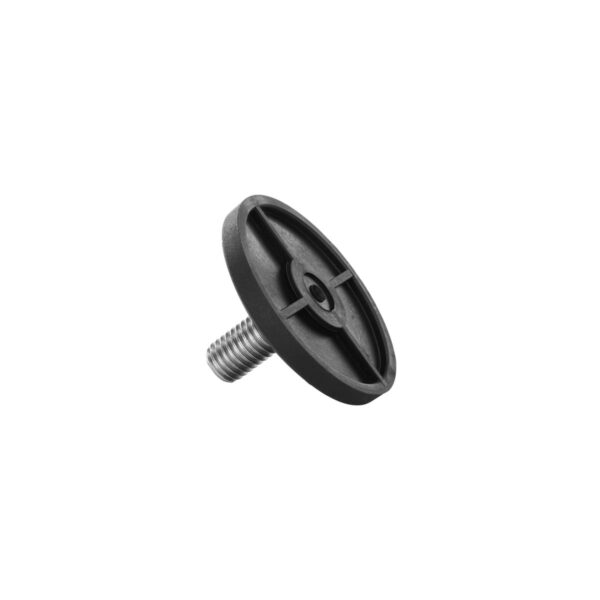
TPE base instead of the PA used on all other standard leveling feet. Zinc-plated steel rod. The TPE body is molded as a single piece with the threaded rod insert during manufacturing.
The Ø 50 mm TPE base at 11 mm height provides the anti-slip floor contact surface. TPE combines rubber-like grip with thermoplastic durability. Temperature range: -51 °C to 124 °C. Excellent abrasion resistance ensures the grippy TPE surface does not wear smooth over the service life of the foot. Non-marking on standard floor surfaces. At 35.2 g, the TPE base is heavier than the equivalent PA base (27.5 g) due to higher material density.
M8 thread, 23 mm rod length. Zinc plating provides corrosion resistance for standard indoor use. For anti-slip grip combined with a corrosion-resistant stainless steel rod, see anti-slip stainless steel leveling feet. For stainless rod without anti-slip, see stainless steel rod leveling feet (PA base).
Standard wide-base uses PA for smooth floor contact. Same Ø 50 mm base. Same M8 thread. Same load capacity. Standard allows sliding. Anti-slip prevents it. Choose based on whether the furniture should stay put or be easy to reposition.
Anti-slip stainless steel combines a TPE base with a stainless steel rod for corrosion resistance. Choose it for wet or chemical environments where both anti-slip and corrosion resistance are needed. Choose standard anti-slip (this product) for dry indoor environments where zinc plating is adequate.
Standard base and low-profile feet use PA and do not prevent sliding. They offer more thread sizes, rod lengths, and base diameters. If anti-slip is not required, these provide more configuration flexibility.
Restaurant dining tables, bar tables, and cafe tables that slide on polished concrete and glazed tile floors. In busy restaurants, servers bump tables, customers lean on them, and chairs push against them. On smooth floors, standard PA feet allow the table to slide out of position. Staff repeatedly reposition tables throughout service, wasting time and creating an unprofessional appearance. Wide-base anti-slip adjustable leveling feet eliminate this cycle: the table stays where it is placed. The TPE base grips the polished concrete or tile and absorbs the lateral forces from leaning, bumping, and chair contact. In restaurants with dozens of tables, the staff time saved from not repositioning tables every shift adds up to meaningful operational efficiency. Managers no longer hear complaints about tables drifting out of alignment during peak service. Available for bulk orders. For commercial pricing, visit Business Solutions.
Workbenches, assembly tables, and laboratory tables where the furniture must not shift during use. On a workbench, a table that slides when force is applied to a tool creates a safety hazard and reduces work accuracy. A drill press mounted to a bench that slides introduces misalignment into every hole. A saw table that shifts during a cut creates a dangerous condition. Wide-base anti-slip adjustable leveling feet lock the bench in position through passive TPE friction without bolting the bench to the floor. The Ø 50 mm width provides the broadest possible grip area for maximum lateral resistance. For wet workshop environments, see anti-slip stainless steel leveling feet with corrosion-resistant rods.
Check periodically that the foot is tight in the threaded insert and the furniture remains level. Inspect the TPE base surface for embedded debris (grit, dust, food particles) that can reduce the grip effectiveness. Clean the TPE base surface with a damp cloth periodically to maintain maximum friction and grip effectiveness. Unlike PA, TPE can pick up and embed fine particles from the floor, so periodic cleaning maintains the anti-slip function at full effectiveness.
Wide-base anti-slip adjustable leveling feet are sold individually for single-foot replacement. The TPE base does not degrade from standard cleaning chemicals or UV exposure under normal indoor conditions. If the TPE surface becomes glossy or smooth from heavy wear, the anti-slip effectiveness is reduced, and the foot should be replaced. Check the grip by pushing the furniture sideways with moderate force. If it slides more easily than when the foot was new, the TPE contact surface may be worn and the foot needs replacing. In commercial environments with heavy daily use, plan to inspect TPE feet annually and keep replacement stock available for any feet that show wear-related grip reduction.
Wide-Base (PA): smooth contact, no anti-slip. M8, 23 and 28 mm rods. Black and grey.
Anti-Slip Stainless Steel: TPE base + INOX rod for wet/chemical environments. Sold in multiples of 4.
| Specification | Details |
|---|---|
Product Type |
Adjustable Leveling Feet – Type M (TPE) |
Materials |
TPE (Thermoplastic Elastomer) base + Fe HDG (Hot-Dip Galvanized Steel) stem |
Fit Style |
Threaded stem with fixed wide base |
Floor Compatibility |
All hard flooring (tile, hardwood, vinyl, concrete, etc) |
Furniture Compatibility |
Desks, lab benches, medical and technical equipment, shelving units |
Leg Compatibility |
Metal frames and reinforced inserts |
Tube/Foot Diameters |
Ø50 mm (1.97") |
Thread Sizes |
M8 |
Thread Lengths |
23 mm (0.91") |
Weight Capacity |
80 kg (176 lbs) static load per foot |
Color Options |
Black |
Installation Type |
Hand screw or basic tool-fit |
Key Benefits |
Non-slip floor protection, vibration dampening, corrosion resistance |
Indoor / Outdoor |
Indoor | Covered Outdoor | Uncovered Outdoor |
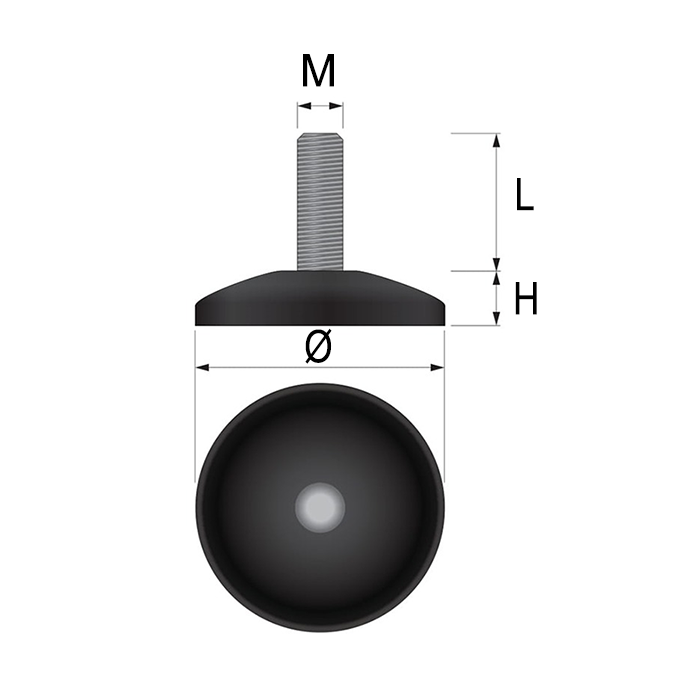
| Base Diameter (Ø) | Thread Size (M) | Threaded Stem Length (L) | Base Height (H) | Static Load Capacity (SL) |
|---|---|---|---|---|
50 mm (1.97") |
M8 (8 mm) |
23 mm (0.91") |
11 mm (0.43") |
80 kg (176 lbs) / pc |
TPE (thermoplastic elastomer) combines the characteristics of rubber with the processability of plastic. The surface is soft, grippy, and high-friction, like rubber. PA (polyamide) is rigid, smooth, and low-friction. On a smooth smooth, hard floor, a PA base allows furniture to slide when pushed. A TPE base grips the floor and resists sliding. Choose TPE when the furniture must stay in place. Choose PA when smooth contact or easy repositioning is preferred.
TPE is non-marking on most floor surfaces. It grips through friction, not adhesion, so it does not leave residue. On very soft or freshly finished floors, test in an inconspicuous area first, as the higher friction contact under sustained heavy load could leave a faint mark on some finishes. On standard hardwood, tile, concrete, and luxury vinyl, TPE contact is safe.
Same Ø 50 mm base, same 11 mm height, same M8 thread. The only difference is the base material: TPE instead of PA. Standard wide-base allows normal sliding. Anti-slip prevents sliding. Same load capacity (80 kg). Different floor interaction.
You can, but there is rarely a reason to. If some legs need anti-slip and others do not, it usually means all legs should have anti-slip. Mixing creates uneven friction that can cause the furniture to pivot rather than slide evenly. Use the same type on all legs for consistent floor interaction.
TPE is denser than PA. The Ø 50 mm TPE base weighs more than the equivalent PA base. The weight difference (7.7 g per foot, about 31 g total on four legs) is negligible relative to the furniture weight. The density contributes to the grippy, rubber-like floor contact that defines the anti-slip function.
Only logged in customers who have purchased this product may leave a review.



Reviews
There are no reviews yet