Hospitality-grade floor protection · Sizing help before you order · Apply for a business account
Sizing help · Apply for a business account
Hospitality-grade floor protection · Sizing help before you order · Apply for a business account
Sizing help · Apply for a business account
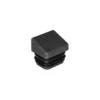
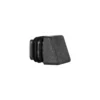
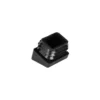


When a rectangular leg splays out or rakes back, a flat plug meets the floor at an angle, digging in on one edge and lifting on the other. This builds a 20° correction into the head so the base lands flat. The ribbed PE body press-fits inside the tube, no shimming needed. For splayed rectangular legs. Black.
We make this size in production runs, so there is none on the shelf today. Tell us how many you would want and you go on the list for it. When enough people ask for a size, we run it, and the people who asked hear about it first.
We stock a limited range of tube sizes and wall thicknesses. Tell us the size you need and we will confirm availability and pricing by email.
Buying in volume? See business pricing & samples ↓
Standard flat rectangular plugs assume the leg meets the floor straight down. On furniture with splayed, raked, or tilted rectangular legs, a flat plug sits at the leg angle instead of flat on the floor. One edge digs in, the other lifts off, and the plug wears unevenly, wobbles, and scratches. Angled rectangular tube plugs solve this by building a 20° angle correction into the plug head. The body press-fits inside the rectangular tube at the leg’s angle, and the flat base sits level on the floor. Full base contact. No wobble. No edge digging. No uneven wear.
Same PE construction and flexible ribbed body as standard rectangular tube plugs, with the head cut at 20° relative to the tube axis. Angled rectangular tube plugs are rectangular plugs for angled legs on furniture with splayed or raked rectangular profiles. One size: 20 × 25 mm with 1 to 1.5 mm wall thickness. Black.
Four measurements: width (short side), length (long side), wall thickness, and leg angle. Angled rectangular tube plugs require all four to match. This is one more measurement than standard rectangular plugs, and two more than round plugs.
Use calipers across both sides of the rectangular tube, outside edge to outside edge. The width must be 20 mm and the length must be 25 mm. Then measure the wall thickness: it must be between 1 and 1.5 mm. If your tube does not match 20 × 25 mm, this product will not fit.
Place a digital angle finder on the leg and read the tilt from vertical. The reading should be close to 20° (roughly 17° to 23°) for these plugs to correct the tilt effectively. The PE base has slight flex that accommodates minor deviations from the exact 20° specification.
Same press-fit mechanism as standard rectangular plugs, with two alignment requirements: the rectangular orientation (width to width, length to length) and the angle direction (flat base facing the floor in the correct tilt direction). Angled rectangular tube plugs press in by hand at 1 to 1.5 mm wall thickness.
The specific problem of angled rectangular legs meeting flat floors. The National Wood Flooring Association (NWFA) recommends protective contact surfaces on all furniture legs, and these plugs ensure the entire base contacts the floor evenly instead of concentrating pressure at one edge.
The primary function. When a standard flat plug goes on a tilted rectangular leg, only one edge touches the floor. On a rectangular profile, that edge is a straight line across the full length of the plug, creating a concentrated pressure line that digs into floor finishes. Angled rectangular tube plugs correct the tilt so the entire flat base meets the floor evenly. Weight distributes across the full 20 × 25 mm area. No edge digging. No pivot line. Tilted rectangular leg plugs that match the leg to the floor geometry.
A flat plug on a tilted rectangular leg creates a sharp line of contact that scratches hardwood, gouges vinyl, and wears through laminate. The line runs across the full width or length of the plug depending on the tilt direction, which means more concentrated damage than a round plug in the same situation. Angled rectangular tube plugs spread that contact across the full base area. Unlike leaving metal edges unprotected, the flat PE base provides a smooth, broad contact surface. For additional scratch protection, apply a rectangular self-adhesive furniture pad to the flat base.
A plug that only contacts the floor at one edge creates a pivot line. The chair rocks along that line. It tips. It scrapes. Every shift in the user’s weight produces noise and movement. Angled rectangular tube plugs eliminate the pivot by providing full base contact. Stable seating. No rocking. No metallic scraping along the pivot edge. Splayed rectangular leg tube plugs that turn unstable seating into stable seating.
Same sealed end as every other plug in the range. The angled geometry does not compromise the seal. Moisture, debris, and insects are kept out of the tube interior. Angled rectangular tube plugs protect the tube and correct the floor contact angle simultaneously. The angled tube plugs rectangular profiles need for splayed designs.
When correctly aligned, the flat PE base of angled rectangular tube plugs contacts the floor across its full 20 × 25 mm area. PE is smoother and softer than bare metal, which makes it adequate for basic floor protection on most surfaces. The base works on hardwood, laminate, vinyl, tile, polished concrete, and cork without scratching under normal use. On scratch-sensitive floors like engineered hardwood or luxury vinyl, apply a rectangular self-adhesive furniture pad to the flat base for dedicated PA6 protection.
On rough hard surfaces like textured tile, stamped concrete, or slate, the PE base may catch on surface irregularities. For those floors, furniture slides with ABS surfaces handle the texture better. On carpet, the angled base provides adequate contact. The key advantage of the angled plug on most floor surfaces is that the full base contacts the surface evenly rather than concentrating all pressure along one edge, which is what happens when a standard flat plug sits on a tilted leg. Even on forgiving floor surfaces, the even contact prevents the rocking, tipping, and noise that edge contact creates.
Match the plug shape to your tube shape. Every shape uses the same PE construction and press-fit concept.
20 × 25 mm, 20° angle correction. Black.
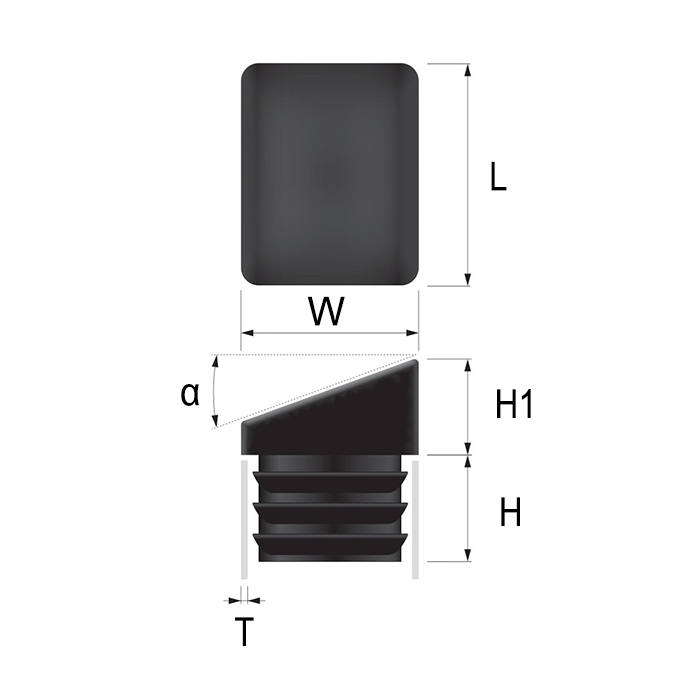
| Fits Tube (W) | Fits Tube (L) | Insert Depth (H) | Head Height (H1) | Tube Wall Thickness (T) | Angle (α) |
|---|---|---|---|---|---|
| 20 mm (0.79″) | 25 mm (0.98″) | 12 mm (0.47″) | 11 mm (0.43″) | 1 to 1.5 mm (0.04″ to 0.06″) | 20° |
Tube wall thickness is a fit requirement, not a tolerance.
| Specification | Detail |
|---|---|
| Material | Polyethylene, a tough low-friction plastic |
| Sizes | 1 size |
| Width (W) | 20 mm (0.79″) |
| Length (L) | 25 mm (0.98″) |
| Height (H) | 12 mm (0.47″) |
| Head height (H1) | 11 mm (0.43″) |
| Tube wall thickness (T) | 1 to 1.5 mm (0.04″ to 0.06″) |
| Angle (α) | 20° |
| Mounting | Pushes into the tube, held by ribs |
| Colors | Black |
| Floor compatibility | Hollow tube legs |
| Minimum order | Sold in a minimum of 4, then any quantity you need |
Place a digital angle finder on the leg and read the tilt from vertical. If the reading is close to 20° (roughly 17° to 23°), this plug will correct the angle so the base sits flat on the floor. If the tilt is significantly less or more than 20°, the base will not sit level. For round legs with different angles, angled round tube plugs are available in 9° and 22°.
Currently yes. 20 × 25 mm with 20° is the one available specification. For other rectangular sizes or angles, contact Business Solutions for custom production. For angled round profiles, angled round tube plugs come in Ø 20 and Ø 22 mm with 9° and 22° angles.
Same press-fit mechanism with one addition: rotational alignment. The angled base must face the correct direction relative to the leg’s tilt. Align width to width, length to length, and rotate the plug until the flat base sits level on the floor. Then press in.
You can, but the plug will sit at the leg angle. Only one edge of the head contacts the floor, creating a pivot point that causes rocking, uneven wear, and floor scratching. Angled rectangular tube plugs eliminate the pivot by compensating for the tilt.
The angled base is flat PE, the same surface as standard flat head plugs. It provides basic floor contact across the full area when correctly aligned. For dedicated scratch protection on smooth, hard floors, apply a rectangular self-adhesive furniture pad to the flat base after installation.
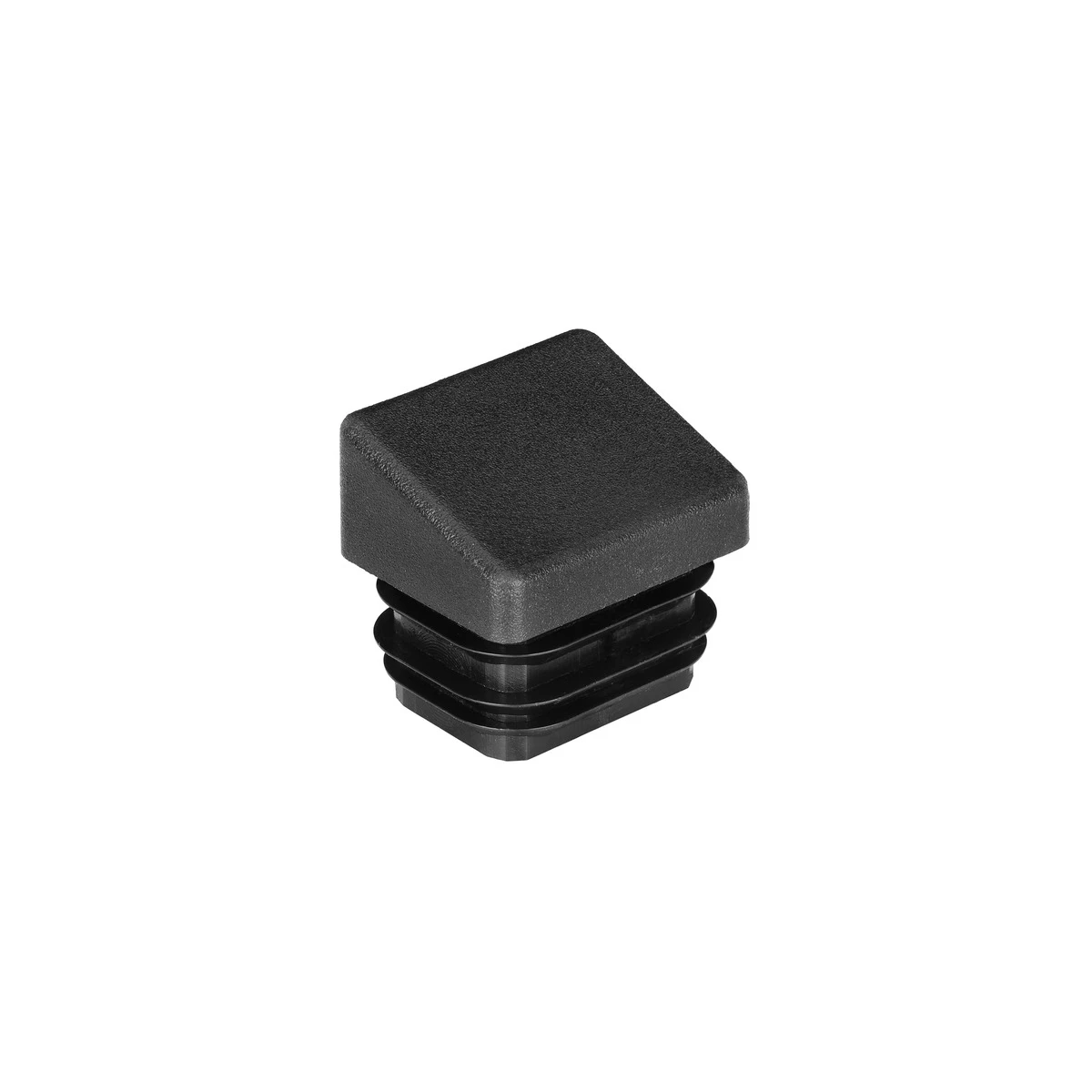 Angled Rectangular Tube Plugs
Outfitting a hotel, restaurant, school, healthcare facility, or large furniture build? Superior Glide supports volume orders with bulk pricing tiers, free physical samples, and dedicated quote pricing for accounts placing larger orders.
Bulk pricing tiers, net terms for qualified buyers, and dedicated support for facility managers and procurement teams.
Hold the product, test the fit, check the finish. We ship samples free so you can evaluate before committing to a full order.
For orders above standard volume tiers, we’ll prepare a custom quote with consolidated shipping and your account’s tier pricing.

Reviews
There are no reviews yet