Hospitality-grade floor protection · Sizing help before you order · Apply for a business account
Sizing help · Apply for a business account
Hospitality-grade floor protection · Sizing help before you order · Apply for a business account
Sizing help · Apply for a business account
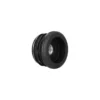
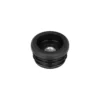
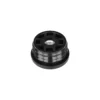

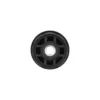
In a thin-walled Ø 35 mm round leg, a standard insert can’t grip hard enough to hold a leveling foot under load. This one reaches deeper into the tube for more surface contact and a stronger hold. The zinc-plated M8 nut is ready for any matching foot. Black.
We make this size in production runs, so there is none on the shelf today. Tell us how many you would want and you go on the list for it. When enough people ask for a size, we run it, and the people who asked hear about it first.
We stock a limited range of tube sizes and wall thicknesses. Tell us the size you need and we will confirm availability and pricing by email.
Buying in volume? See business pricing & samples ↓
Standard round threaded inserts hold firmly in Ø 28, 40, and 50 mm tubes at 1 to 2 mm wall thickness. But Ø 35 mm tubing sits between those sizes and is often manufactured with walls at the thin end of the 1 to 2 mm range. At thinner walls, a standard-depth insert can work loose under the sustained compressive load of a leveling foot, especially on heavy furniture that gets moved or adjusted frequently. Extended round threaded inserts solve this with a longer insertion body that reaches deeper into the Ø 35 mm tube for more grip surface and a more secure anchor for the leveling foot. Also known as deep grip round threaded inserts, extended depth leveling foot inserts, extended insertion threaded inserts, or round threaded inserts thin wall.
Same PA body, same zinc-plated steel M8 nut, same press-fit installation as standard round threaded inserts. The only difference is the body length. Extended round threaded inserts are deep-grip round threaded inserts for Ø 35 mm thin-walled tubing, where standard depth is not enough to support a leveling foot reliably. Black.
Not every Ø 35 mm tube needs extended depth. The decision depends on wall thickness, furniture weight, and how much the leveling feet are adjusted or stressed during use. Extended round threaded inserts are the answer when standard depth cannot support the leveling foot reliably.
Two tube measurements plus the thread confirmation. Extended round threaded inserts require an outside diameter of Ø 35 mm and 1 to 2 mm wall thickness. The thread is M8 only.
Use calipers across the outside of the round tube. The diameter must be 35 mm. If your tube is 28, 40, or 50 mm, use standard round threaded inserts in those sizes instead.
Use calipers at the tube end. The wall must be between 1 and 2 mm. Check the interior clearance: the extended body inserts deeper than standard, so confirm no welds, brackets, or bends obstruct the interior for at least 25 mm from the tube end.
These inserts are M8 only. Confirm your leveling foot uses an M8 threaded rod. If you need a different thread on Ø 35 mm, contact Business Solutions for custom options.
Same press-fit installation as standard round threaded inserts, with more insertion resistance due to the longer body. A rubber mallet is strongly recommended. The extended body creates more friction during insertion because more PA surface contacts the tube interior.
The specific problem of insert retention under load in thin-walled Ø 35 mm round tubing. The National Wood Flooring Association (NWFA) recommends protective measures on all furniture legs, and extended round threaded inserts ensure those measures stay in place when standard depth cannot hold under the compressive load of a leveling foot.
The primary function. A leveling foot transfers the weight of the furniture and its contents through the M8 thread, through the nut, through the PA body, and into the tube walls. At standard insertion depth on thin-walled Ø 35 mm tubing, that load path can cause the insert to shift or work loose over time. The extended body adds a grip surface that keeps the insert anchored.
Tube sealing, moisture protection, noise dampening, and finished appearance. The extended body does not change any of these. The PA body still seals the tube opening completely. The zinc-plated steel nut still provides a durable M8 threaded connection. Unlike leaving furniture legs unprotected, the insert stays in place and continues supporting the leveling foot because the extended body prevents the pull-out that would eliminate the threaded connection.
Every time a standard-depth insert works loose, the leveling foot loses its anchor, and the furniture leg drops to bare metal on the floor. Rethreading a loose insert is difficult without removing it and reinstalling. Extended round threaded inserts reduce this by holding more securely from the start. Fewer loose inserts. Fewer maintenance calls.
Standard round threaded inserts come in Ø 28, 40, and 50 mm. Ø 35 mm falls in the gap. These inserts fill that gap with a product specifically engineered for this diameter. Without the extended version, Ø 35 mm tubing would have no threaded insert option in the range.
Understanding the load path explains why extended depth matters. When a table sits on four leveling feet, the weight of the table and everything on it is divided across the four legs. Each leveling foot carries roughly one-quarter of the total load. That load travels up through the foot’s threaded rod, into the M8 nut, through the PA body, and into the tube walls via the ribbed grip.
At standard insertion depth, the grip surface is limited. On thin-walled Ø 35 mm tubing, the tube wall provides less resistance per millimeter of contact than a thicker wall would. The load can cause the PA ribs to compress slightly, allowing the insert to shift downward over time. Extended round threaded inserts address this by adding a grip surface. The additional body length distributes the load across a longer section of tube wall, reducing the compression per millimeter at each rib point. The result is a more stable anchor that resists the gradual shift that standard depth cannot prevent in thin-walled Ø 35 mm tubes.
| Fits Tube (Ø) | Insert Depth (H) | Head Height (H1) | Tube Wall Thickness (T) | Thread (M) | Static load (SL) |
|---|---|---|---|---|---|
| 35 mm (1.38″) | 14 mm (0.55″) | 5 mm (0.20″) | 1 to 2 mm (0.04″ to 0.08″) | M8 | 80 kg |
Tube wall thickness is a fit requirement, not a tolerance.
| Specification | Detail |
|---|---|
| Material | Polyamide body with a hot-dip galvanised steel thread |
| Sizes | 1 size |
| Diameter (Ø) | 35 mm (1.38″) |
| Height (H) | 14 mm (0.55″) |
| Head height (H1) | 5 mm (0.20″) |
| Tube wall thickness (T) | 1 to 2 mm (0.04″ to 0.08″) |
| Thread (M) | M8 |
| Static load (SL) | 80 kg |
| Mounting | Pushes into the tube, takes a threaded foot |
| Colors | Black |
| Floor compatibility | Hollow tube legs |
| Minimum order | Sold in a minimum of 4, then any quantity you need |
Ø 35 mm falls between the standard Ø 28 and Ø 40 mm sizes. Tubing at this diameter is often manufactured with thinner walls than the larger sizes, which means standard-depth inserts have less interior surface to grip. The extended body compensates by reaching deeper into the tube. The standard sizes (Ø 28, 40, 50 mm) typically use wall thicknesses that provide adequate grip at standard depth.
Currently yes. M8 is the most common leveling foot thread for furniture in the Ø 35 mm tubing range. For other thread sizes in standard depth, round threaded inserts offer M6, M8, M10, and M12 across Ø 28, 40, and 50 mm. For custom extended thread options, contact Business Solutions.
The M8 nut and its load capacity are the same as in standard-depth round threaded inserts. What changes is retention: the extended body grips the tube interior more securely, which means the insert is less likely to pull out or shift under repeated loading and unloading. The threaded connection handles the same furniture weight regardless of body depth.
You can, but the extended depth is designed for thin-walled tubes (1 to 2 mm) where standard depth does not hold firmly. In thick-walled tubes, a standard-depth insert already grips securely. The extended body in a thick-walled tube creates a very tight fit that is harder to install and remove.
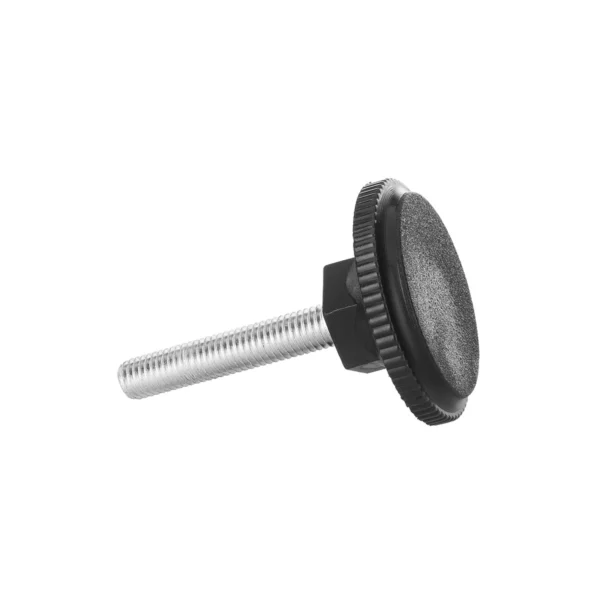
Any leveling foot with an M8 thread. Browse our adjustable leveling feet range for M8 options including standard base, low-profile, anti-slip, ball-joint, tilt, and stainless steel rod variants. The M8 thread interface is identical to the standard round threaded insert.
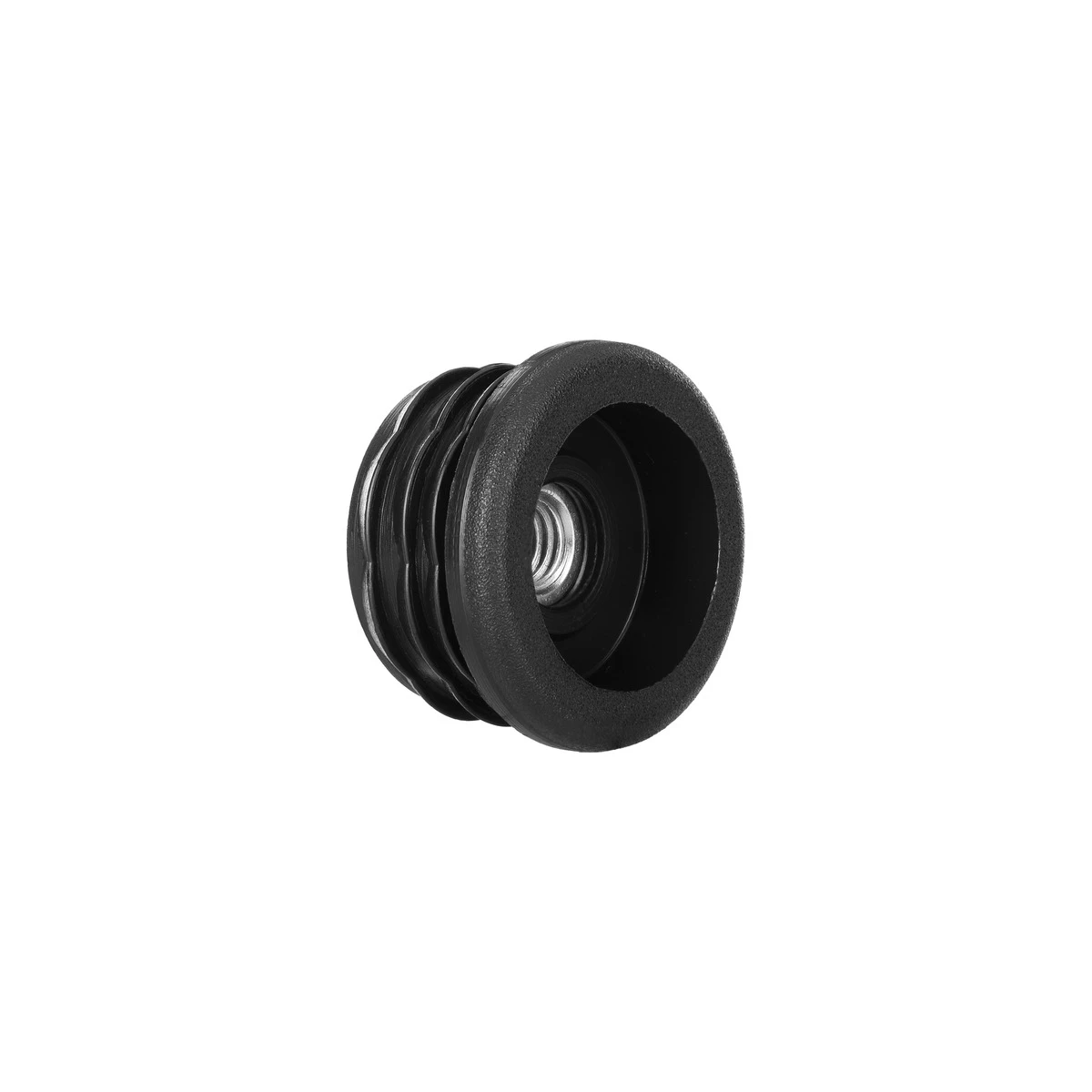 Extended Round Threaded Inserts
Outfitting a hotel, restaurant, school, healthcare facility, or large furniture build? Superior Glide supports volume orders with bulk pricing tiers, free physical samples, and dedicated quote pricing for accounts placing larger orders.
Bulk pricing tiers, net terms for qualified buyers, and dedicated support for facility managers and procurement teams.
Hold the product, test the fit, check the finish. We ship samples free so you can evaluate before committing to a full order.
For orders above standard volume tiers, we’ll prepare a custom quote with consolidated shipping and your account’s tier pricing.

Reviews
There are no reviews yet