Hospitality-grade floor protection  ·  Free shipping over $50  ·  90-day limited warranty


Sled Base Glides Guide:
Choose, Measure & Install

Sled base furniture runs on a continuous metal runner instead of individual legs, and every point where bare tube meets the floor scratches it. Sled base glides cradle the runner from below. This guide covers every mounting position, tube shape, and how to fit them.

Saddle-mount or clip-on · Round, rectangular, oval, and wireframe tube profiles · All hard floors plus carpet, carpet tile, and area rugs

Not sure where to start? Three quick questions narrow most applications down. (1) Where on the runner does the glide need to mount? Mid-runner for the straight horizontal section. Corner for the bend. End for open tube terminations. Clip-on for wireframe runners. (2) What is the tube shape and diameter? Round (Ø 20–30 mm), rectangular, oval, or Ø 10 mm wireframe. (3) Does the floor scratch easily? For smooth hardwood and luxury vinyl, choose a pad slot version and fit a PA6 pad inside. For tile, stone, concrete, carpet, or carpet tile, the bare polyamide saddle works without a pad.

The rest of this sled base glides guide walks through each decision in detail. For furniture with a flat bottom rail instead of a round tube runner (rocking chairs, bench bases), see the Flat-Bottom Nail-On section below.

Mid-Runner Sled Base Glides

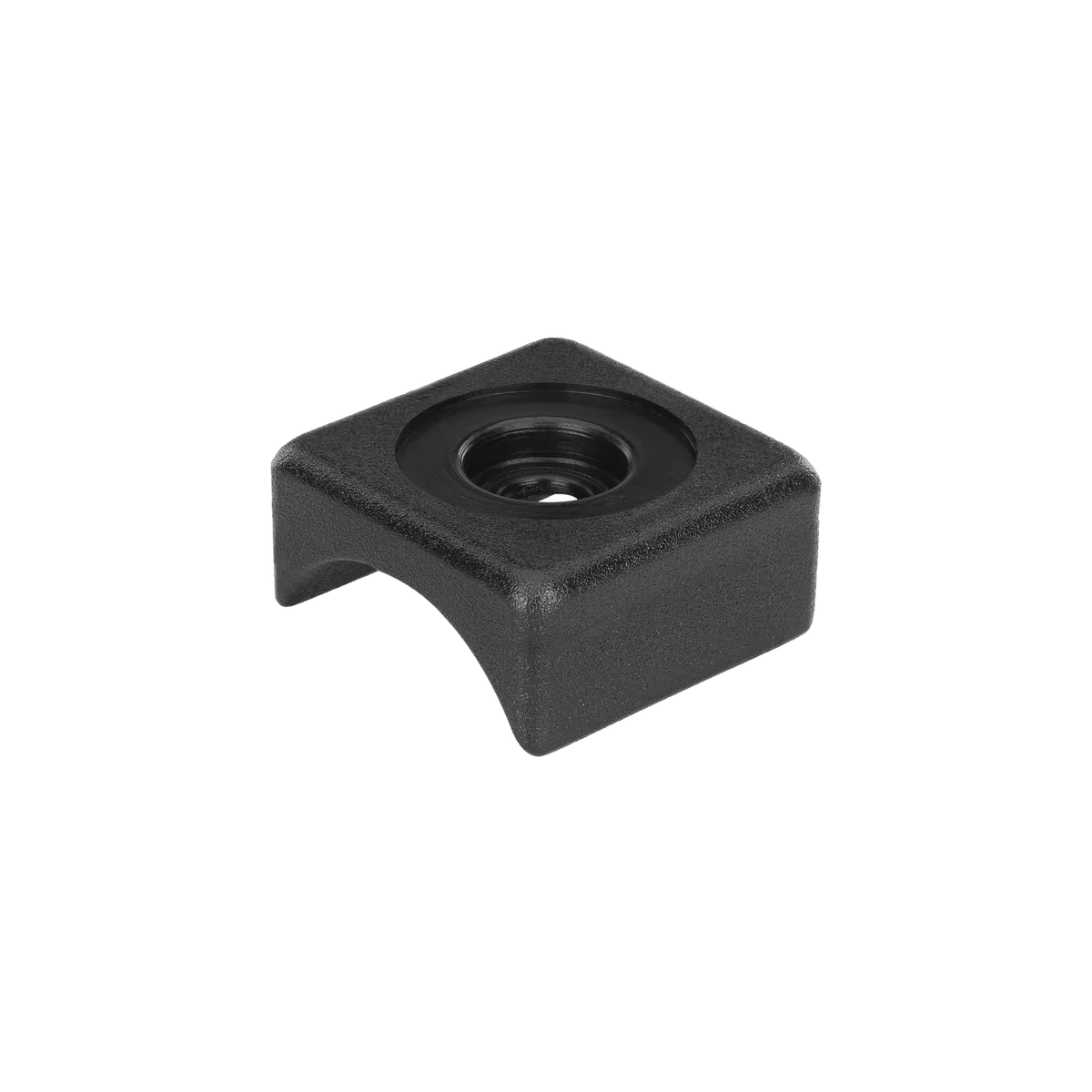
The most-used category in this sled base glides guide. Mid-runner glides mount along the straight horizontal section of the runner where the tube lies flat on the floor. The PA saddle cradles the tube from below and attaches through the tube wall with self-tapping screws. Five products cover Ø 20 to Ø 30 mm tubes in solid-base and pad-slot variants.

Solid Base (No Pad Slot)

In this sled base glides guide, the solid base is the default choice: a bare polyamide saddle that works on all hard floors and on carpet. The PA surface is abrasion-resistant and slides smoothly without snagging carpet pile. The default choice when the floor handles itself — tile, stone, concrete, vinyl, laminate, or carpet.

With Pad Slot

In this sled base glides guide, the pad slot version accepts an optional PA6 needle-punched fiber pad. Fit the pad for scratch-sensitive floors (oiled or waxed hardwood, luxury vinyl, lacquered surfaces) or leave the slot empty for everything else. The pad is sold separately and snaps into the slot without adhesive.

Corner Sled Base Glides

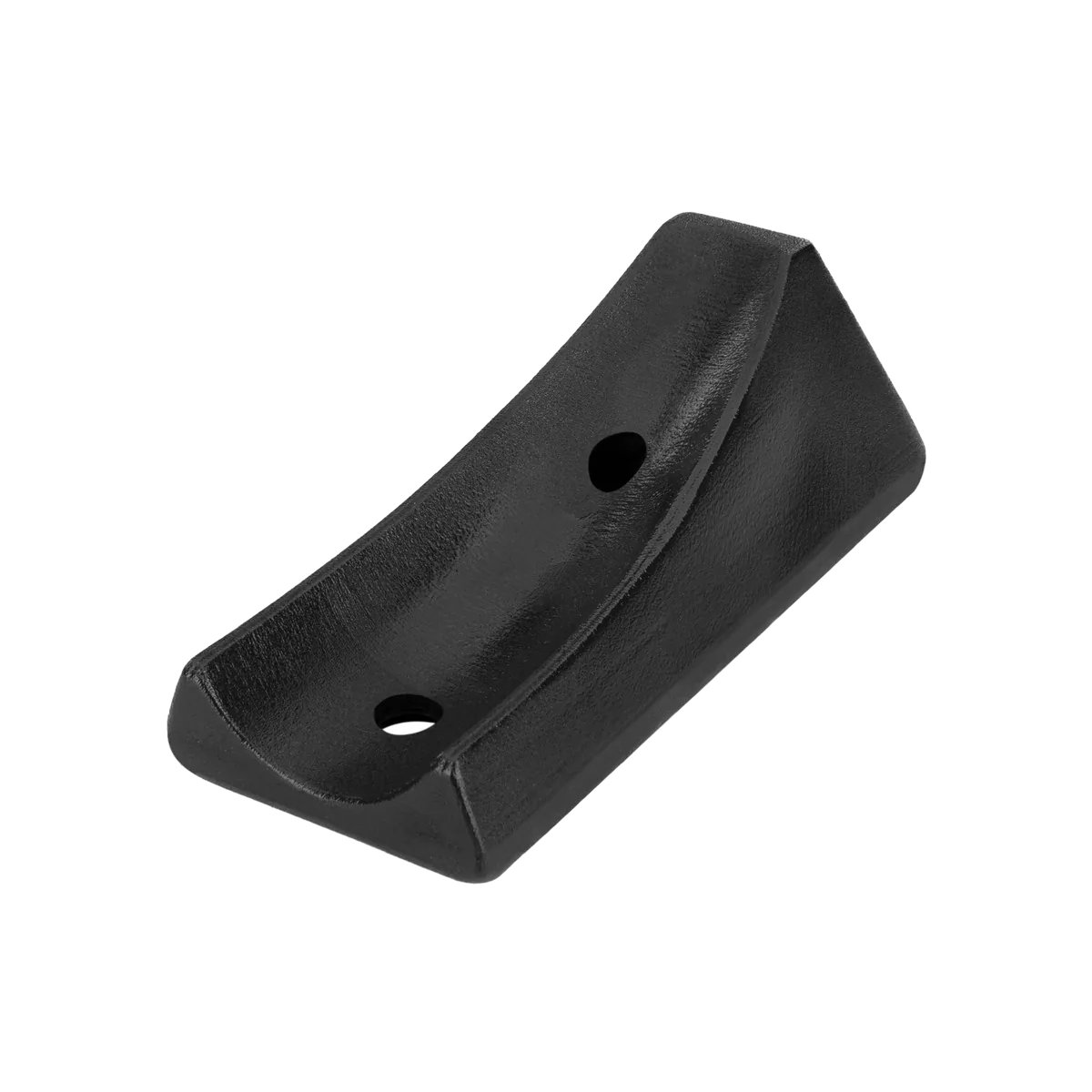
The corner chapter of this sled base glides guide covers the bend where the horizontal runner curves upward into the vertical riser. The extended base spans the full transition zone. Mid-runner glides cannot fit here because the tube is curved. The corner is often the highest-stress contact point on a sled chair and the most likely scratch source if left uncovered. Three configurations cover single-screw mount, two-screw mount, and pad-slot version.

Two-Screw Corner Glides

The standard corner solution in this sled base glides guide: two screws through the tube wall hold the glide firmly in place on the bend. The extended base spans the full transition zone from horizontal to vertical. Use the pad-slot version when scratch-sensitive floors call for an extra PA6 pad.

Single-Screw Corner Glides

This part of the sled base glides guide is for lighter sled chairs and installations where a single fastener is sufficient. Ø 20 mm tube. Solid PA base. Faster install than two-screw versions, with a slightly smaller bearing area on the floor.

End Glides, Clip-On, and Flat-Bottom Nail-On

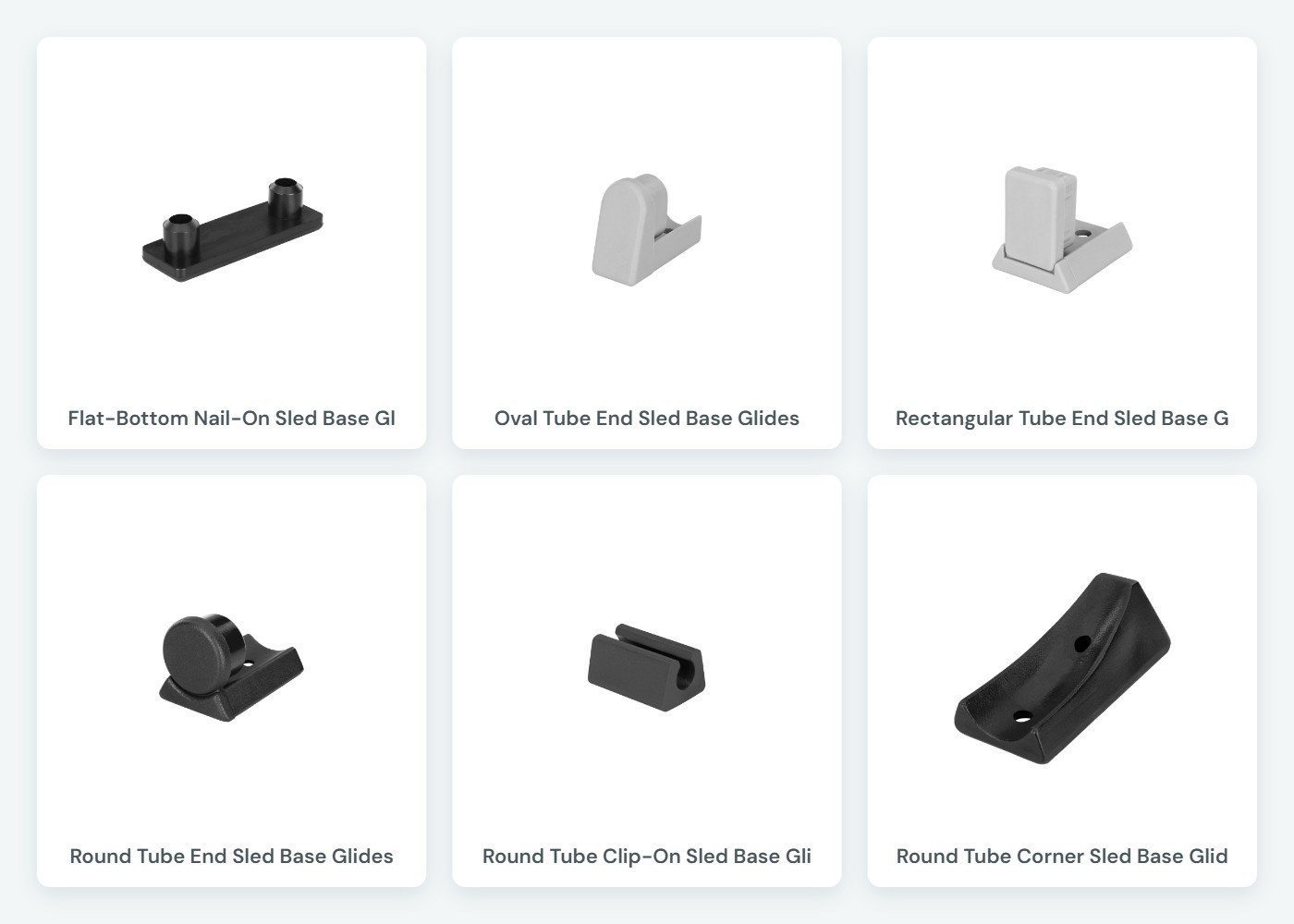
The remaining product groups in this sled base glides guide. End glides insert into open tube terminations (round, rectangular, or oval). Clip-on glides snap onto wireframe runners without fasteners. And for furniture with a flat bottom rail instead of a round tube runner, the flat-bottom nail-on glide mounts along the rail.

End Glides (Tube End Insert)

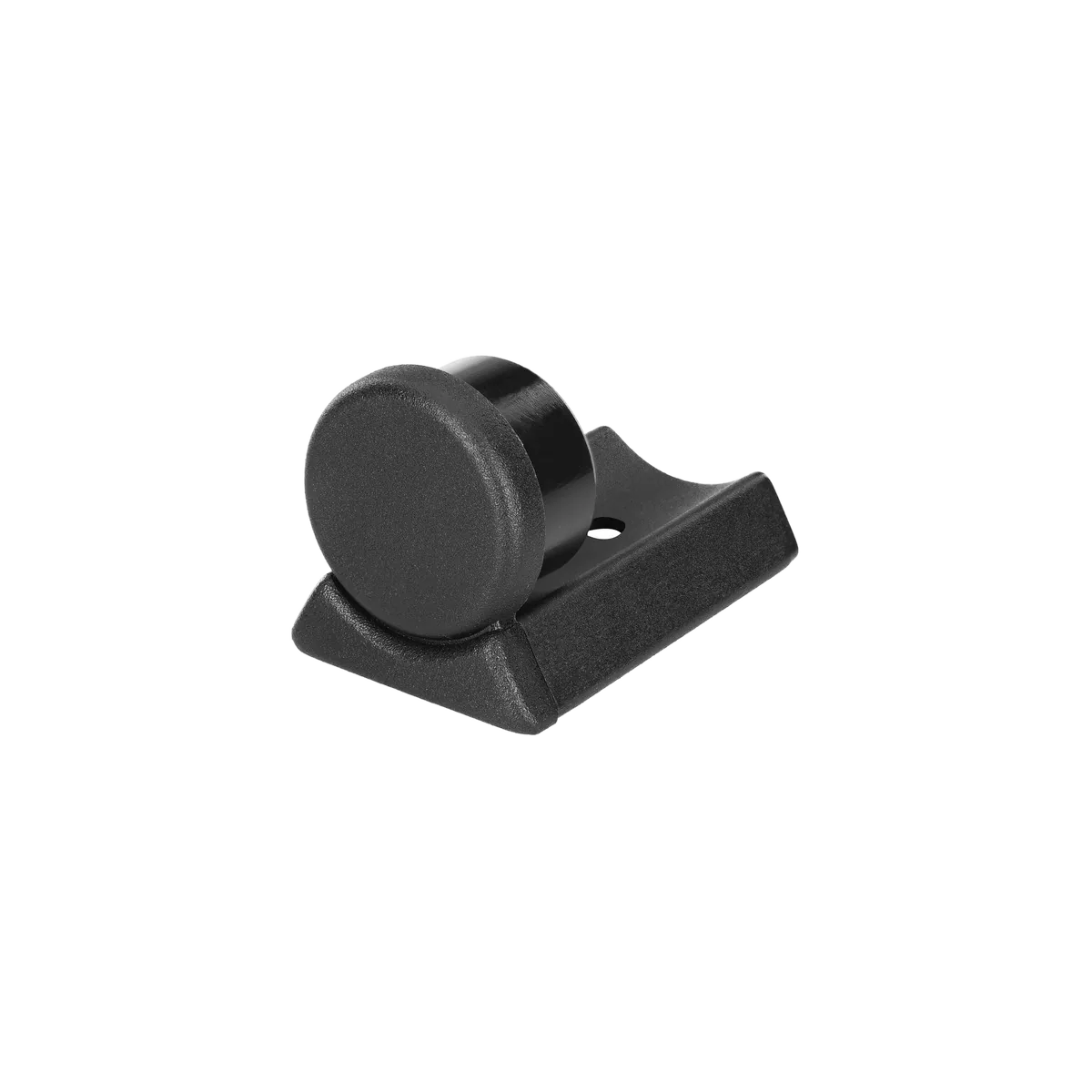
The end-glide section of this sled base glides guide is for open tube ends, where the runner stops in a free-hanging end rather than continuing to another floor contact point. The glide inserts into the tube end opening and is secured with screws. Three tube shapes cover round, rectangular, and oval profiles.

Clip-On Glides (Friction Mount)

The only product in this sled base glides guide that installs without fasteners. Press the clip-on glide onto the runner end and a friction clip grips the tube without screws. For Ø 10 mm wireframe runners only — typically used on visitor chairs, classroom stacking chairs, and minimalist seating where the runner is a thin rod rather than a thick tube.

Flat-Bottom Nail-On Glides

The only nail-on product in this sled base glides guide. For furniture that contacts the floor along a straight edge rather than a round tube runner. Mounts along flat bottom rails, rocking chair runners, bench bases, and any straight floor-contact edge where saddle-mount glides cannot provide coverage. Nail-on PA body installs with two finishing nails along the rail. Black, Brown, and Natural.

How to Measure Your Sled Runner

The measurement chapter of this sled base glides guide pins down the right glide for any sled runner. Three measurements cover most installations: tube outer diameter, tube shape, and mounting position.

What to MeasureHow to MeasureWhat It Determines
Tube outer diameterUse calipers across the outside of the tube. For round tubes, measure across the widest point. Common sizes: Ø 10 (wireframe), Ø 20, Ø 25, Ø 28, Ø 30 mm.Which saddle size fits. Must match the tube outer diameter.
Tube shapeRound, rectangular, or oval. Look at the cross-section of the tube where it meets the floor.Round tubes use saddle glides; rectangular and oval tubes use shape-specific end glides.
Mounting positionWhere on the runner does the glide need to mount? Straight section (mid-runner), curved bend (corner), or open tube end (end glide)?Mid-runner, corner, or end glide. Some chairs need all three.
Floor typeSmooth hardwood, luxury vinyl, or laminate? Or tile, stone, concrete, carpet, or carpet tile?Smooth scratch-sensitive floors benefit from a pad slot version with PA6 pad. Other floors use the bare PA saddle.

Tip: count the floor contact points before ordering

A typical sled chair has four floor contact points: two on the front bend (corners) and two on the back. Some U-frame chairs have additional mid-runner contact too. Walk around the chair and count every spot where the tube touches the floor. Order one glide per contact, and select the type (corner / mid-runner / end / clip-on) per spot.

For furniture with a flat bottom rail instead of a tube runner, skip the tube diameter measurement and go directly to the Flat-Bottom Nail-On section.

Floor Compatibility

Sled base glides work on all hard floors and on carpet, carpet tile, and area rugs. The polyamide saddle is abrasion-resistant and handles both smooth and textured surfaces. The floor compatibility chapter of this sled base glides guide is short on purpose: the only real decision is whether to fit a PA6 pad in the pad slot.

Without Pad — All Hard Floors and Carpet

The bare polyamide saddle works across every floor type. Smooth hardwood, vinyl, laminate, and tile. Textured tile, slate, stamped concrete, and brushed stone. Carpet, carpet tile, and area rugs. The saddle slides smoothly without snagging carpet pile or wearing on abrasive surfaces. This is the default choice for any sled chair on commercial, institutional, or mixed-flooring spaces.

With PA6 Pad — Scratch-Sensitive Smooth Floors

For pad slot products, fit a PA6 needle-punched fiber pad into the slot to optimize the glide for scratch-sensitive smooth floors: oiled hardwood, waxed hardwood, lacquered hardwood, luxury vinyl plank, and laminate. The pad provides extra-soft floor contact for finished surfaces that show wear easily. Leave the slot empty for tile, stone, concrete, carpet, or any abrasive surface.

By Furniture Type: Quick Lookup

Sled base furniture comes in many forms. The lookup chapter of this sled base glides guide narrows the most likely glide type and tube diameter for common furniture categories. Use it as a starting point, then confirm with the actual measurement.

Furniture TypeMost Common GlideTubeNotes
Cantilever dining chairsCorner + mid-runnerØ 20–25 mmTwo corner glides on the front bend; mid-runner on straight back section.
U-frame office chairsCornerØ 20–25 mmThe two front bends and the two back bends each take a corner glide.
Sled-base barstoolsCorner + mid-runnerØ 25–28 mmHeavier loads benefit from Ø 28 mm corner glides with two-screw mount.
Classroom stacking chairsClip-onØ 10 mm wireframeWireframe runners almost always use clip-on glides for fast deployment.
Visitor / waiting room chairsCorner + endØ 20–25 mmEnd glides if the runner terminates in an open tube; otherwise corner glides only.
Conference chairsCornerØ 25–28 mmFor carpet floors use solid base; for hardwood use pad slot version with PA6 pad.
Lecture hall fixed seatingCornerØ 25 mmBolted to the floor at the rear; corner glides handle front floor contact.
Patient / clinical seatingCornerØ 25 mmTwo-screw mount stays put during daily cleaning. Solid base on tile or vinyl flooring.
Stadium / theater seatingCorner + endØ 20–28 mmHeavy use environment. Use pad-slot version with PA6 pad on hardwood theaters.
Outdoor patio sled chairsCorner + mid-runnerØ 25–28 mmSolid PA saddle works on concrete, tile, and composite deck materials.
Rocking chairs (flat runner)Flat-bottom nail-onn/aFor curved or straight flat bottom rails; saddle glides do not apply.
Bench bases (flat rail)Flat-bottom nail-onn/aFor benches with a flat rail bottom; aligns along the rail with finishing nails.

If the furniture is not listed, the safest path is to remove one of the existing glides (or measure the tube directly) and order a matching size. The tube diameter and mounting style of the existing glide tell you exactly what to order new.

Materials

The materials chapter of this sled base glides guide covers the polymer used in the saddle body, the optional pad insert that fits into pad slot products, the mounting hardware you supply separately, and the colors and finishes available across the range.

MAIN SADDLE BODY

PA — Polyamide

Polyamide is the main material across every saddle glide in this sled base glides guide. Tough, load-rated, and abrasion-resistant. The PA saddle cradles the round tube runner and provides smooth, non-scratching floor contact on every surface from hardwood to concrete to carpet.

Used in: mid-runner, corner, end, clip-on, and flat-bottom nail-on bodies. Temperature range: −40 to +85°C. Properties: high tensile strength, abrasion resistance, low friction on carpet and hard floors.

PAD SLOT INSERT

PA6 — Needle-Punched Fiber Pad

The optional pad insert that fits into pad slot products. Needle-punched PA6 fiber provides extra-soft floor contact for scratch-sensitive smooth floors (hardwood, luxury vinyl, laminate). The pad snaps into the slot without adhesive and can be replaced when worn.

Used in: pad-slot variants of mid-runner, corner, and end glides. Properties: non-marking, dirt-tolerant, compatible with finished hardwood and LVP.

SOURCED SEPARATELY

Self-Tapping Screws

Saddle glides bolt through the tube wall using self-tapping screws. Screws are not included with the glides because the right size depends on the tube wall thickness. Source self-tapping screws sized for your runner: typically No. 6 or No. 8 sheet metal screws in 12 to 16 mm length.

Used with: all saddle glides except clip-on. Sourcing: match the screw length to your tube wall thickness plus 4–6 mm engagement. Use zinc-plated or stainless for indoor; stainless only for outdoor.

COLORS AND FINISHES

Black, Brown, and Natural

Saddle glides ship in Black as the standard color across the range. The flat-bottom nail-on glide adds Brown and Natural options for furniture where a contrast finish would be visible. All colors are color-matched across batches and use the same PA polymer underneath.

Black: standard for saddle glides, neutral and low-visibility under most furniture. Brown / Natural: available on the flat-bottom nail-on rectangular base for residential furniture where the glide is partly visible along the rail.

Installation

The installation chapter of this sled base glides guide covers two methods. The standard four-step install applies to saddle glides on round tube runners. The clip-on and flat-bottom nail-on variants use different methods covered in the variant notes below.

Saddle Glide Install (under 2 minutes per glide)

1

Position the saddle

Place the saddle glide against the runner so it cradles the tube from below. Position it at the planned floor contact point: mid-runner section, the corner bend, or the open tube end. The saddle should sit flush against the tube with no gap. Mark the screw hole positions through the glide onto the tube wall.

2

Pre-drill the tube wall

Pre-drill each marked location with a metal bit one size smaller than the screw diameter. For a No. 8 screw, use a 3 mm bit. Drilling through one wall is enough — do not drill all the way through. Use light pressure; metal tube walls are thin and the bit breaks through quickly.

3

Drive self-tapping screws

Set the glide back in position and drive self-tapping screws through the pre-drilled holes. Use a hand screwdriver or a low-torque drill setting to avoid stripping the thin tube wall. Screws engage as they cut their own thread on the way through. Stop when the screw head is flush with the glide.

4

Verify the seat

Check that the saddle sits flat against the tube with no gap. Tip the chair gently and confirm the glide does not rotate or shift on the runner. If there is any gap or movement, snug the screws another quarter-turn. Repeat for every floor contact point on the chair.

Notes for clip-on and flat-bottom installs

Clip-on glides: no screws, no pre-drilling. Press the clip-on glide onto the end of the Ø 10 mm wireframe runner. The friction clip grips the tube mechanically. Slide along the runner to position. Removable by hand for replacement or repositioning.

Flat-bottom nail-on glides: for furniture with a flat bottom rail instead of a round tube runner. Align the glide along the rail at the floor contact point and drive two finishing nails through the glide into the rail. Pre-drill if the rail is hardwood to prevent splitting.

Pad slot products: if the slot will hold a PA6 pad, fit the pad before installing the glide. The pad snaps into the slot from above without adhesive. Replace the pad when worn; the glide itself stays in place.

Replacement and reusable

Sled base glides are removable by backing out the screws. Replacement glides install into the existing screw holes if the new glide matches the old one. For commercial fit-outs and bulk replacements, take one existing glide off and bring it to the measurement — tube diameter and mounting style on the old part tell you exactly what to order.

Sled Base Glides vs Standard Furniture Glides

Both protect floors from furniture, but the underlying furniture geometry decides which one fits. Sled base furniture rides on a continuous metal runner; standard furniture rests on individual legs. The comparison chapter of this sled base glides guide weighs the two approaches.

SLED BASE GLIDES (THIS GUIDE)

Saddle bodies cradle a tube runner

  • PA saddle cradles the round tube runner from below.
  • Screw-mounts through the tube wall, or friction clip for wireframe.
  • Sized by tube diameter (Ø 10–30 mm), not leg cross-section.
  • Mid-runner, corner, and end variants cover every contact zone on the chair.
  • Pad slot variants accept an optional PA6 pad for smooth hardwood floors.
  • Works on all hard floors and on carpet, carpet tile, and area rugs.
  • For cantilever chairs, U-frame chairs, sled stools, and wireframe seating.

STANDARD FURNITURE GLIDES

Flat glides mount to each leg

  • PA6 fiber or anti-slip rubber surface on an ABS platform.
  • Nail-on or self-adhesive. Mounts to the bottom of each leg.
  • Sized by leg cross-section: round (Ø 23–75 mm) or square.
  • One glide per leg — typically four glides per chair or table.
  • PA6 fiber surface for smooth hard floors; anti-slip TPE for grip.
  • For dining chairs, tables, desks, bar stools, and standard four-leg furniture.
  • Browse the standard glides category for sized products.

Sled Base Glides FAQ: Your Questions Answered

The questions we get most often about sled base glides. The FAQ chapter of this sled base glides guide covers tube diameter, mounting position, pad slot decisions, and the common installation questions. If your question is not here, our specialists will help you match the right glide to your chair.

Mid-runner glides mount along the straight horizontal section of the runner where the tube lies flat on the floor. Corner glides mount on the bend where the runner curves into the vertical riser — mid-runner glides cannot fit here because the tube is curved. End glides insert into open tube ends, where the runner terminates rather than curving back up. A typical sled chair needs all three: two corner glides on the front bend, two corner glides on the back bend, and mid-runner or end glides anywhere else the tube contacts the floor.

In this sled base glides guide, measuring is the first step: measure the outside diameter of the round tube runner with calipers across the widest point. Common sled chair tube diameters are Ø 20, Ø 25, and Ø 28 mm; wireframe runners are typically Ø 10 mm. If you are replacing existing glides, the fastest way to know is to remove one and measure it directly — the saddle inside diameter tells you what tube it fits.

The pad slot version accepts an optional PA6 needle-punched fiber pad fitted into the slot. Use it for scratch-sensitive smooth floors: oiled hardwood, waxed hardwood, lacquered hardwood, luxury vinyl plank, or laminate. Leave the slot empty (or choose the solid base version) for tile, stone, concrete, carpet, carpet tile, or any other surface. The bare PA saddle is abrasion-resistant and handles those floors directly.

Self-tapping sheet metal screws sized for your tube wall thickness. Typically No. 6 or No. 8 screws in 12 to 16 mm length. Screws are not included with the glides because the right size depends on your specific tube wall thickness. For indoor furniture, zinc-plated screws are fine. For outdoor furniture, use stainless steel screws to match the corrosion-resistance of the application.

The clip-on glide is for Ø 10 mm wireframe runners only. It uses a friction clip that grips the tube without screws — useful for classroom stacking chairs, visitor seating, and minimalist furniture where the runner is a thin rod rather than a thick tube. For runners thicker than Ø 10 mm, use a screw-mount saddle glide instead. Clip-on glides are removable by hand for repositioning or replacement.

Yes. The polyamide saddle is low-friction and slides smoothly over carpet, carpet tile, and area rugs without snagging the pile or wearing the carpet face. Use the solid base (no pad slot) version on carpet; the PA6 pad insert is for smooth hard floors only. Sled base furniture on carpet typically moves more freely than standard furniture with individual legs because the continuous tube runner distributes weight across a larger contact area.

Yes. The bare PA saddle is abrasion-resistant and handles textured tile, slate, stamped concrete, brushed stone, and other rough hard floors. The continuous saddle profile bridges grout lines and texture variations smoothly. Do not fit the PA6 pad insert on these surfaces — the rough surface would tear the fiber pad over time. The solid base version is the right choice for rough floors.

The flat-bottom nail-on glide is for furniture that contacts the floor along a straight rail or runner rather than a round tube. Rocking chair runners, bench bases, and any straight floor-contact edge fit this profile. Saddle glides cannot install on flat rails because the saddle shape requires a round tube to cradle. The flat-bottom glide mounts along the rail with two finishing nails through the polyamide body.

The PA (polyamide) saddle body is the structural part of every sled base glide — it cradles the tube and provides the mounting points. The PA6 pad is an optional needle-punched fiber insert that fits into pad slot products to provide an extra-soft floor contact layer for scratch-sensitive smooth floors. The PA saddle is hard plastic; the PA6 pad is soft, fibrous, and replaceable. You only need the pad on certain floor types and only for pad slot products.

Yes. Saddle glides install with self-tapping screws and remove by backing out the screws. The same glide can be reused in a new chair if the tube diameter and mounting style match. Clip-on glides are removable by hand without tools. Flat-bottom nail-on glides are harder to remove because the nails embed in the rail — plan replacement glides before the install if reuse matters.

No. Mid-runner glides have a straight saddle profile that cradles a straight tube. The bend on a sled chair changes the tube angle through the contact zone. A mid-runner glide installed on a bend will only contact the tube at one point and will rock or fall off under load. Corner glides have an extended base that spans the full transition zone from horizontal to vertical, with the saddle profile shaped to match the bend.

Typically four corner glides: two on the front bends and two on the back bends. Each bend is a discrete floor contact point that needs its own corner glide. If the chair also contacts the floor along straight mid-runner sections, add mid-runner glides there. Count every spot where the runner tube touches the floor and select the right glide for that location: corner for bends, mid-runner for straight sections, end for open tube terminations.

Yes. For commercial accounts, hospitality fit-outs, manufacturers, and contractors who order regularly, Business Solutions covers volume pricing, B2B accounts, custom invoicing, and dedicated support. Contact us with your tube diameter, mounting positions needed (corner / mid-runner / end / clip-on), and expected annual volume for a quote.

Still narrowing it down?

Ask the Product Advisor

Tell our advisor your tube shape, diameter, and mounting position in plain English. Direct answers in seconds, no sign-up.

Ready to choose the right sled base glide?

You’ve made it through the whole sled base glides guide. Now shop the catalog with the full picture on mounting position, tube diameter, base shape, and pad slot options. Or chat with our product advisor for a second opinion before ordering.

Resources beyond this Guide

Browse other furniture guides: Glides Guide · Slides Guide · Pads Guide · Tube Plugs Guide · Leveling Feet Guide

Business accounts: Business Solutions for volume pricing, B2B accounts, hospitality fit-outs, and commercial orders.