Hospitality-grade floor protection · Sizing help before you order · Apply for a business account
Sizing help · Apply for a business account
Hospitality-grade floor protection · Sizing help before you order · Apply for a business account
Sizing help · Apply for a business account
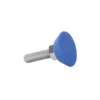
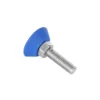

In a wet kitchen or washroom, a leveling foot fights two things: a floor it slides on and moisture that rusts the rod. This handles both. The TPE base grips so the furniture stays put, and the stainless steel rod shrugs off corrosion. Rated to 80 kg per foot.
We make this size in production runs, so there is none on the shelf today. Tell us how many you would want and you go on the list for it. When enough people ask for a size, we run it, and the people who asked hear about it first.
We stock a limited range of threads and lengths. Tell us what you need and we will confirm availability and pricing by email.
Buying in volume? See business pricing & samples ↓
Some environments demand both anti-slip grip and corrosion resistance from the same leveling foot. Commercial kitchens with wet, slippery floors and aggressive cleaning chemicals. Food processing facilities with wash-down protocols. Industrial environments where water, steam, and chemical exposure are daily conditions. Standard leveling feet address one problem or the other: TPE anti-slip bases grip the floor but use zinc-plated rods that corrode. Stainless steel rods resist corrosion but come on PA bases that slide. Anti-slip stainless steel adjustable leveling feet combine both: TPE base for floor grip and INOX rod for corrosion resistance.
Ø 30 mm TPE base at 9 mm height. Stainless steel (INOX) M8 threaded rod with stainless steel hex nut. Static load capacity: 80 kg per foot. Anti-slip stainless steel adjustable leveling feet are corrosion resistant anti-slip leveling feet for furniture where wet floors create both sliding and corrosion problems simultaneously. Blue. Sold in packs of 4, adjustable in steps of 2 at checkout.
Anti-slip stainless steel adjustable leveling feet are the only leveling foot in the range that combines both anti-slip grip and stainless steel hardware. Understanding each feature explains why the combination matters in specific environments.
The TPE (thermoplastic elastomer) base grips the floor through mechanical friction. On wet, slippery surfaces like polished kitchen floors, tile in wash-down areas, and sealed concrete in food processing, the TPE surface holds the furniture in position. The rubber-like grip prevents sliding when the furniture is bumped, leaned on, or pushed. TPE stainless steel leveling feet that grip wet floors where PA bases slide.
The entire metal assembly (rod and nut) is stainless steel. No zinc plating to erode. No mixed metals to create galvanic corrosion. The rod maintains smooth thread engagement with the insert regardless of water, steam, cleaning chemicals, or food acid exposure. The stainless hex nut ensures the threaded interface inside the insert is also corrosion-resistant. Anti-slip stainless leveling feet with fully corrosion-resistant hardware.
Without this product, achieving both features requires a TPE anti-slip foot with a zinc rod (which will corrode in wet environments) or a stainless PA foot with a separate anti-slip pad applied to the base (which can peel). Anti-slip stainless steel adjustable leveling feet eliminate both compromises in one integrated component.
Anti-slip stainless steel adjustable leveling feet are blue. This is not an aesthetic choice. Blue is the standard visual detection color in food processing and commercial kitchen environments.
Blue is the color least likely to occur naturally in food products. If a blue component detaches from equipment and falls into a food preparation area, it is immediately visible against virtually any food product. This visual detectability is why food-grade equipment, utensils, and components in commercial kitchens and food processing facilities often use blue coloring.
If an anti-slip stainless steel leveling foot detaches or is dislodged from furniture during cleaning or maintenance, the blue TPE base is immediately noticeable on any floor surface or food preparation area. Staff can identify and retrieve the component quickly, preventing foreign-object contamination. This is a food safety feature, not a design preference.
Anti-slip stainless steel adjustable leveling feet serve the specific intersection of two environmental demands: wet floors that cause sliding and corrosive conditions that destroy zinc-plated hardware.
Same screw-in process as every leveling foot. The TPE base and stainless rod do not change the installation procedure. The anti-slip grip engages automatically when the furniture is set on the floor.
Anti-slip stainless steel adjustable leveling feet provide grip on both wet and dry surfaces. The TPE material maintains friction in both conditions, though performance differs slightly.
Maximum grip. The TPE surface creates high friction against the dry floor surface. The furniture resists sliding under bumping, leaning, and pushing forces. On dry polished concrete, glazed tile, and sealed stone, anti-slip stainless steel adjustable leveling feet provide the same grip performance as the wide-base anti-slip (proportional to the contact area difference).
Reduced but still significant grip. Water between the TPE and the floor surface acts as a partial lubricant. The grip is lower than on a dry surface, but substantially higher than a PA base on the same wet surface. PA bases have near-zero grip on wet floors. TPE maintains meaningful friction that prevents most casual sliding from bumps and leans. For floors that are continuously flooded (standing water), no leveling foot provides reliable anti-slip performance.
When two dissimilar metals are in contact in the presence of an electrolyte (water, cleaning chemicals), galvanic corrosion can occur. The less noble metal corrodes preferentially. On a leveling foot with a stainless rod and a zinc-plated nut, the zinc nut would corrode faster than it would in isolation because the stainless steel drives the galvanic reaction.
Anti-slip stainless steel adjustable leveling feet use a stainless steel hex nut to match the stainless rod. Both metals are the same alloy family. No galvanic potential difference. No accelerated corrosion on either component. This all-stainless approach ensures the complete metal assembly maintains its integrity in wet environments where mixed-metal assemblies would fail at the less noble component first.
For furniture manufacturers designing for wet food-service or industrial environments, anti-slip stainless steel adjustable leveling feet are a single-SKU specification: Ø 30 mm, M8 × 35 mm, TPE + INOX, blue. Include alongside M8 threaded inserts in the bill of materials. The blue color may need to be noted in the furniture specification for environments where food safety color coding is part of the compliance documentation.
For facility managers retrofitting existing kitchen furniture, anti-slip stainless steel adjustable leveling feet replace any M8 leveling foot on the same threaded insert. If the existing furniture has corroded zinc feet that also slide on wet floors, this product solves both problems in one replacement. For production quantities, visit Business Solutions.
Grip and corrosion resistance on furniture in the harshest wet environments. The National Wood Flooring Association (NWFA) recommends protective contact surfaces on all furniture legs, and the TPE base provides non-marking, non-scratching floor contact with the added benefit of anti-slip grip.
The primary anti-slip benefit. On wet kitchen floors, wash-down concrete, and slippery tile, the TPE base grips the surface and prevents the furniture from sliding when bumped or pushed. Standard PA bases have near-zero grip on wet surfaces. TPE maintains meaningful friction even when the floor is wet. Non-slip stainless leveling feet furniture that stays positioned on the wettest commercial floors.
The stainless steel rod and hex nut resist corrosion from water, steam, cleaning chemicals, sanitizers, and food acids. The threaded connection stays smooth and adjustable. Unlike using zinc-plated feet in wash-down environments, the all-stainless metal assembly does not corrode, seize, or weaken in wet conditions. Anti-slip stainless steel adjustable leveling feet maintain both grip and adjustment function indefinitely.
The blue color provides visual foreign-object detection in food-handling areas. The TPE material is non-toxic and does not leach chemicals. The stainless steel resists rust and particle shedding. All three materials (TPE, INOX rod, INOX nut) are appropriate for food-contact-adjacent equipment in commercial kitchen and food processing environments.
Commercial kitchen and food processing floors often have drainage slopes, expansion joints, and surface irregularities. The 35 mm stainless rod provides adequate adjustment range for these conditions. Combined with the anti-slip grip that holds the foot in position even on sloped wet surfaces, the 35 mm rod covers most commercial kitchen floor conditions.
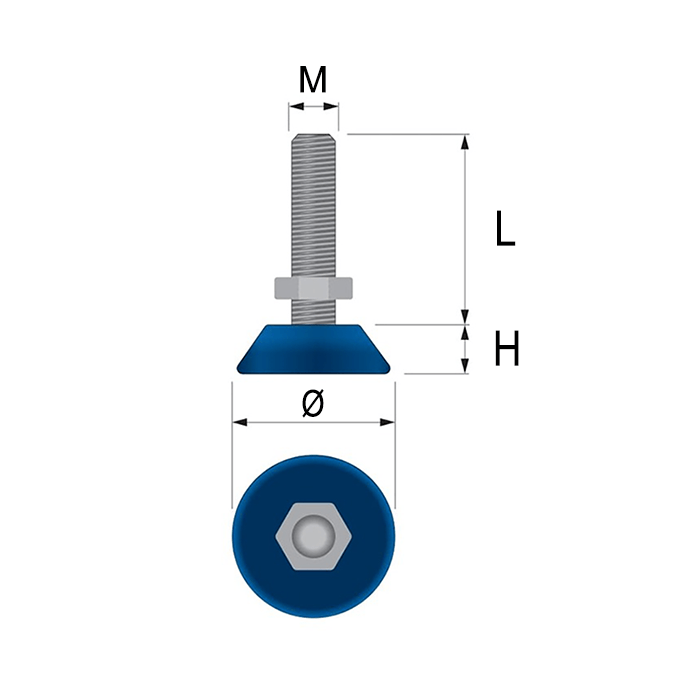
| Diameter (Ø) | Length (L) | Height (H) | Thread (M) | Static load (SL) |
|---|---|---|---|---|
| 30 mm (1.18″) | 35 mm (1.38″) | 9 mm (0.35″) | M8 | 80 kg |
Thread size must match the insert in your furniture leg.
| Specification | Detail |
|---|---|
| Material | Thermoplastic elastomer over a stainless steel thread |
| Sizes | 1 size |
| Diameter (Ø) | 30 mm (1.18″) |
| Length (L) | 35 mm (1.38″) |
| Height (H) | 9 mm (0.35″) |
| Thread (M) | M8 |
| Static load (SL) | 80 kg |
| Mounting | Screws into a threaded insert |
| Colors | Blue |
| Floor compatibility | Smooth hard floors, where grip matters more than easy movement |
| Minimum order | Sold in a minimum of 4, then any quantity you need |
The blue color is a visual identifier used in food processing and commercial kitchen environments. Blue is the most detectable color against food products, which is why food-safe equipment often uses blue components. The blue TPE base makes this leveling foot visually distinct from other components if it detaches, helping prevent foreign-object contamination in food-handling areas.
Wide-base anti-slip has a TPE base but uses a zinc-plated rod. This product has a TPE base with a stainless steel rod. Choose wide-base anti-slip for dry environments where anti-slip is needed but corrosion is not a concern. Choose anti-slip stainless for wet environments where both are needed.
The M8 stainless steel hex nut is part of the rod assembly. It provides the threaded interface that connects to the threaded insert inside the furniture leg. Using a stainless nut (instead of a zinc-plated nut) ensures the entire metal assembly is corrosion-resistant, not just the rod itself. No mixed metals, no galvanic corrosion risk.
TPE provides anti-slip grip on both wet and dry surfaces. On wet floors, the grip is slightly reduced compared to dry because water acts as a lubricant. However, TPE still provides significantly more grip than PA on wet surfaces. For floors that are frequently wet (kitchens, wash-down areas), TPE is the better choice for preventing furniture sliding.
When the foot has to grip as well as level. One anti slip leveling foot holds its position on a smooth or damp floor, and the stainless steel rod shrugs off washdown and coastal air.
When the foot has to grip as well as level. One anti slip leveling foot holds its position on a smooth or damp floor, and the stainless steel rod shrugs off washdown and coastal air.
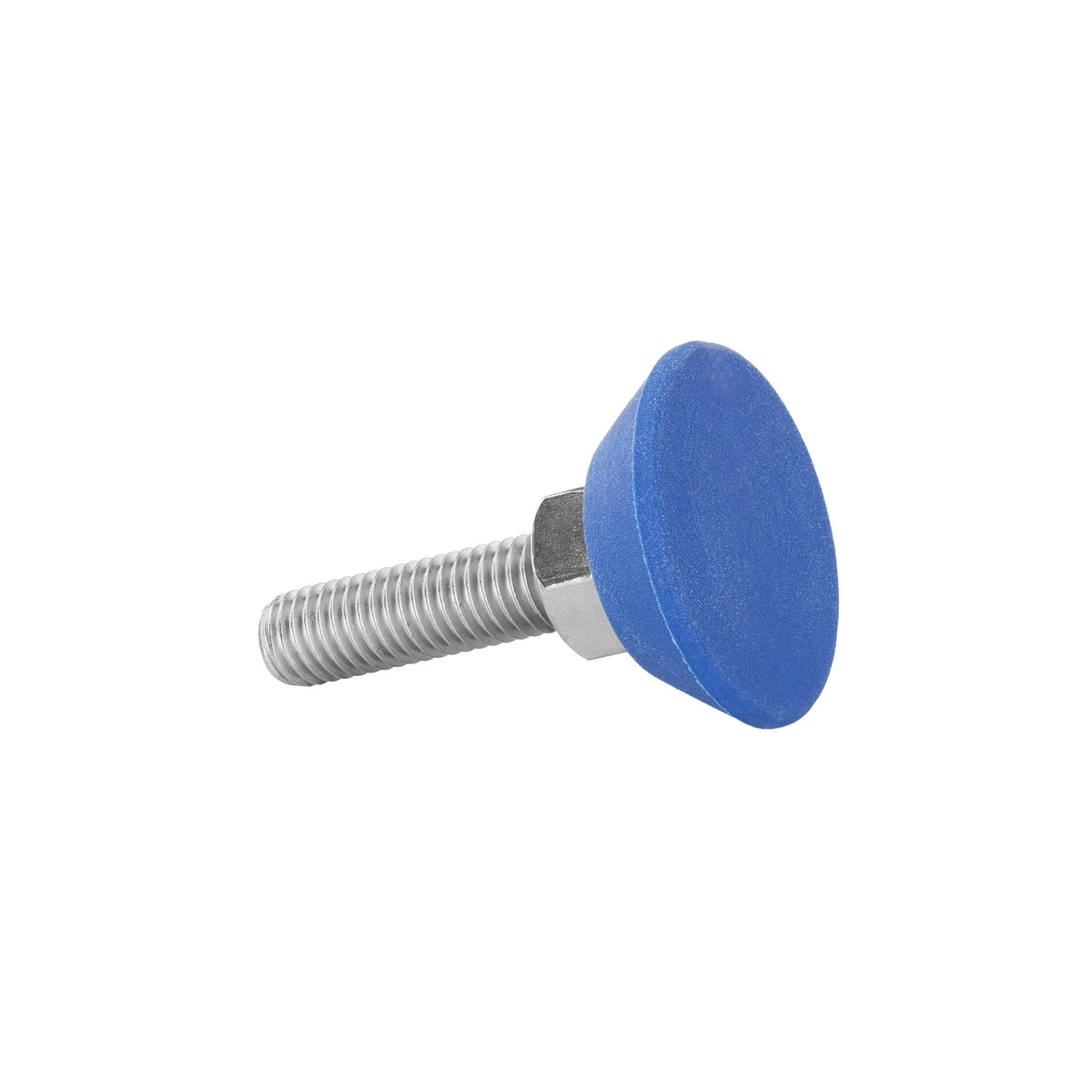 Anti-Slip Stainless Steel Adjustable Leveling Feet
Outfitting a hotel, restaurant, school, healthcare facility, or large furniture build? Superior Glide supports volume orders with bulk pricing tiers, free physical samples, and dedicated quote pricing for accounts placing larger orders.
Bulk pricing tiers, net terms for qualified buyers, and dedicated support for facility managers and procurement teams.
Hold the product, test the fit, check the finish. We ship samples free so you can evaluate before committing to a full order.
For orders above standard volume tiers, we’ll prepare a custom quote with consolidated shipping and your account’s tier pricing.

Reviews
There are no reviews yet