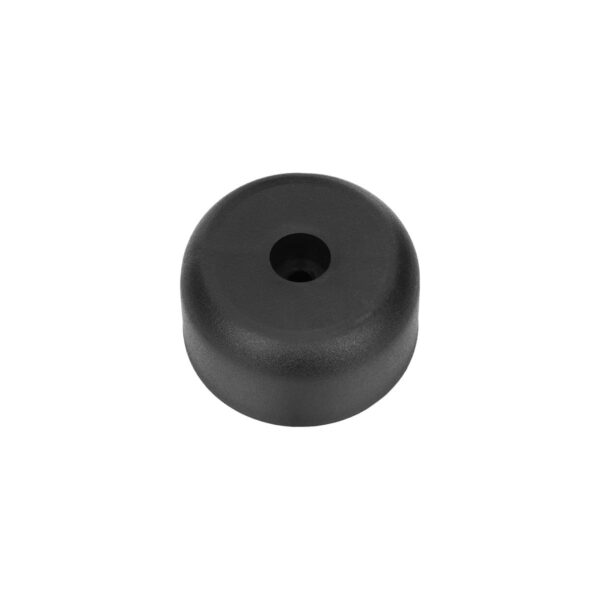
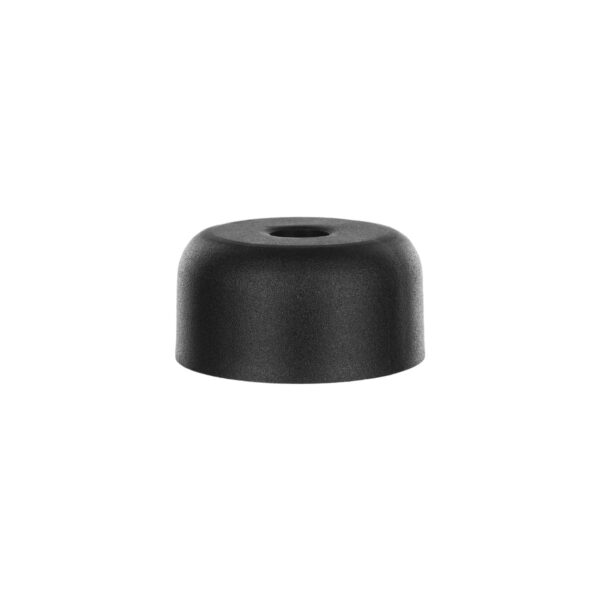
Round furniture feet provide a broad Ø 49 mm PA floor contact surface for furniture legs. Single screw through the central hole mounts the foot to the leg bottom. H = 25 mm raises the furniture slightly and provides the PA mass for durable floor contact. Three colors: black, grey, white. 12.9 g. Sold individually.
Not sure what size? See the size chart ↓
📦 Sold in packs of 4 — quantity adjustable at checkout
Round furniture feet provide a broad Ø 49 mm PA (polyamide) floor contact surface for furniture legs. A single screw through the central hole mounts the foot to the bottom of the leg, replacing the bare leg end with a smooth, non-scratching PA base that distributes the furniture’s weight across nearly 1,886 mm² of floor contact area. The 25 mm height provides structural mass for durability and creates clearance between the leg bottom and the floor. For tables, desks, cabinets, shelving units, and any stationary furniture with legs that accept a screw on the bottom.
PA (polyamide) screw-mount furniture foot. Round furniture feet protect floors from scratching and denting caused by bare furniture leg ends. Ø 49 mm. H = 25 mm. Central screw hole (Ø 5.3 mm, countersink Ø 11.5 mm). Three colors: black, grey, white. 12.9 g. Sold individually.
Three color options cover the most common furniture finishes. All three share identical dimensions, material, and mounting.
PA body. Ø 49 mm. H = 25 mm. 12.9 g. For dark-finished furniture: espresso, walnut, black-painted, and dark metal legs.
PA body. Ø 49 mm. H = 25 mm. 12.9 g. For grey, silver, brushed metal, and medium-toned furniture legs.
PA body. Ø 49 mm. H = 25 mm. 12.9 g. For white, cream, light oak, and light-painted furniture legs. Healthcare and clean room applications.
For square legs: square rubber furniture feet with pad (38 × 38 mm). For sliding furniture: furniture glides. For nail-on gliders: furniture glider. For height adjustment: adjustable leveling feet. For custom sizes, contact Business Solutions.
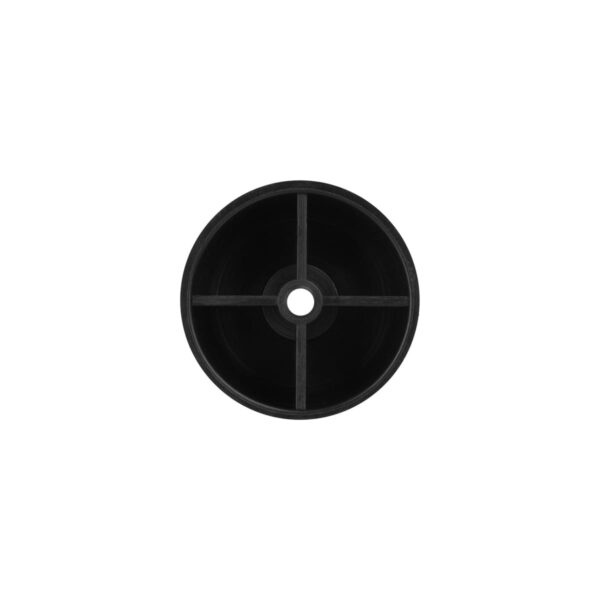
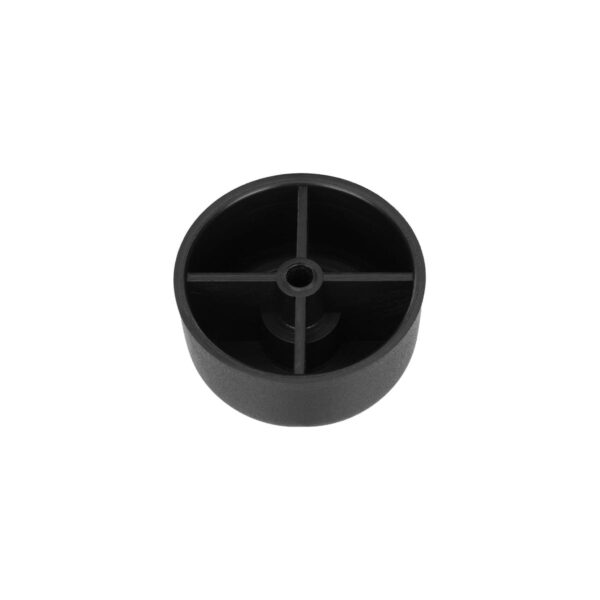
Round furniture feet attach to the leg bottom with a single screw through the central hole. The foot sits flat on the floor, and the screw passes upward through the foot into the leg end. The Ø 11.5 mm countersink seats the screw head flush with or below the PA surface so the screw does not contact the floor.
The Ø 49 mm diameter is intentionally larger than most furniture legs. A typical table or cabinet leg is 25 to 40 mm in diameter or width. The Ø 49 mm round furniture foot extends beyond the leg on all sides, creating a broad floor contact surface that distributes the furniture weight more evenly than the smaller leg end alone. This wider footprint reduces the pressure per square millimeter on the floor surface, which means less denting on hardwood, less marking on luxury vinyl, and less concentrated wear on any floor type.
The overhang beyond the leg is minimal from a visual perspective. On a 30 mm leg, the overhang is 9.5 mm per side. On a 40 mm leg, the overhang is 4.5 mm per side. From standing height, the foot is barely visible under the leg. The visual impact is negligible while the floor protection benefit is significant. The round shape ensures the overhang is symmetrical in all directions regardless of the leg shape (round, square, or tapered).
Round furniture feet are 25 mm tall, which raises the furniture slightly compared to bare leg contact. This height provides several benefits. The PA mass at 25 mm depth gives the foot structural bulk to resist compression under heavy furniture loads without deforming. The height creates clearance between the leg bottom and the floor, which means even if the foot compresses slightly under extreme weight, the leg bottom does not contact the floor through the foot.
The 25 mm height also changes the furniture’s overall height by 25 mm (minus whatever the bare leg end currently provides). For dining tables at standard 30 inch height, the additional 25 mm (about 1 inch) raises the table slightly. This is typically not noticeable in use but should be considered if the furniture has a precise height specification. If height adjustment is needed in addition to floor protection, adjustable leveling feet with threaded rods provide both.
The central screw hole is Ø 5.3 mm, which accepts standard wood screws and self-tapping screws in this shaft range. The Ø 11.5 mm countersink around the hole seats the screw head flush with or below the PA surface. This is critical: if the screw head protrudes below the foot surface, it contacts the floor instead of the PA, defeating the floor protection purpose and potentially scratching the floor with the metal screw head.
Choose a screw with a head diameter under 11.5 mm and a shaft diameter of approximately 5.3 mm. The screw length should be long enough to penetrate into the leg for a secure grip but not so long that it exits through the side of the leg. For hardwood legs, pre-drill a pilot hole to prevent splitting. For metal legs with a flat accessible bottom, use a self-tapping screw. The screw is not included with the round furniture foot to allow selection of the appropriate screw type for the specific leg material.
Floor protection on stationary furniture with legs. The National Wood Flooring Association (NWFA) recommends protective contact surfaces on all furniture legs, and round furniture feet provide that protection with a broad, durable PA contact surface.
The primary function. Bare furniture legs (wood, metal, or composite) concentrate weight on the small leg end surface. This creates dents on hardwood, scratches on tile, and marks on luxury vinyl. Round furniture feet replace the bare leg contact with a smooth Ø 49 mm PA surface that distributes weight across nearly 1,886 mm² of floor contact. PA furniture feet with screw hole that prevent floor damage at every leg position.
When furniture is set down after moving or when items are placed on a table, the impact transmits through the legs to the floor. The PA mass of round furniture feet absorbs a portion of this impact energy, reducing the noise that bare legs transmit. In offices, libraries, healthcare facilities, and residential spaces, the PA contact provides a quieter furniture-to-floor interface than bare wood or metal legs. Unlike leaving furniture legs unprotected, PA feet reduce both floor damage and transmitted noise.
The Superior Glide catalog includes several floor protection options for furniture legs. Choose based on whether the furniture slides, stays stationary, needs height adjustment, or has hollow tube legs.
Screw-mount. Ø 49 mm. H = 25 mm. For stationary furniture (tables, cabinets, desks). Provides broad floor contact and impact absorption. Not designed for frequent sliding.
Self-adhesive or nail-on. Various sizes. For furniture that slides (chairs, stools). Low-friction PA or PA6 surface designed for smooth floor movement.
Threaded rod + PA base. Various sizes. For furniture that needs height adjustment on uneven floors. Threaded insert required in the leg.
Internal insert. Various shapes and sizes. For hollow tube legs. Plugs press into the tube interior. Different mounting concept than screw-mount feet.
Round furniture feet provide PA floor contact compatible with all standard hard floor surfaces.
On premium hardwood where even PA contact under heavy static load is a concern, apply a self-adhesive PA6 pad to the bottom of the round furniture foot. The PA6 pad adds a lower-friction, higher-wear-resistance contact layer on top of the PA foot. This two-layer approach (PA foot + PA6 pad) provides the maximum floor protection available in the catalog for stationary furniture.
PA (polyamide) body throughout. The same engineering polymer used across all sled base glides, furniture glides, leveling feet, and tube plugs in the catalog. PA provides high compressive strength for load bearing under heavy furniture, excellent abrasion resistance for the floor contact surface, impact resistance for dropped or bumped furniture, and UV and moisture resistance for any standard indoor environment.
At 12.9 g per foot, the PA mass provides structural bulk that absorbs impact energy and resists compression under heavy loads. The color is molded into the PA during manufacturing, not painted or coated, so it does not chip, peel, or wear away from floor contact over the service life of the foot.
Round furniture feet mount to any flat furniture leg bottom that accepts a screw. The foot does not insert into the leg or fit over the leg. It sits flat under the leg end and is secured by one screw driven upward through the foot into the leg.
Compatible leg types: solid wood legs (round, square, or tapered), metal legs with a flat bottom and screw-accessible end, and composite or MDF legs with sufficient density to hold a screw. Not compatible with hollow tube legs (use tube plugs instead) or legs with threaded inserts (use leveling feet instead). For square legs that need an external-fit rubber foot with vibration dampening, see square rubber furniture feet with pad.
One per leg. Most tables have 4 legs (order 4 feet). Some tables have 3 legs, trestle bases with 2 legs, or pedestal bases with 1 leg. Count the legs on your furniture and order the matching quantity. For a fleet of 20 four-leg tables, order 80 round furniture feet plus a 10% spare stock.
Round furniture feet are sold individually, not in sets. This allows ordering the exact quantity needed for any leg count. Choose one color per furniture piece for visual consistency, or mix colors if different legs have different finishes.
On stationary furniture, round furniture feet wear very slowly because there is minimal sliding friction. The primary wear mechanism is static compression from the furniture weight pressing the PA against the floor surface over months and years. The PA material resists compression creep under sustained load, maintaining its shape and floor contact geometry throughout the furniture’s service life. On furniture that is occasionally repositioned (moved for cleaning, rearranged for events), the PA base wears from both compression and the sliding friction of each repositioning movement.
Signs that replacement is needed: the PA base has worn unevenly (causing the furniture to wobble on one leg), the screw hole has enlarged from repeated tightening or loosening (the foot spins freely on the screw), or the PA has cracked from a severe impact such as dropping the furniture during a move. These conditions are uncommon under normal stationary use because the PA compound is engineered to resist exactly these failure modes.
Round furniture feet typically last the service life of the furniture on pieces that stay in one position. On furniture that moves frequently and needs smooth sliding contact rather than static floor protection, consider switching to self-adhesive furniture glides instead, which are specifically designed for repeated sliding contact on hard floors.
For furniture manufacturers, round furniture feet should be included as standard equipment on tables, desks, cabinets, and other stationary furniture with solid or accessible leg bottoms. The three-color selection covers most furniture finish categories without custom orders. Specify the screw type and length in the assembly instructions so the end customer installs with the correct fastener.
For facility managers and interior designers, round furniture feet are specified for all stationary furniture on finished floors where the furniture legs would otherwise contact the floor directly. On projects with mixed furniture types, combine round furniture feet on tables and cabinets with furniture glides on chairs and sled base glides on cantilever seating for consistent PA floor protection across every piece in the space. This comprehensive approach ensures no furniture contact point is left unprotected, regardless of the furniture type or leg configuration. For large projects with hundreds of furniture pieces, the three-color selection and individual-unit ordering simplify procurement. For production quantities, visit Business Solutions.
Offices, conference rooms, hotels, restaurants, and retail environments where tables, desks, and cabinets sit on finished floors. Round furniture feet protect the floor investment across the entire stationary furniture fleet. The three-color selection matches the most common commercial furniture finishes without custom orders. In corporate offices where dozens of desks and tables sit on hardwood or luxury vinyl, round furniture feet prevent the cumulative denting that bare leg ends cause over months and years of static weight. The screw mount ensures the feet stay attached through furniture moves and relocations. Available in bulk. For commercial pricing, visit Business Solutions.
Dining tables, kitchen tables, desks, and storage furniture on hardwood, tile, or luxury vinyl floors. Even heavy furniture that rarely moves can dent hardwood over time from the static weight concentrated on the small leg end area. Round furniture feet distribute this weight across the full Ø 49 mm PA base, reducing the pressure on the floor surface at each leg position. In dining rooms where a heavy oak table sits on wide-plank hardwood, the bare leg ends create visible compression dents within months. Round furniture feet prevent these dents from forming. For chairs in the same room, self-adhesive glides and furniture pads provide matching PA floor protection on pieces that need to slide.
Inspect round furniture feet periodically. On stationary furniture, annual checks are sufficient. Confirm the screw is tight, the PA base is not cracked or unevenly worn, and the foot sits flat on the floor. Tighten any loose screws. Replace feet that have cracked, deformed, or worn unevenly. Round furniture feet are sold individually. Order one per leg.
| Specification | Details |
|---|---|
Product Type |
Furniture Feet |
Material |
PA (Polyamide) |
Shape |
Round |
Floor Compatibility |
All hard and soft flooring |
Furniture Compatibility |
Furniture Compatibility |
Foot Diameter |
Ø 49 mm (1.93") |
Mounting Style |
Centered hole for screw (screw not included) |
Color Options |
Black, Grey, White |
Installation Type |
Screw-in |
Key Benefits |
Floor protection, vibration reduction, stability |
Indoor / Outdoor Use |
Indoor | Covered Outdoor | Uncovered Outdoor |
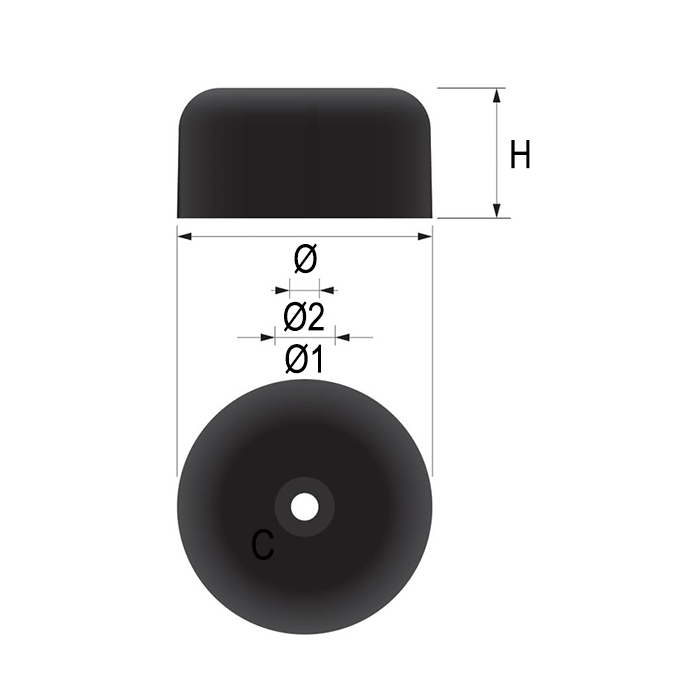
| Ø (Foot Diameter) | Ø1 (Screw Hole Diameter) | Ø2 (Recessed Area Diameter) | H (Foot Height) |
|---|---|---|---|
49 mm (1.93") |
5.3 mm (0.21 |
11.5 mm (0.45") |
25 mm (0.98") |
The central hole is Ø 5.3 mm with an Ø 11.5 mm countersink. Use a wood screw or self-tapping screw that fits these dimensions. The countersink seats the screw head flush with or below the foot surface so the screw does not contact the floor. The screw is not included.
Round furniture feet mount to any flat leg bottom that accepts a screw. The Ø 49 mm foot extends beyond most furniture legs, creating a broad floor contact surface. Works on solid wood legs, metal legs, and composite legs. The foot does not insert into a tube or fit over the leg. It screws to the bottom of the leg end.
The 25 mm height provides structural mass for the PA body and creates clearance between the leg bottom and the floor. This height allows the foot to absorb impact and distribute weight across the full Ø 49 mm base without the leg contacting the floor through the foot under heavy loads.
Yes. Round furniture feet work on any furniture with legs that accept a screw on the bottom: tables, desks, cabinets, shelving units, benches, and sideboards. They are not designed for sliding (chairs and stools should use furniture glides instead). For furniture that needs height adjustment, see adjustable leveling feet.
The foot is designed to extend beyond the leg. A 30 mm leg with a 49 mm foot creates a 9.5 mm overhang on each side. This is intentional: the broad base distributes weight across more floor area than the leg alone. If the Ø 49 mm overhang is too visible for your aesthetic, this is the only round furniture foot size in the range.
Only logged in customers who have purchased this product may leave a review.



Reviews
There are no reviews yet