
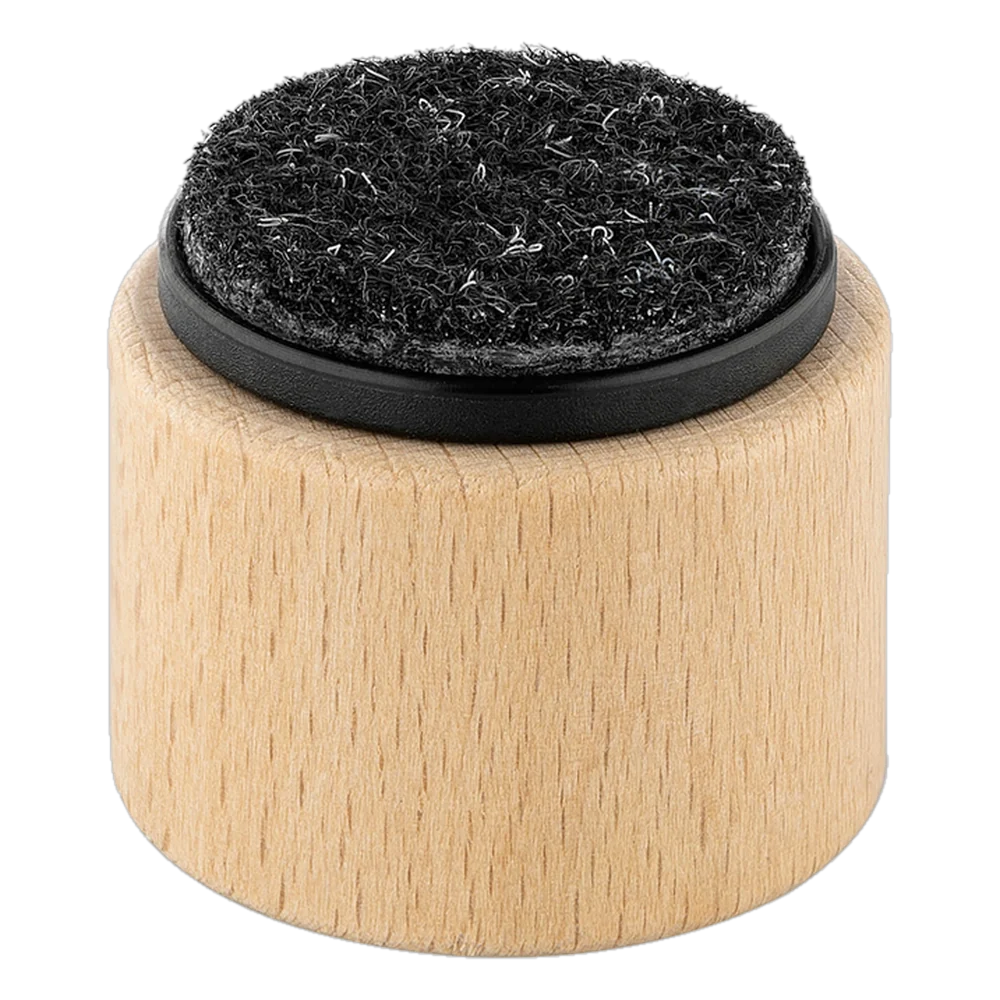
Before you try to stop chairs sliding on wood floors, one thing is worth knowing: most of your chairs should slide. Chairs sliding on a wood floor and chairs scratching a wood floor sound like the same complaint. They are opposites, and the fix for one makes the other worse.
Scratching is about what the leg drags across the floor. Sliding is about how little the leg holds on to it. A glide chosen to move smoothly is doing its job perfectly at the moment a light chair shoots back from under somebody. So the first question is not which glide, it is whether you want this particular chair to move or to stay put.
Why some floors are so slippery
Three things decide how hard it is to stop chairs sliding on wood floors, and none of them is the chair.
The finish. A modern floor finish is hard, sealed and smooth, which is the point of it. It shrugs off water and dirt, and it also gives a chair leg very little to hold. Gloss-lacquered hardwood, glazed tile and polished concrete are the slipperiest. A matte or oiled wood floor grips noticeably better.
What is already on the leg. Felt slides, and gets slicker as it packs flat. So does bare plastic. So does any contact face that has worn glassy, because texture is what gives grip, and enough dragging polishes it off. This is why a pad that felt fine when you fitted it can turn into a skate without ever looking broken.
Weight and shape. A light chair on four narrow legs puts very little load on each contact point. Café chairs, folding chairs and stacking chairs slide far more than a heavy dining chair for exactly this reason.
Which chairs should move
More of them than most people think, which is why the instinct to stop chairs sliding on wood floors everywhere is usually wrong.
Dining chairs get pulled out and pushed in many times a day. If they grip the floor, people drag them anyway, and now the leg is fighting the floor on every move. That is where gouges come from. A dining chair wants a glide that moves cleanly and takes the abrasion instead of the finish.
Stacking chairs in a function room, chairs at a kitchen island, desk chairs without casters: same. Seating that moves constantly wants to move easily.
For those, the answer is a PA6 fiber glide sized to the leg. It moves quietly, it protects the finish, and nobody has to lift the chair. Which version depends on the leg: solid wood takes nail-on, with a hollow tubular rivet and an anti-rotation notch that stops the glide turning; metal or laminate takes self-adhesive, cleaned with 70% isopropyl alcohol and left 48 hours to reach full strength.
Which chairs should grip
Seating that stays in one place. A reading chair. A bar stool people climb on and off. A bench at the end of a table. Chairs on a boat or in an RV, where the floor moves underneath you and furniture that merely slides at home becomes a hazard.
For those chairs, a fiber glide is the wrong tool, and the reason is worth a minute of your time.
Grip is a material, not a size
This is the part worth knowing before you spend anything to stop chairs sliding on wood floors, because it saves you buying the wrong thing.
Grip comes from a soft, slightly deformable face. A rubber or TPE foot grips because it squashes a little under the weight of the chair, which increases the real contact with the floor. Nothing else on a chair leg does that.
PA6 needle-punched fiber does not grip, and is not meant to. It is a protective face, built to move smoothly and take the abrasion instead of your floor. If your problem is scratching, it is exactly right. If your problem is sliding, no size or shape of fiber glide will fix it, and comparing them is wasted effort.
Felt grips worst of all, and gets worse as it packs flat. It is also the material most likely to be scratching your floor while it fails to hold it.
So if you want to stop chairs sliding on wood floors, do not go looking through the glide range for the answer. Look at the next section instead.
What actually stops chairs sliding on wood floors
A rug, with a rug pad under it. The oldest fix and still the best one for a dining set on a slippery floor. The legs sit on textile instead of lacquer, and the rug pad stops the rug itself creeping. If the room can take a rug, start here.
Weight, and a wider foot. Load is grip. A light café chair on four narrow legs has almost nothing pressing down on each contact point, and no small part changes that physics much. If a set of light chairs will not stay put on a polished floor, the chairs are the problem.
Ask us before you buy anything for a whole room. Deciding which seating should move and which should stay put is the part people get wrong, and getting it wrong across twenty chairs is expensive. If you are fitting out a dining room, a restaurant, a school, a boat or an RV, tell us what the chairs and the floors are and we will tell you what belongs on each. It costs nothing to ask.
Do not fix sliding with adhesive. A common instinct is to stick something rough or tacky under the leg. It picks up grit, holds it against the floor, and turns a sliding problem into a scratching one.
The mixed house
Most homes that want to stop chairs sliding on wood floors need both, in different rooms. The dining chairs on fiber glides so they move without marking. The armchair in the corner on something that holds. Seating that stays put wants grip; seating that moves constantly wants a glide. Sort the chairs that way and the shopping is easy.
If the real problem is scratching
If you came here to stop chairs sliding on wood floors but the chairs slide fine and the floor is getting marked, you are on the wrong article. Read why felt furniture pads scratch hardwood floors, then fit the right glide for the leg: nail-on for solid wood, self-adhesive for metal and laminate, a pad for anything that stays put, sized flush with the leg or one step smaller.
The National Wood Flooring Association publishes guidance on finish care and on preventing abrasive wear, which is the damage a badly protected chair leg does.
Still not sure how to stop chairs sliding on wood floors in your room, or which side of the line your chairs fall on? Send a photo of the chair and the floor to support@superiorglide.com, or use the chat, and we will tell you what to fit.
Fitting out a restaurant, hotel, school, boat or RV? Working out which seating should move and which should stay put, across a whole room, is the part worth getting right before you order anything. Business Solutions covers free samples, volume pricing and a quote for the job, and we would rather talk it through than have you fit the wrong thing to sixty chairs.