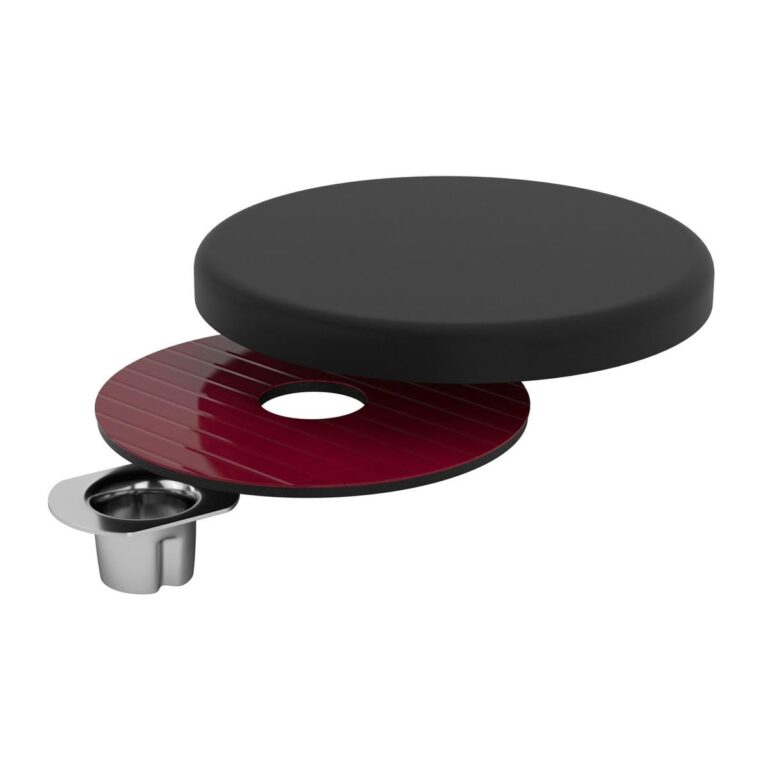
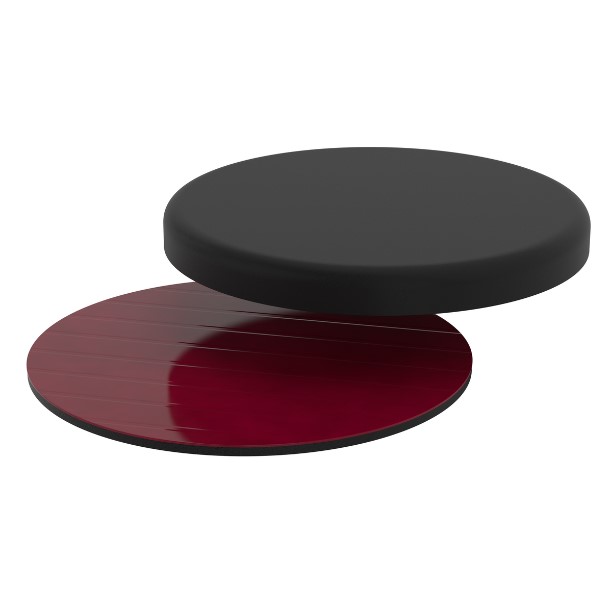
Every time you drag a chair across carpet, the legs tear fibers, stretch backing, and wear traffic lanes into the pile. Furniture slides for carpet and rugs put a hard, smooth ABS surface between the leg and the floor so furniture glides over the pile instead of dragging through it. Silent. Effortless. No carpet damage.
This guide covers everything: how to choose carpet slides for your furniture, how to measure your legs, nail-on vs self-adhesive mounting, which floors slides work on (including rough hard floors), and chair slides installation for both methods. Whether you are protecting residential carpet or outfitting a commercial venue, this is the only carpet furniture sliders guide you need.
Not sure if you need slides or glides? Slides are for carpet, rugs, and rough hard floors (textured tile, slate, stamped concrete). Glides are for smooth hard floors (hardwood, tile, laminate, vinyl). If the floor feels rough to the touch, you need slides. View furniture glides instead →
Jump to: How to Measure · Nail-On vs Self-Adhesive · Floor Compatibility · Materials · By Furniture Type · Installation · Why Superior Glide · FAQ
The measurement process is the same as for furniture glides. The slide should be slightly smaller than the leg so it stays hidden beneath the leg edge. Too large, and the overhang catches on carpet transitions. Too small, and the leg perimeter contacts the carpet directly. If your measurement lands on a boundary, choose the smaller slide.
If your furniture leg has a circular cross-section, measure the diameter at the very bottom. For turned or tapered legs, always measure at the base, not mid-leg. Match to the closest slide size and go smaller if between sizes.
Equal sides means you only need one measurement. Measure one edge of the flat base in millimeters. If both sides are not equal, the leg is rectangular. Square slides provide full corner-to-corner ABS coverage.
Rectangular legs have unequal sides, so you need two measurements: the long side and the short side. One slide size (33 × 19 mm) covers most rectangular legs found on mid-century and Scandinavian furniture.
Flip the furniture over or lay it on its side. You need clear access to the flat bottom face of each leg where the furniture slide will sit.
Use a ruler or calipers across the widest point of the leg base. For round legs, measure the diameter. For square legs, measure one side. For rectangular legs, measure both the long and short sides.
Many modern and mid-century furniture legs taper. A leg that measures 40 mm at mid-height but 33 mm at the base needs the 28 mm slide, not the 38 mm. Always measure at the very bottom.
If your measurement falls between two sizes, always go with the smaller slide. A slide that is slightly smaller than the leg stays hidden beneath the leg edge. A slide that is too large overhangs and catches on carpet edges and transitions.
| Shape | Slide Size | Fits Legs | Common Furniture |
|---|---|---|---|
| Round | Ø 23 mm | Ø 23–27 mm | Side chairs, lightweight accent furniture |
| Round | Ø 28 mm | Ø 28–37 mm | Dining chairs, kitchen chairs, desk seating |
| Round | Ø 38 mm | Ø 38–49 mm | Accent chairs, heavier seating |
| Round | Ø 50 mm | Ø 50 mm and above | Dining tables, coffee tables |
| Square | 23 × 23 mm | 23–27 mm | Lightweight side chairs |
| Square | 28 × 28 mm | 28–37 mm | Dining chairs, bar stools |
| Square | 38 × 38 mm | 38–49 mm | Dining chairs, accent chairs |
| Square | 50 × 50 mm | 50 mm and above | Heavy chairs, dining tables |
| Rectangular | 33 × 19 mm | 33–40 × 19–25 mm | Mid-century chairs, modern dining |
Learning how to choose carpet slides comes down to one decision: mounting method. Unlike glides, slides only come in one surface type (hard ABS). There is no anti-slip variant because furniture slides for carpet and rugs are designed to help furniture move across carpet, not grip it.
The strongest mechanical solution. A zinc-plated steel tubular rivet drives into solid wood with a rubber mallet. No drilling, no adhesive. The rivet separates wood fibers rather than cutting them away, so replacements seat at full strength in the same hole.
Use when: the furniture legs are solid wood
Round (4 sizes), Square (4 sizes), Rectangular (1 size)
The universal option. EHBF acrylic foam tape bonds to any clean, smooth surface: wood, metal, chrome, plastic, powder-coated steel. Peel, press, done. No tools, no drilling, no risk of splitting. For any leg material.
Use when: the furniture legs are metal, plastic, hollow tube, or wood
Round (4 sizes), Square (4 sizes), Rectangular (1 size)
The short version: If the legs are solid wood, use nail-on furniture slides for carpet and rugs. If the legs are metal, plastic, or hollow tube, use self-adhesive. If the legs are wood but you prefer no rivet, self-adhesive works on wood too.
All furniture slides use the same hard ABS (Acrylonitrile Butadiene Styrene) floor contact surface. ABS is smooth and rigid, allowing furniture to glide over carpet fibers without snagging or pulling. Unlike PA6 fiber (used on hard-floor glides), ABS does not catch on carpet pile.
Best for: carpet, rugs, and rough hard floors
All shapes and sizes. Nail-on and self-adhesive.
Hard ABS on smooth hard floors (hardwood, polished tile, laminate, vinyl) can scratch the finish and produces more noise than PA6 fiber. For smooth hard floors, use furniture glides with the soft PA6 surface instead.
For smooth hard floors: use furniture glides
PA6 smooth glide and NR+CR anti-slip variants available.
The short version: Slides have one surface (ABS) for carpet and rough floors. Glides have two surfaces (PA6 and NR+CR) for smooth hard floors. Choose based on your floor type.
Furniture slides for carpet and rugs are designed for soft flooring and rough hard surfaces. The hard ABS base glides smoothly over carpet fibers, rug textures, and abrasive hard floor surfaces that would wear down PA6 fiber glides prematurely.
Also works on rough hard floors: Slides handle textured tile, natural cleft slate, stamped concrete, travertine, and other rough surfaces where PA6 furniture glides would wear prematurely. For smooth hard floors, the National Wood Flooring Association recommends soft contact surfaces like the PA6 glides in our glides collection.
⚠️ Not for smooth hard floors: Hardwood, polished tile, laminate, luxury vinyl, polished concrete, sealed stone. Hard ABS on smooth floors can scratch the finish. For smooth hard floors, use furniture glides with the soft PA6 surface.
💡 Have both carpet and hard floors? Many homes and offices have carpeted rooms and hard-floor rooms. Use furniture slides on carpet and furniture glides on hard floors. For area rugs on hard floors, pair glides with a quality rug pad underneath for complete protection.
Every piece of furniture interacts with carpet and rugs differently. Here’s how to choose the right slide type, mounting method, and size for the furniture you’re protecting.
Dining chairs on carpet take constant abuse. Every push and pull drags fibers and stretches backing. Nail-on slides with hard ABS bases let chairs glide across carpet without snagging or catching. For solid wood legs, nail-on is the strongest option. For metal or tube legs, use self-adhesive.
Tables are heavy but still need to move for cleaning. Larger slides (50 mm) spread the weight and prevent legs from sinking into carpet pile. Self-adhesive slides work well for most table legs since tables move less frequently than chairs.
Bar stools on carpet often catch and tip when pulled forward. ABS slides eliminate that friction so stools glide smoothly across carpet pile. Nail-on slides are recommended for solid wood legs since bar stools endure rotational stress from swiveling.
If your office chair has casters, you need a chair mat, not slides. For fixed-leg desk chairs and guest chairs on carpet, self-adhesive slides are the easiest option. The ABS surface prevents carpet fibers from bunching around the leg base.
Heavy sofas on carpet create deep indentations and are nearly impossible to reposition without slides. Large self-adhesive slides (50 mm) under each leg let you push a full sofa across carpet for cleaning or rearranging without lifting.
Bed frames on carpet dig in and create permanent impressions. Self-adhesive slides under each leg reduce indentation and make it possible to reposition the bed for cleaning. Dressers benefit from the same treatment, especially on thick pile carpet.
For irreplaceable antique furniture on carpet, self-adhesive slides are the only safe option. No nail holes, no modification to the original piece. The ABS surface prevents carpet fibers from wrapping around legs, and the low profile keeps the slides hidden.
Hotels, conference centers, and banquet halls with carpeted floors go through thousands of chair movements per week. Nail-on slides are the standard for commercial use because they never fall off. Staff can drag, stack, and rearrange without losing slides across the floor.
Every slide is engineered as a complete movement system. Each material plays a specific role in smooth motion, durability, and floor protection.
Built with durable, low-friction materials that deliver smooth movement, reduced resistance, and dependable performance across carpeted floors and area rugs.
Smooth ABS (Acrylonitrile Butadiene Styrene) plastic surface with precision-molded edges. The low-friction surface slides over carpet fibers without snagging, catching, or crushing the pile.
EHBF (Extra High Bond Foam) double-sided acrylic foam pad distributes load across the full ABS platform, dampens vibration from movement, and absorbs sound when sliding heavy furniture across carpet. The EHBF foam layer is available on nail-on slides in Ø 50 mm round and 50 × 50 mm square sizes only.
Zinc-iron plated steel tubular rivet with a razor-sharp edge that separates wood fibers without pre-drilling. The precision-formed head is molded directly into the ABS platform, creating a single fused unit that can’t loosen or rattle.
Built with high-grip, low-friction materials that deliver smooth movement, reduced resistance, and dependable performance across carpeted floors and area rugs.
Both protect your floor and make furniture easy to move. The difference is the floor contact surface, because carpet and hard floors need opposite materials.
Surface: Hard ABS (Acrylonitrile Butadiene Styrene).
For: Carpet, rugs, and rough hard floors.
How it works: The smooth, rigid ABS base glides over carpet fibers without snagging, pulling, or wearing down the pile. Also handles rough textures that would abrade PA6 fiber.
Sizes: Round (4), Square (4), Rectangular (1). Nail-on and self-adhesive.
This is the product you are viewing.
Surface: PA6 needle-punched fiber (smooth glide) or NR+CR rubber (anti-slip).
For: Smooth hard floors: hardwood, tile, laminate, vinyl, stone, polished concrete.
How it works: Soft PA6 fiber moves silently without scratching. NR+CR rubber grips the floor for furniture that must stay put.
Sizes: Round (5), Square (5), Rectangular (1). Nail-on and self-adhesive.
Chair slides installation is identical to furniture glides. Same rivet system, same adhesive system. The only difference is the ABS contact surface instead of PA6. Both nail-on and self-adhesive furniture slides for carpet and rugs install in under a minute per leg.
Center the furniture slide on the bottom of the leg. The smooth ABS surface faces the floor (toward the carpet). The zinc rivet points upward into the wood. For square and rectangular slides, align edges with the leg edges before striking.
Tap with a rubber mallet until the furniture slide sits flush against the leg base. Two to three firm strikes on most wood species. No pre-drilling required on hardwood, MDF, or softwood.
Try to rotate the furniture slide with your fingers. If it stays locked in place, the anti-rotation mortise has engaged. If it spins, give the rivet one more firm tap.
Set the furniture back down on the carpet and push it across the floor. The ABS surface should glide smoothly over the carpet pile with minimal effort.
Wipe the bottom of every furniture leg with isopropyl alcohol (70% or higher). Remove dust, oil, old adhesive residue, and moisture. The EHBF tape bonds only as well as the surface it bonds to.
Peel the protective backing film off the furniture slide. Avoid touching the adhesive surface with your fingers. Oils from skin reduce bond strength.
Center the furniture slide on the leg base and press firmly for 30 seconds. Apply pressure across the entire surface. For square and rectangular slides, align edges with the leg edges.
Set the furniture back down gently. The weight helps cure the adhesive. Allow 48 hours for full bond strength before heavy use or repositioning.
Most furniture slides on the market use cheap polystyrene or PTFE-coated plastic that cracks under load or loses its coating within months. Superior Glide slides use engineering-grade ABS that maintains its performance long-term.
Surface: Engineering-grade ABS (Acrylonitrile Butadiene Styrene). Impact-resistant, crack-resistant, dimensionally stable.
Mounting: ZnFe tubular rivet (nail-on) or EHBF acrylic foam tape (self-adhesive). Same proven systems used across the entire glide range.
Durability: ABS does not rely on a coating. The entire surface is ABS through and through. No degradation from repeated movement.
Load: Rigid ABS platform distributes weight evenly. No edge cracking under heavy furniture.
Surface: Polystyrene or polypropylene. Brittle. Cracks under impact and sustained load.
Mounting: Weak adhesive that peels within weeks. Thin nail that bends and loosens.
Durability: PTFE coatings wear through with repeated movement, exposing the rough base material to carpet fibers. Once the coating is gone, the slide drags instead of gliding.
Load: Concentrates weight at edges. Cracks and splits under heavy dining tables and commercial furniture.
Common questions about how to choose carpet slides, sizing, and chair slides installation for carpet and rugs. This carpet furniture sliders guide answers the questions our customers ask most.
Slides have a hard ABS floor contact surface designed for carpet, rugs, and rough hard floors. Glides have a soft PA6 fiber surface (or NR+CR rubber for anti-slip) designed for smooth hard floors like hardwood, tile, laminate, and vinyl. Use slides on carpet. Use glides on hard floors.
Not recommended. The hard ABS surface can scratch smooth hardwood, tile, laminate, and vinyl. For smooth hard floors, use furniture glides with the soft PA6 fiber surface instead. Slides are specifically for carpet, rugs, and rough hard surfaces.
Yes. Furniture slides work on textured tile, natural cleft slate, stamped concrete, travertine, and other rough hard surfaces. The hard ABS base handles abrasive textures without degrading, whereas PA6 fiber glides would wear prematurely on these surfaces.
Furniture slides are available up to Ø 50 mm / 50 × 50 mm. The Ø 75 mm / 75 × 75 mm size is available in the glide range but not in slides. For legs larger than 50 mm on carpet, contact Business Solutions for custom options.
Yes. The nail-on slides and glides use the same ZnFe tubular rivet system. Remove the slide with a flat-head screwdriver, and a glide (or vice versa) seats tightly in the same hole with full holding force. The fibers spring back when the rivet is removed. Swap as often as your needs change.
The EHBF acrylic foam tape creates a permanent structural bond. It does not weaken from carpet fiber contact, humidity, or repeated movement. The bond lasts as long as the furniture is in use. Allow 48 hours after installation for full adhesive cure before heavy use.
Yes. Mismatched legs (some with slides, some without) cause the furniture to sit unevenly and can make movement more difficult, not less. Install slides on every leg that contacts the carpet. All slides are sold in multiples of 4.
No. The smooth ABS surface glides over carpet fibers without snagging, pulling, or cutting. Slides actually reduce carpet wear compared to bare furniture legs, which tear fibers and stretch backing when dragged.
Business accounts: Business Solutions — volume pricing, B2B accounts, and commercial orders.
Browse other product categories: Furniture Glides · Furniture Slides · Furniture Pads · Tube Plugs & End Caps · Adjustable Leveling Feet · Sled Base Glides
Guide pages: Glide Guide · Slide Guide · Pad Guide · Tube Plugs Guide · Leveling Feet Guide · Sled Base Glides Guide