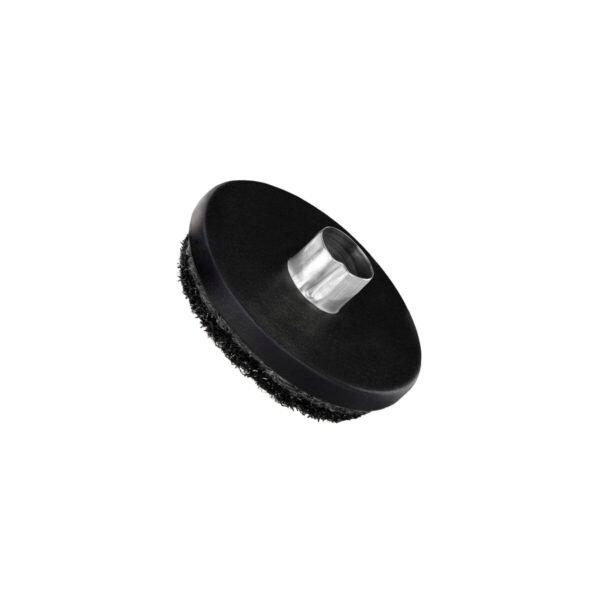
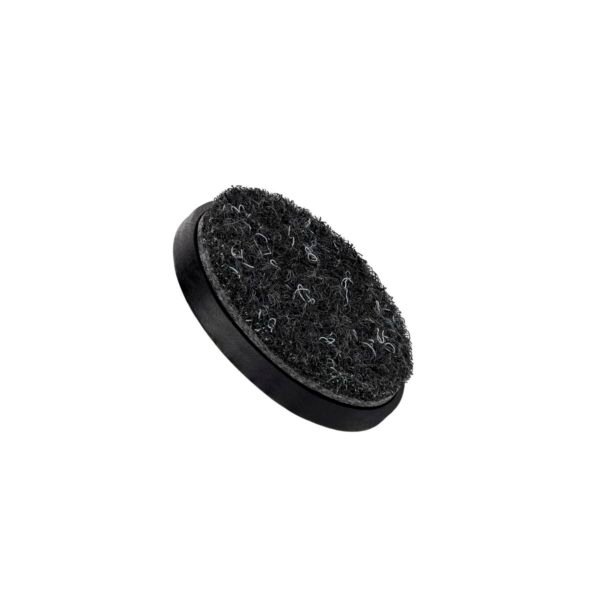
Your dining chairs move more than any other furniture in the house — and every pass with a bare wood leg grinds grit into your floor. Round nail-on furniture glides for hard floors tap into solid wood legs with a zinc-plated tubular rivet. No pre-drilling. No maintenance. The PA6 needle-punched surface glides silent across hardwood, tile, laminate, vinyl, and stone. 5 sizes from Ø 23 mm to Ø 75 mm.
Not sure what size? See the size chart ↓
📦 Sold in packs of 4 — quantity adjustable at checkout
Your dining chairs take more abuse than any other furniture in the house. Pushed back, pulled forward, dragged sideways — six times a day, every day, month after month. That’s hundreds of passes across your hardwood, your tile, your vinyl. And every pass with a bare-wood leg grinds grit into the finish.
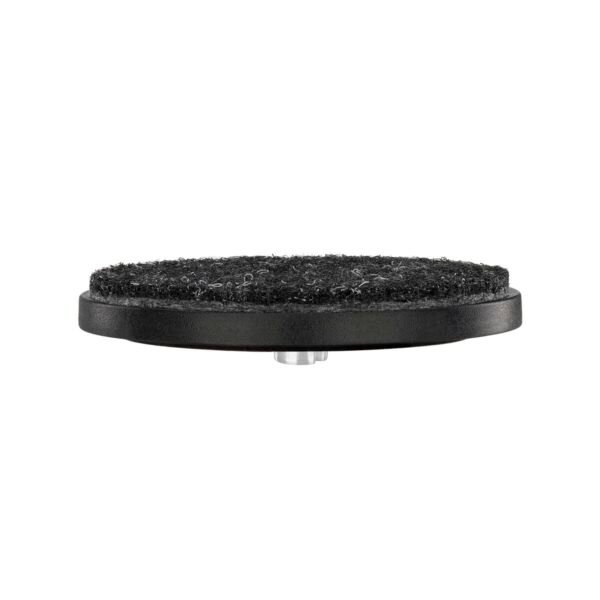
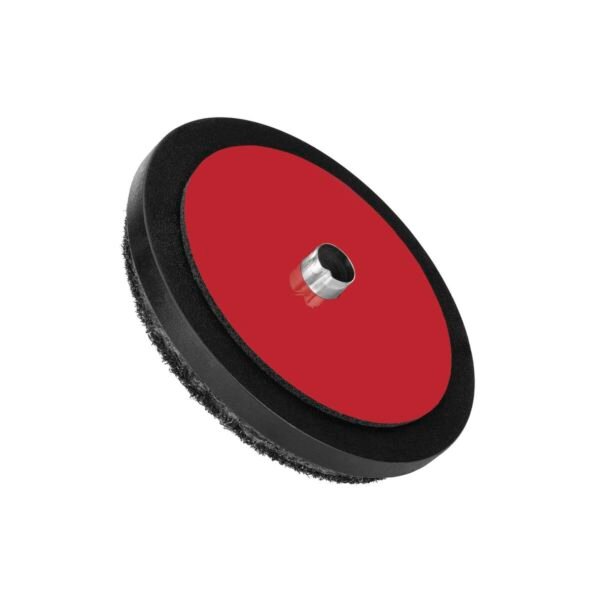
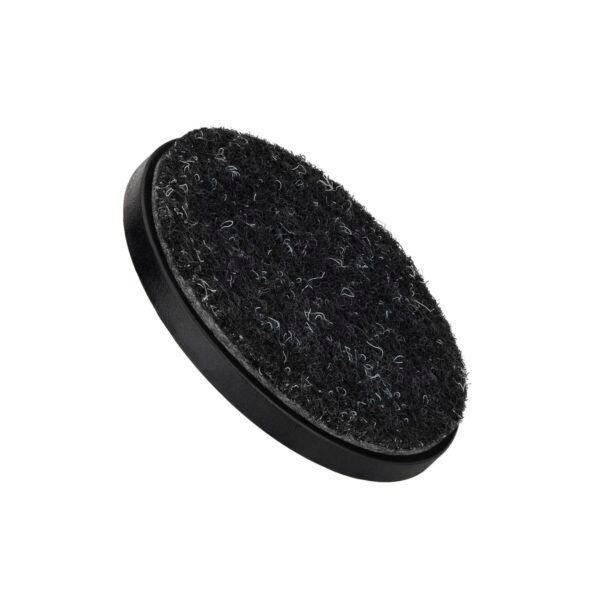
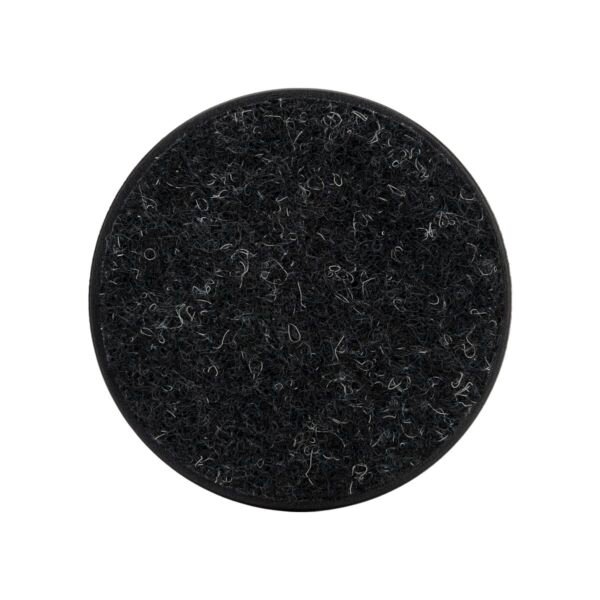
Round nail-on furniture glides for hard floors are built for that exact demand. A zinc-plated tubular rivet taps into the base of any solid wood leg with a rubber mallet — a few firm strikes, fully seated, nothing to come loose. The PA6 needle-punched gliding surface (1,450 g/m² pile density) moves silently across every smooth hard floor type without compressing flat, trapping debris, or wearing through under daily load.
5 sizes from Ø 23 mm to Ø 75 mm — every round wooden furniture leg from a lightweight side chair to a heavy conference table. Available in multiples of 4. PA6 hard floor and NR+CR anti-slip surface variants. For solid wood legs only.
A glide that doesn’t match the leg is a glide that doesn’t protect. Too small and the leg edge rides past it — bare wood on floor, every push. Too large, and the overhang catches, lifts, and eventually snaps off. Round nail-on furniture glides for hard floors come in five diameters, sized to sit flush against the leg base with full edge coverage and even weight distribution.
For legs Ø 23–27 mm
Side chairs, lightweight seats
For legs Ø 28–37 mm
Dining chairs, desk chairs
For legs Ø 38–49 mm
Accent chairs, heavier seating
For legs Ø 50–74 mm
Dining tables, coffee tables
For legs Ø 75 mm and above
Conference tables, heavy furniture
Need a wider range of round sizes? Round self-adhesive furniture pads are available in 33 diameters from Ø 12 mm to Ø 300 mm — the same PA6 needle-punched surface with EHBT fiberglass mesh adhesive backing. For bulk orders and commercial fit-outs, visit Business Solutions.
The glide that fails fastest is the one that was never the right size. Put a 28 mm nail-on glide on a 38 mm chair leg, and the outer rim of wood rides bare on the floor — while the glide itself wobbles loose under uneven load. Thirty seconds with a ruler prevents all of it. Here’s how.
Lay it on its side or turn it upside down. You need clear access to the base of each leg — the flat face where the round nail-on furniture glide will seat.
Straight across the widest point of the leg base, in millimeters. Steel rule, tape measure, or calipers — millimeter accuracy is all you need. For turned legs that taper, measure at the very bottom. The contact point with the floor is the only dimension that matters.
Select the round nail-on furniture glide whose range includes your measurement. If you land exactly on a boundary — say, 38 mm — take the larger size. Full coverage beats a tight fit.
If you can swing a rubber mallet, you can install these. No pilot holes. No surface prep on standard sizes. No curing time. Center the glide, tap the rivet, done.
The PA6 gliding surface is chemically inert — no reaction with polyurethane sealers, wax finishes, or commercial cleaning solutions. The National Wood Flooring Association (NWFA) recommends protective glides on all furniture legs as a primary maintenance measure for hardwood floors. These PA6 nail-on floor protectors meet that recommendation across every smooth hard floor type listed below. For a full overview of hard floor types and their care requirements, The Spruce’s hard flooring guide provides a useful reference for matching protection to surface.
Cheap glides fail in three predictable ways: the gliding surface wears through, the fastener loosens in the wood, and the platform cracks under load. Every component in round nail-on furniture glides for hard floors is engineered to eliminate one of those failures. Here’s what’s inside — and why each part matters.
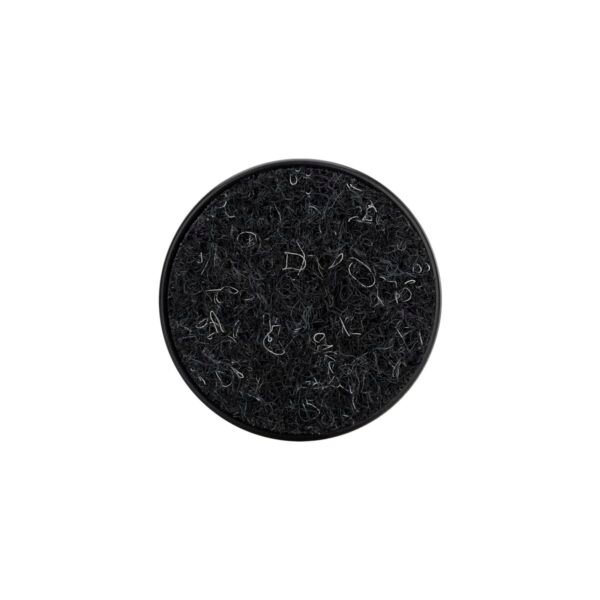
PA6 belongs to the family of engineering polymers used in mechanical bearings and industrial gears — materials selected specifically for low friction and high wear resistance under continuous load. In round nail-on furniture glides for hard floors, thousands of PA6 fibers are forced through the base material by barbed needles during manufacturing. Each fiber is mechanically interlocked, not glued. There’s no adhesive layer between them to weaken, no horizontal planes to shear apart when a chair gets shoved sideways across the floor.
That’s the fundamental difference from felt. Felt is horizontal layers bonded with adhesive — layers that compress under weight, absorb moisture on every mop, and trap the grit that turns a soft pad into a sanding block. The PA6 surface in round furniture glides for hard floors and stands vertically. The fibers deflect particles instead of embedding them. And because there’s no adhesive holding the fiber structure together, there’s nothing to degrade. The NWFA’s hardwood floor maintenance guidelines cite abrasion from degraded furniture glides as one of the leading causes of preventable finish damage — it’s the reason PA6 nail-on floor protectors use needle-punched fiber instead of felt.
Every nail-on glide has a fastener. Most use a plain nail — a solid spike that punches a cylindrical hole through the wood fibers and removes material on the way in. The hole widens with every lateral movement. Pull the glide out to replace it, and the hole is bigger. Drive a new nail in, and it’s looser. After two or three replacements, the leg is compromised.
The tubular rivet in these nail-on chair glides for wood legs works differently. The razor-sharp hollow edge parts the wood fibers as it enters — separating them, not removing them. When the rivet comes out, the fibers spring back and the hole closes. A fresh rivet seats tightly in the same location without widening the entry or weakening the wood. The wide rivet head is injection-molded directly into the ABS platform — a single structural unit, not two pieces pressed together with a failure seam between them.
The platform between the PA6 surface and the rivet in round nail-on furniture glides. It takes the full compression load of the furniture and spreads it evenly across the gliding surface — no single point bearing all the weight, no edges curling under pressure. ABS is the same engineering-grade thermoplastic used in automotive interiors and electronics housings. It doesn’t age-crack under sustained pressure the way commodity plastics do, and it holds its shape across temperature swings that would warp a cheaper carrier.
Felt compresses. That’s what it does under weight — the horizontal fibers flatten out, the pad gets thinner, and the gap between protection and no protection disappears. Then the trapped grit finishes the job, grinding into your floor with every movement. Meanwhile, the adhesive backing has absorbed moisture from the last three moppings and let go entirely. You find the pad stuck to your sock. The chair leg has been bare on the hardwood for who knows how long.
Round furniture glides for hard floors like these aren’t in the same category as felt. PA6 fibers are mechanically interlocked by needle-punching — vertical orientation, no adhesive between them, no layers to compress or separate. And the connection to the leg isn’t adhesive at all. It’s a steel rivet driven into wood — a fastening method that doesn’t care about humidity, spills, or cleaning schedules.
A solid nail removes wood on the way in. Every time the chair shifts, the hole widens. Pull the glide to replace it, and you’re driving the next nail into a hole that’s already too big. The glide rocks. The leg splits. The furniture is done.
The tubular rivet in these nail-on furniture glides for hardwood floors separates fibers instead of cutting them. The hole recovers when the rivet is removed. A replacement rivet seats tight in the same spot — not looser than last time. And the rivet head is molded into the ABS platform as one unit. No press-fit joint. No glue seam. Nothing to work loose from the inside.
Same PA6 surface. Same ABS platform. The only difference is how they attach to the leg. Round nail-on furniture glides drive a tubular rivet into solid wood — a mechanical lock designed for furniture that moves under heavy daily use. Round self-adhesive furniture glides use EHBF foam adhesive tape — a strong, clean bond that works on wood, metal, plastic, and hollow legs where a rivet has nothing to bite into.
Choose nail-on when the legs are solid wood, and the furniture takes constant lateral movement — dining chairs, classroom seating, restaurant tables. Choose self-adhesive when the legs aren’t wood, or when you want a tool-free installation with no mallet required. Both deliver the same floor protection and the same sliding performance.
Round self-adhesive furniture pads use the same PA6 needle-punched surface without the ABS platform or rivet. They bond directly to the leg base with EHBT fiberglass mesh adhesive tape and come in 33 diameters from Ø 12 mm to Ø 300 mm — far more sizes than the five available in glides. When exact size matching matters, or the furniture doesn’t move under constant load, pads are the simpler and equally effective solution.
Round nail-on furniture glides are the natural choice for high-movement wooden furniture. The rigid ABS platform prevents the gliding surface from flexing under concentrated load, and the steel rivet creates a robust mechanical fastening built for the repetition of daily chair use. Dining chairs, desk chairs, bar stools — anything that gets pushed back and dropped into position hundreds of times a day. For furniture that mostly stays put — tables, bookcases, cabinets, sofas — pads handle the job with a simpler installation and a much wider size selection.
Same platform. Same rivet. Two different surfaces for two different jobs. The question isn’t what floor you have — it’s whether the furniture needs to slide or grip.
Low-friction PA6 for furniture that gets repositioned regularly. Dining chairs, desk seats, accent chairs — anything that moves across hardwood, tile, laminate, vinyl, or stone, and should do so quietly and without resistance. Round nail-on furniture glides for hard floors are the standard choice. If you’re choosing between the two surfaces and you’re not sure, start here.
NR+CR rubber compound (Natural Rubber + Neoprene) at 30 Shore A. Controlled grip — the furniture stays exactly where it’s placed and doesn’t creep. Restaurant chairs on polished concrete, boat cabin furniture on marine flooring, RV seating that shifts underway, or anywhere an unexpected slide is a liability.
Both variants use the same ABS platform and ZnFe tubular rivet. Only the gliding surface differs.
The glide shape has to match the leg cross-section. A round glide on a square leg leaves every corner exposed — unprotected wood bearing directly on the floor. Measure the base before ordering.
For circular cross-section legs — turned, tapered, and cylindrical. 5 sizes from Ø 23 mm to Ø 75 mm.
For equal-sided square legs. Full corner-to-corner protection that a round glide can’t deliver.
For oblong legs with unequal sides — the signature profile of mid-century modern and Scandinavian furniture design.
Anywhere round wooden furniture sits on a hard floor and gets moved regularly. Nail-on chair glides for wood legs are the professional standard when chairs and tables take daily punishment — and when the protection needs to hold up without anyone thinking about it. For bulk and commercial orders, visit Business Solutions.
Dining chairs that get pushed back three meals a day. Kitchen stools are dragged across the tile every morning. Desk chairs, accent chairs, bar stools, coffee tables, side tables, dining tables — any solid wood furniture with round legs sitting on a floor you’d rather not refinish. Round nail-on furniture glides in the Ø 28 mm and Ø 38 mm sizes handle the majority of residential dining and kitchen chairs out of the box.
Restaurant dining rooms, hotel lobbies, conference rooms, healthcare waiting areas, school cafeterias, and event venues. Commercial seating moves hundreds of times a day — and when a glide comes loose, nobody notices until the floor does. The mechanical rivet keeps the glide locked to the leg through that kind of volume without inspection or re-attachment. Available in bulk for full-venue fit-outs, fleet replacements, and new-build specifications.
Identical ABS platform and ZnFe rivet. NR+CR rubber surface instead of PA6 — for furniture that must hold position on hardwood, tile, or polished concrete.
Same PA6 gliding surface. EHBF adhesive backing instead of rivet — for metal, plastic, or hollow furniture legs that can’t accept a nail-on fitting.
| Specification | Details |
|---|---|
Product Type |
Round Nail-On Furniture Glides |
Shape |
Round |
Materials |
PA6 needle-punched surface, ABS base plate, ZnFe steel tubular rivet, EHBF adhesive backing (Ø50 & Ø75 mm only) |
Pile Density |
1,450 g/m² |
Fit Style |
Nail-on tubular rivet — no pre-drilling required |
Leg Compatibility |
Solid wooden furniture legs only |
Floor Compatibility |
All hard floors — hardwood, laminate, vinyl, tile, stone, concrete, cork, linoleum |
Furniture Compatibility |
Chairs, stools, tables, office seating, and other solid wood-leg furniture |
Sizes Available |
Ø 23 / 28 / 38 / 50 / 75 mm (0.91″ – 2.95″) |
Pack Quantity |
Available in multiples of 4 |
Color |
Black |
Installation Type |
Tap in with hammer or rubber mallet (clean surface first if adhesive-backed) |
Indoor/Outdoor Use |
Indoor | Covered Outdoor |

| Shape | Ø (Diameter) | Compatible Leg/Base Size | Ø1 (Rivet Diameter) | H (Height) | H1 (Rivet Height) |
|---|---|---|---|---|---|
Round |
23 mm (0.91″) |
23 – 27 mm (0.91 – 1.06″) |
9.2 mm (0.36″) |
12 mm (0.47") |
5.5 mm (0.22″) |
Round |
28 mm (1.10") |
28 – 37 mm (1.10 – 1.46″) |
9.2 mm (0.36″) |
12 mm (0.47") |
5.5 mm (0.22″) |
Round |
38 mm (1.50") |
38 – 49 mm (1.50 – 1.93″) |
9.2 mm (0.36″) |
12 mm (0.47") |
5.5 mm (0.22″) |
Round |
50 mm (1.97") |
50 – 74 mm (1.97 – 2.91″) |
9.2 mm (0.36″) |
12 mm (0.47") |
5.5 mm (0.22″) |
Round |
75 mm (2.95") |
75 mm + (2.95″) |
9.2 mm (0.36″) |
12 mm (0.47") |
5.5 mm (0.22″) |
All smooth hard floor types, including hardwood (all species and finishes), engineered wood, bamboo, parquet, laminate, luxury vinyl (LVP and LVT), sheet vinyl, ceramic tile, porcelain tile, natural stone (marble, granite, travertine), sealed and polished concrete, cork, and linoleum. The PA6 gliding surface is chemically inert — it won’t react with polyurethane sealers, wax finishes, or commercial cleaning solutions. For carpet and soft flooring, use furniture slides instead.
Measure the diameter of the furniture leg base in millimeters, straight across the widest point. Match that measurement to the five available sizes: Ø 23 mm (legs 23–27 mm), Ø 28 mm (legs 28–37 mm), Ø 38 mm (legs 38–49 mm), Ø 50 mm (legs 50–74 mm), or Ø 75 mm (legs 75 mm and above). For turned or tapered legs, measure at the very bottom — the contact point with the floor is the only dimension that matters. If your measurement falls exactly on a boundary, choose the larger size for full edge coverage.
No. The zinc-plated tubular rivet taps directly into solid wood with a rubber mallet — no pilot holes and no surface prep required on the Ø 23 mm, Ø 28 mm, and Ø 38 mm sizes. For the Ø 50 mm and Ø 75 mm sizes, wipe the leg base with 70% isopropyl alcohol and let it dry before installing. These larger sizes include EHBF adhesive tape backing for additional bond strength alongside the rivet.
No — the tubular rivet requires solid wood grain to create a mechanical lock. For metal, plastic, or hollow legs, use round self-adhesive furniture glides, which attach with EHBF foam adhesive tape instead of a rivet. They use the same PA6 gliding surface and ABS platform — only the attachment method differs.
Lever the old glide out with a flathead screwdriver. The tubular rivet separated the wood fibers on the way in rather than removing them, so the hole closes back once the rivet is out. A new rivet seats tight in the same location without widening the entry or weakening the wood. You can replace glides in the same spot as many times as needed over the life of the furniture.
Both use the same ABS platform and zinc-plated tubular rivet — only the gliding surface differs. PA6 hard floor glides feature a low-friction, needle-punched surface for furniture that is repositioned regularly (dining chairs, desk chairs, accent chairs). Anti-slip glides use an NR+CR rubber compound that grips the floor, keeping furniture exactly where it’s placed. Choose PA6 when the furniture needs to move freely. Choose anti-slip when it must hold a position.
Only logged in customers who have purchased this product may leave a review.





Reviews
There are no reviews yet