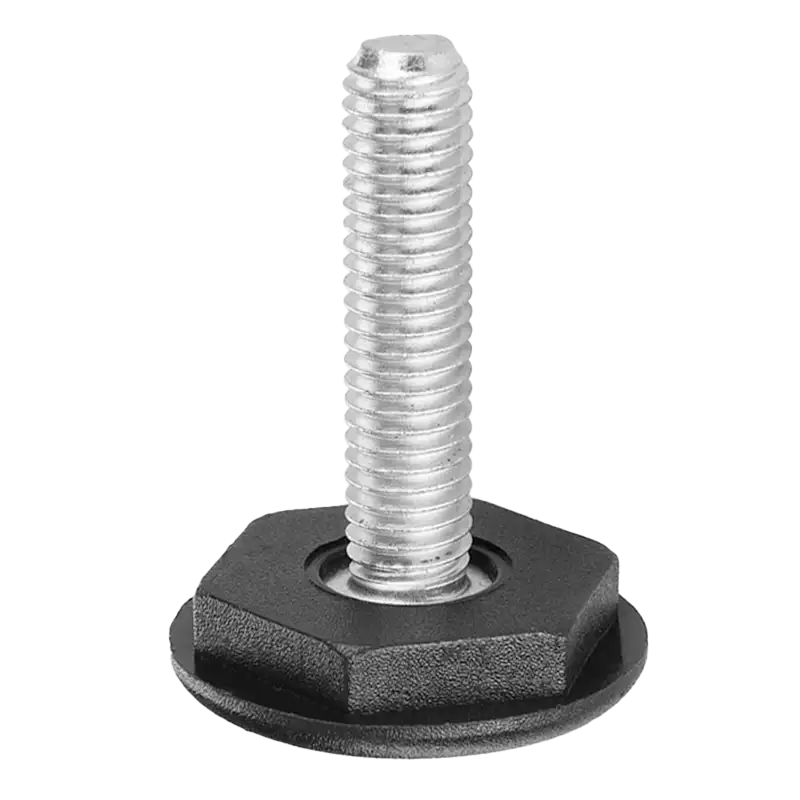
Discover how adjustable leveling feet improve stability on uneven floors, enable precise height adjustment, and support both residential and commercial furniture applications.
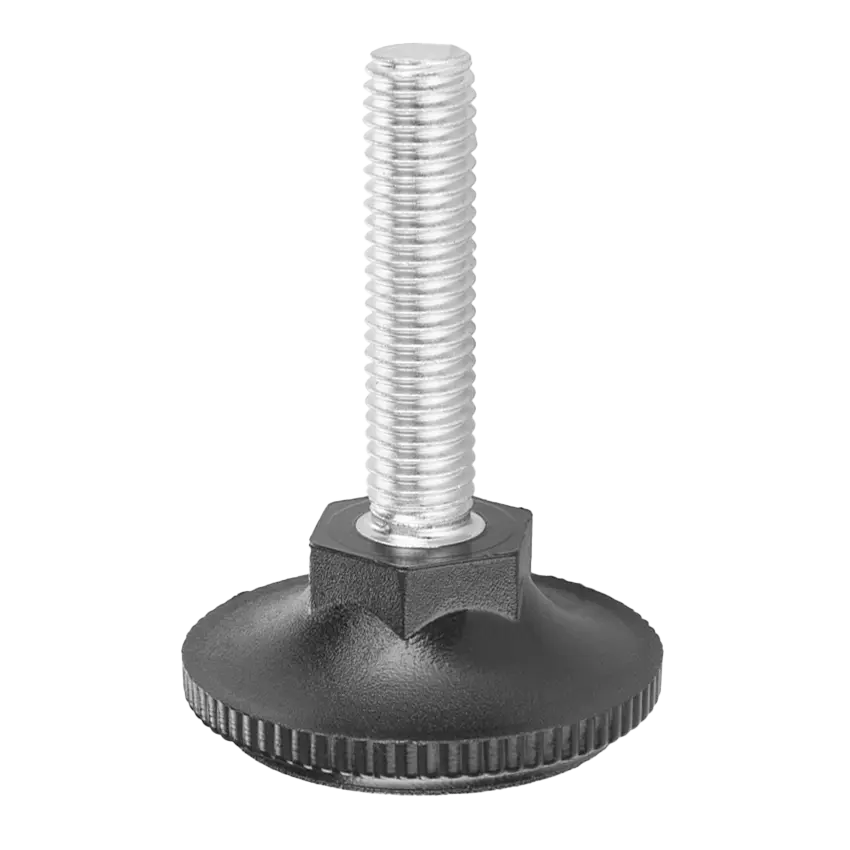
Choosing the right furniture leveling feet depends on your floor surface, furniture weight, and adjustment needs. Fixed Base feet work best on flat floors, while self leveling feet handle uneven or sloped surfaces, helping stabilize furniture and protect floors.
PA6 pads are available on select adjustable leveling feet for smooth, hard-floor protection
Best for: mostly even floors where fine-tuning is needed
Manually adjustable for precise height leveling
Maintains consistent contact on flat surfaces
Keeps furniture stable on even floors
Ideal for cabinets, tables, and workstations
Best for: uneven or sloped floors
Manually adjustable with a self-aligning surface
Automatically adapts to uneven floors
Maintains full contact without extra adjustment
Ideal for chairs, stools, and uneven installs
Every leveling foot is engineered as a complete system — combining stable support, precise adjustment, and durable materials to ensure long-term performance on uneven floors.
Built using specific rod and foot materials depending on the leveling foot type selected—each chosen to deliver reliable strength, corrosion resistance, and consistent performance across different environments and applications.
Depending on the leveling foot selected, the threaded rod is manufactured from either galvanized iron or stainless steel—each chosen to provide the appropriate level of strength, corrosion resistance, and durability for the intended environment.
Fe HDG (Hot-Dip Galvanized Iron)
Zinc-coated steel that provides reliable strength and long-lasting protection against corrosion in standard indoor and light commercial environments.
INOX (Stainless Steel)
Naturally corrosion-resistant steel designed for high-humidity, outdoor, or demanding commercial applications requiring maximum durability.
Depending on the leveling foot selected, the foot base is manufactured from polyamide, thermoplastic elastomer, or polyoxymethylene—each material engineered to deliver specific performance characteristics such as load stability, grip, wear resistance, or vibration damping.
PA (Polyamide / Nylon)
A tough, wear-resistant material that offers high load capacity, dimensional stability, and long service life.
TPE (Thermoplastic Elastomer / Rubber)
A flexible, high-grip material that absorbs vibration, protects floors, and reduces noise.
POM (Polyoxymethylene / Acetal)
A rigid, low-friction material that provides smooth movement, excellent wear resistance, and precise dimensional stability.
Quick answers to help you choose the right leveling feet with confidence.
These adjustable leveling feet are designed to screw into plastic tube plugs or threaded inserts installed inside chair and table legs. The threaded rod adjusts height, while the base stabilizes the furniture—making them ideal for metal, wood, or plastic legs with internal threads.
You must match the furniture levelling foot’s thread size to the threaded insert already inside your furniture leg.
Common sizes include M6, M8, M10, and M12. If unsure, remove the existing foot or bolt and measure the thread diameter – or check the insert specification before ordering.
The base size determines load distribution and floor contact:
Smaller bases (Ø 13–20 mm) are suited for light furniture.
Ø 30 mm is a versatile, general-purpose size.
Larger bases (Ø 45–50 mm) provide better stability for heavier furniture and commercial fixtures
Standard levelling feet have a fixed flat base, best for relatively even floors.
Tilt levelling feet (including inclination or half-sphere heads) allow the base to self-align—maintaining full contact on uneven or sloped floors without stressing the threaded rod.
For sensitive floors, choose:
Adjustable leveling feet with integrated pads
TPE (rubber-like) base feet
Larger diameter bases that reduce point pressure
These options help minimize marking on hardwood, tile, vinyl, and epoxy floors.
Material choice affects longevity, floor interaction, and suitability for commercial use.
Furniture leveling feet with longer threaded rods (e.g. 43 mm, 63 mm, 110 mm) allow greater height adjustment and are ideal for:
Uneven floors
Equipment alignment
Commercial installations where precise leveling is required
Shorter rods are better for fine adjustment only.
Choose stainless-steel levelling feet when the furniture is used in:
Wet or humid environments
Food service or hygiene-critical areas
Outdoor or corrosion-prone locations
They provide superior corrosion resistance and longer service life compared to galvanized steel.